
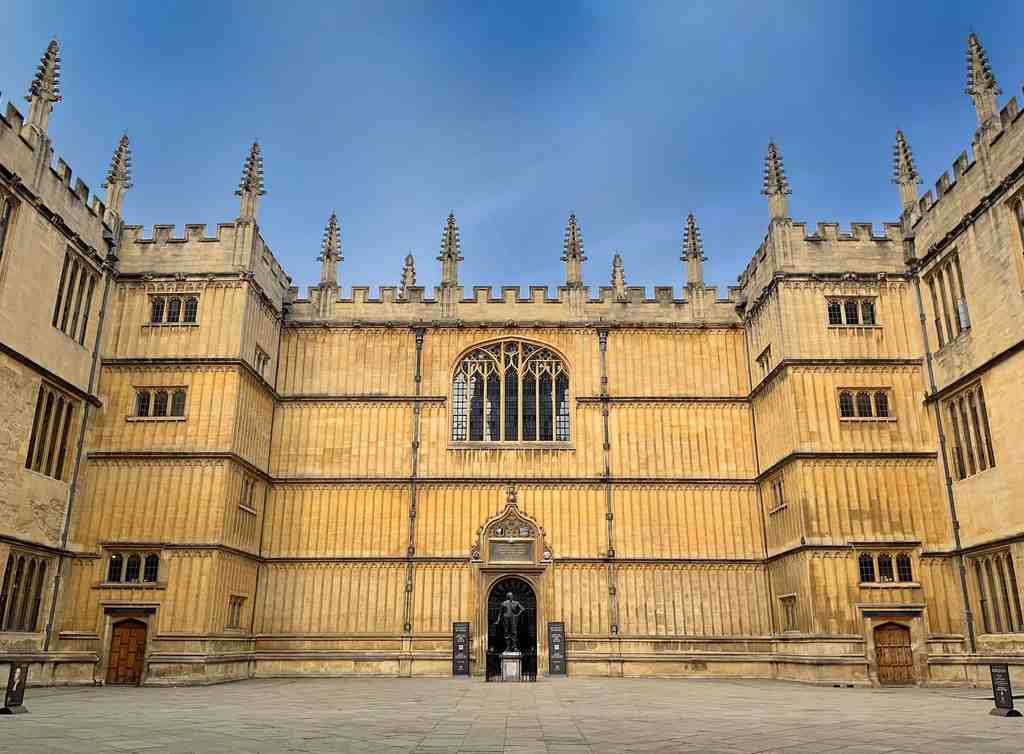
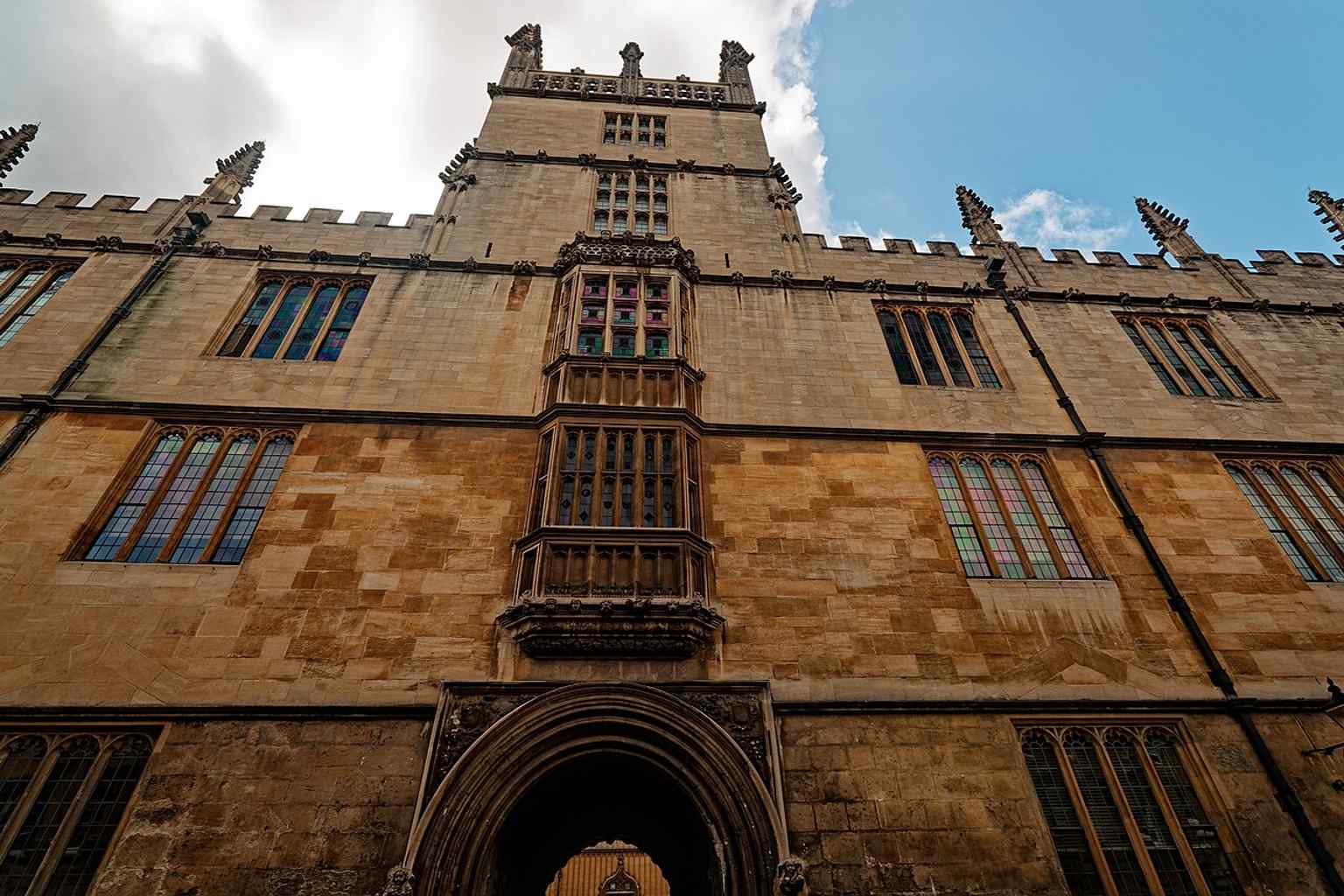
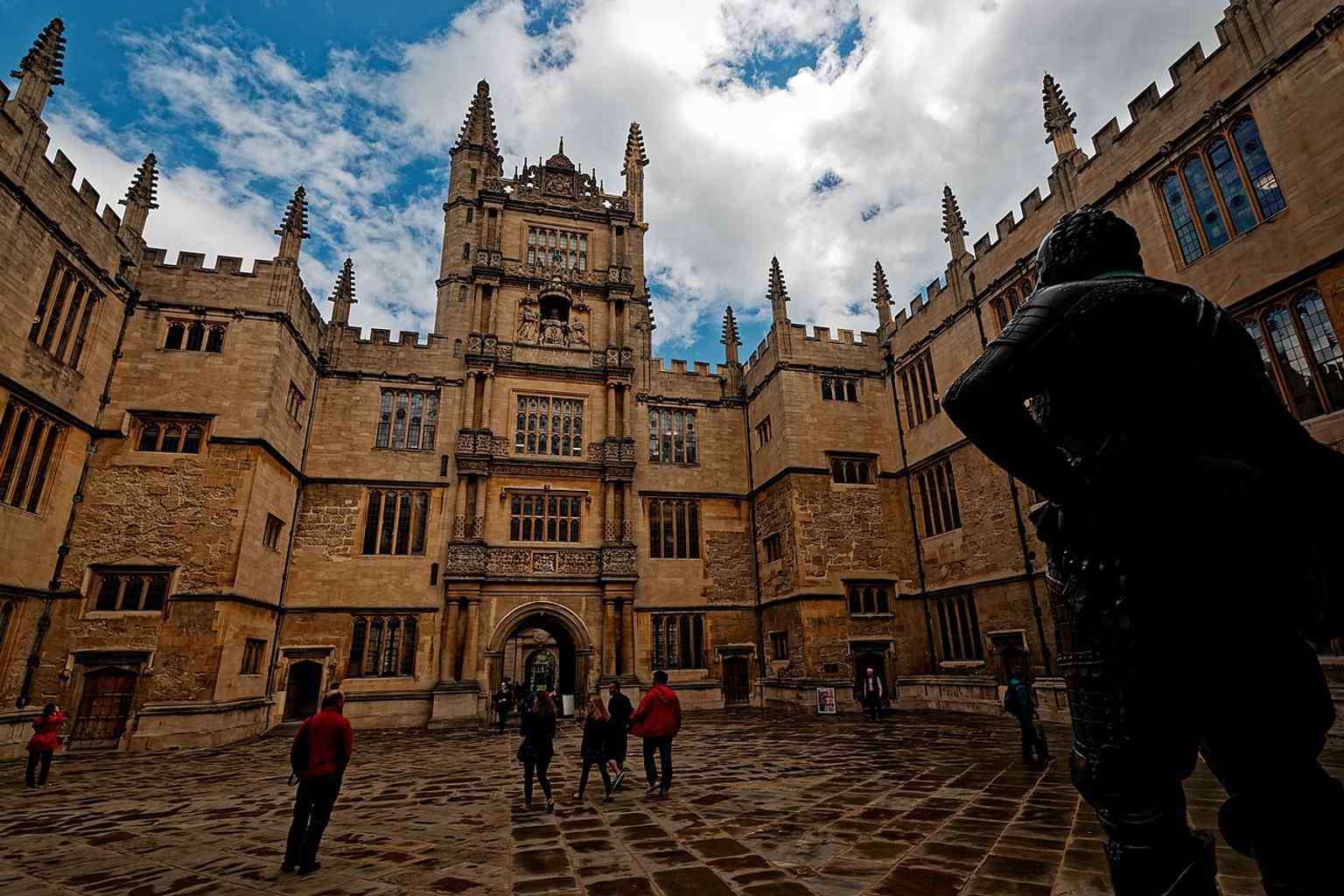
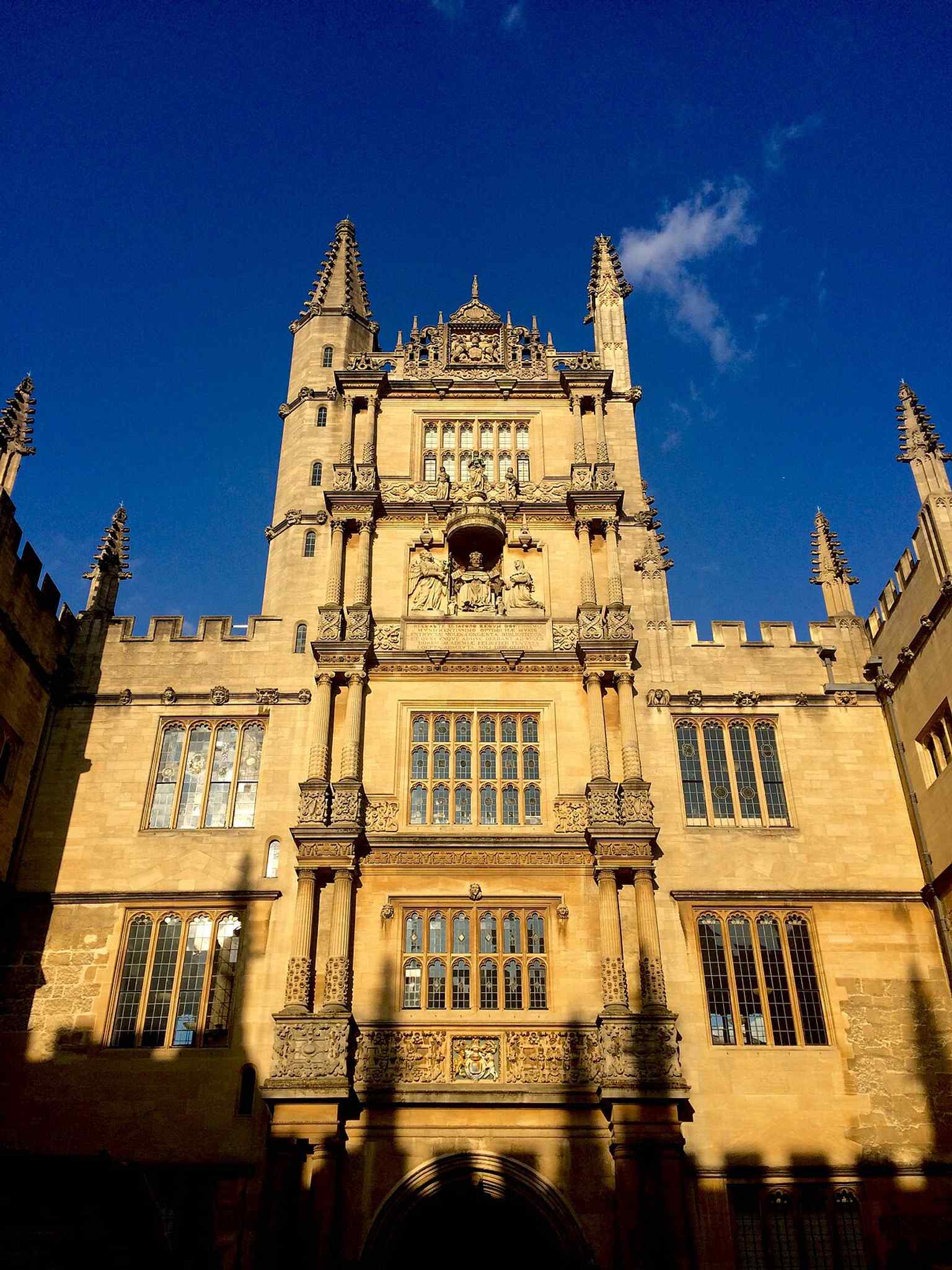
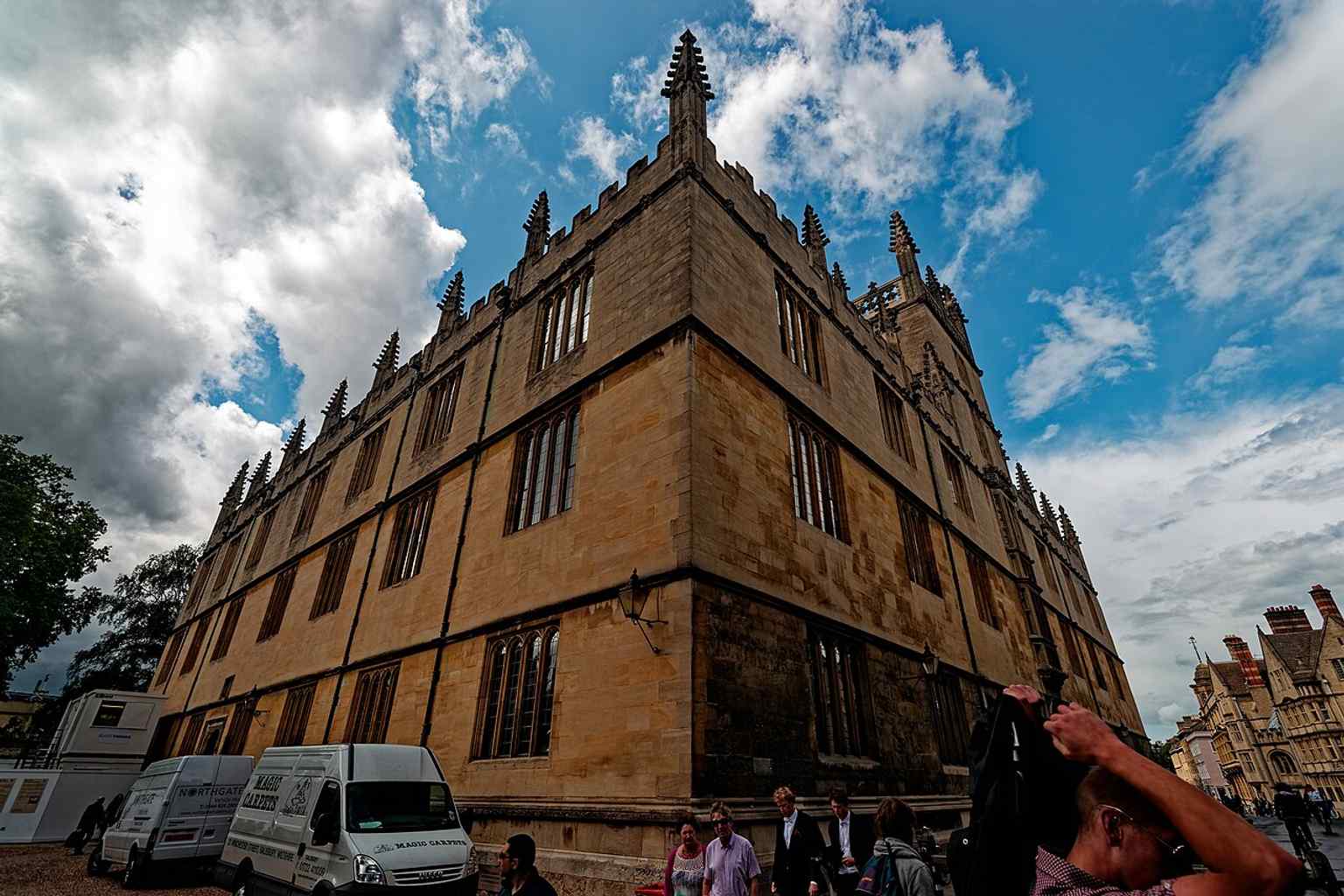
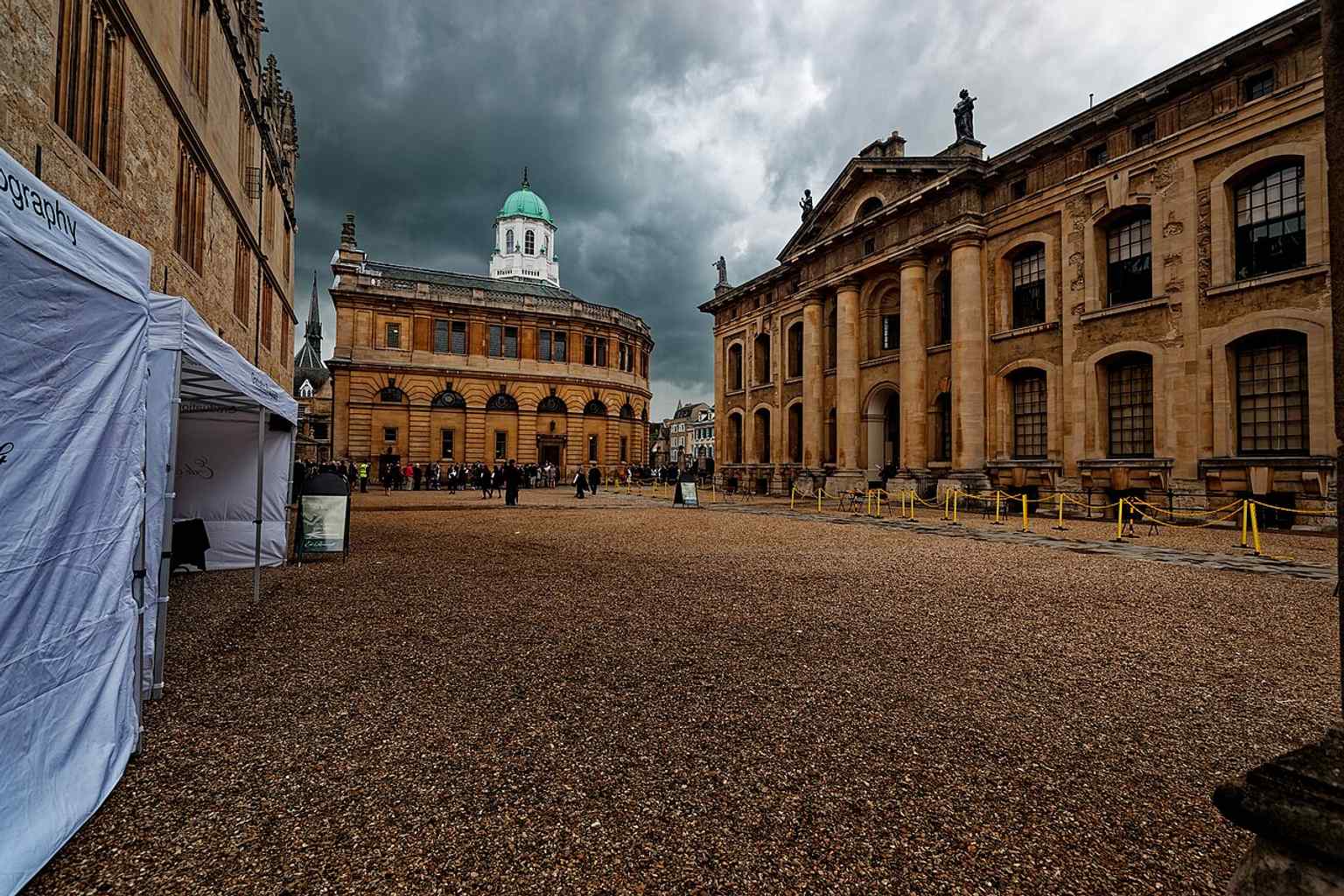
On your right, look for a long honey-colored stone building with a rectangular, crenellated roofline and an ornate gateway tower marked by stacked classical columns.
This is the Bodleian Library, Oxford’s great engine room of scholarship... and one of Europe’s oldest libraries still doing the job it was built for. Sir Thomas Bodley refounded it in sixteen oh two, after the university’s earlier library had fallen into a fairly dismal state. Furniture got sold off, books disappeared, and by the late sixteen hundreds only three of Duke Humfrey’s original books were left. Bodley stepped in, wrote to the vice chancellor, and essentially said: let me rescue this place.
What you see here grew from that rescue. The oldest heart of the library began in the fifteenth century with Duke Humfrey’s Library, a reading room above the Divinity School. When Bodley revived the library, he restocked it, reopened it, and then made a shrewd deal in sixteen ten with the Stationers’ Company so the library received a copy of every registered book printed in England. A wonderfully efficient way to make sure the shelves never enjoyed a moment of peace again.
That growth explains the scale of the Bodleian today. It holds more than thirteen million printed items, making it the second largest library in Britain after the British Library. It is also a legal deposit library, which means publishers in the United Kingdom must send in copies of their books, and it can request copies from Ireland too. So this isn’t just an Oxford library. For a long stretch, before the British Museum opened in seventeen fifty-three, it functioned much like England’s national library.
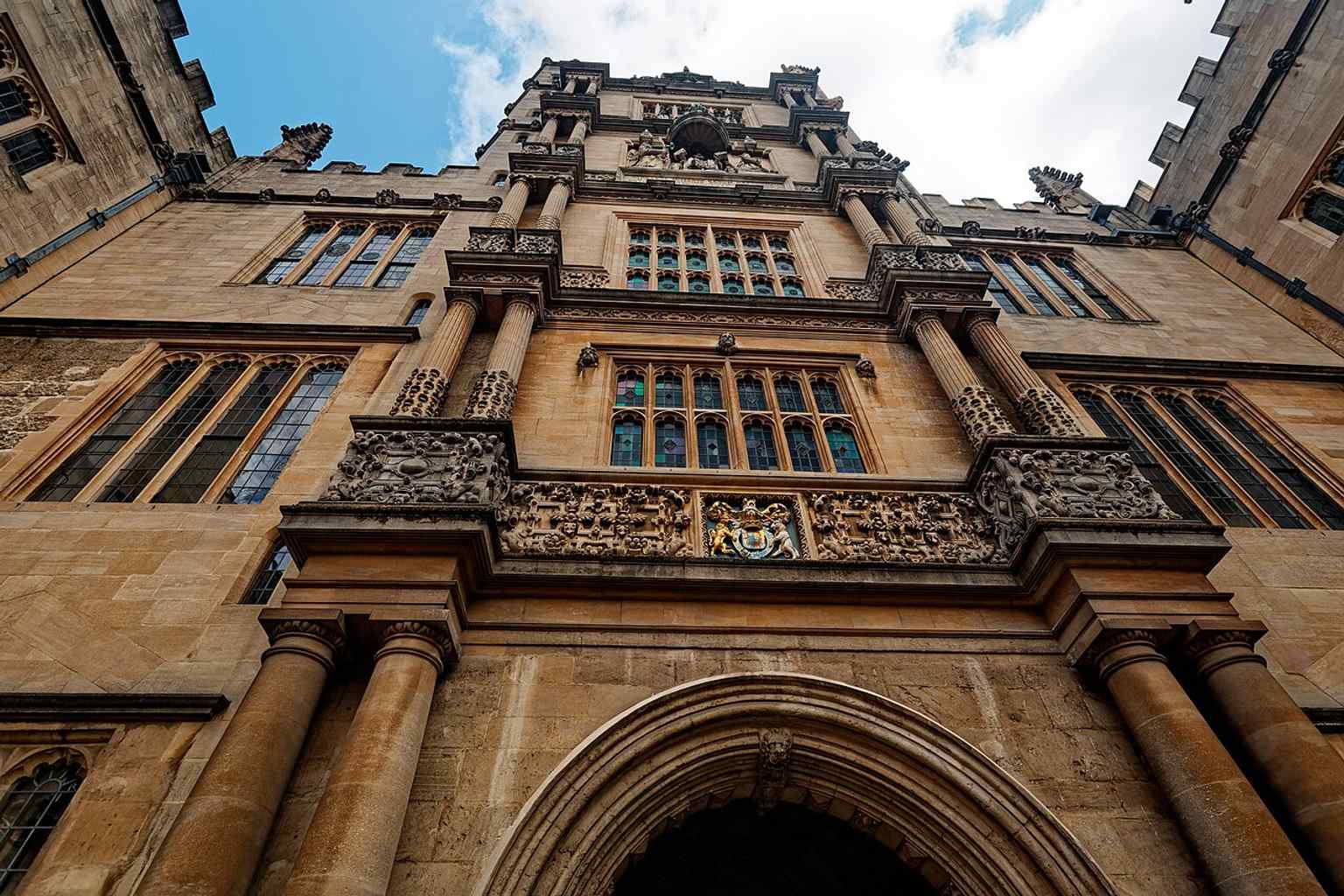
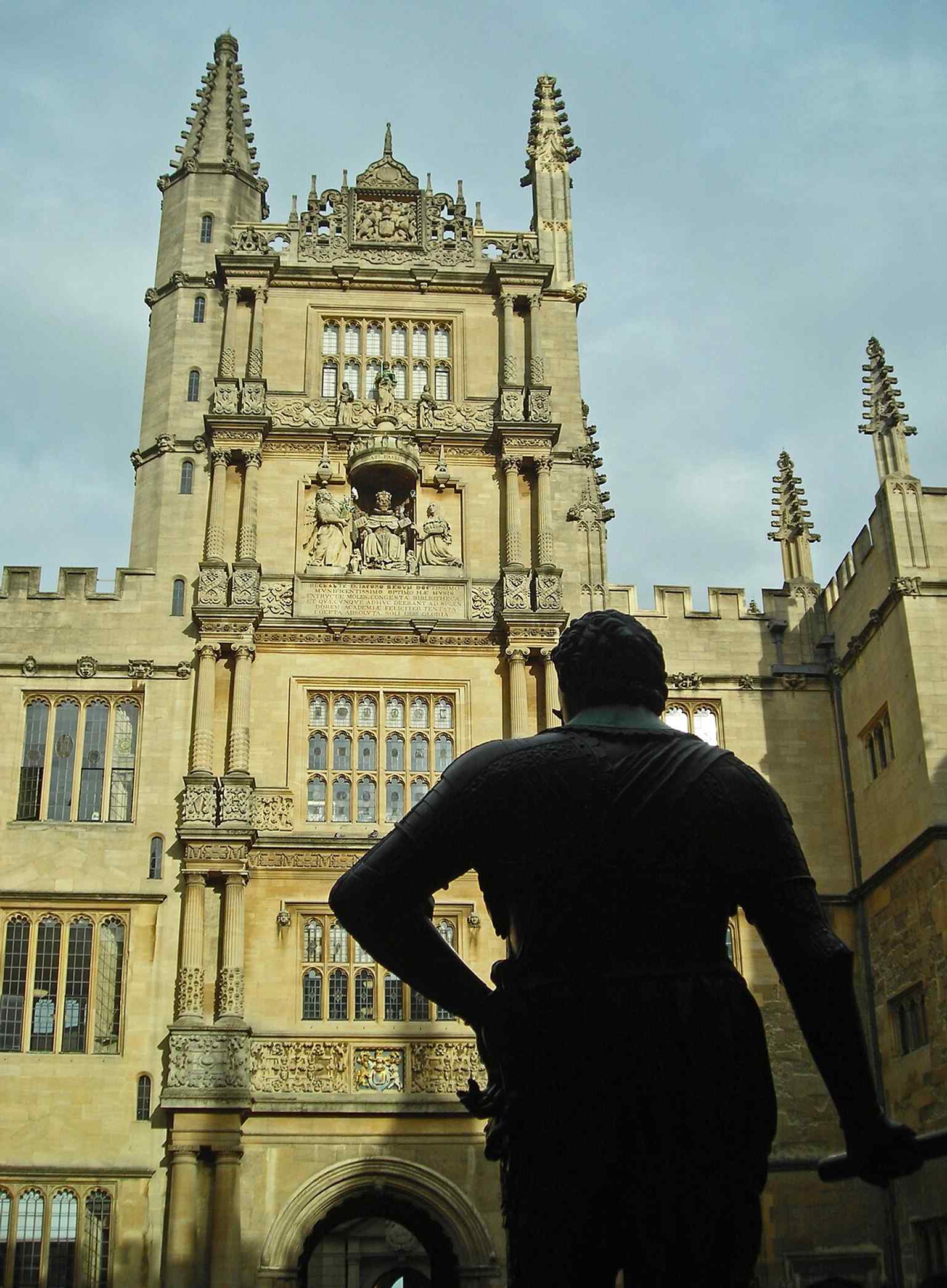
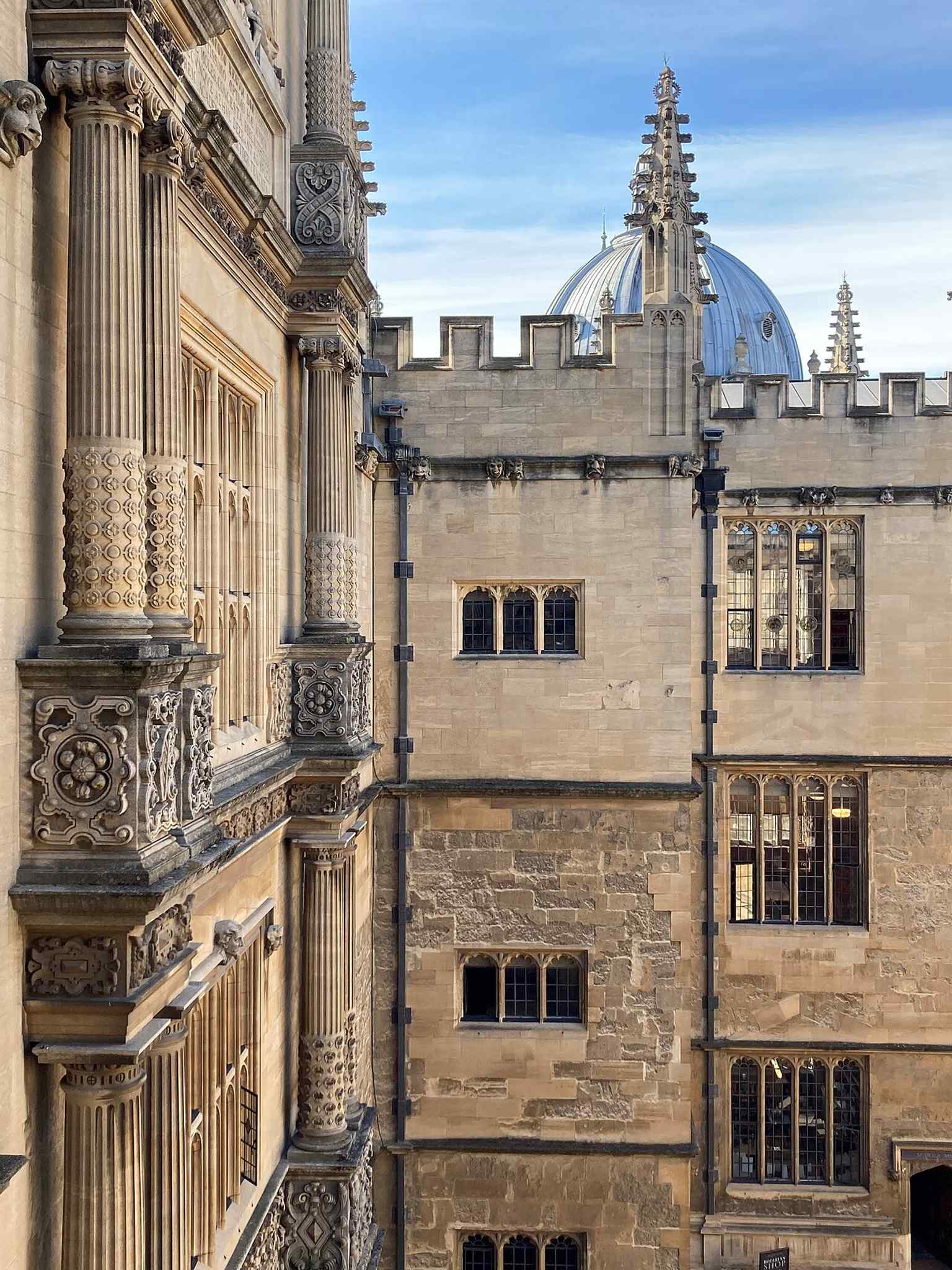
If you glance at your screen, image three shows the Tower of the Five Orders up close, with its layers of Tuscan, Doric, Ionic, Corinthian, and Composite columns stacked one above another like a stone textbook in classical architecture.
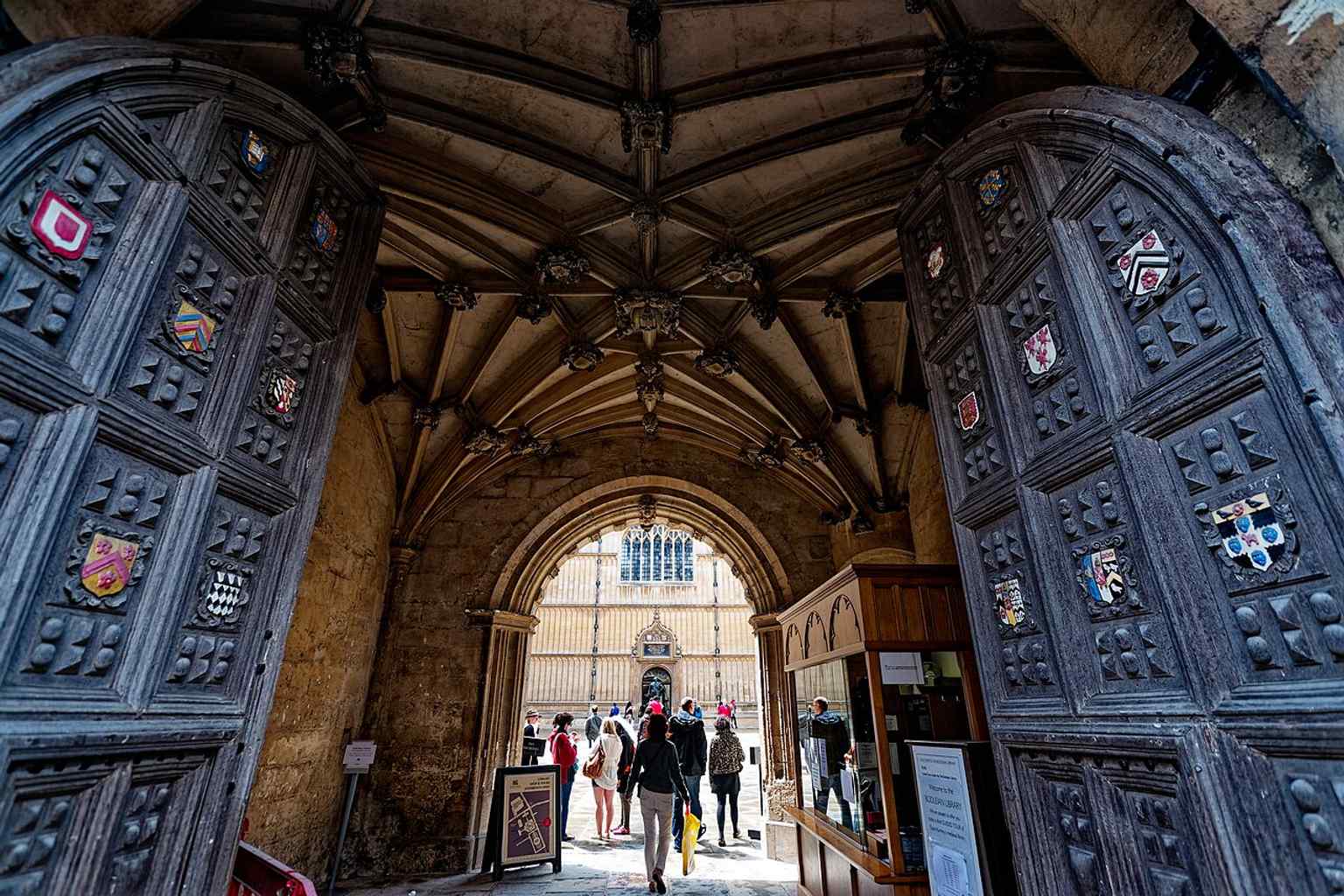
The Bodleian has rules, naturally. New readers still make a formal declaration promising not to damage the books, bring in fire, or otherwise behave like the villain in a manuscript thriller. External readers often recite it aloud, and the library keeps translations in more than one hundred languages. Also, this is mainly a reference library, which means the books stay here. The Bod, as Oxford people call it, has spent centuries learning not to trust books with travel plans.
Its treasures are almost absurdly rich: four surviving copies of Magna Carta, a Gutenberg Bible, Shakespeare’s First Folio, the first book printed in Arabic with movable type, Tolkien manuscripts, and manuscripts by Jane Austen, Kafka, Mary Shelley, and C. S. Lewis. Beneath the old buildings, tunnels and underground stacks once carried books under Broad Street by conveyor and even pneumatic tube, which is exactly the kind of wonderfully overengineered idea librarians come up with when they have too many books and not enough floor.
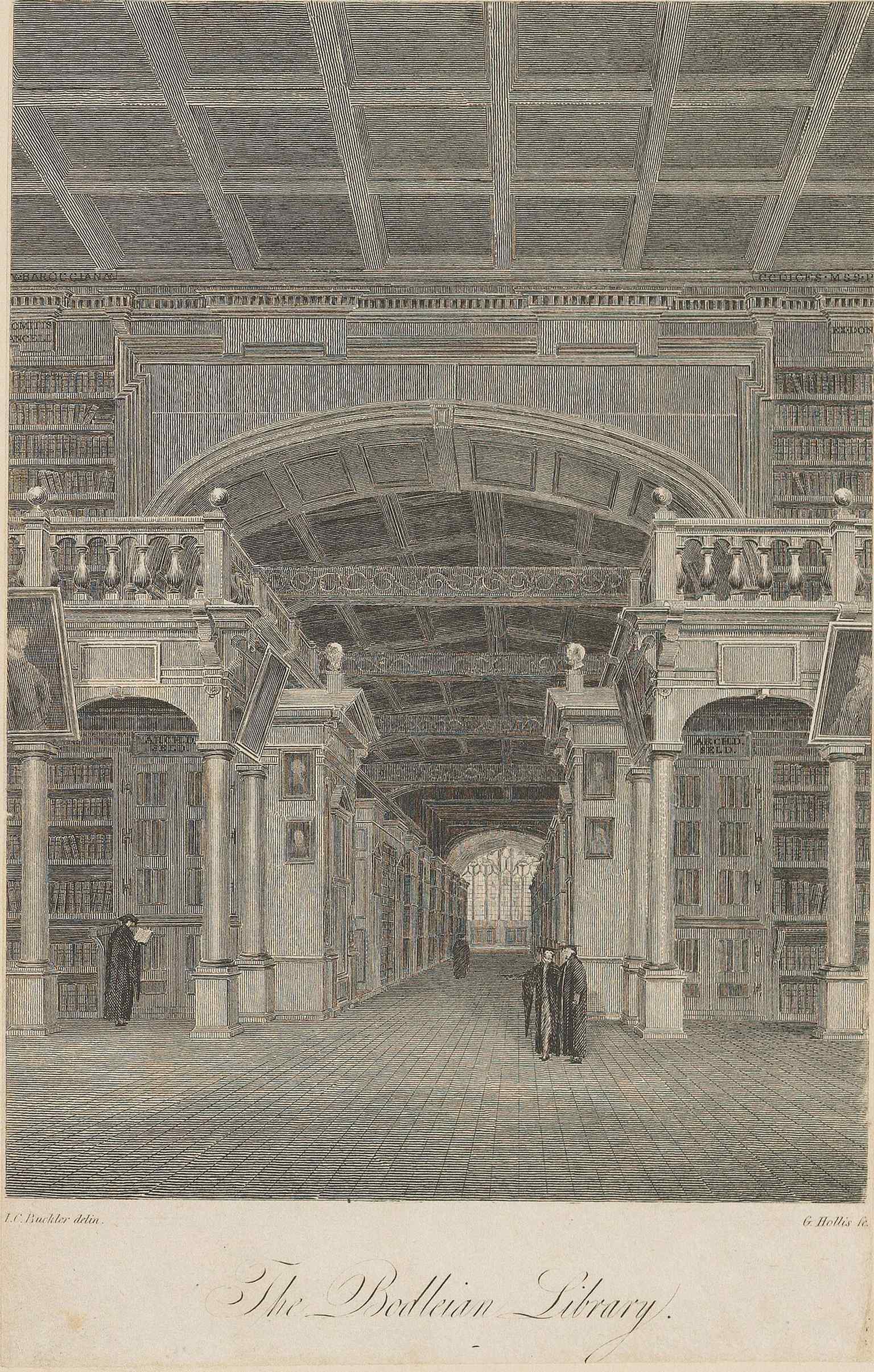
This place has changed, but not as dramatically as you might think. Have a quick look at the before-and-after image if you like... the old Schools range looks uncannily familiar across more than one hundred and seventy years.
The Bodleian turns scholarship into stone: serious, patient, and very hard to outgrow.
When you’re ready, continue to the University Church of St Mary the Virgin, where Oxford’s library story began even before Bodley reclaimed it.





%201613.jpg)

%20by%20Hubert%20Le%20Sueur.jpg)
%20by%20Hubert%20Le%20Sueur%2003%20-%20Tower%20of%20the%20Five%20Orders%20of%20Architecture%20(Tuscan%2C%20Doric%2C%20Ionic%2C%20Corinthian%2C%20Composite)%201613.jpg)


%20Bodleian%20Library%201602%20-%20(On%20the%20right)%20Clarendon%20Building%20(Oxford%20University%20Press)%201711-15%20by%20Nicholas%20Hawksmoor.jpg)
%20Bodleian%20Library.jpg)