
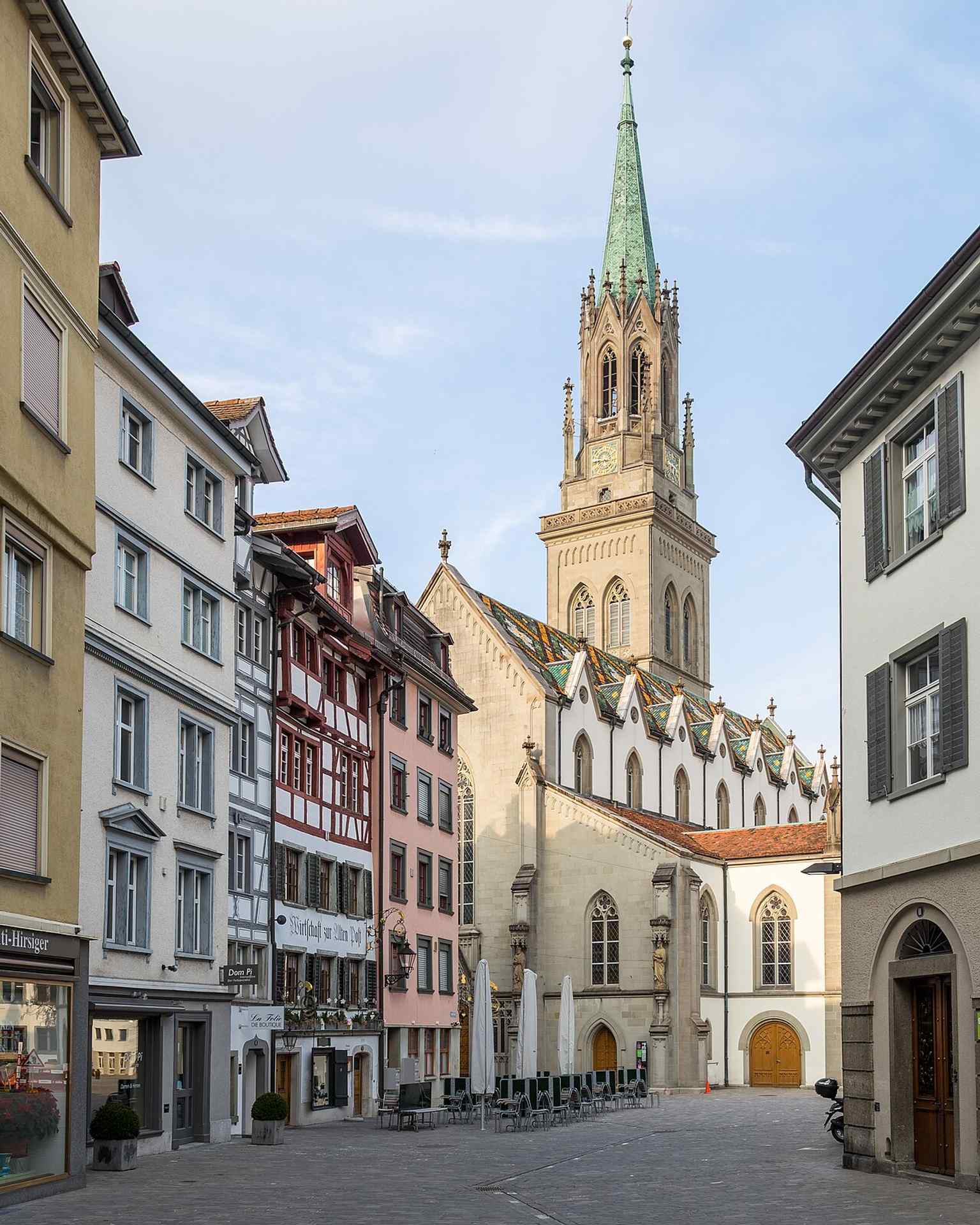
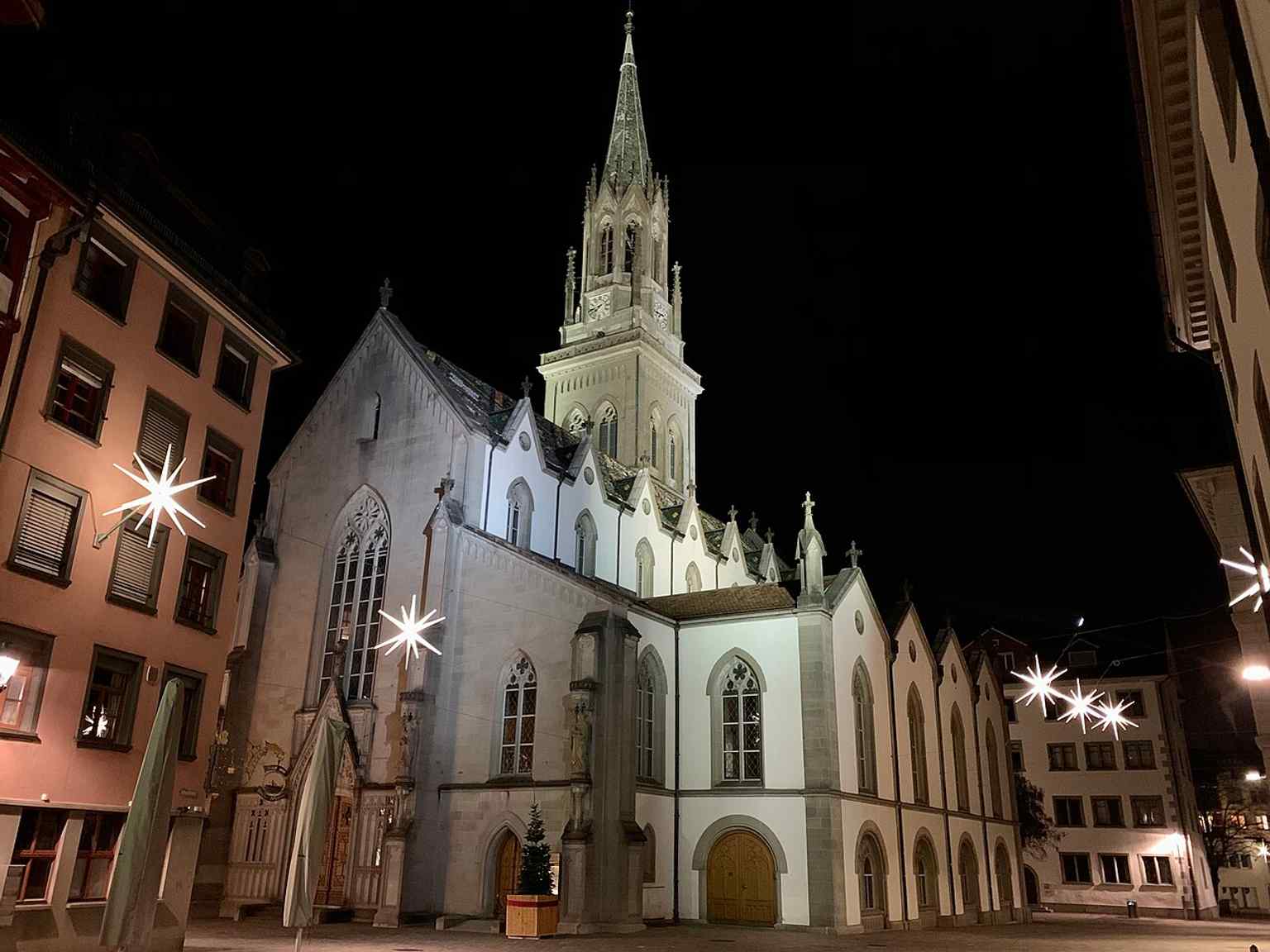
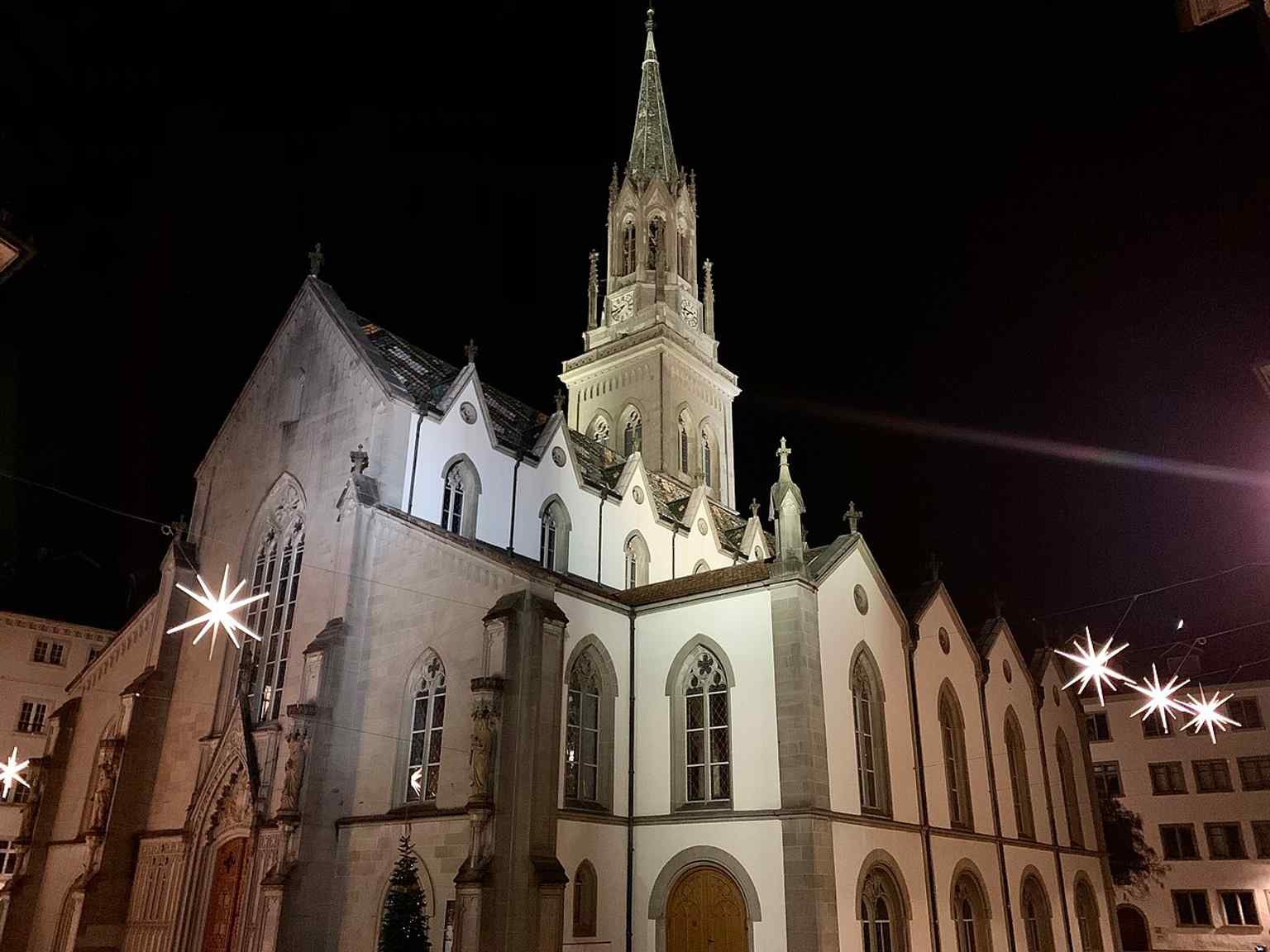
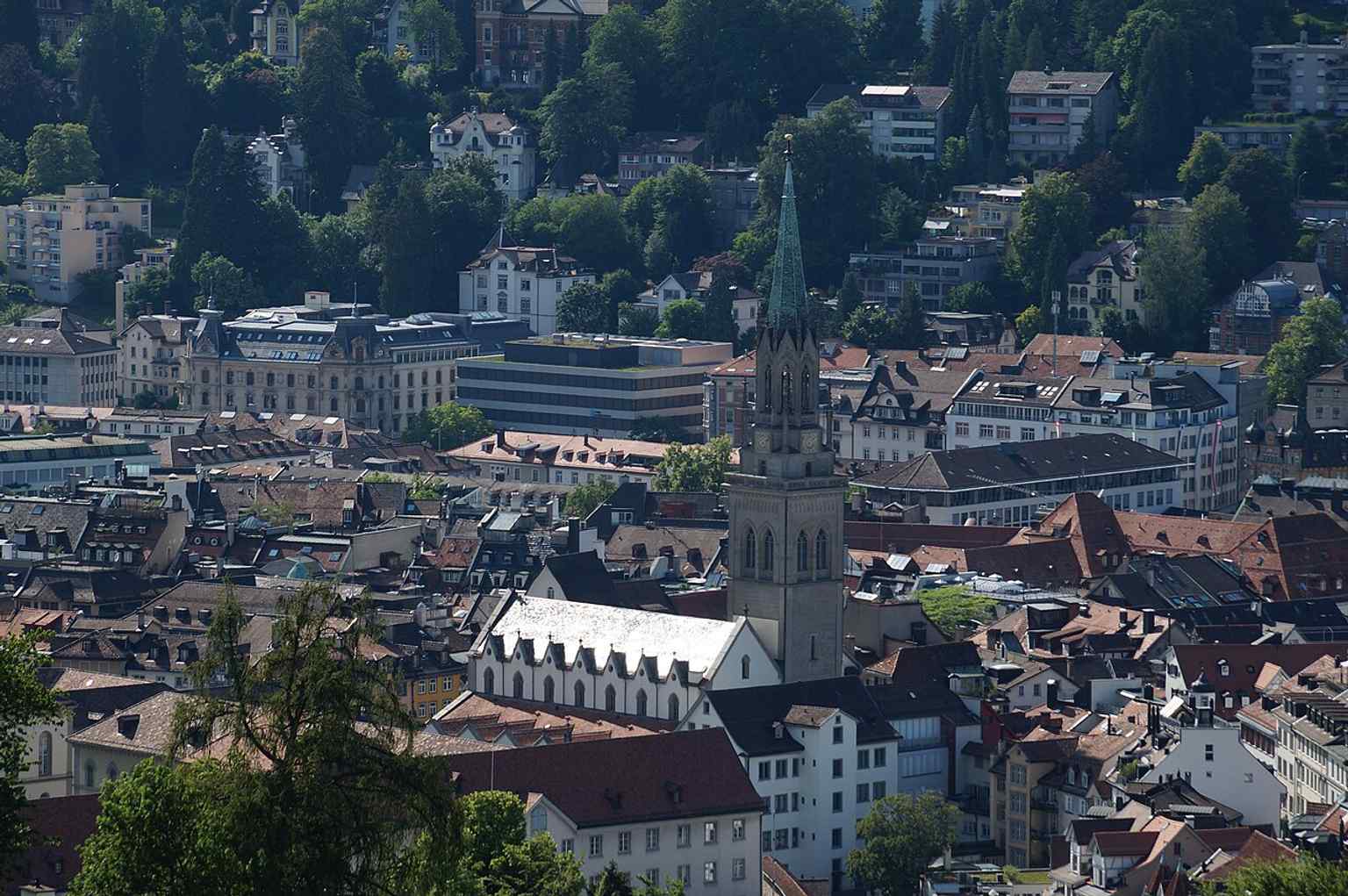
On your right, St. Laurenzen is a pale stone church with a broad stepped façade, a tall spired tower, and pointed neo-Gothic openings cut high into the bell stage.
It looks medieval enough to fool you... but much of what you’re seeing came out of a nineteenth-century rebuild. By the early eighteen hundreds, the church had become impossible to ignore in all the wrong ways: tired, worn, and badly in need of repair. In eighteen forty-five, a young architect named Johann Georg Müller drew up an ambitious restoration. He fought off rival proposals that wanted to replace the church entirely, which feels a bit like saving a family heirloom while everyone else suggests buying flat-pack furniture.
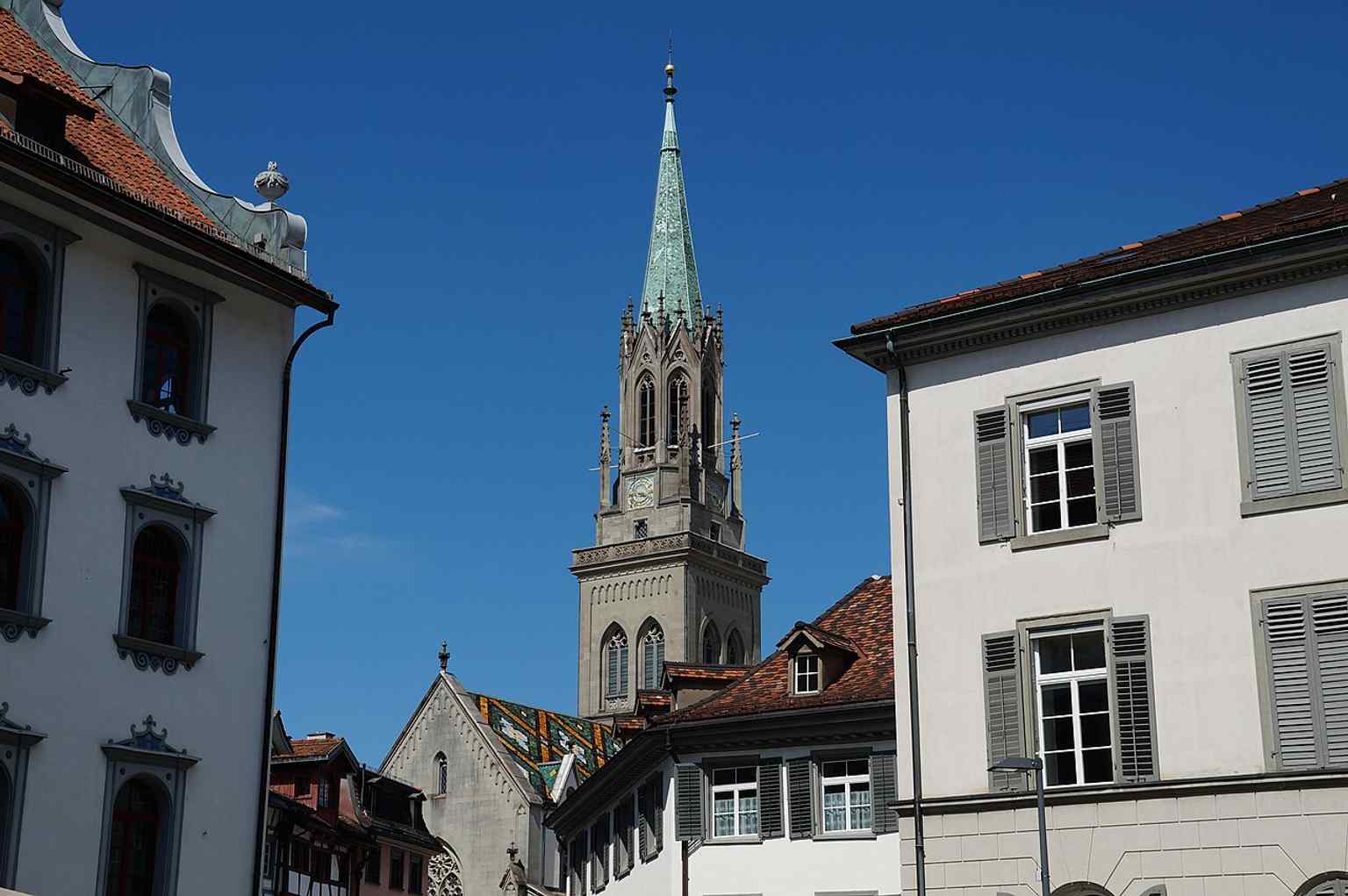
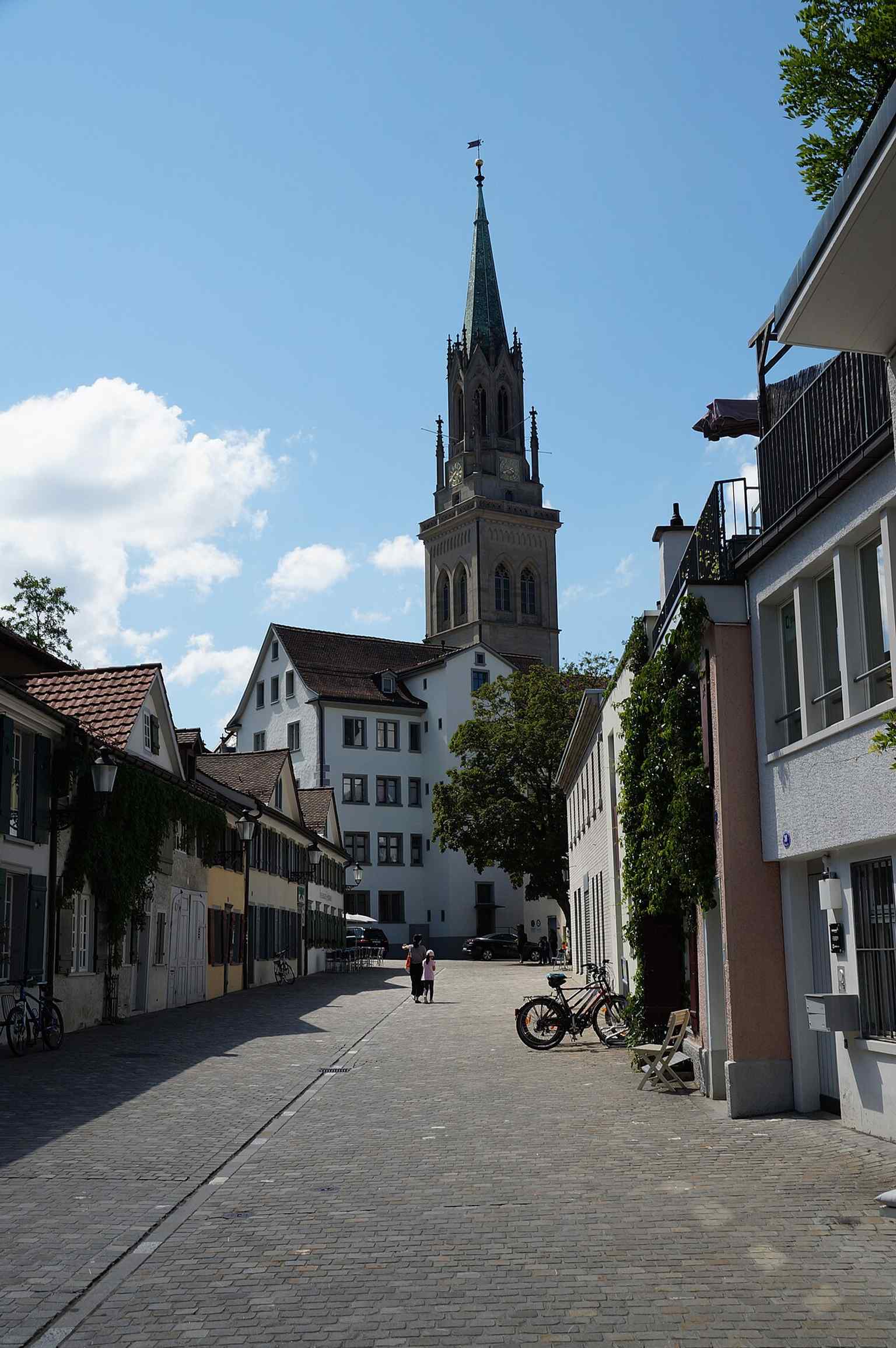
Müller cared deeply about preserving the old building, but he died in eighteen forty-nine at just twenty-seven. Johann Christoph Kunkler then carried the project through between eighteen fifty-one and eighteen fifty-four. They removed the west front completely, kept parts of the older arcades and outer walls, and rebuilt the upper part of the tower in neo-Gothic style. That means a revival of medieval Gothic forms: pointed arches, vertical lines, and a general sense that stone ought to reach for heaven. The tower you see has a square lower shaft, then an octagonal upper stage, and finally that sharp spire. If you glance at the image on your screen, you can catch those rebuilt details clearly.
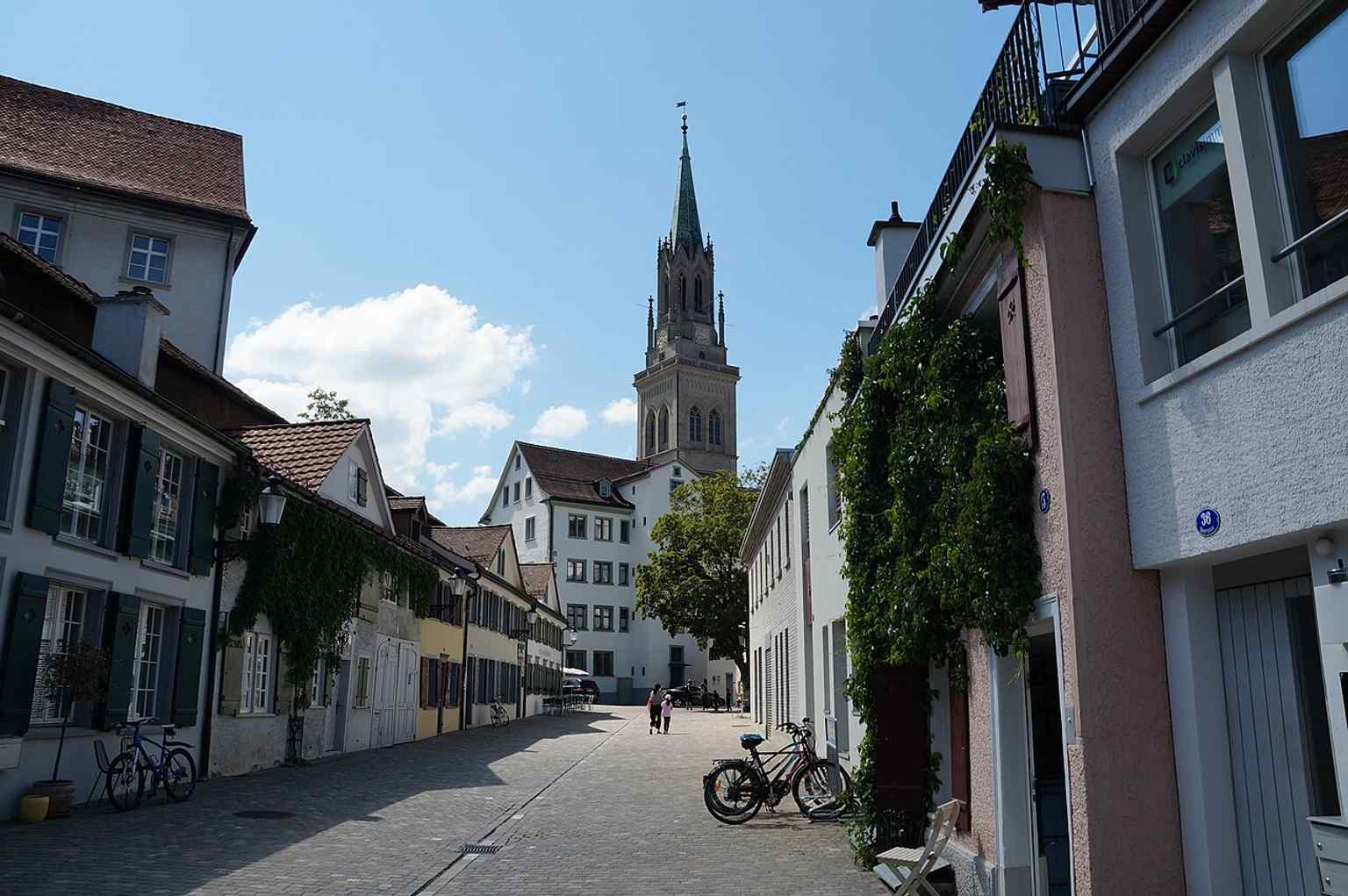
There’s a nice little historical irony here. St. Laurenzen is a Reformed Protestant church, yet it wears a Gothic style that had already gone out of fashion before the Reformation even began. So the building is Protestant by confession, medieval by costume, and nineteenth-century by major surgery.
Inside, the church is a basilica, meaning a tall central hall with lower side aisles. During the restoration from nineteen sixty-three to nineteen seventy-nine, specialists tried to recover an earlier building phase. That work led to something more startling. In nineteen seventy-six and seventy-seven, archaeologists dug beneath the floor and found traces of earlier churches, eleven graves, an ossuary - a bone box - and scattered remains from about one hundred and thirty individuals. About half were children, so scholars think this church rose over an older children’s cemetery. Some skull evidence even points toward late Roman or Celtic inhabitants, or their descendants. So beneath the sermons, hymns, and organ music, the ground had been keeping a very old memory.
And speaking of organ music: inside now sits a remarkable multi-part organ system. It grew from a nineteen seventy-nine Kuhn organ into a larger installation completed in twenty twenty-three and twenty twenty-four, with sections in different parts of the church and seventy-six registers, meaning seventy-six distinct families of sound. If you want a look inside, the interior image in the app gives you a good sense of that elevated space over the choir.
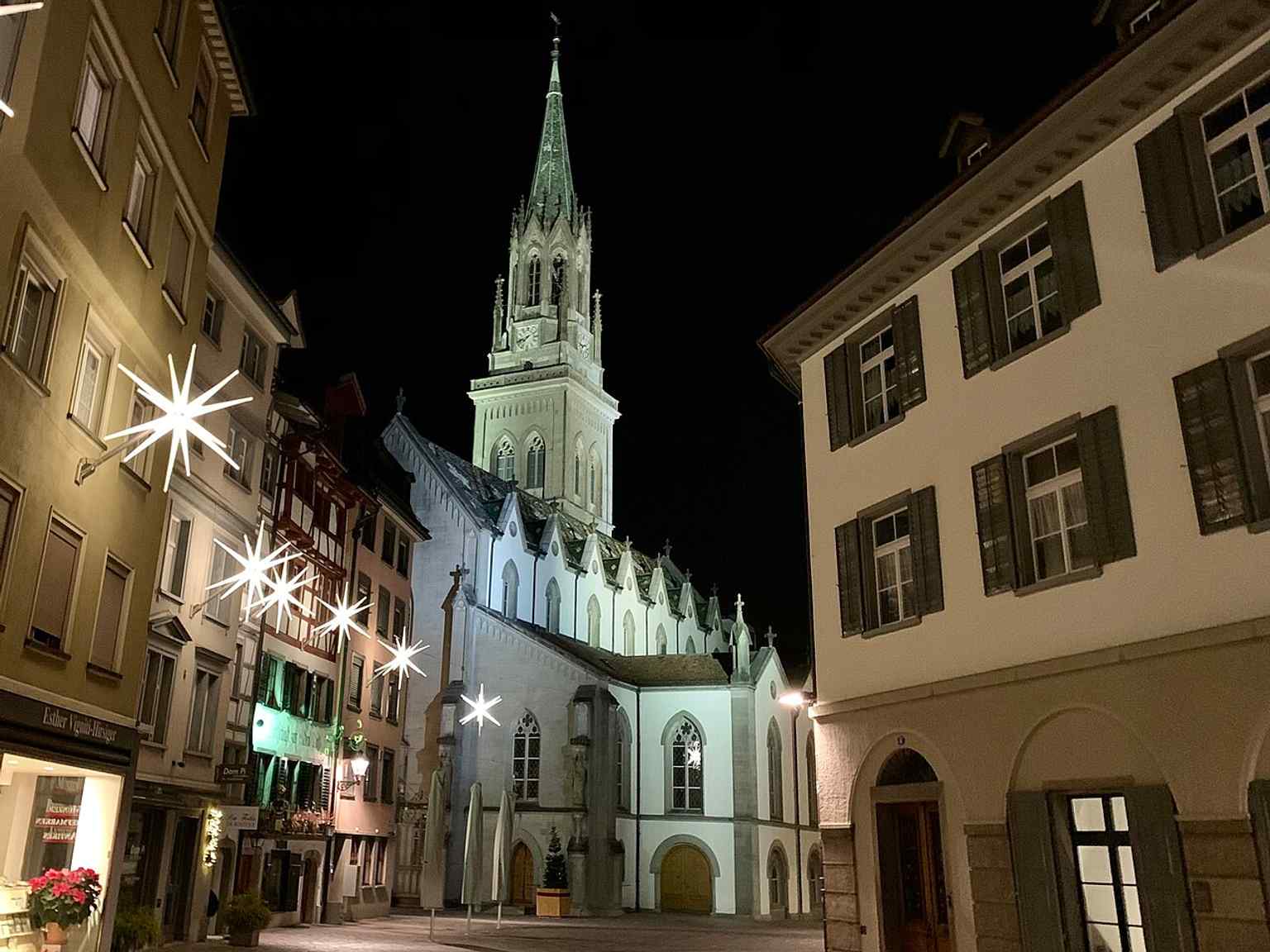
St. Laurenzen is one of those churches that quietly stacks centuries on top of each other and somehow makes the whole thing feel coherent.
Take a moment here, and when you’re ready, we can continue to St. Mangen.






%2C%20St%20Gallen%2C%20Switzerland%20(%20Ank%20Kumar%20)%2001.jpg)


%2C%20St%20Gallen%2C%20Switzerland%20(%20Ank%20Kumar%20)%2002.jpg)
%2C%20St%20Gallen%2C%20Switzerland%20(%20Ank%20Kumar%20)%2003.jpg)
