
Standing here, you’re in a city that began with one monk and an unlikely patch of ground. Around the year six hundred twelve, Gallus, an Irish wandering monk, settled beside the upper Steinach and built a hermit’s cell. A little later, around seven hundred nineteen or seven hundred twenty, people founded the monastery that turned his lonely retreat into a lasting settlement. By the tenth century, it had grown into a town, and in eleven eighty St. Gallen became a Free Imperial City of the Holy Roman Empire. Not bad for what started as a spiritual off-grid experiment.
The city still carries Gallus in its name, which is why people call it the Gallusstadt. Even the spelling has a slightly Swiss flavor of precision: the city administration writes the name without a space after “Saint,” while formal spelling rules would rather see one there. Civilization, as you can tell, rests on standards.
What really shapes St. Gallen, though, is the land under your feet. The city sits around seven hundred meters above sea level, making it one of the higher cities in Switzerland. It stretches through a broad valley between the Rosenberg to the north and the Freudenberg to the south. If you glance at the image on your screen, you can see that landscape beautifully from above, with the city spilling across the slopes and Lake Constance in the distance. That steep terrain gave St. Gallen one of its best nicknames: the city of a thousand stairs.
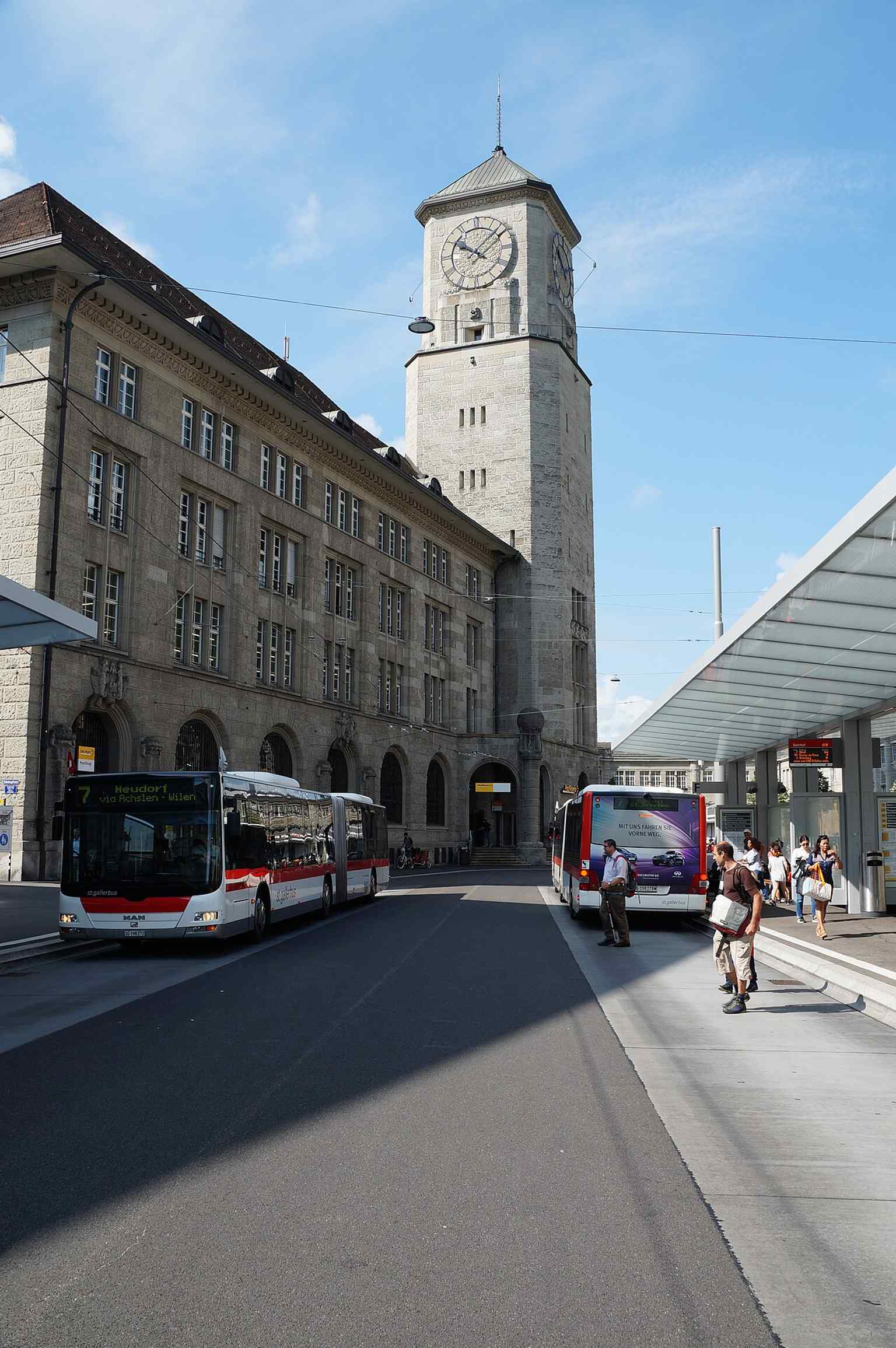
There’s also more water here than meets the eye. The Steinach still runs through the city, but much of it now flows underground in a channel, hidden from view. Another stream, the Irabach, disappeared from maps after engineers buried it; before that, it flooded the station in nineteen oh four. And because much of the center sits on unstable peat with a lot of groundwater, builders supported major buildings, including the station and main post office, on oak piles. So yes, parts of St. Gallen stand on timber foundations... which is impressive, and just a little unsettling if you think about it too long.
St. Gallen’s power came first from religion, then from textiles. The abbey gave the city its start, but embroidery made it wealthy. St. Gallen lace and embroidery became famous far beyond Switzerland, and that trade drove its rise as an economic center. It also left the city vulnerable: textile crises brought real hardship, including famine in eighteen sixteen and a major decline after the nineteen thirties, when thirteen thousand residents left.
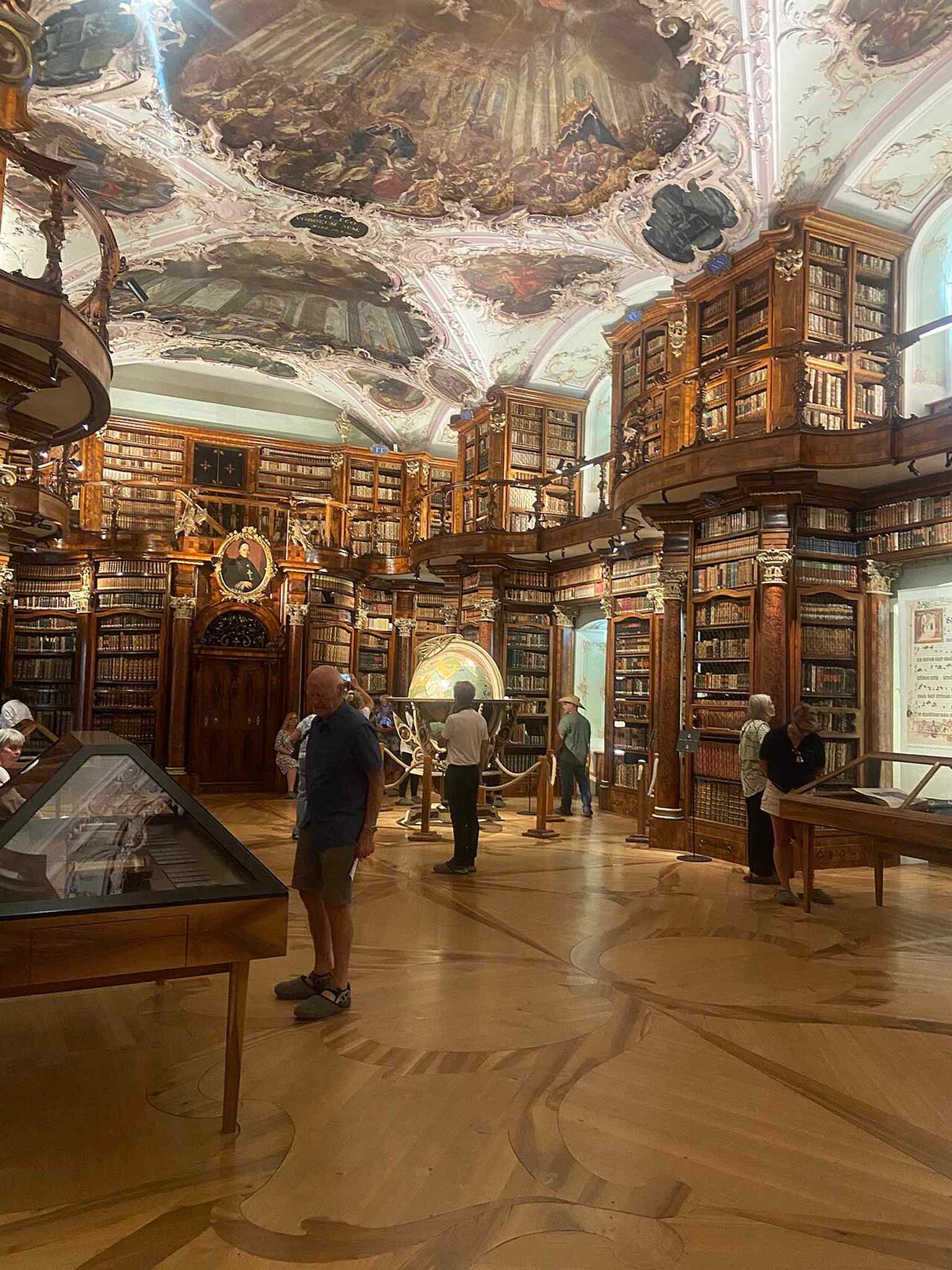
On your phone, the abbey complex in the UNESCO World Heritage site shows the seed from which the whole city grew. But modern St. Gallen is broader than its monastic heart. It’s the cultural and economic capital of eastern Switzerland, a railway hub, a gateway to Appenzell, home to the University of St. Gallen and the Federal Administrative Court, and still green around the edges, with nearly a third of its area used for agriculture.
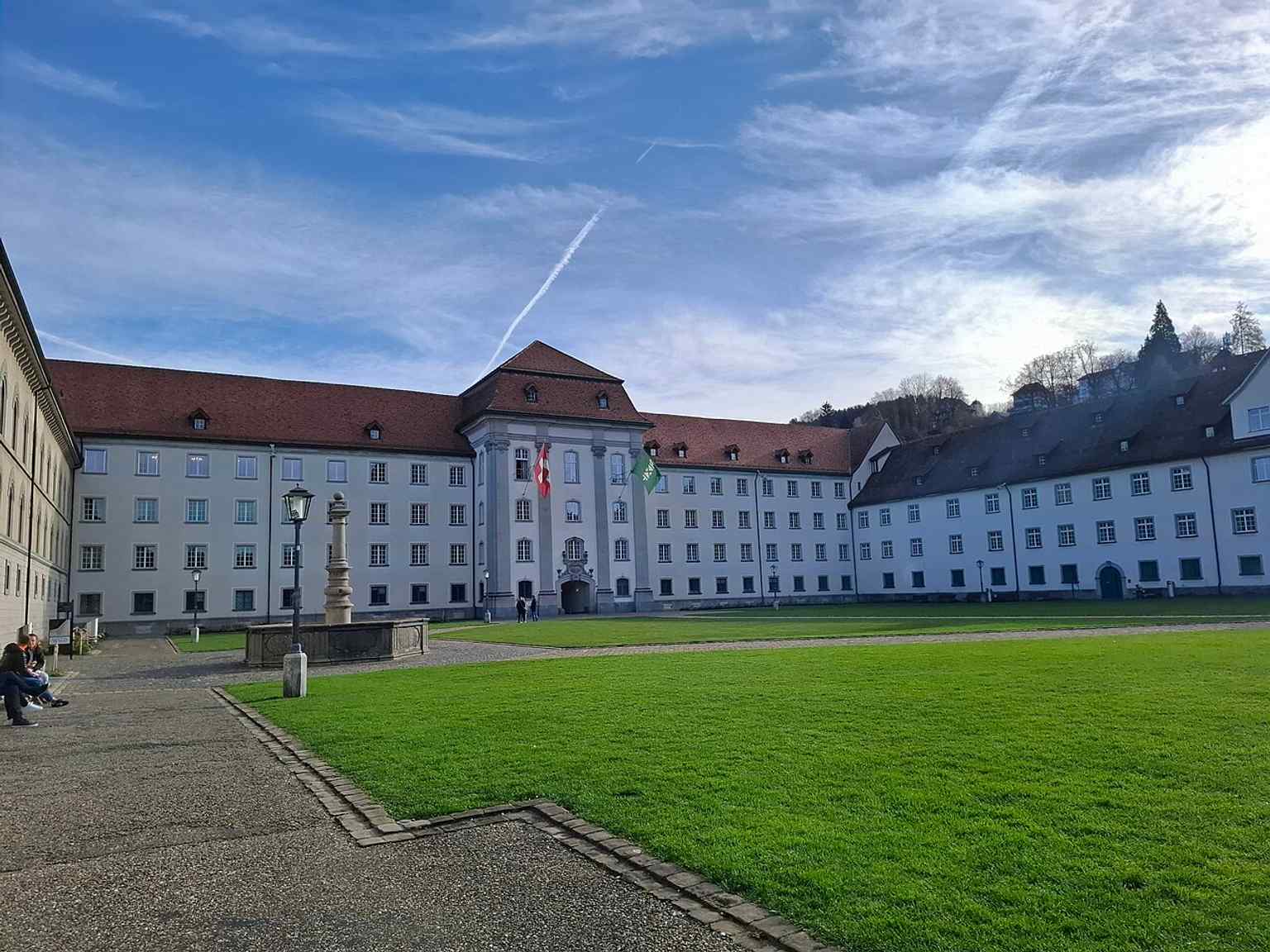
St. Gallen is a city of monks, merchants, hidden rivers, and stubborn reinvention.
Take a moment here, and when you’re ready, we can continue to St. Laurenzen.





%20St.%20Gallen.jpg)

.jpg)
.jpg)
.jpg)


