
On your left, look for the pale stone Baroque church with its broad curved front, twin towers rising high above it, and the little onion-shaped lantern crowning the gable.
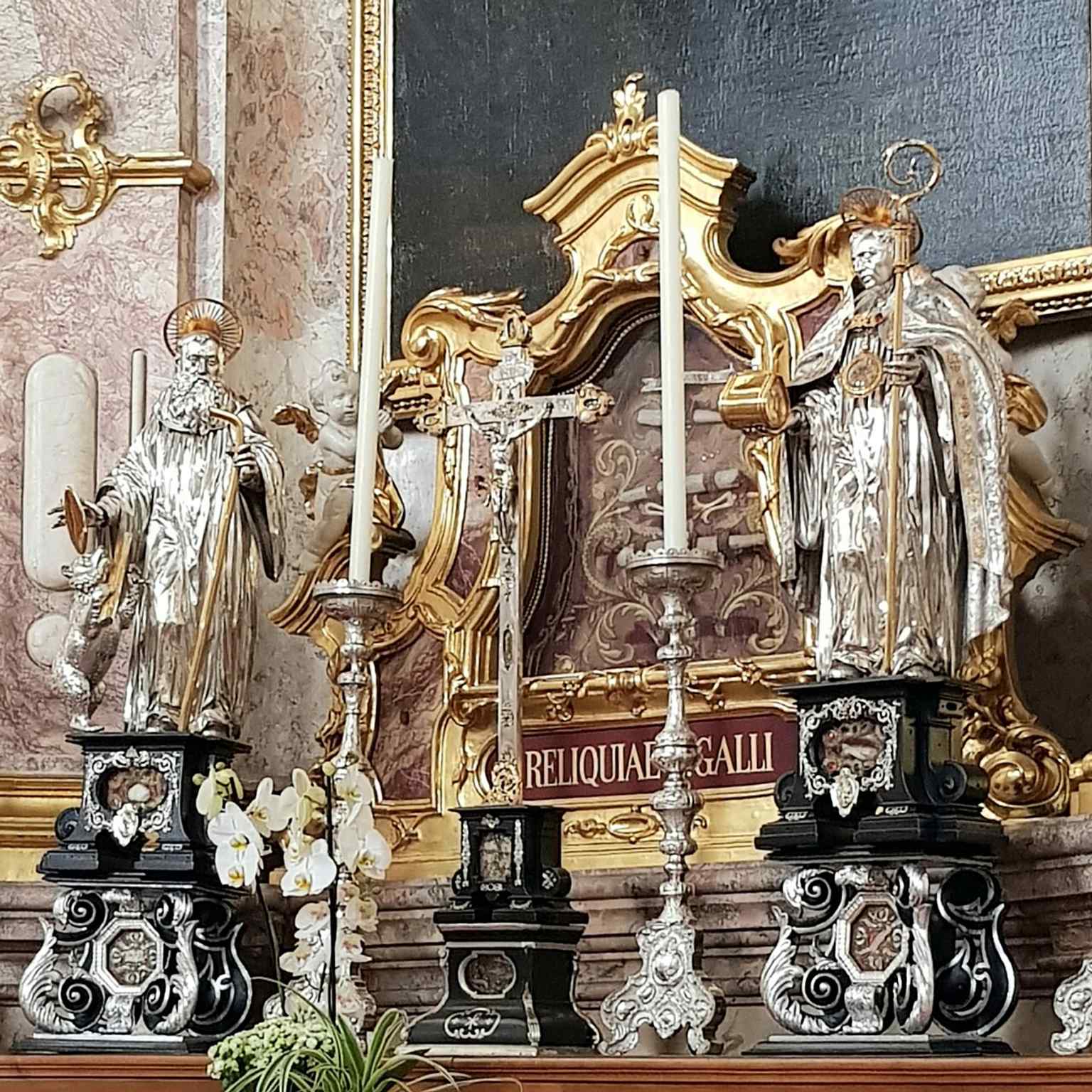
This is the Collegiate Church of Saint Gallus and Otmar, later the cathedral of Saint Gallen... a building with the confidence of an empire and the backstory of a monk’s cell. The church you see now belongs mostly to the mid eighteenth century, but the story starts much earlier, around the grave of Gallus, the Irish missionary whose name the city still carries.
Around the year seven twenty, Abbot Otmar reorganized the little religious community here and turned it into a proper monastery. Stone buildings went up, including an early church with three aisles and a crypt, which is an underground sacred chamber. Archaeologists, digging here in the nineteen sixties, found carved sandstone pieces from that early world... two hundred and sixty-six of them. Some even carried holes from later reuse, where workers had hooked in lifting tongs after a fire in fourteen eighteen damaged the choir. Medieval thrift, in stone.
One of the great ideas born here was the Saint Gallen monastery plan, drawn in the Carolingian age, around the early ninth century. It is famous because it shows, for the first time in Europe, a separate building for a library and a writing workshop. Not bad for a monastery that began as a remote spiritual outpost. The monks clearly believed prayer and paperwork could live quite happily together.
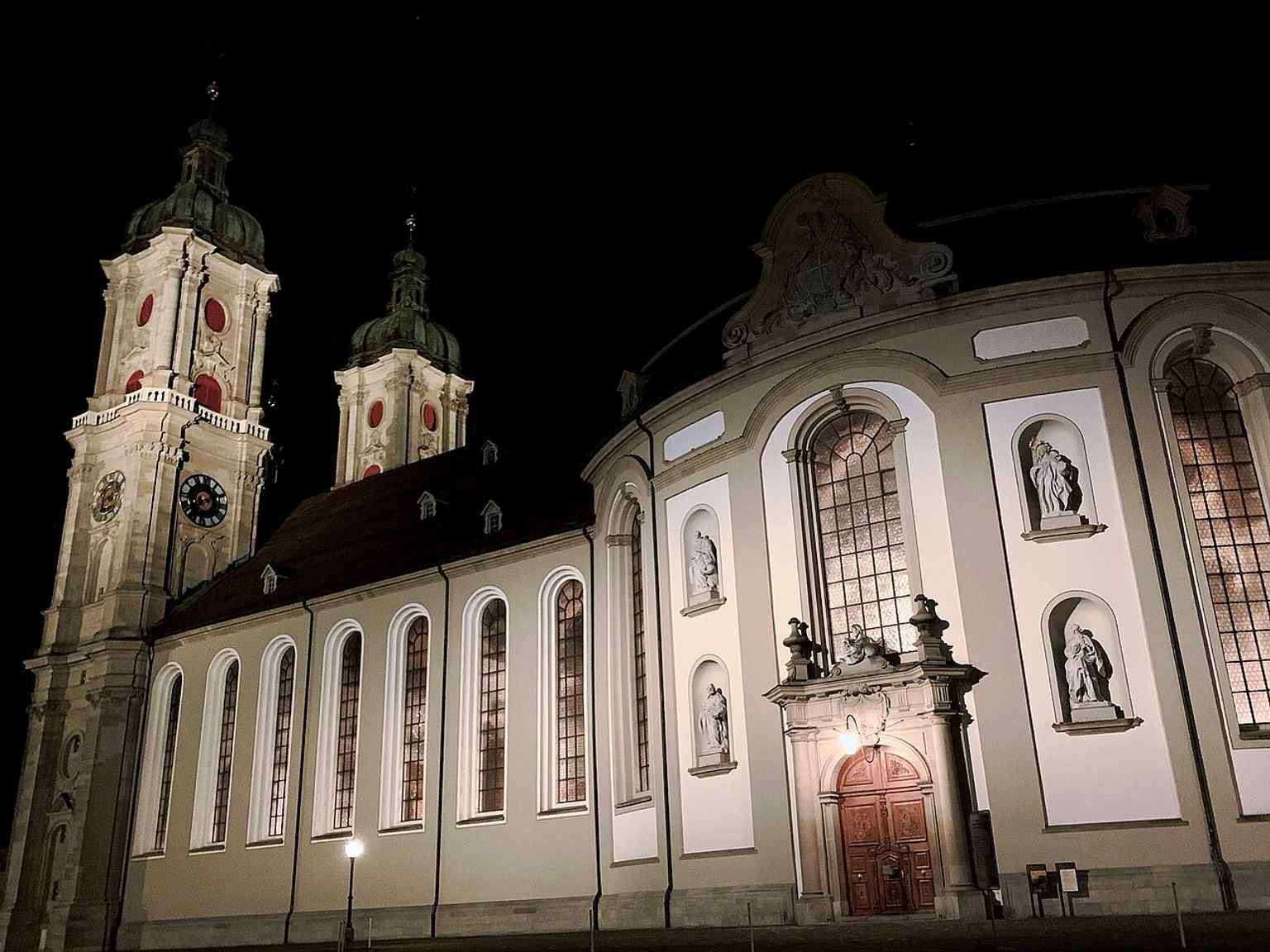
By the seventeen hundreds, the old abbey church had become dangerously worn out, so the abbots decided on a full rebuild. Peter Thumb took charge of the main body between seventeen fifty-five and seventeen fifty-seven, using plans connected to Gabriel Loser and Johann Caspar Bagnato. Later, Johann Michael Beer oversaw the new choir, and by seventeen sixty-six the twin towers were finished. If you glance at the app’s wide exterior image, you can see how this church anchors the whole abbey district.
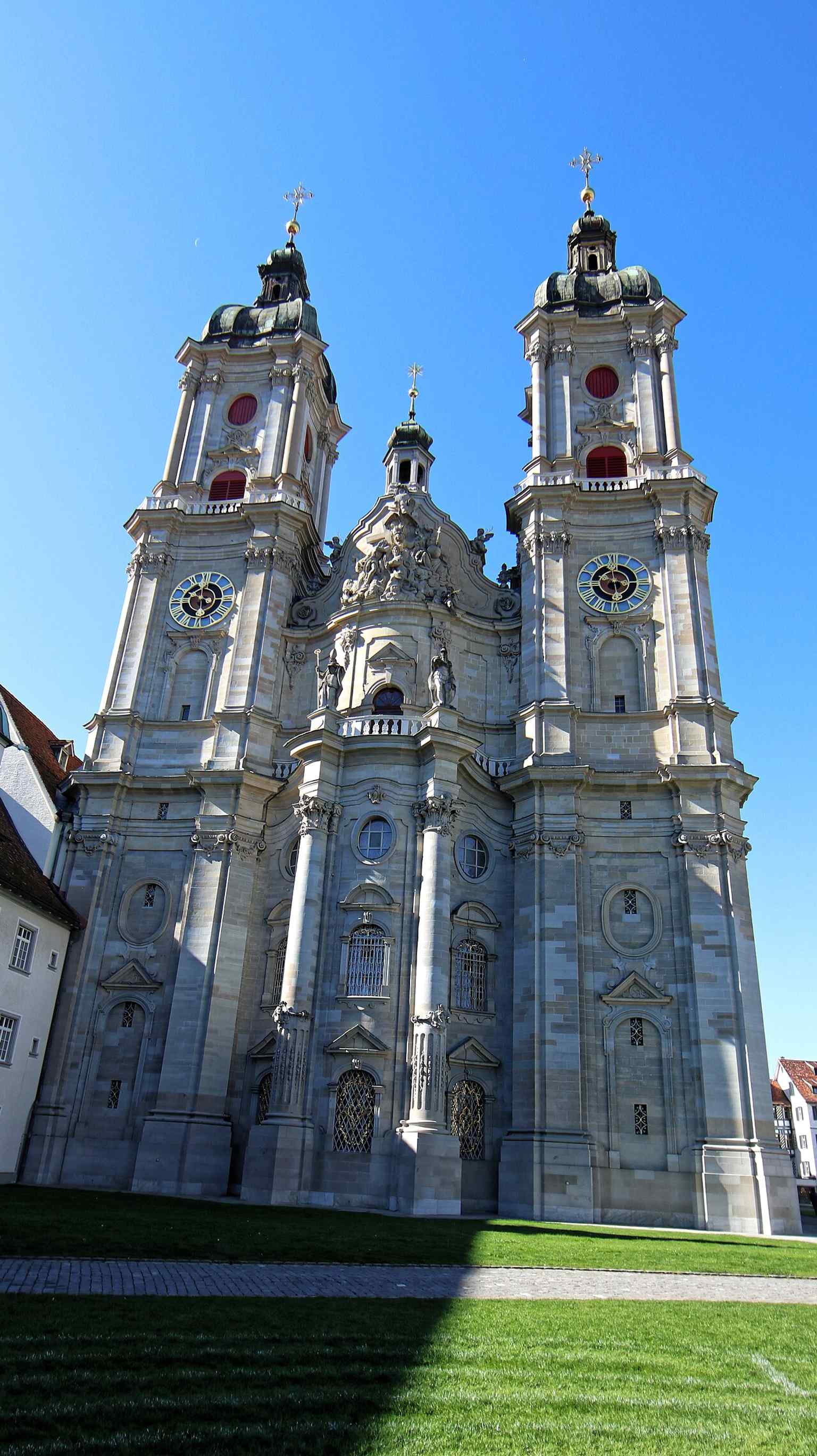
The result is one of the last great sacred buildings of the late Baroque, and it knows it. Those towers rise about sixty-eight meters, with clock faces, layered pilasters - shallow decorative columns - and a façade that pushes forward in the center like it is making a polite but firm point. This whole district entered the UNESCO, the United Nations Educational, Scientific and Cultural Organization, World Heritage list in nineteen eighty-three.
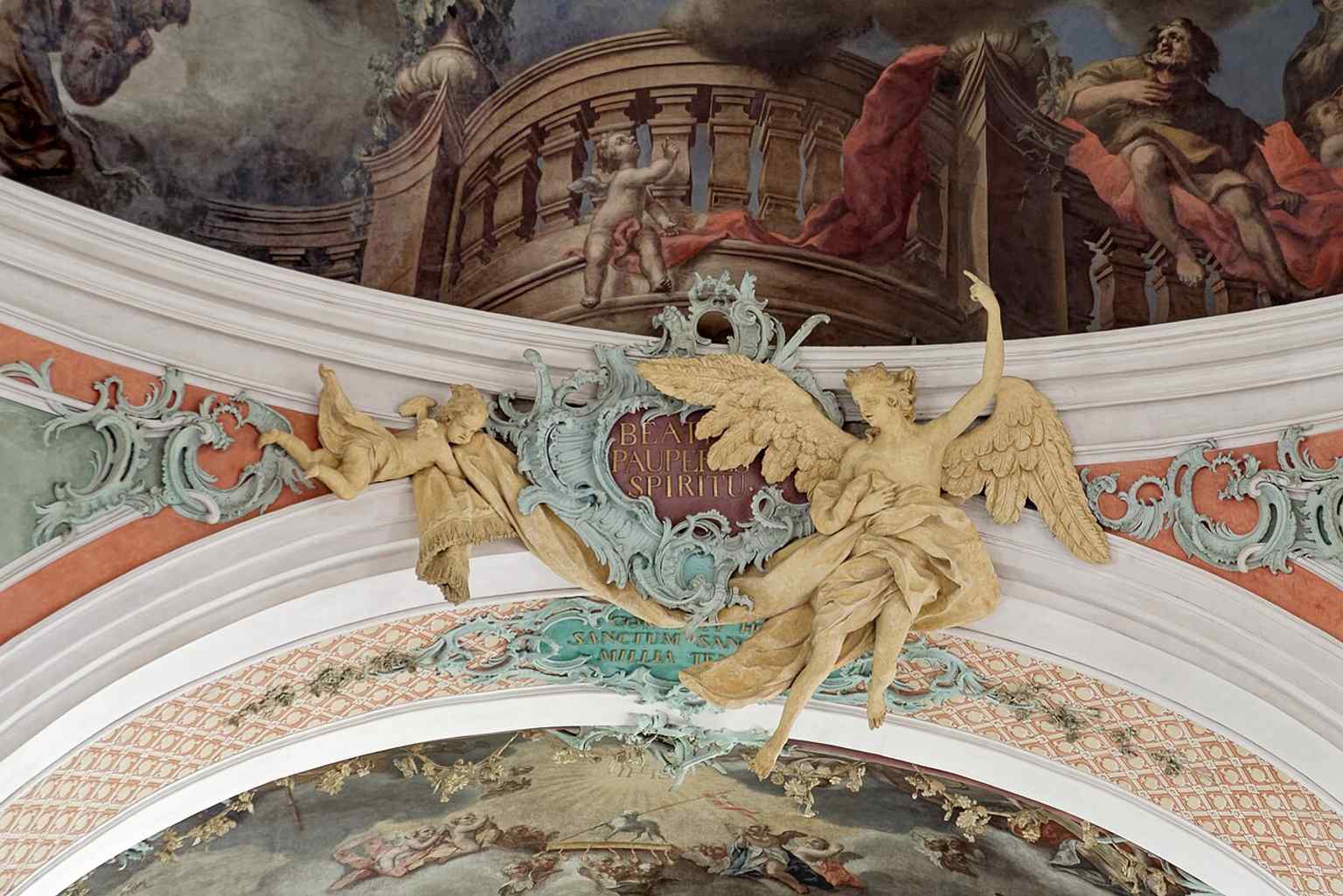
Inside, the church gets even more theatrical. On your screen, the interior view shows the nave, the main hall, opening into a rounded central space called a rotunda. Johann Christian Wentzinger shaped much of the decoration, and Joseph Wannenmacher filled the ceilings with frescoes. The design is brilliant, though the ambitious dome needed repairs almost immediately after completion. Even holy architecture, it turns out, is not immune to engineering optimism.
And since eighteen forty-seven, this former abbey church has served as the cathedral of the independent diocese of Saint Gallen, while still keeping the memory of Gallus and Otmar at its core.
If you want to go inside later, the church is generally open daily from seven in the morning to six in the evening.
This is the place where Saint Gallen turned a monastic beginning into a monument.
When you’re ready, we can head on to the Abbey Library.






%2001.jpg)

