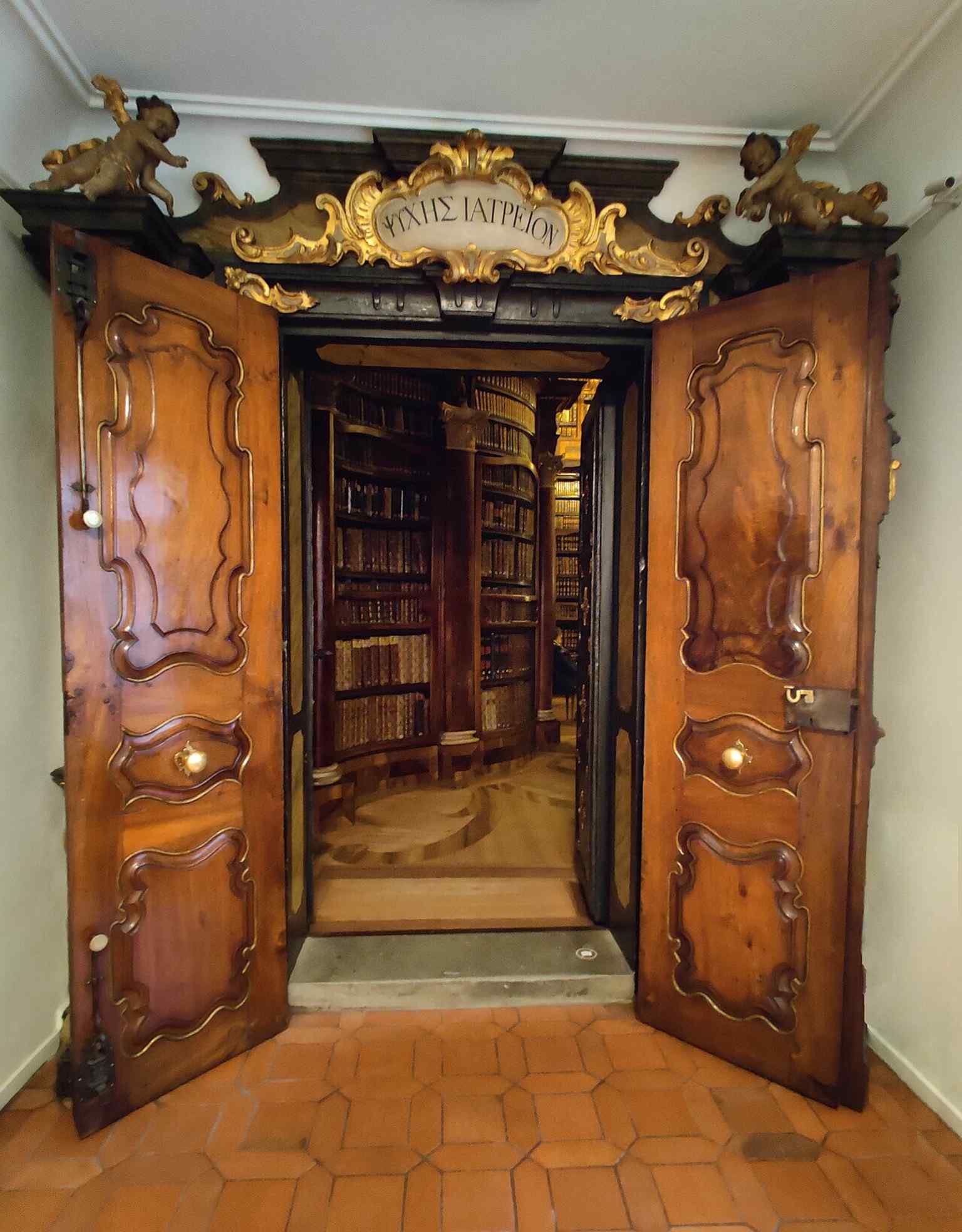
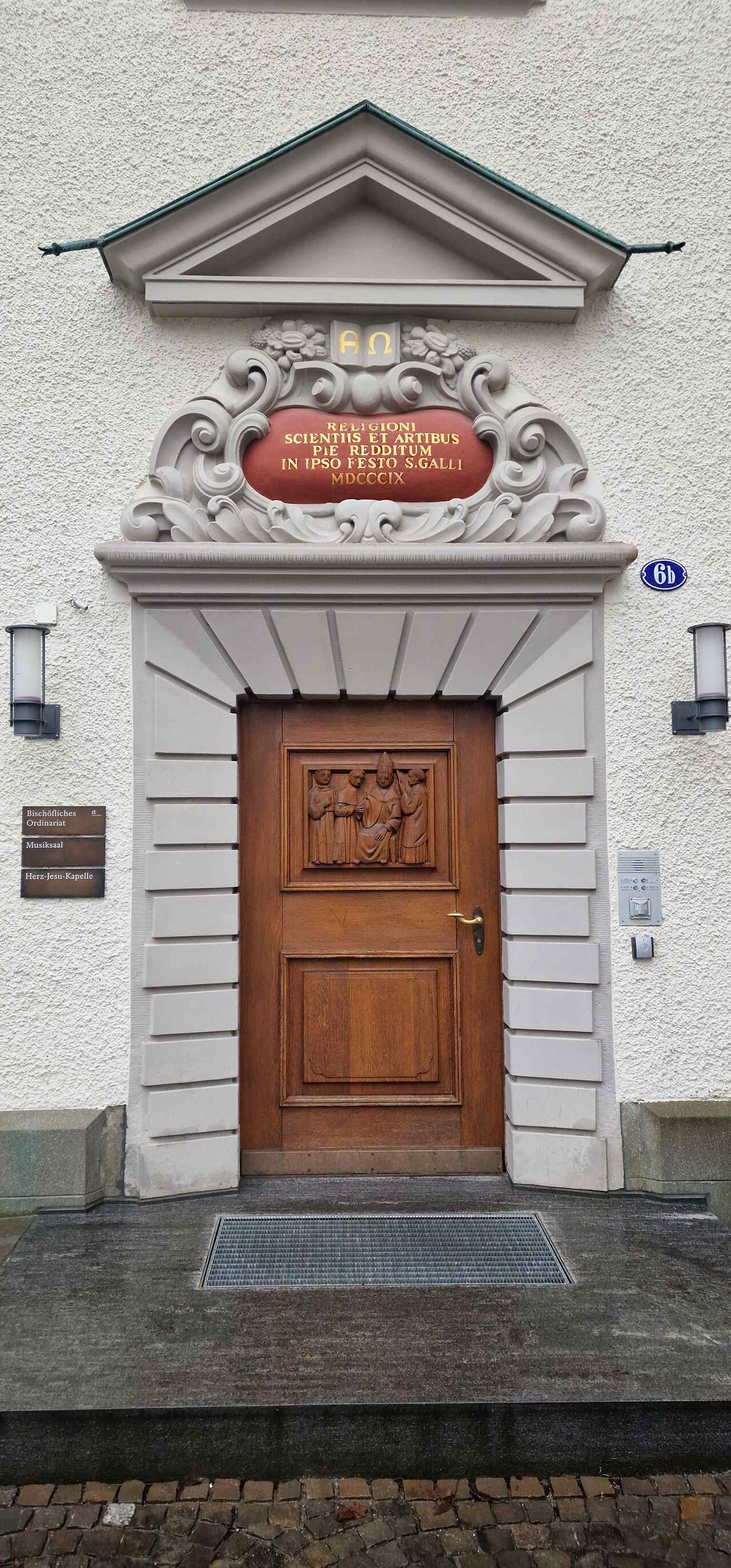
On your left, look for a pale stone Baroque portal set into a gently curved facade, framed by columns and topped with the Greek inscription above the doorway.
That inscription reads Psyches Iatreion... “healing place of the soul,” or, more charmingly, a pharmacy for the spirit. Not a bad slogan for one of the world’s great historic libraries.
This place grew out of the little religious cell that the Irish monk Gallus founded here around the year six hundred twelve. Later, Abbot Otmar turned that settlement into a Benedictine abbey, and the monks began building a serious library. They copied books in a scriptorium - basically the monastery’s writing workshop - and, remarkably, the core of that collection stayed together. That almost never happened. St. Gallen still holds around two thousand one hundred manuscripts, plus a vast collection of early printed books and later volumes.
Its survival took real nerve. In nine hundred twenty-six, the recluse Wiborada warned the monks that Hungarian raiders were coming. They carried the manuscripts to safety on the island of Reichenau. Wiborada refused to leave her cell near St. Mangen. The attackers climbed in through her roof and killed her with axe blows. Because the books survived, she later became the first woman formally canonized by a pope, in ten forty-seven, and she is still the patron saint of libraries and book lovers. Tough company for anyone who returns a book late.
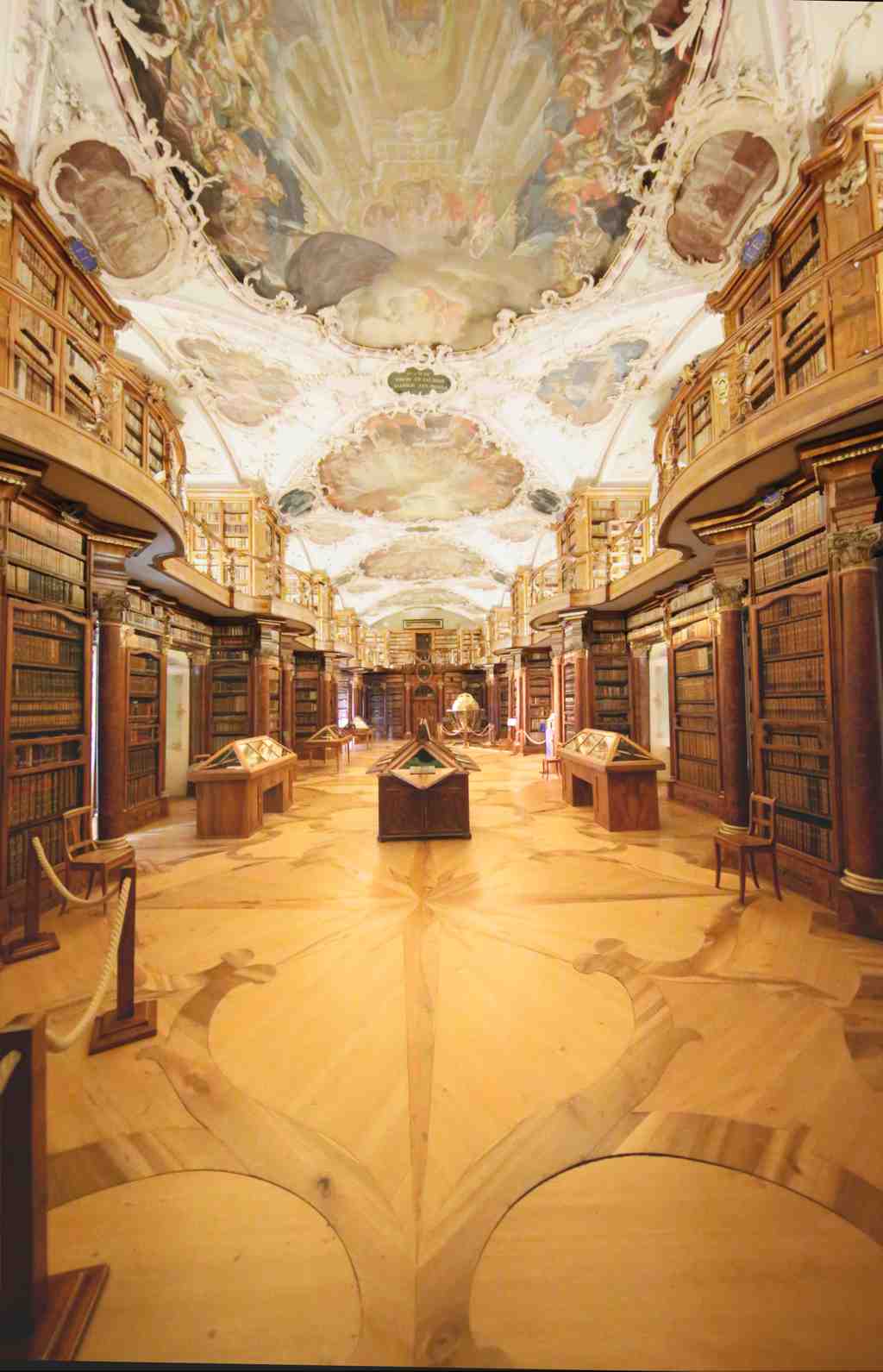
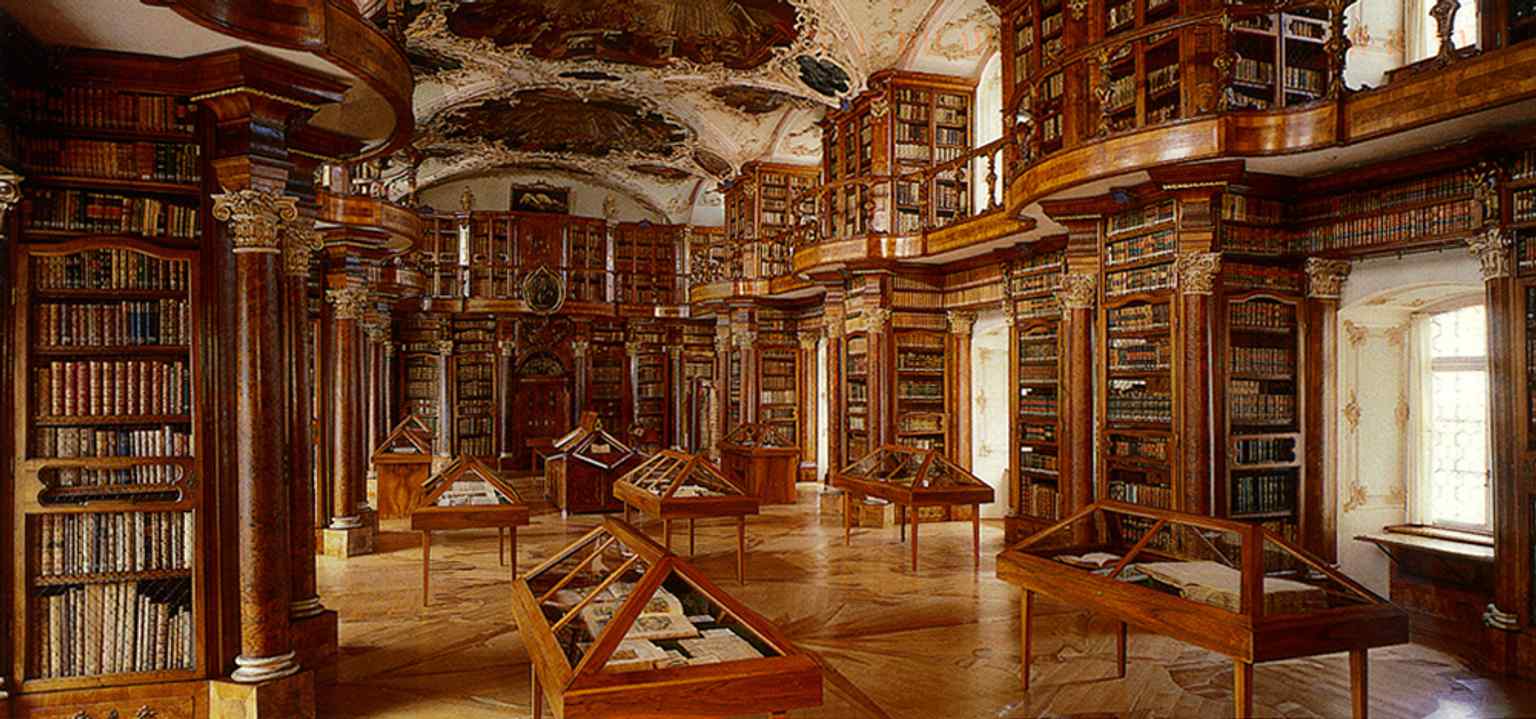
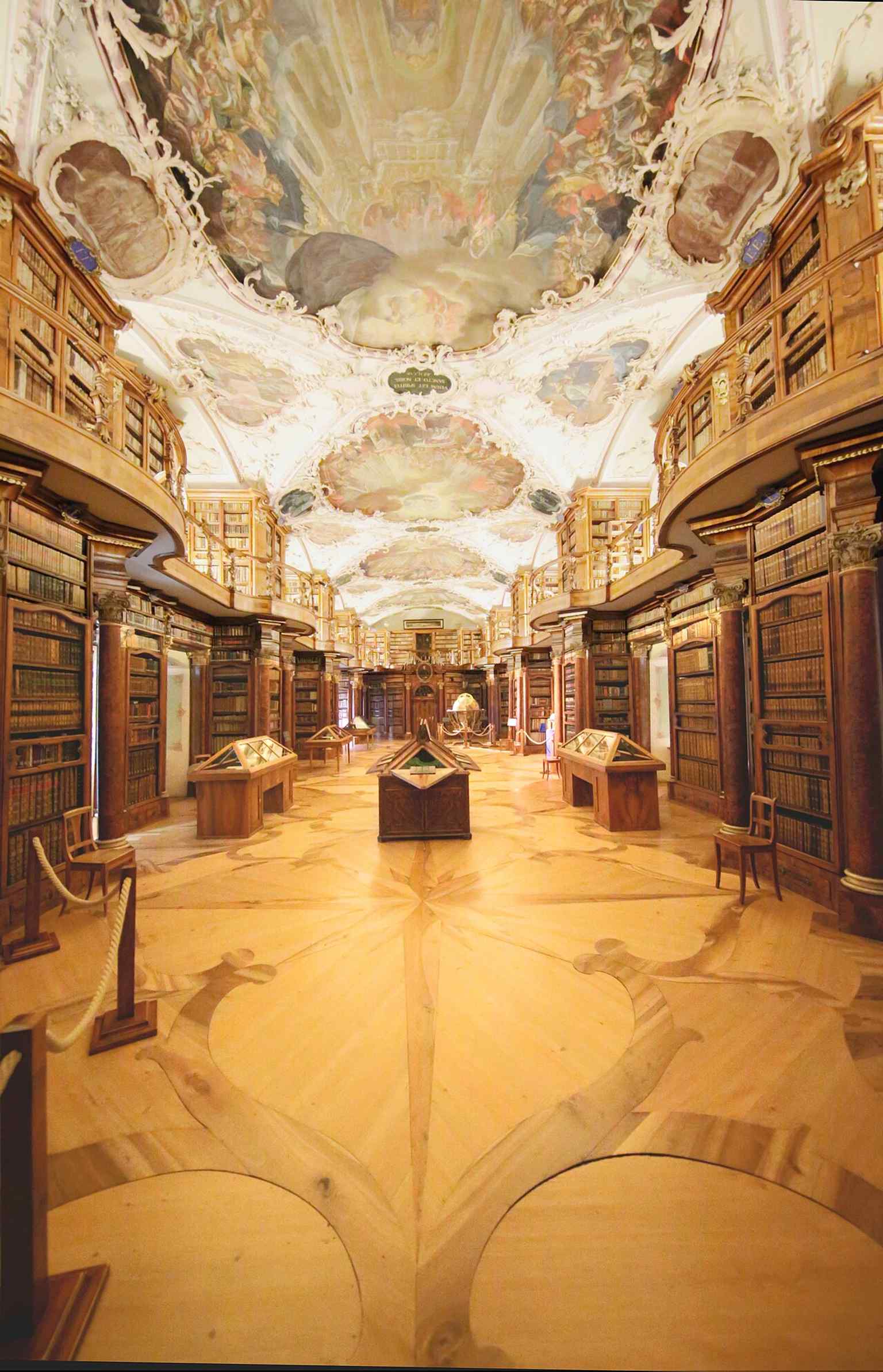
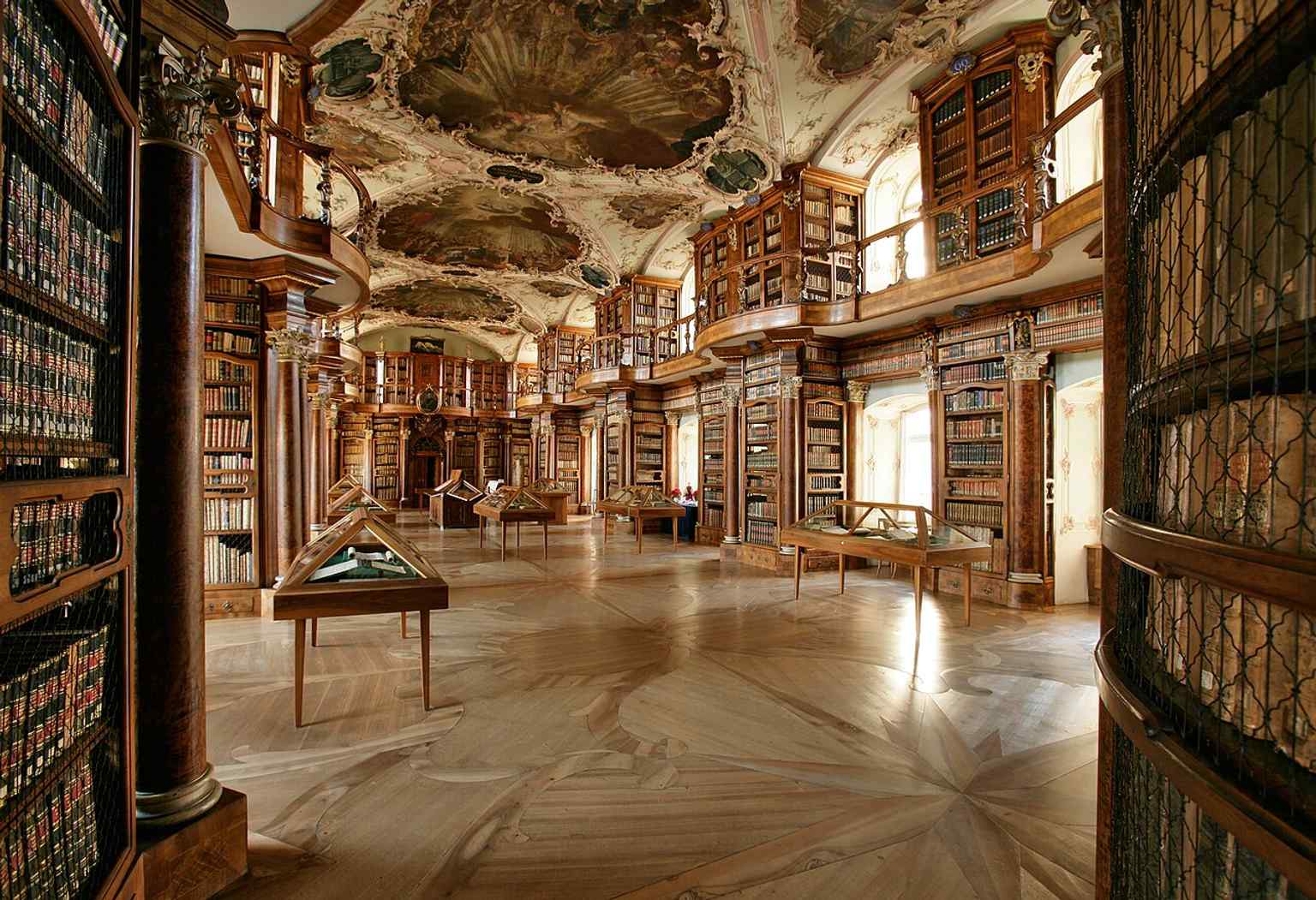
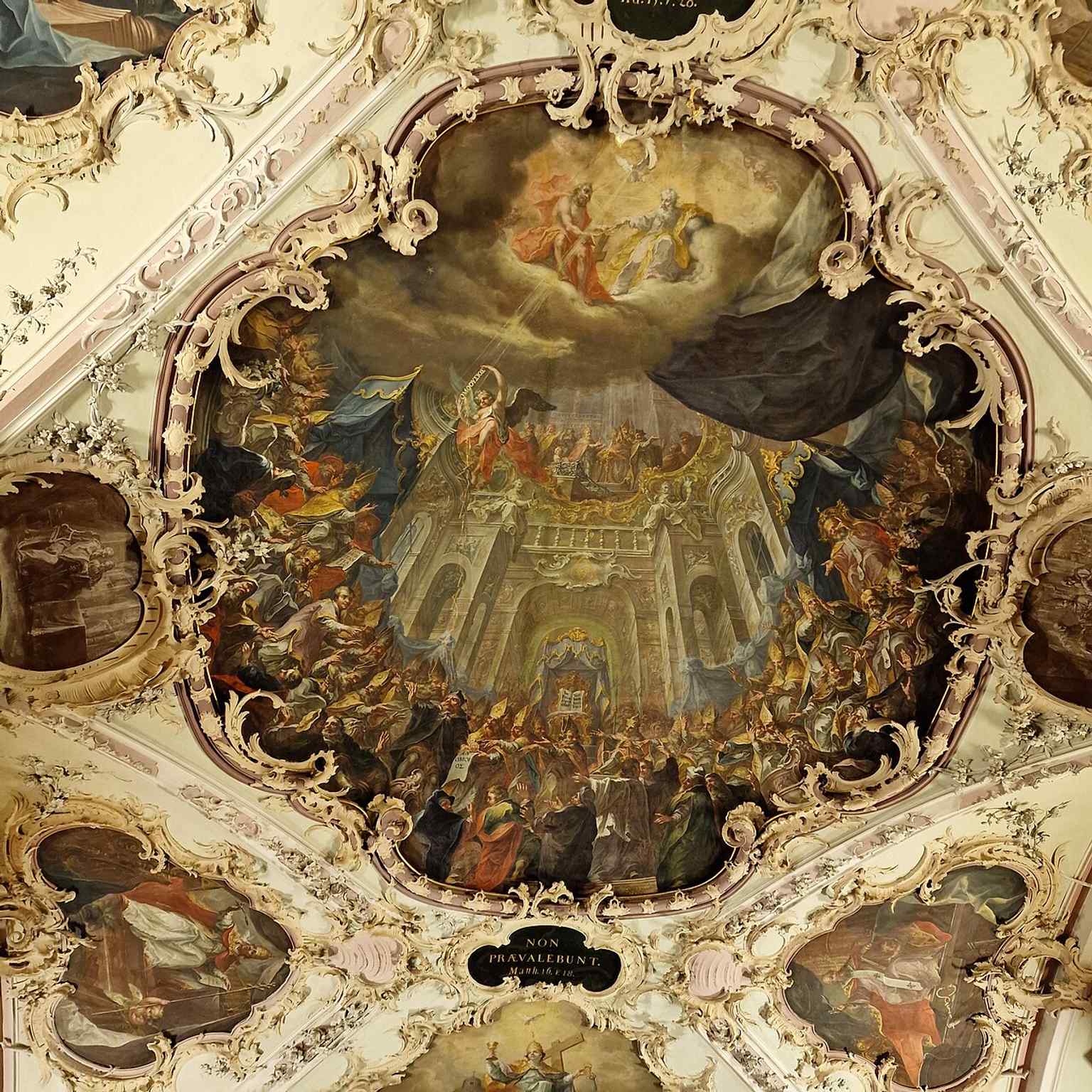
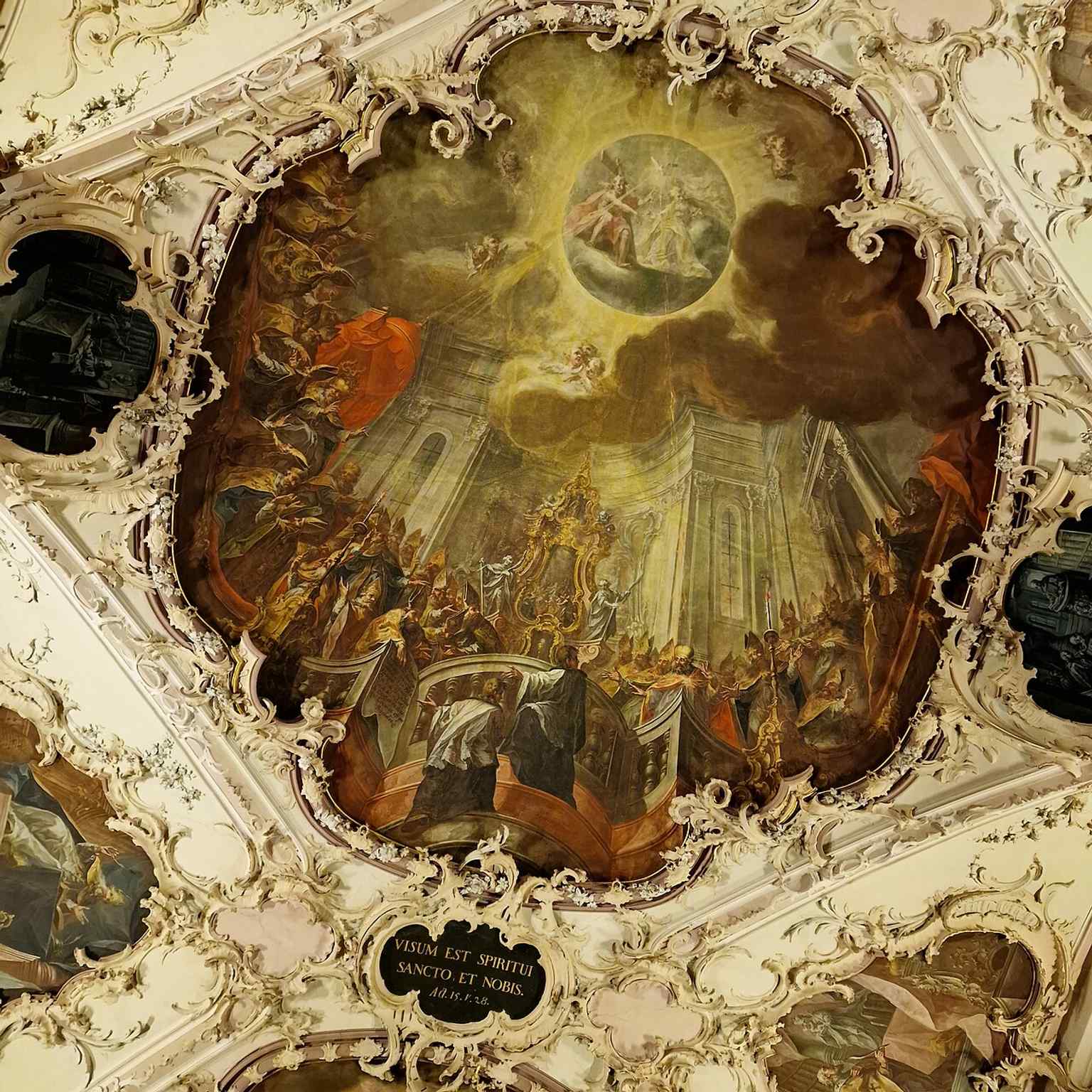
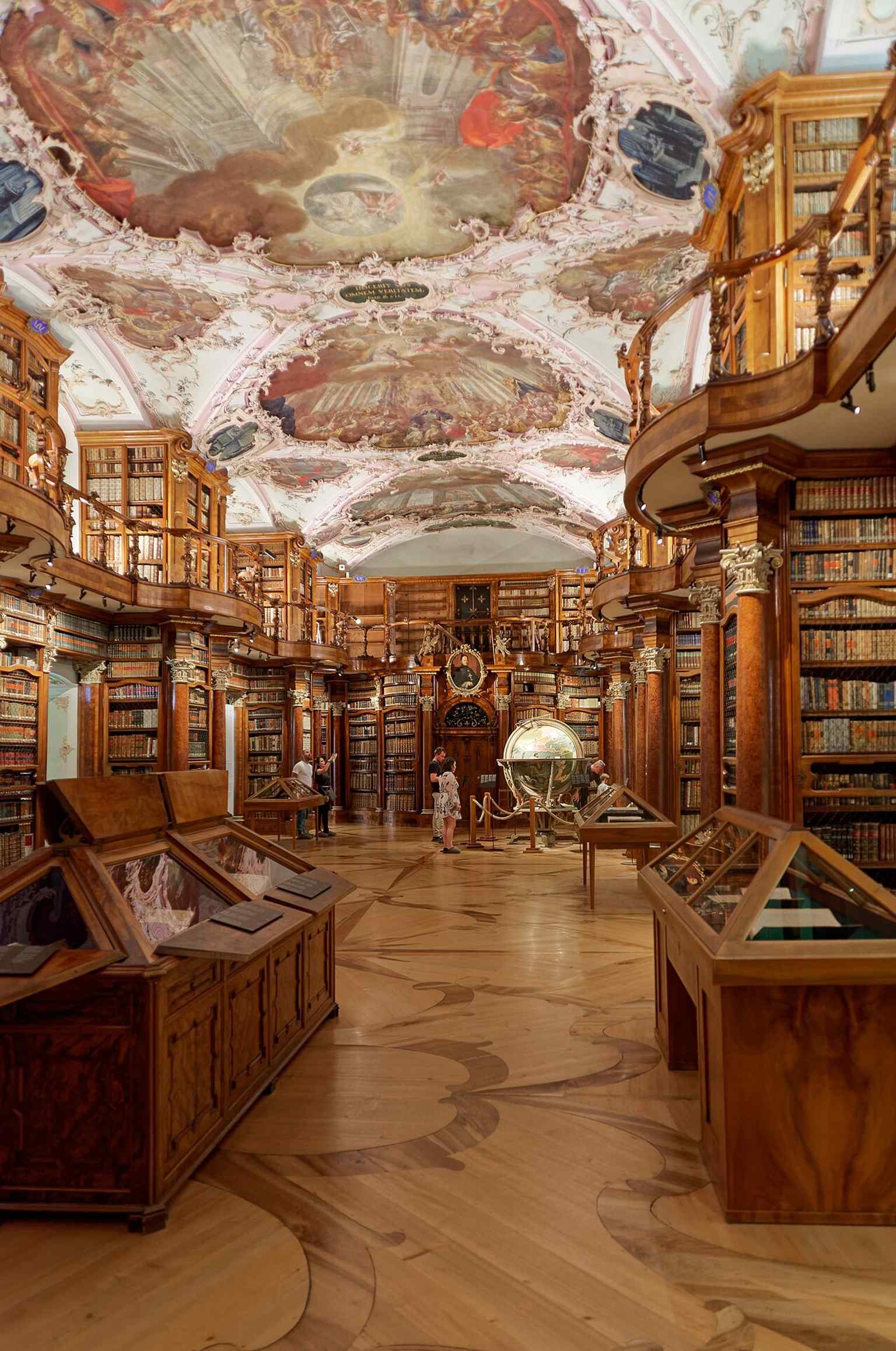
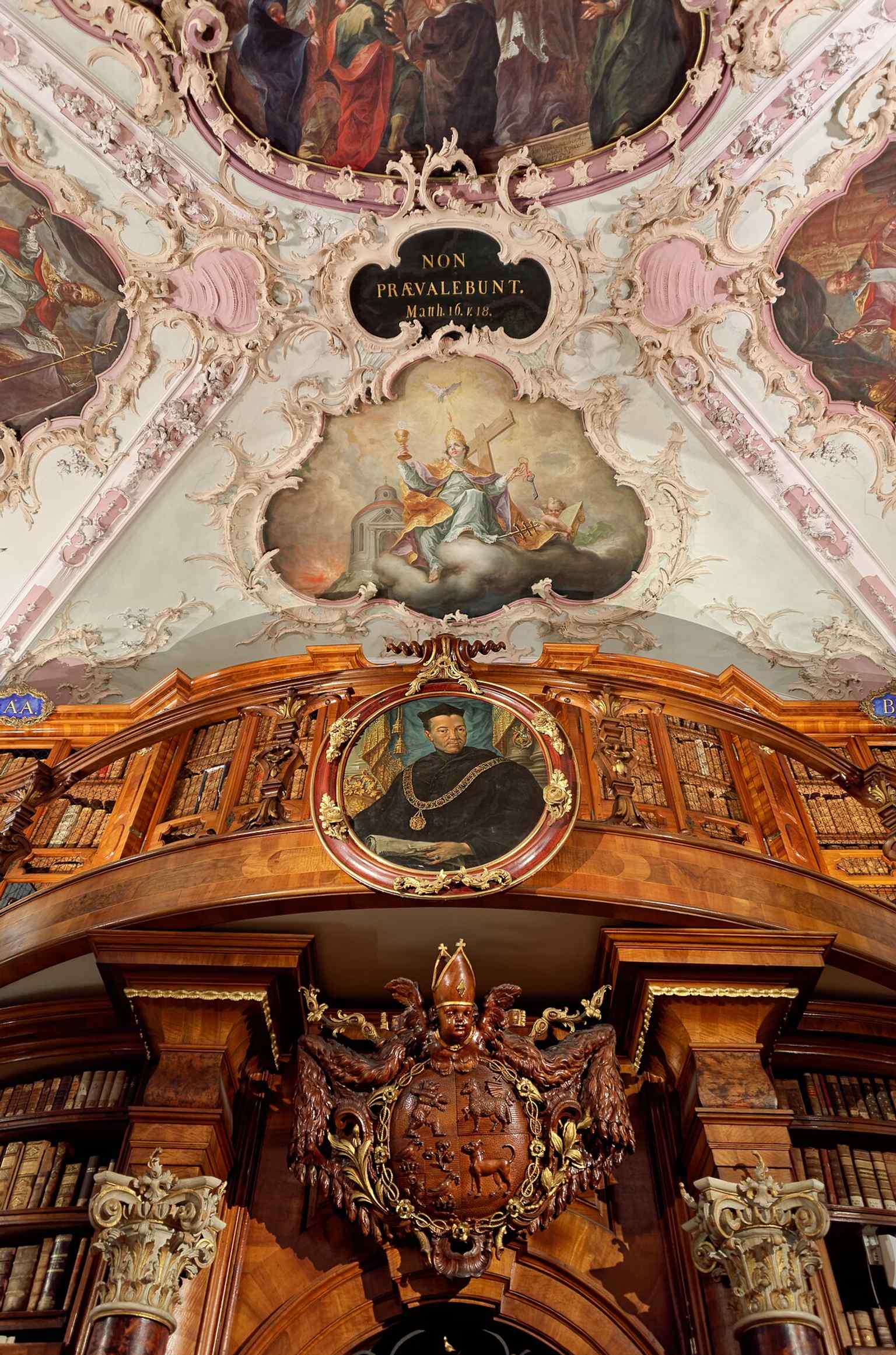
If you check the image on your screen, you can peek inside the famous hall. The room you see there, built between seventeen fifty-eight and seventeen sixty-seven, is often called the finest non-church Baroque room in Switzerland. It has a gallery running around the hall, rich woodwork made in the abbey workshop, and a delicate wooden floor inlaid with walnut stars. Visitors wear felt slippers inside, which may be the most civilized way anyone has ever been told, “Please don’t scuff the masterpiece.”
The iconic Baroque library hall, often described as one of the world’s most beautiful library interiors.Photo: Stiftsbibliothek St. Gallen, Wikimedia Commons, CC BY-SA 3.0. Cropped & resized.
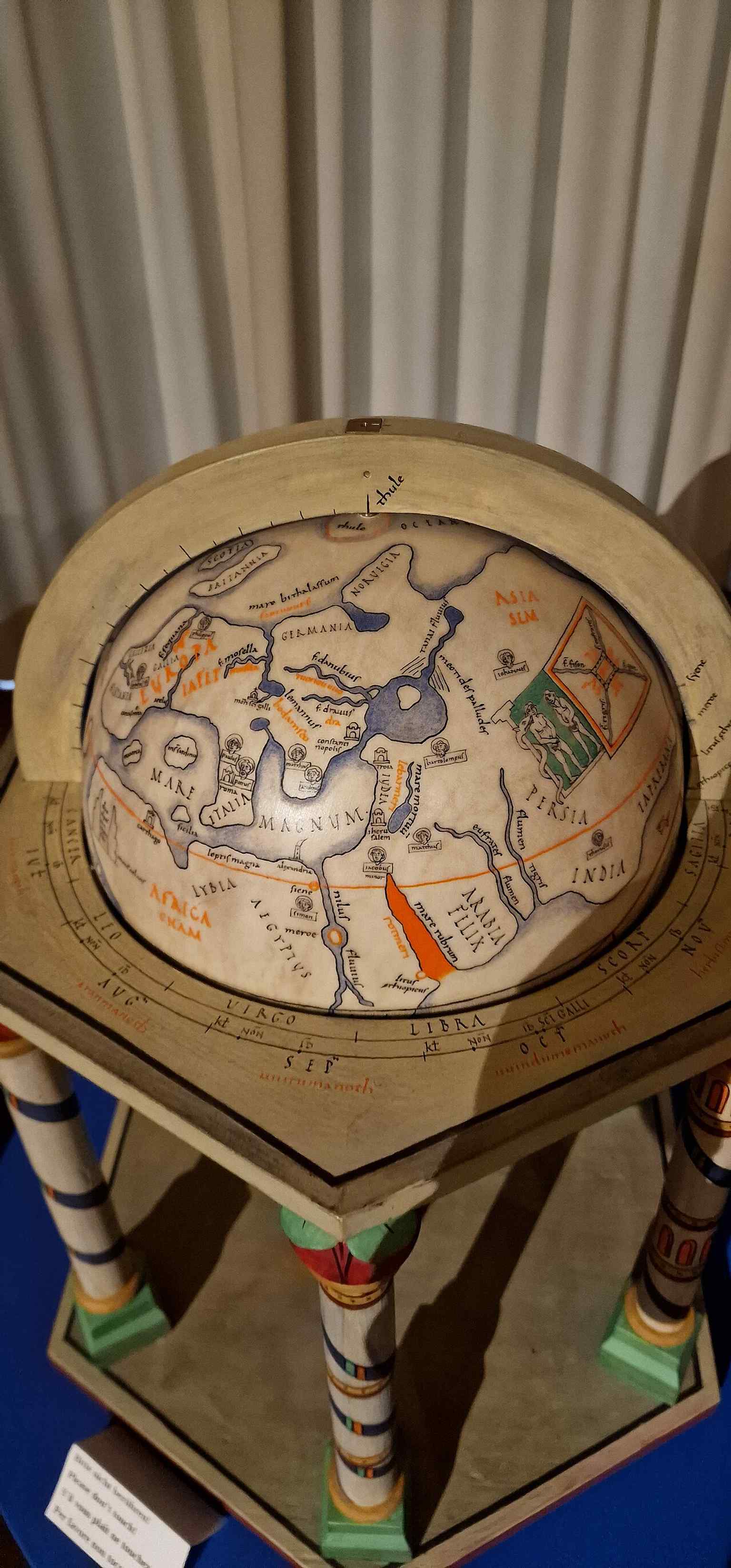
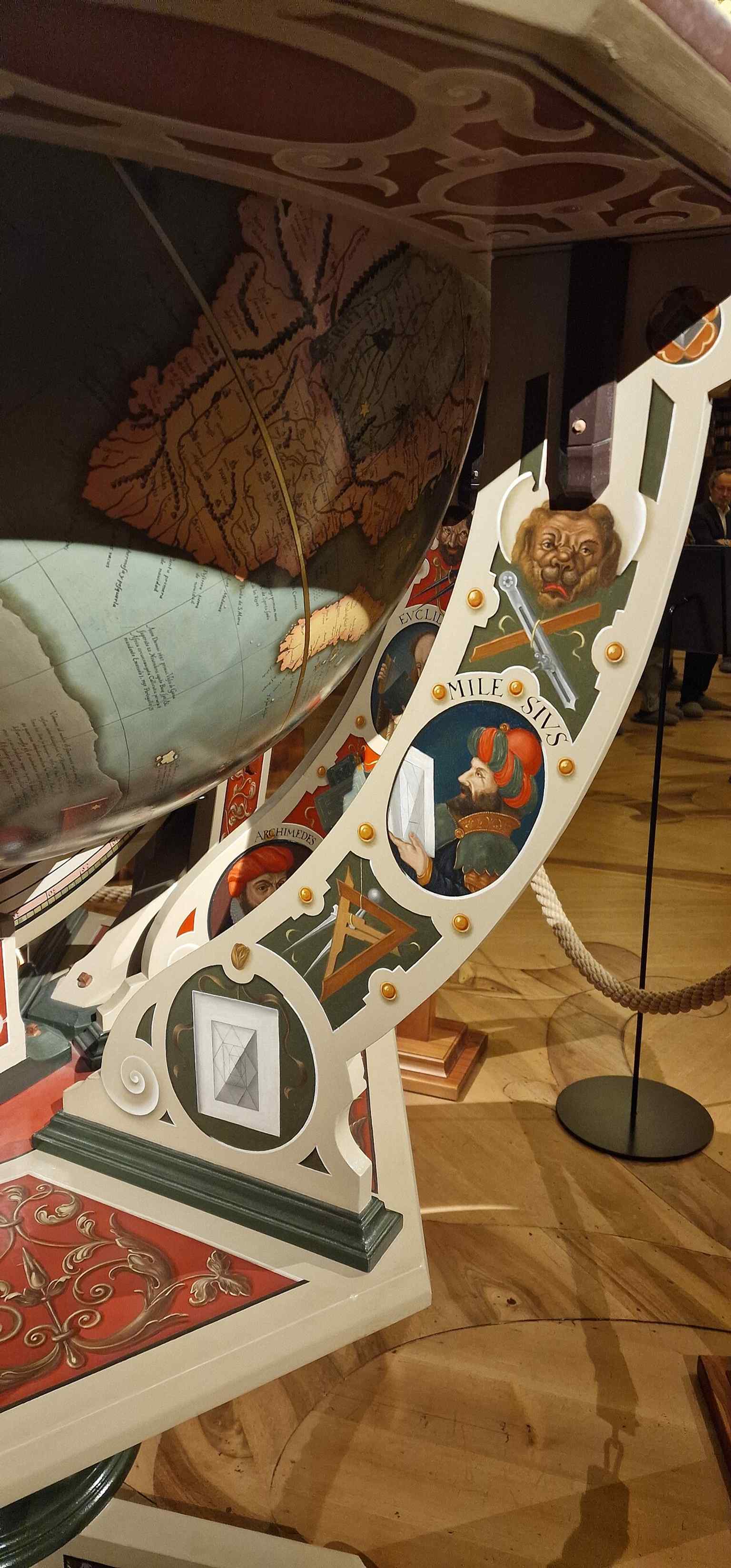
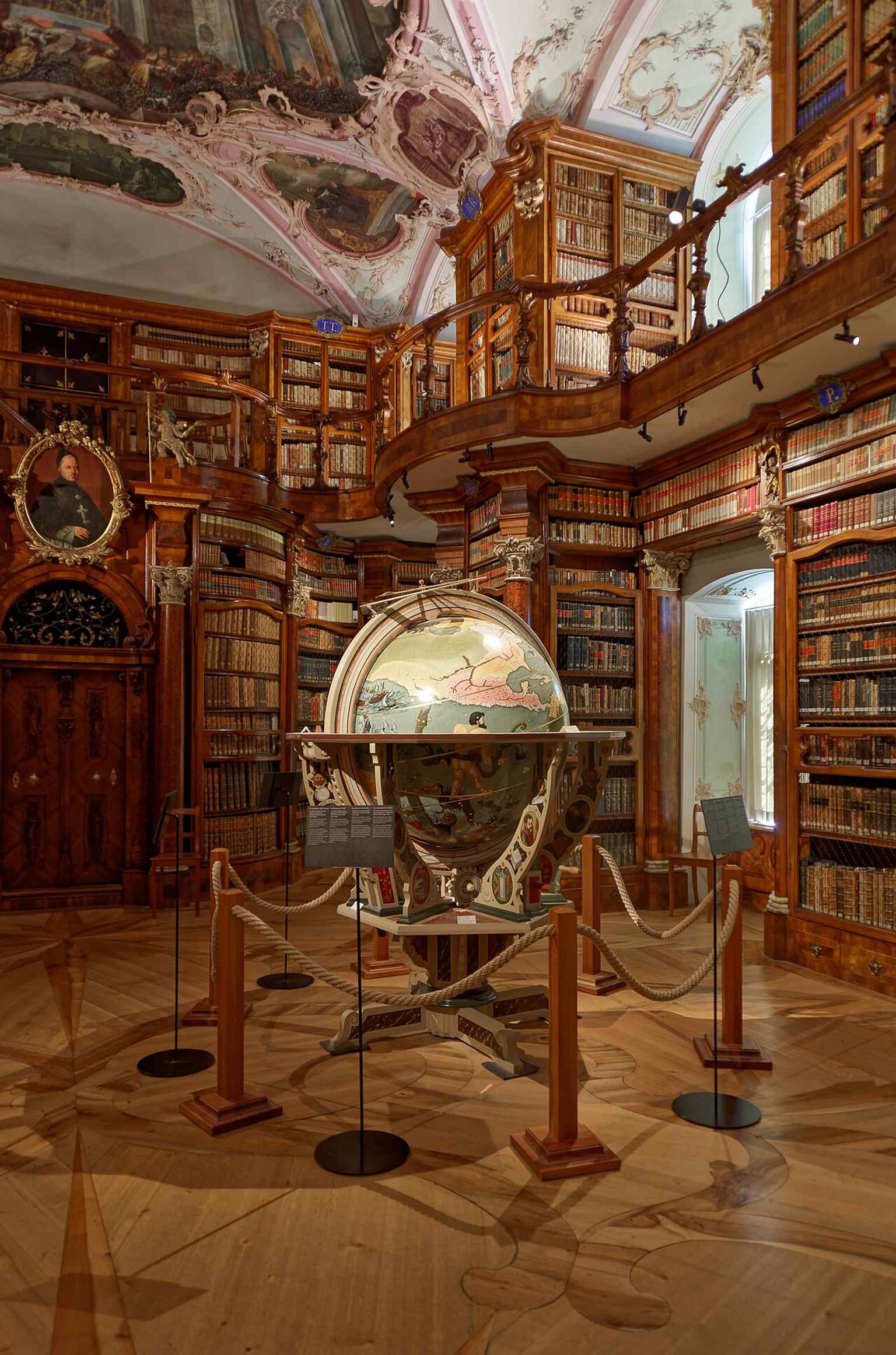
The library also had its share of theft and diplomacy. In seventeen twelve, Zurich and Bern troops carried off manuscripts and the great St. Gallen globe. The dispute dragged on for centuries until a settlement in two thousand six led to an exact replica for St. Gallen; you can see it in the app here.
The reconstructed St. Galler Globus, linked to the famous 1712 looting and the later restitution compromise.Photo: Gre regiment, Wikimedia Commons, CC BY-SA 4.0. Cropped & resized.
In twenty seventeen its documents joined the Memory of the World register. If you want to go inside later, the library is open daily from ten in the morning to five in the afternoon.
For a place devoted to quiet reading, this library has lived a surprisingly adventurous life.
Take a moment here, and when you’re ready, we can continue on to City Lounge.
4.8 across the App Store and Google Play. Here's a few we keep coming back to.
starstarstarstarstar
This tour was such a great way to see the city. The stories were interesting without feeling too scripted, and I loved being able to explore at my own pace.
Started this tour with a croissant in one hand and zero expectations. The app just vibes with you, no pressure, just you, your headphones, and some cool stories.







%20-%20Abbey%20library%20of%20St.%20Gallen.jpg)


