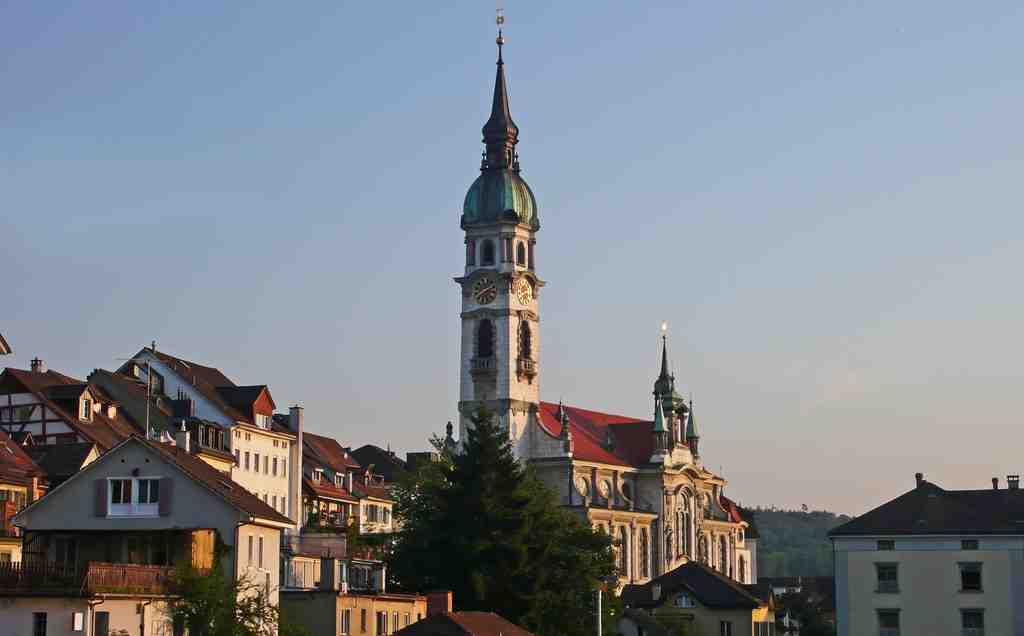
On your left stands a pale stone church with a broad front, a soaring tower above the main portal, and ranks of saintly figures set over the entrances.
St. Nicholas is one of Frauenfeld’s grand statements in stone, but its real story is less calm than its façade suggests. This hill of molasse rock above the bend of the Murg held sacred buildings from at least the ninth century, and a chapel here is certain by the late thirteenth century. By fourteen sixty-three, the patron was named clearly: Saint Nicholas of Myra.
Then faith here became something shared, and contested. After the Reformation reached Frauenfeld in fifteen twenty-nine, Catholics and Protestants agreed in fifteen thirty-one to use this church, and the church at Oberkirch, side by side. Imagine that for a moment: one building carrying two confessions, two sets of convictions, and one town trying not to split itself apart. That arrangement lasted until the Protestant church opened in sixteen forty-seven, and even then, the strain had already marked the place.
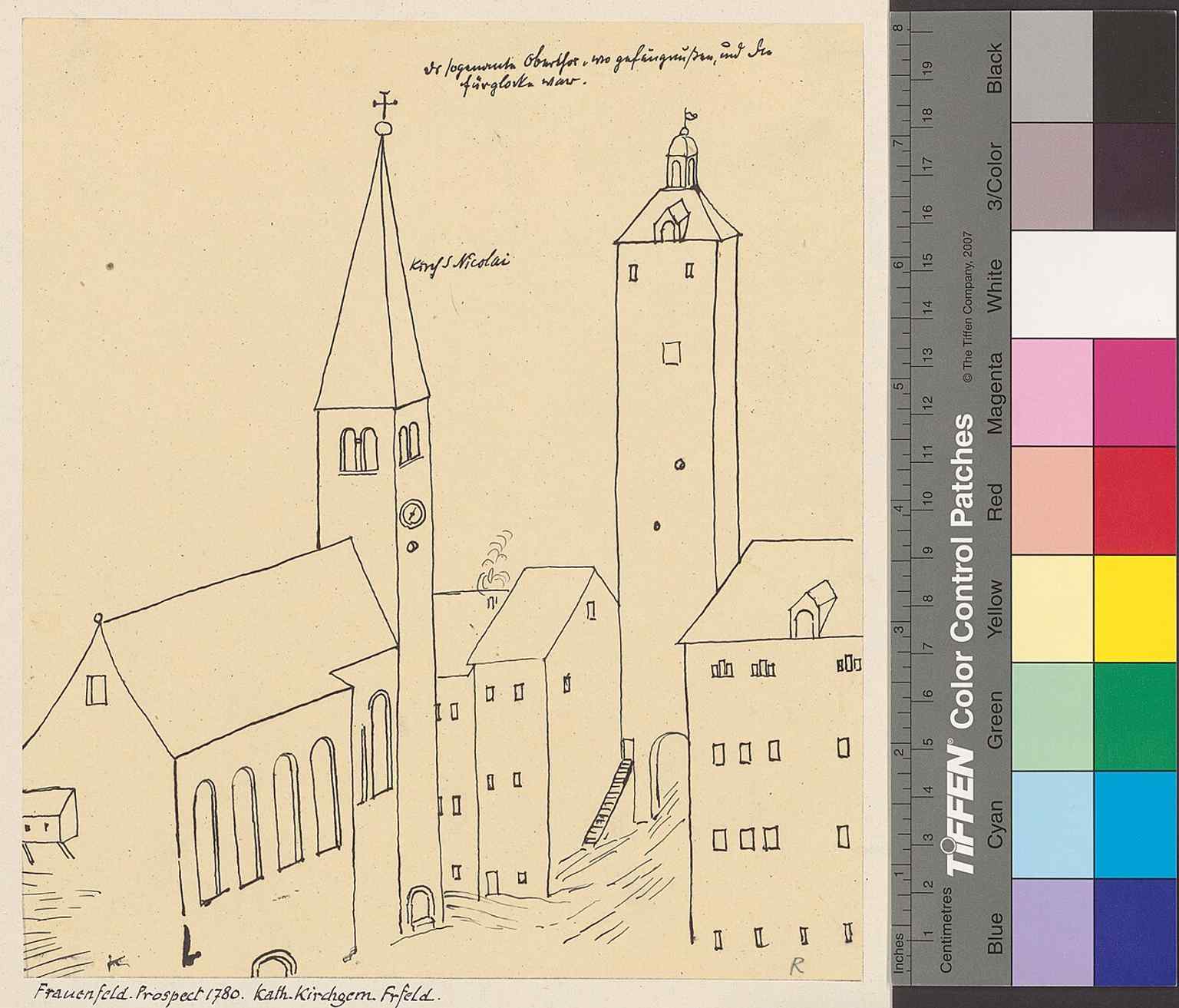
If you glance at the image on your screen, you can see an earlier version of the church in the old town setting, long before the present design claimed the skyline. That is the first surprise here: continuity in Frauenfeld rarely means standing still. It means rebuilding.
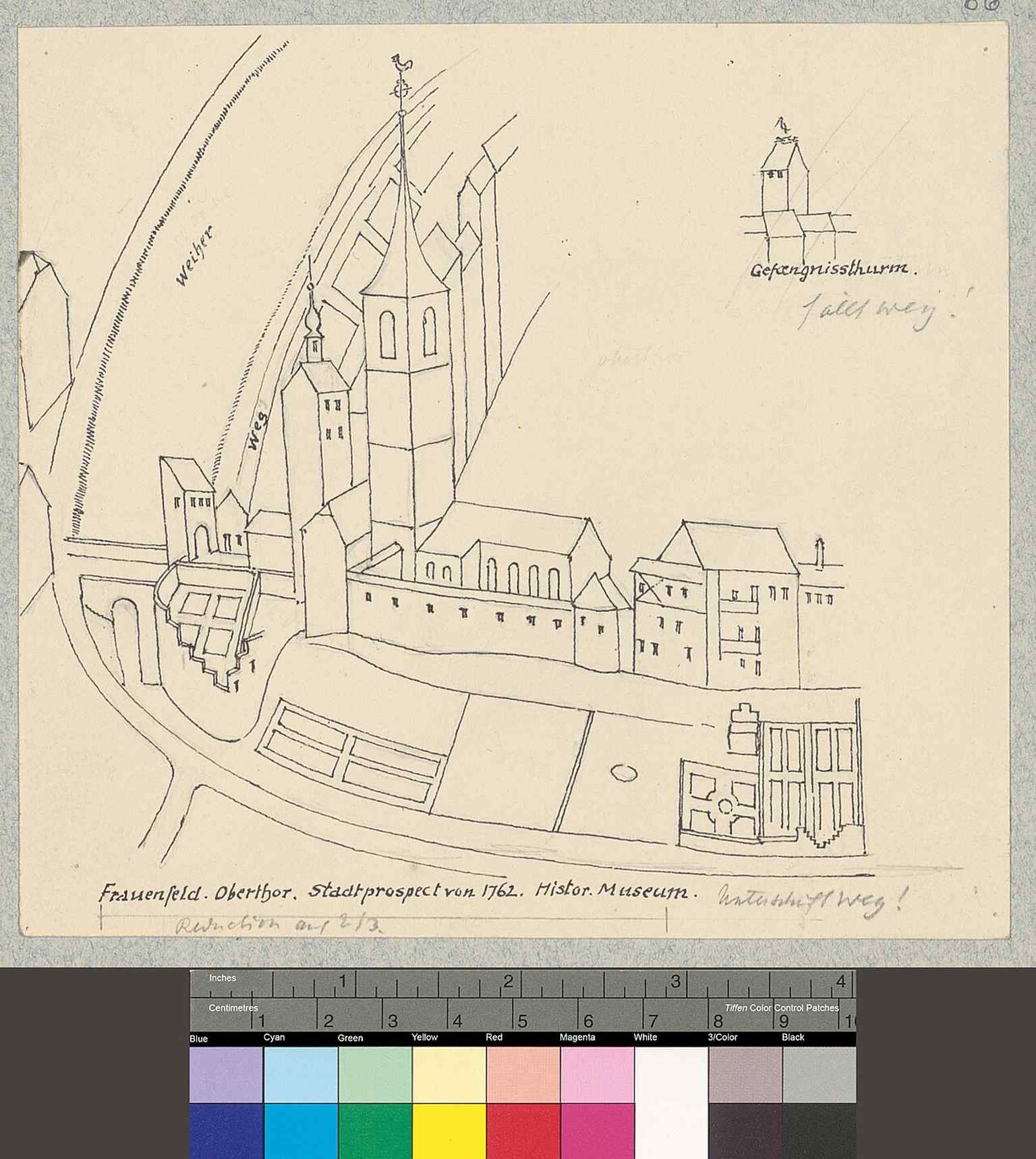
Fire proved that brutally. In the first city fire of seventeen seventy-one, half the town burned, and of St. Nicholas, almost nothing survived except the shaft of the tower. Peter Bein then raised a new late Baroque church on the old foundations, and when it opened in seventeen eighty-one, its clock did not belong only to parish clergy or wealthy patrons. Citizens across the town paid for that “city clock” together. Even in ruin, this church remained entangled with civic life.
And yet the church you see now is not that one either. In the late nineteenth century, the congregation outgrew the old building. Architect August Hardegger proposed one solution, but money stalled the plan. Then politics entered through the side door. When the city planned a new access road from the station to the cantonal government building, church land stood in the way. Dean Konrad Kuhn pushed hard for a new church, partly to solve overcrowding and partly to keep the site from being cut apart. Suddenly this was not only about worship. It was about who could shape the town itself.
The decisive figure became Albert Rimli. In bitter arguments, he outmanoeuvred Hardegger with a richly varied design and a persuasive perspective drawing that showed people exactly what could rise here. His church, built between nineteen oh four and nineteen oh six, gave Frauenfeld this striking tower and this blend of Neo-Baroque drama and Art Nouveau softness. Look at the sculpted portals, the layered stonework, the scroll-like volutes. This building does not hide that it fought to exist.
And perhaps that is the question the church presses on you: how can one place belong to more than one confession, more than one generation, even more than one version of the city?
There is one more quietly moving detail. In nineteen oh six, St. Nicholas received a new ring of six bronze bells from Aarau, tuned in harmony with the Protestant church’s bells, an early, deliberate gesture of cooperation. The parish called it a small gesture of Christian cooperation. Even the sound above Frauenfeld learned to share.
If you want a glimpse of the church before this reinvention, the second image shows the late Baroque predecessor that stood here after the fire. So no, sacred space in Frauenfeld was never simple; it was argued over, rebuilt, funded together, and made to endure. In about one minute, we’ll step to the Bernerhaus, where shared ground turns from sacred to civic and political. If you plan to return later, the church is generally open daily, with hours varying across the week.