AudaTours logoAudaTours

Stop 3 of 12

Frauenfeld Castle

Frauenfeld Castle
Frauenfeld Castle
Frauenfeld CastlePhoto: Roland Zumbuehl, Wikimedia Commons, CC BY-SA 3.0. Cropped & resized.

On your left, look for a compact castle of pale stone and dark timber, gathered around a square tower, with a high doorway that still hints at its once-raised entrance.

This is Schloss Frauenfeld, perched above the Murg like a hand still resting on the reins. The Kyburgers, Habsburgs, and later ruling powers all used this same stronghold to command the town and the wider Thurgau. What changed was not the need for control, but who claimed the right to exercise it.

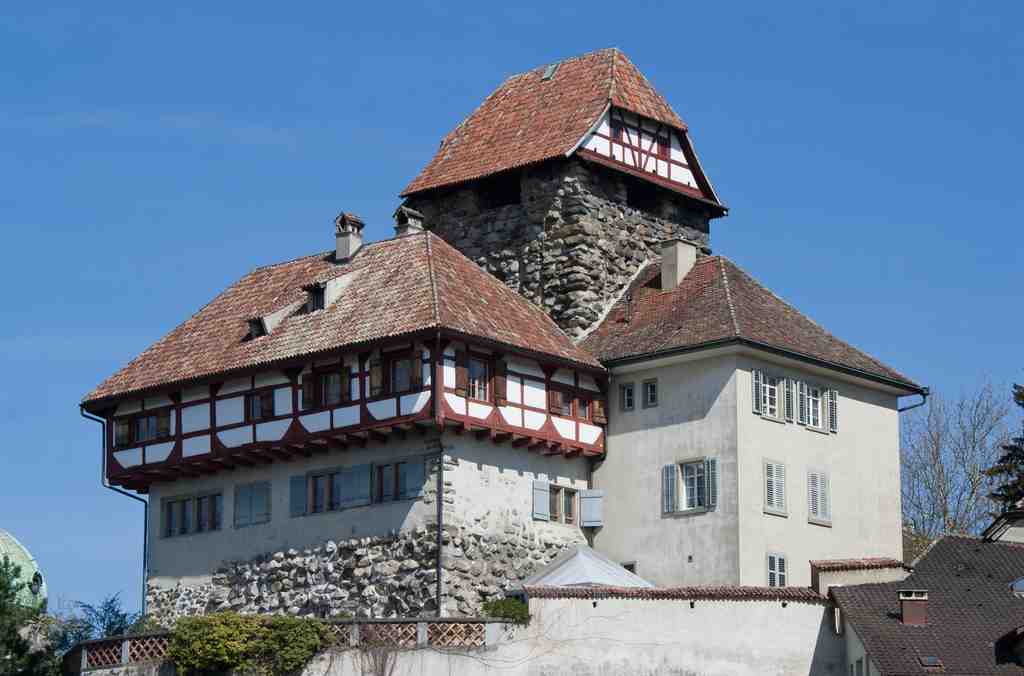
Around the year twelve thirty, the Kyburg counts planted the core of the castle here on a molasse rock above the river. They began with the keep, the main defensive tower, almost nineteen metres high and built from great blocks and boulders. If you glance at the image on your screen, you can see just how blunt and purposeful that medieval tower still feels. Its original entrance sat high up, roughly at the level of today’s second floor, reached by a wooden outer gallery. That was a simple military precaution: if attackers broke into the outer spaces, defenders could still pull back into the tower itself. Another image in the app shows that elevated doorway very clearly.
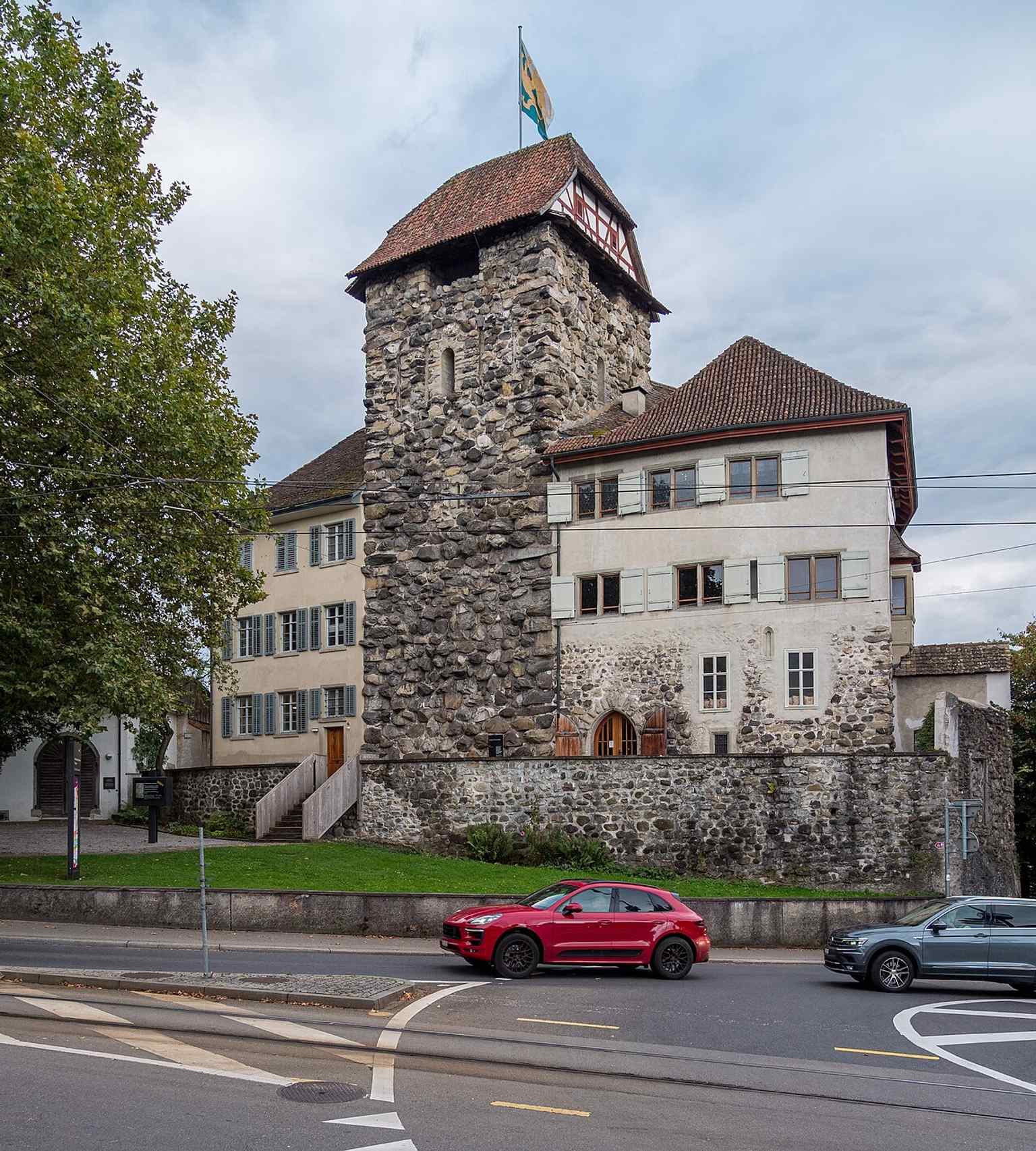
A clear modern north view of Frauenfeld Castle, showing the sturdy medieval keep that began as a Kyburg stronghold around 1230.
A clear modern north view of Frauenfeld Castle, showing the sturdy medieval keep that began as a Kyburg stronghold around 1230.Photo: JoachimKohler-HB, Wikimedia Commons, CC BY-SA 4.0. Cropped & resized.

Beside the keep stood the palas, meaning the lord’s residential building, where the more comfortable rooms lay. There was no direct connection between the two at first, which tells you exactly how these builders thought: safety first, convenience later. The oak ceiling beams inside still date, by tree-ring analysis, to about twelve thirty-one and twelve thirty-five. The castle, in other words, still carries the bones of its first ambition.

When the Kyburg line died out in twelve sixty-four, Rudolf of Habsburg inherited their lands. The Habsburgs expanded the fortress with a zwinger, a defended strip between walls where attackers could be trapped under fire. Later, Nikolaus Hofmeister, the son of Jakob von Frauenfeld and eventually bishop of Constance, lengthened the chapel here. Even prayer, at a place like this, served authority.

Then came new adjustments. After the Appenzellers failed to attack in fourteen oh seven, the lords of Hohenlandenberg cut a deep ditch between castle and town and strengthened the ring walls. They also gave the castle the overhanging timber-framed upper section that still shapes its character. The ground-level entrance used today dates from that remodelling. This place did not cling to purity; it altered itself to survive.

The Confederates took Thurgau in fourteen sixty, and by fifteen thirty-four they bought the castle outright. Their bailiffs, the officials who governed on behalf of the ruling cantons, held court here. They enlarged the windows and created a grand courtroom on the second floor. Painted coats of arms turned its walls into a public record of office, a silent reminder of who had judged here before.

And then the old order ended. After seventeen ninety-eight, the bailiffs stopped coming. The canton used the castle for flats, then briefly as a prison and workhouse, then for the treasury. At one point, officials even put the state vault inside the tower. In the nineteenth century, demolition threatened the whole place, until Johann Jakob Bachmann-Wegelin bought it in eighteen sixty-seven, at the urging of his son Jakob Huldreich Bachmann, and saved it. Later, Marie Elise Bachmann left it to the canton on one condition: it must become a historical museum. So once again, the building changed role without losing its weight.

That is one of Frauenfeld’s quiet habits: power shifts, walls adapt, and memory finds a new room to live in. At the Baliere, about four minutes from here, that story turns from command and office toward work, exchange, and the more practical energies that keep a town alive. If you decide to come back inside, the museum is open from one to five in the afternoon, Tuesday through Sunday, and closed on Mondays.
A late-19th-century view of the castle, useful for showing how the fortress survived after its period as an administrative building and private home.
A late-19th-century view of the castle, useful for showing how the fortress survived after its period as an administrative building and private home.Photo: Johann Rudolf Rahn, Wikimedia Commons, Public domain. Cropped & resized.
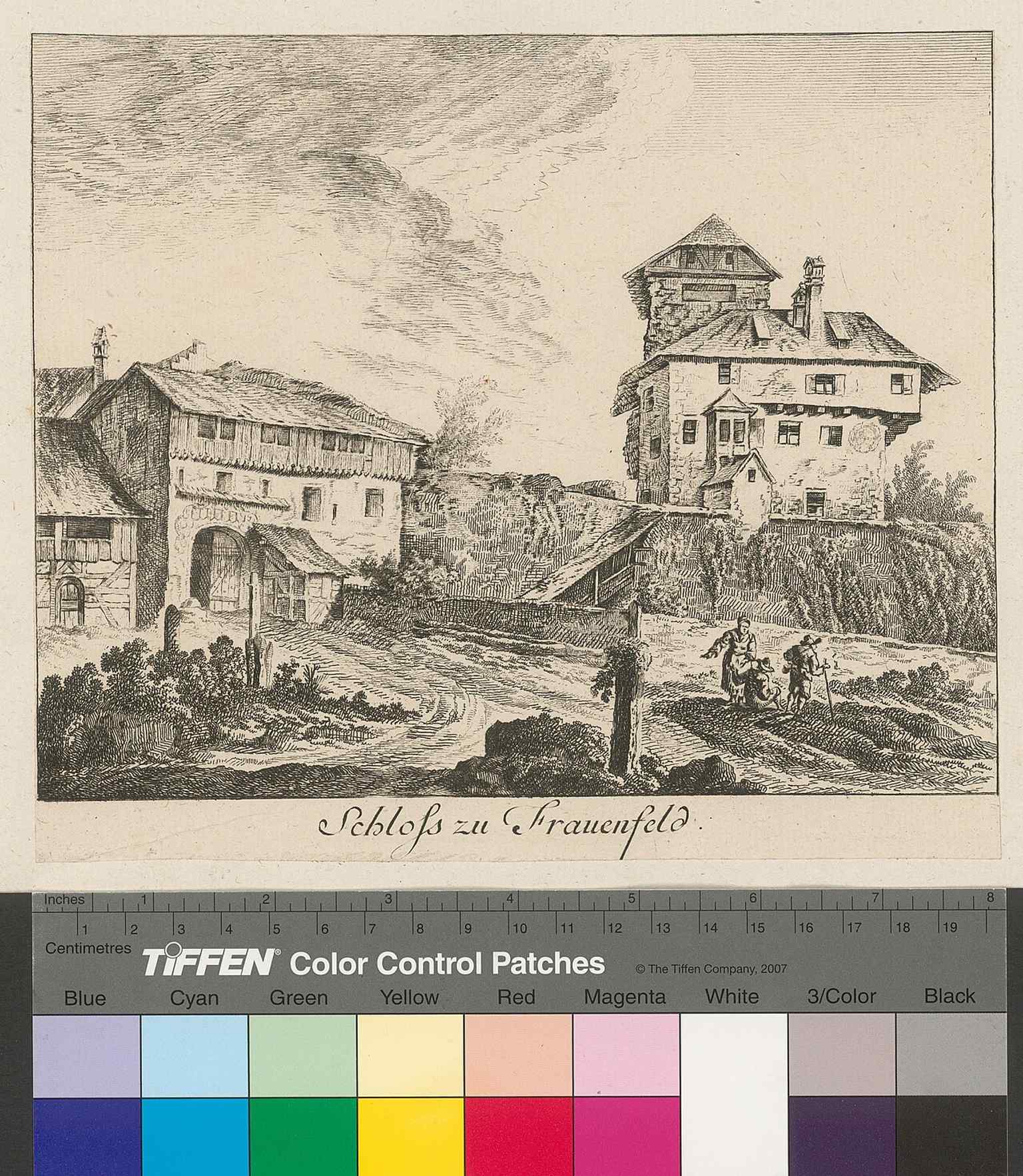
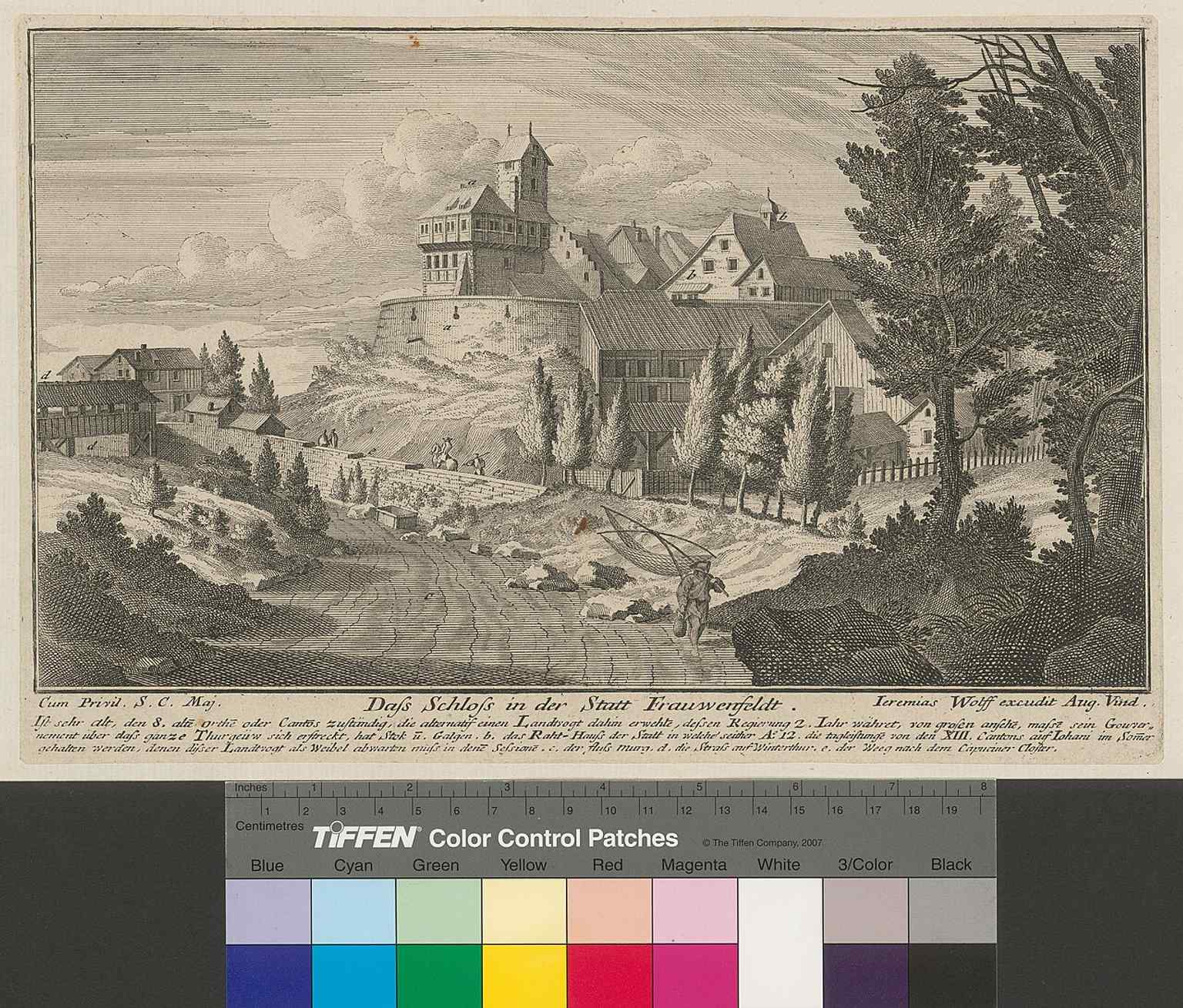
An early depiction of the castle in Frauenfeld, capturing its long role as the dominant stronghold above the old town.
An early depiction of the castle in Frauenfeld, capturing its long role as the dominant stronghold above the old town.Photo: Johann Melchior Füssli (Künstler), Wikimedia Commons, Public domain. Cropped & resized.
Another early view of Frauenfeld Castle, ideal for illustrating how the medieval complex was remembered before modern restoration.
Another early view of Frauenfeld Castle, ideal for illustrating how the medieval complex was remembered before modern restoration.Photo: Anonym/e Künstler/in, Wikimedia Commons, Public domain. Cropped & resized.
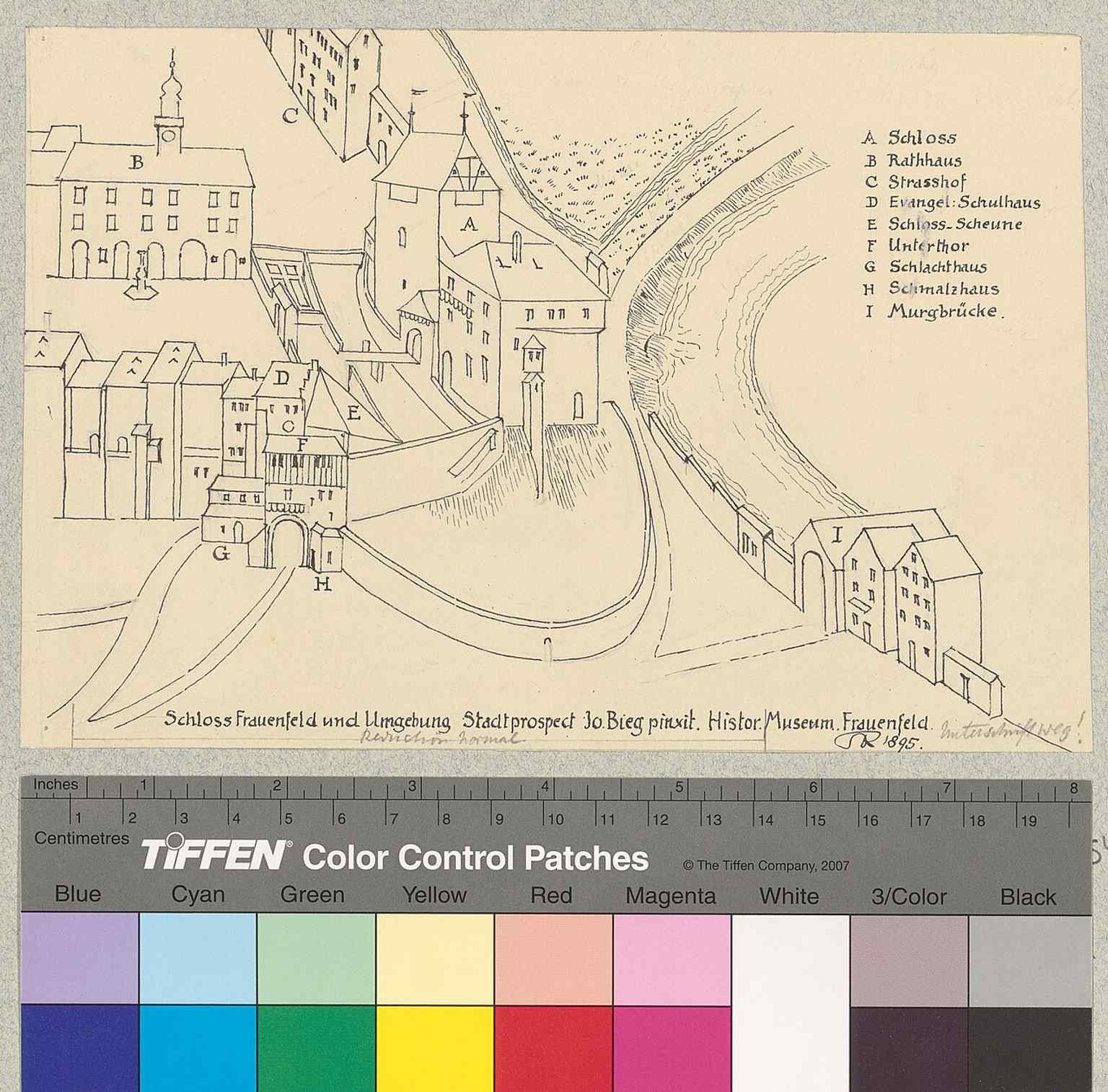
The castle and surrounding town in a historic city prospect — a good way to place the fortress above the Murg and within Frauenfeld’s old urban fabric.
The castle and surrounding town in a historic city prospect — a good way to place the fortress above the Murg and within Frauenfeld’s old urban fabric.Photo: Johann Rudolf Rahn, Wikimedia Commons, Public domain. Cropped & resized.
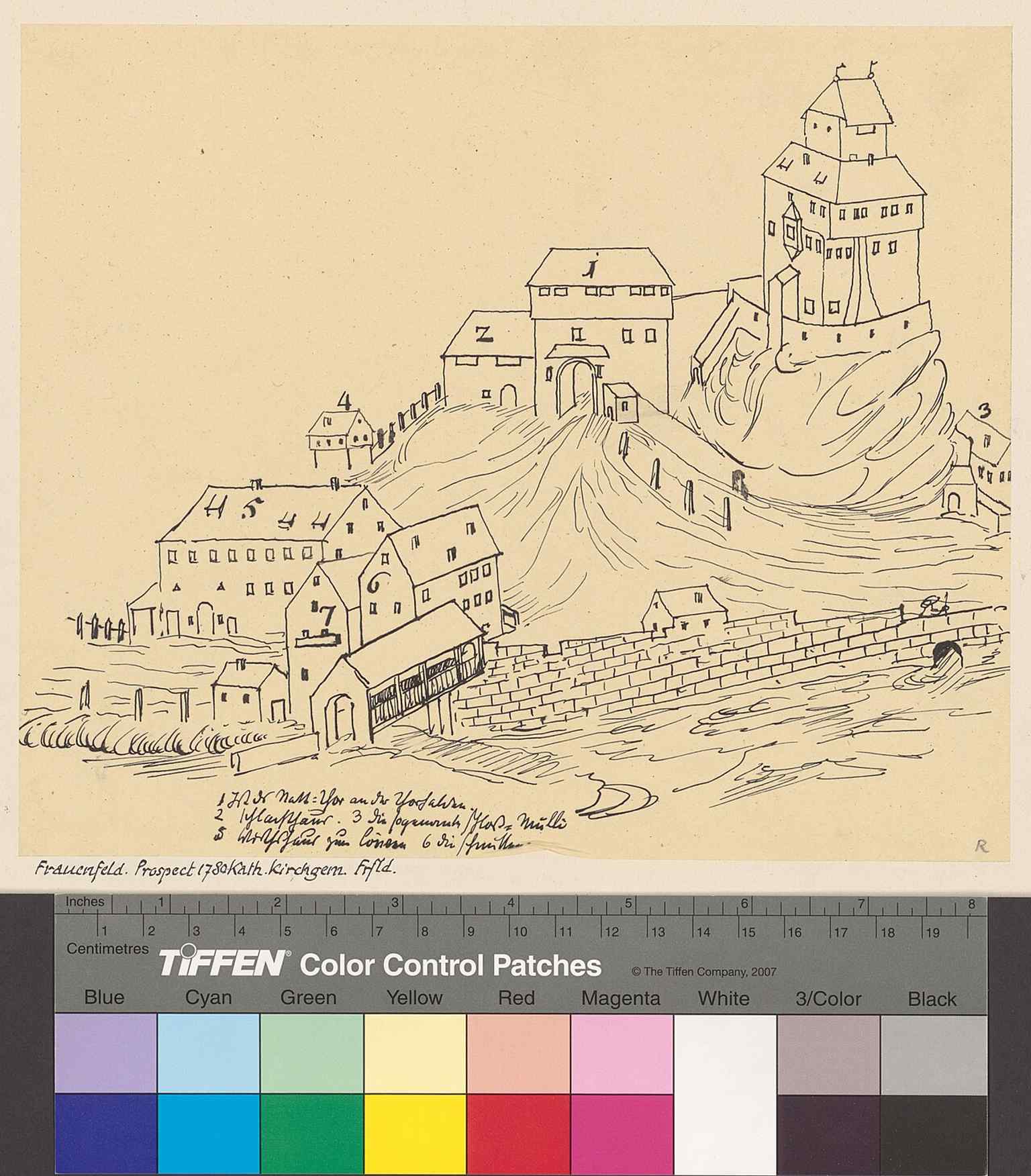
A pre-1771 town prospect showing the castle and its surroundings, helping to tell the story of the fortress before later changes to the cityscape.
A pre-1771 town prospect showing the castle and its surroundings, helping to tell the story of the fortress before later changes to the cityscape.Photo: Johann Rudolf Rahn, Wikimedia Commons, Public domain. Cropped & resized.
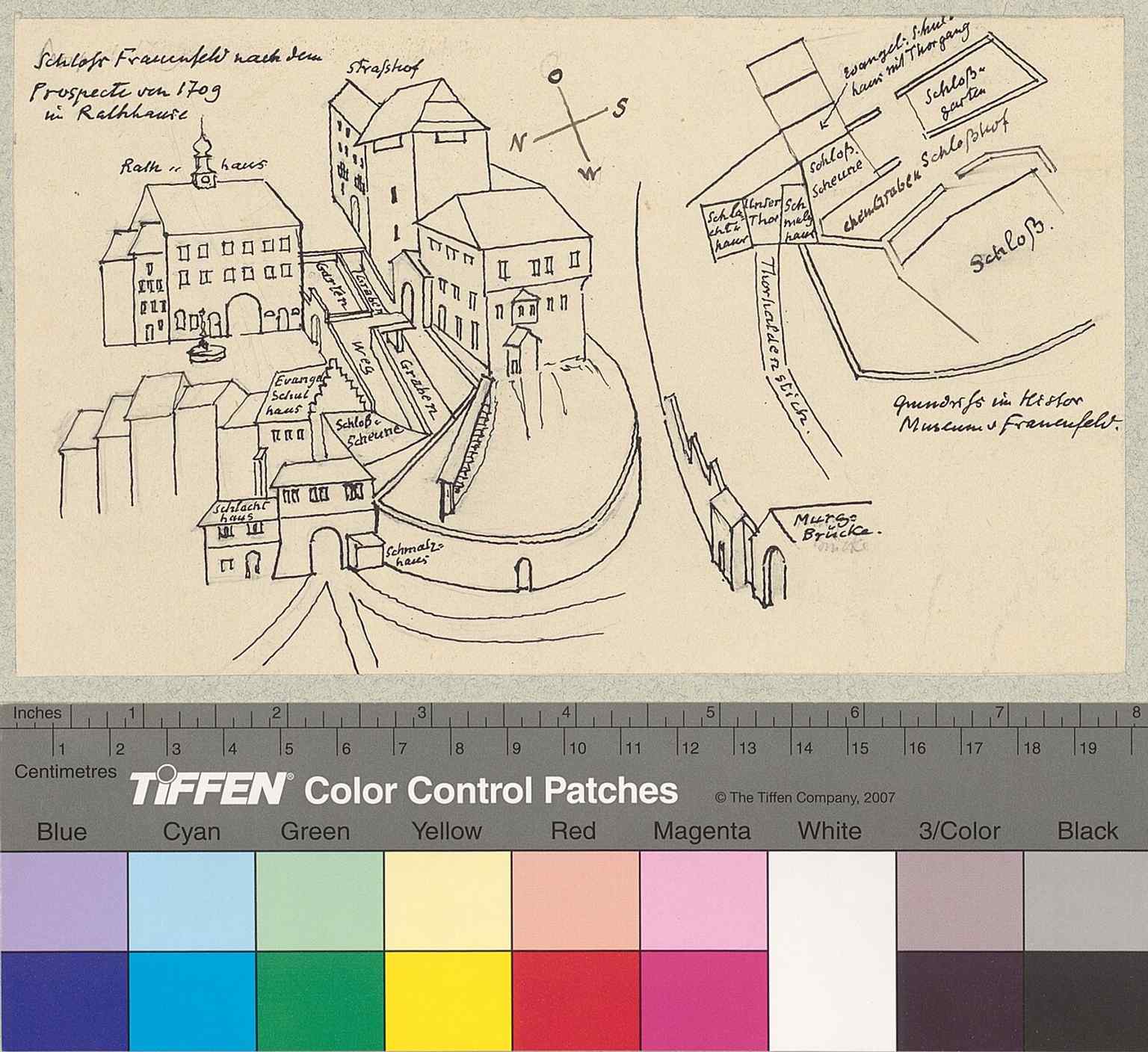
This print combines a castle view with a ground plan, useful for explaining the layered layout of keep, palas, and surrounding defenses.
This print combines a castle view with a ground plan, useful for explaining the layered layout of keep, palas, and surrounding defenses.Photo: Johann Rudolf Rahn, Wikimedia Commons, Public domain. Cropped & resized.
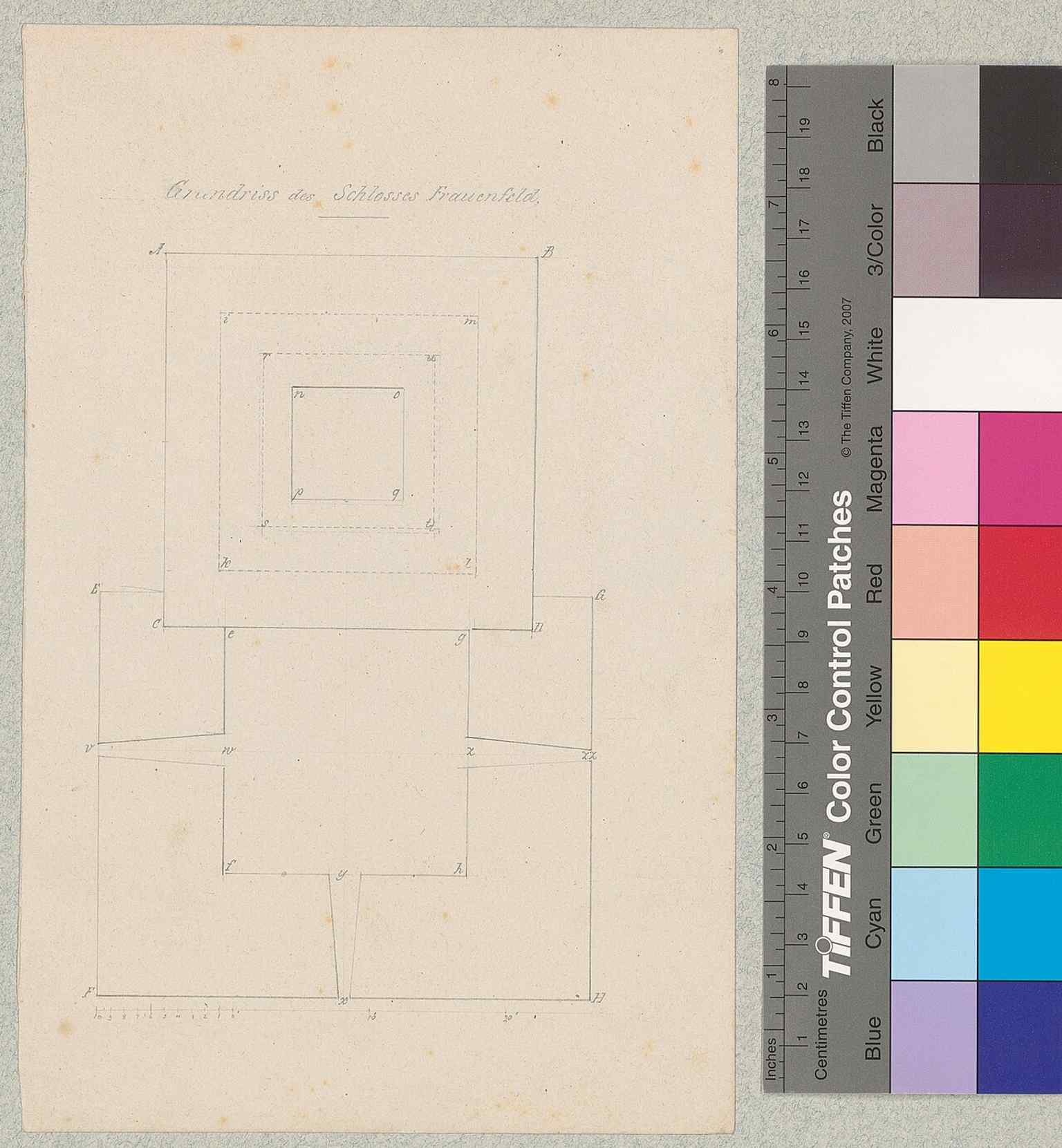
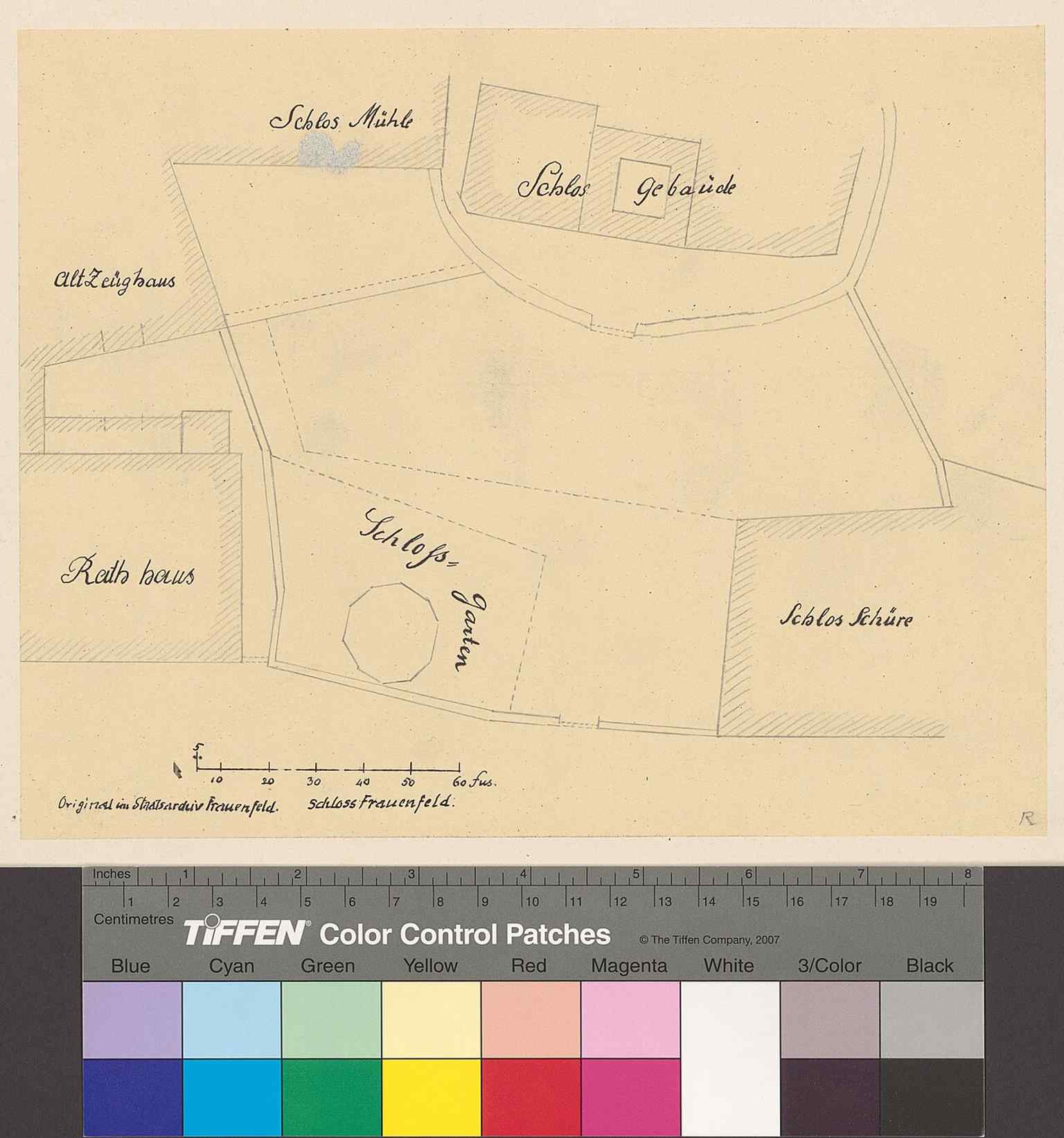
A ground plan of Frauenfeld Castle from 1858, highlighting the compact medieval core that still anchors the whole complex.
A ground plan of Frauenfeld Castle from 1858, highlighting the compact medieval core that still anchors the whole complex.Photo: Johann Rudolf Rahn, Wikimedia Commons, Public domain. Cropped & resized.
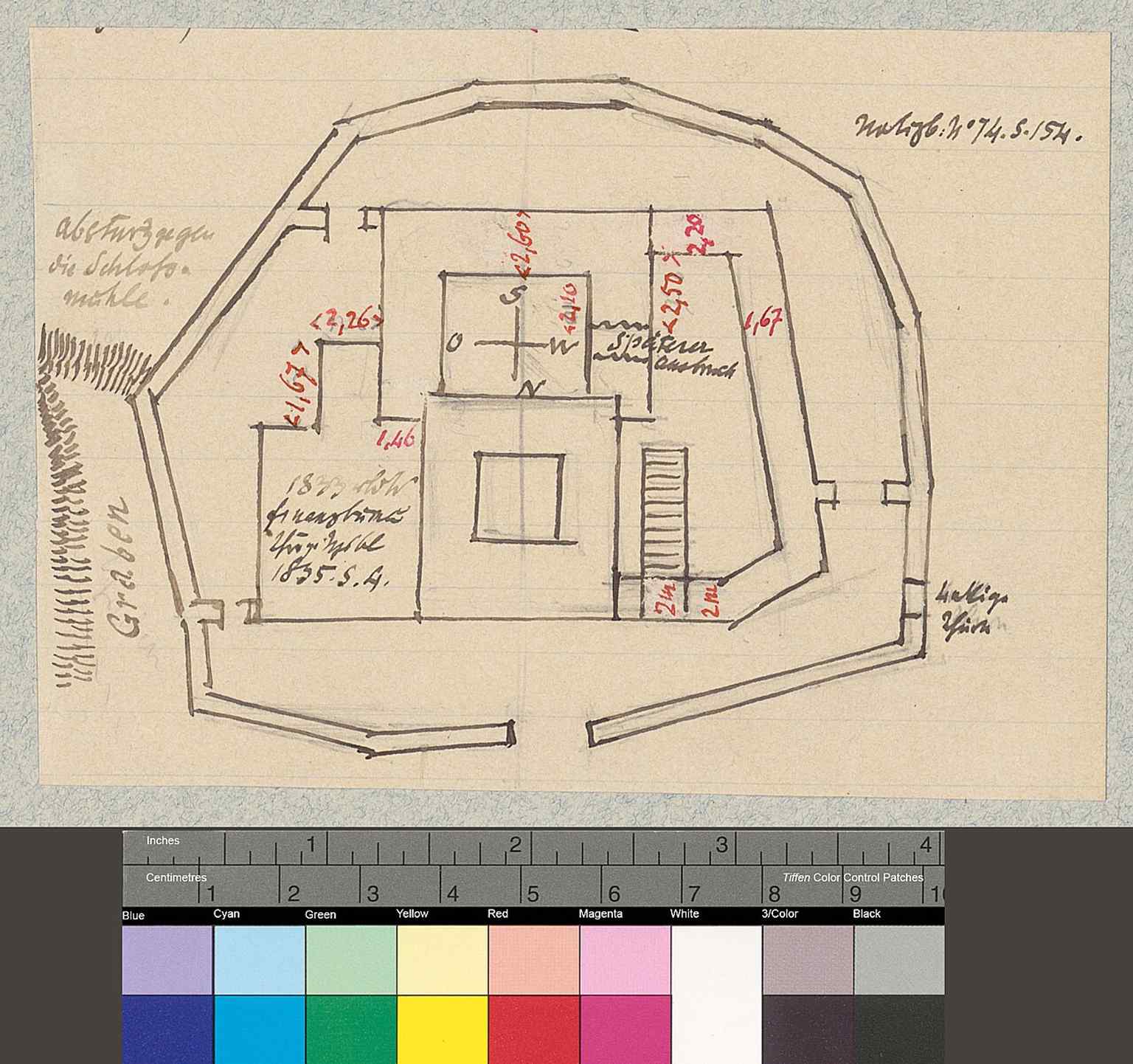
The ground plan of the lower floor helps reveal the castle’s internal structure and the once-protected spaces around the keep.
The ground plan of the lower floor helps reveal the castle’s internal structure and the once-protected spaces around the keep.Photo: Johann Rudolf Rahn, Wikimedia Commons, Public domain. Cropped & resized.
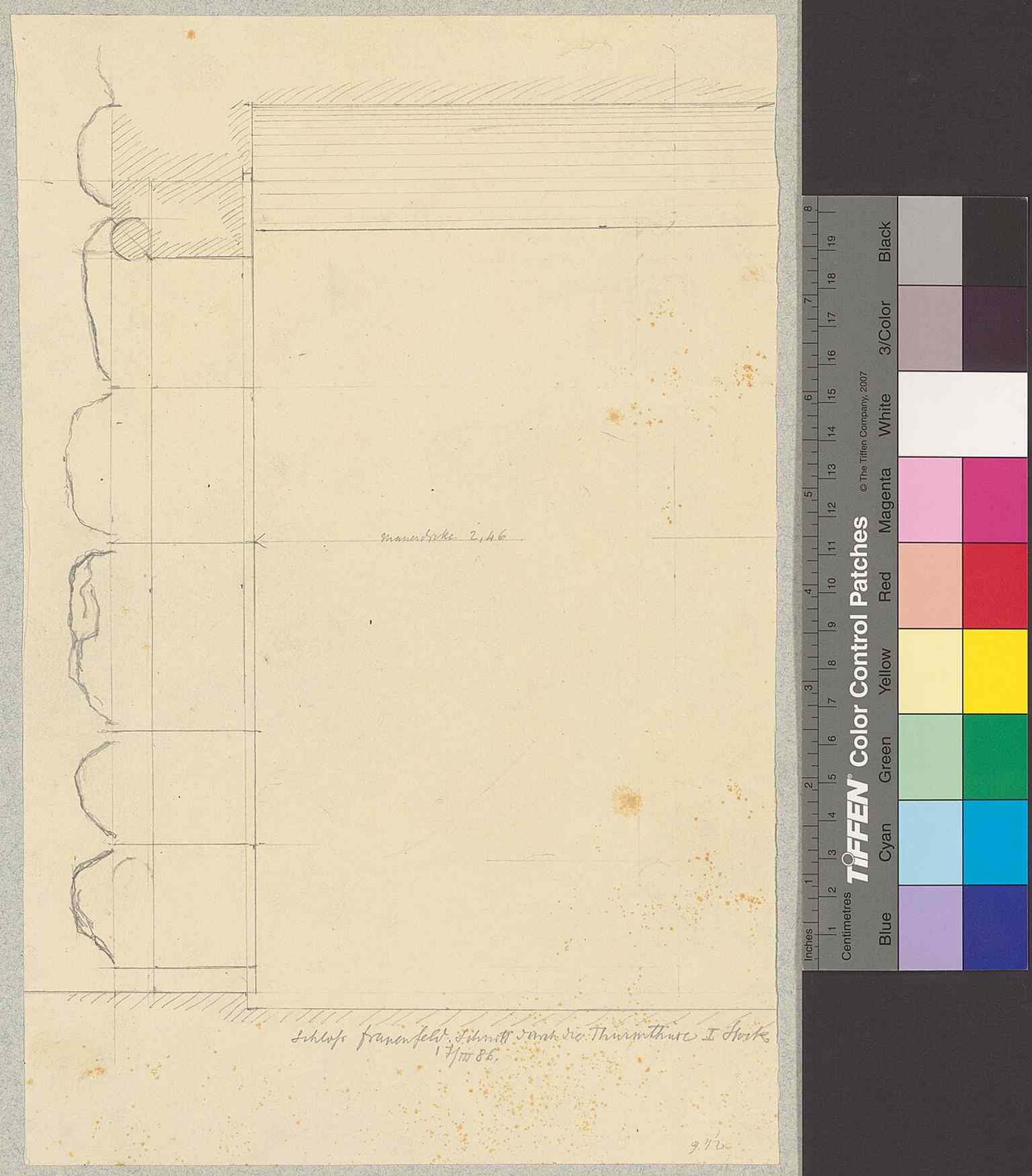
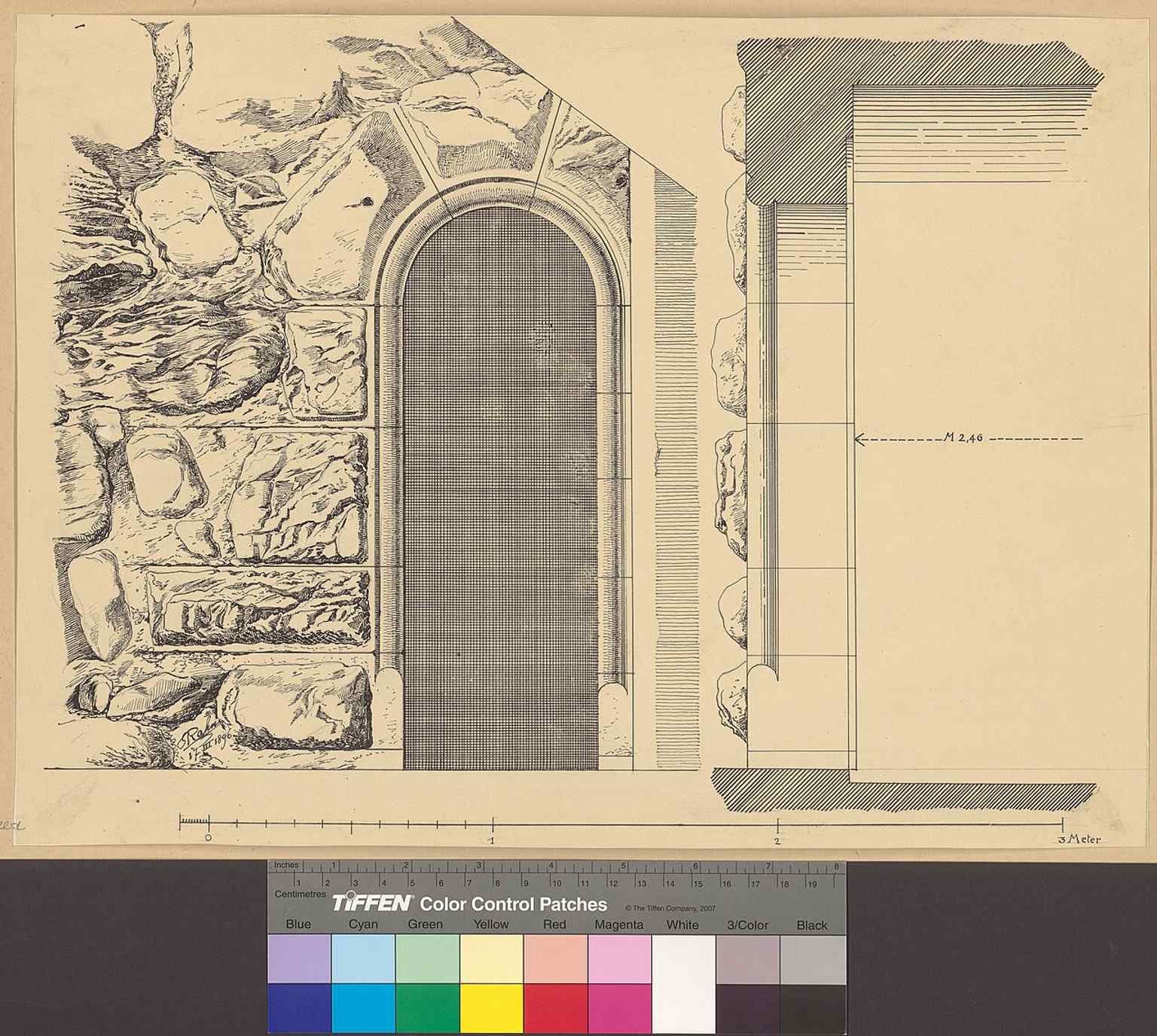
A cutaway of the tower door on the first floor — evidence of the original elevated entrance, reached in the Middle Ages by a wooden gallery.
A cutaway of the tower door on the first floor — evidence of the original elevated entrance, reached in the Middle Ages by a wooden gallery.Photo: Johann Rudolf Rahn, Wikimedia Commons, Public domain. Cropped & resized.
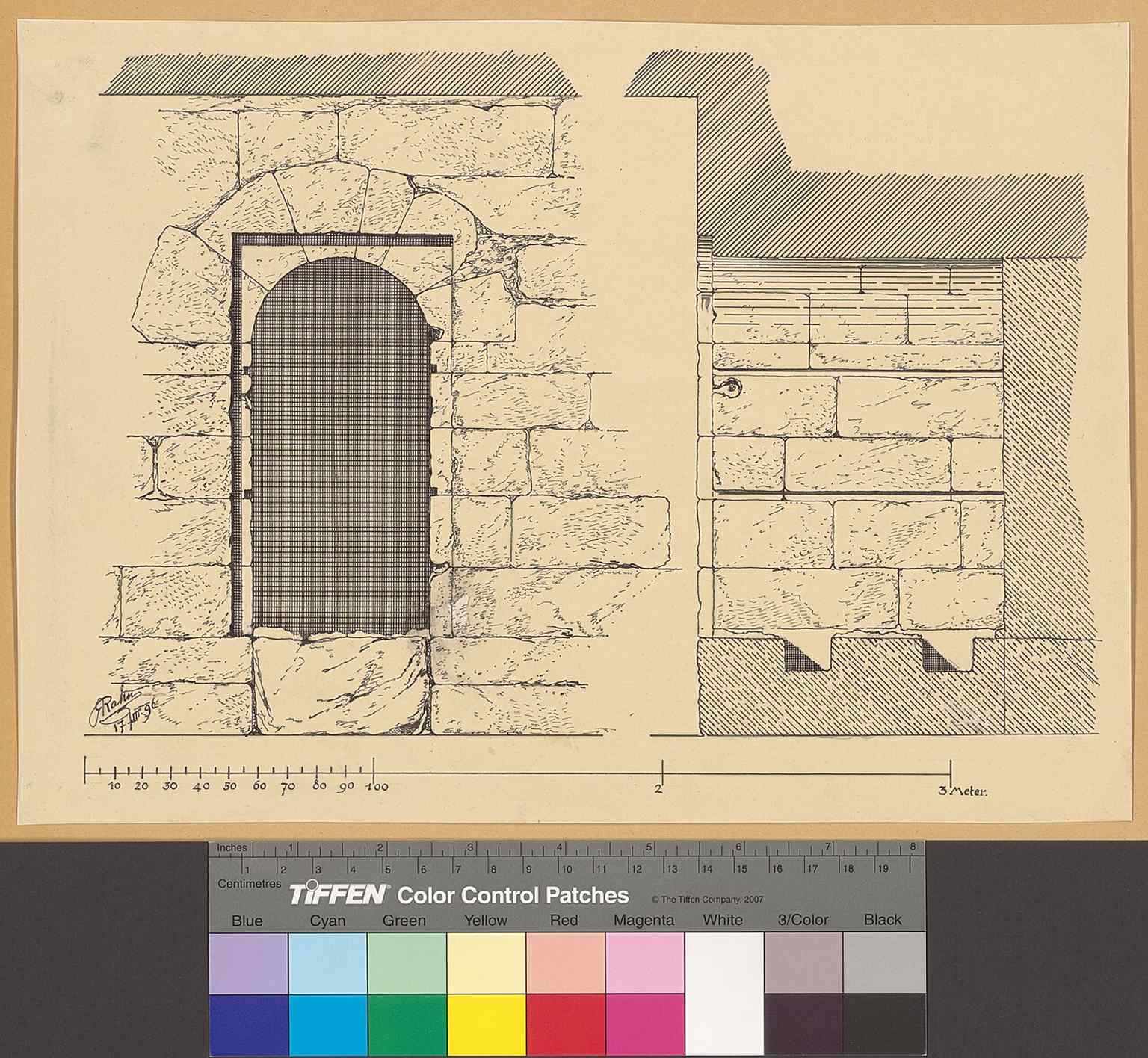
The tower doorway on the second floor, matching the source’s description of the raised medieval access point into the keep.
The tower doorway on the second floor, matching the source’s description of the raised medieval access point into the keep.Photo: Johann Rudolf Rahn, Wikimedia Commons, Public domain. Cropped & resized.
A close architectural study of the tower entrance, showing the heavy masonry that made the keep the castle’s defensive core.
A close architectural study of the tower entrance, showing the heavy masonry that made the keep the castle’s defensive core.Photo: Johann Rudolf Rahn, Wikimedia Commons, Public domain. Cropped & resized.
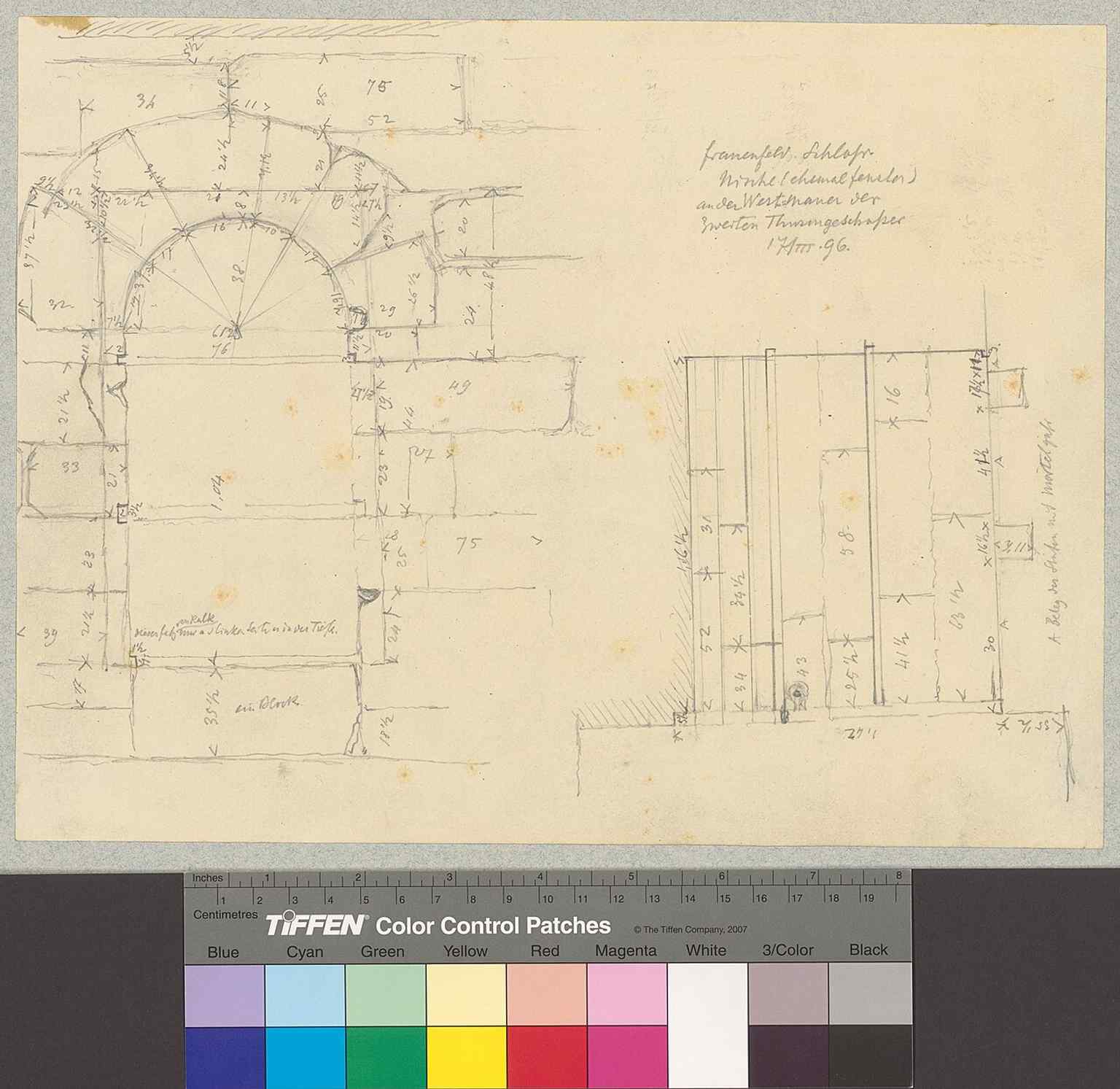
A former window niche on the tower wall, a small but telling trace of the medieval building fabric still visible today.
A former window niche on the tower wall, a small but telling trace of the medieval building fabric still visible today.Photo: Johann Rudolf Rahn, Wikimedia Commons, Public domain. Cropped & resized.
arrow_back Back to Frauenfeld Audio Tour: Hidden Gems and Echoes of Ergaten-Talbach
Loved by travellers

Thousands of tours started.
Plenty of opinions.

4.8 across the App Store and Google Play. Here's a few we keep coming back to.

starstarstarstarstar
This was a solid way to get to know Brighton without feeling like a tourist. The narration had depth and context, but didn't overdo it.
Christoph
Christoph
Brighton Tour
starstarstarstarstar
Started this tour with a croissant in one hand and zero expectations. The app just vibes with you, no pressure, just you, your headphones, and some cool stories.
download Get the app

Pop your headphones in.
Step outside.

Free to download. Tours in every city. Start in 60 seconds — no account, no card.

Download on the App StoreGet it on Google Play
starstarstarstarstar_half
4.8
AudaTours app icon
headphones
~ 4 min until your first tour starts
public
1,000+ cities worldwide
all_inclusive
AudaTours
Unlimited

Every tour. Every city. One subscription.

3101 tours2271 cities138 countries50+ languages