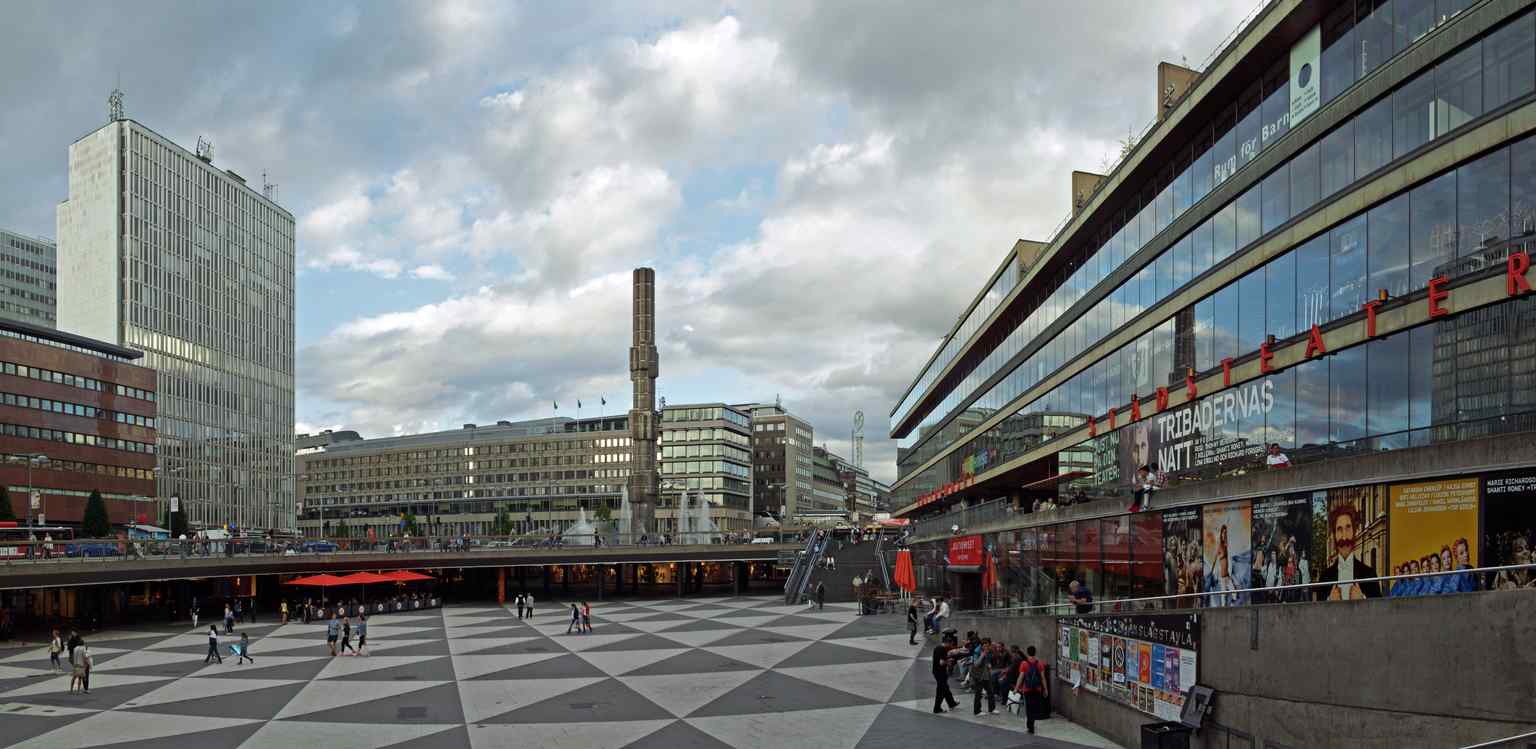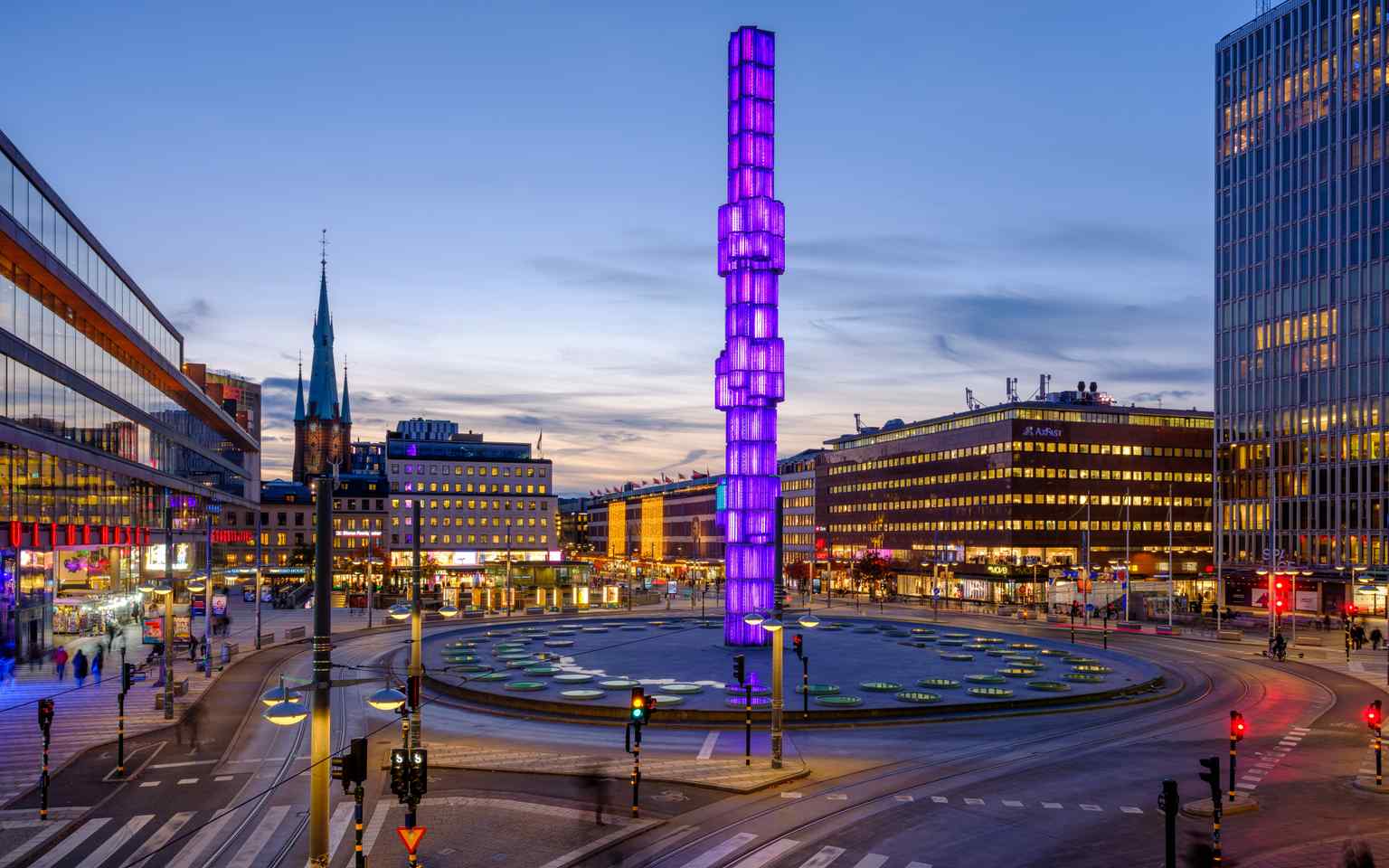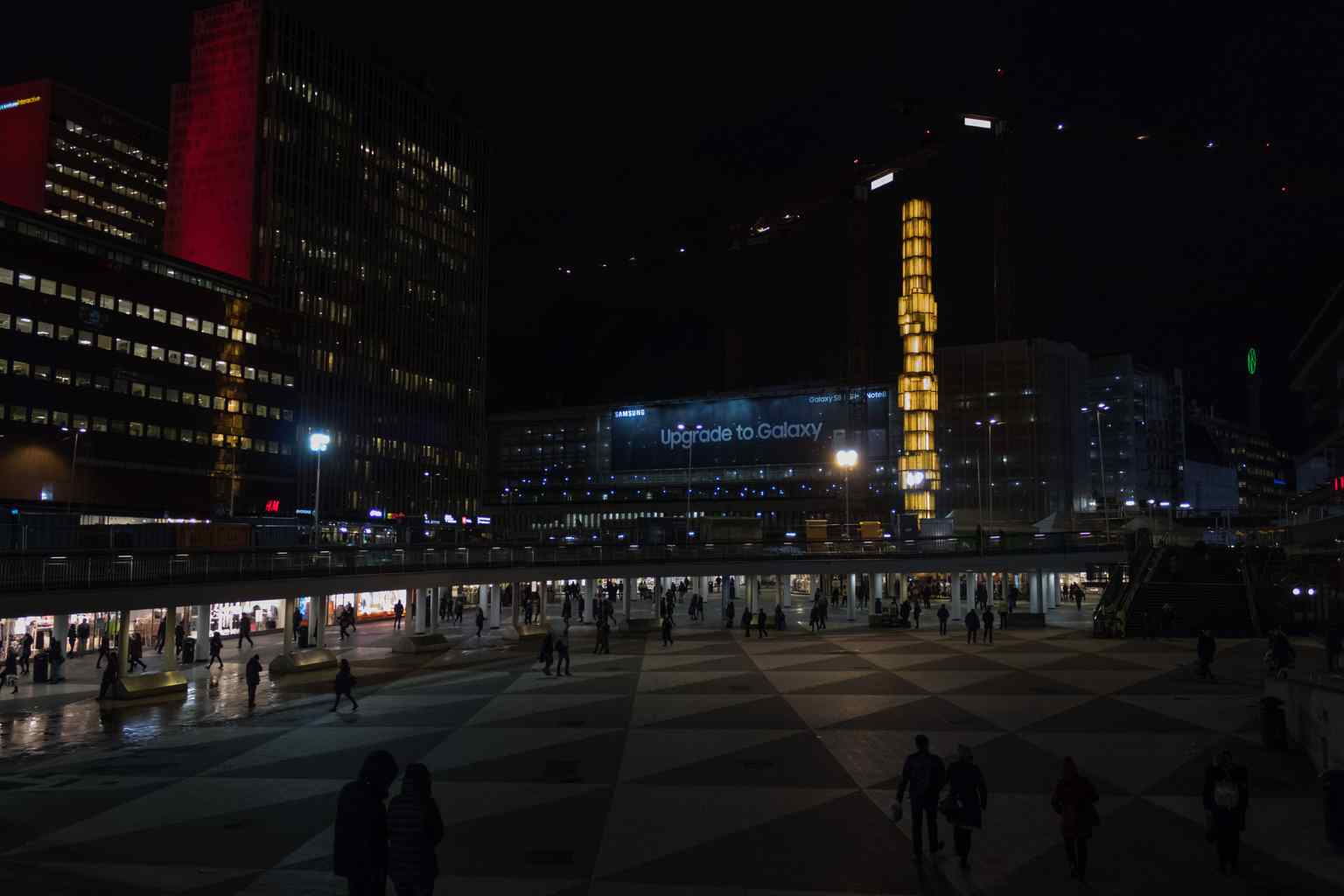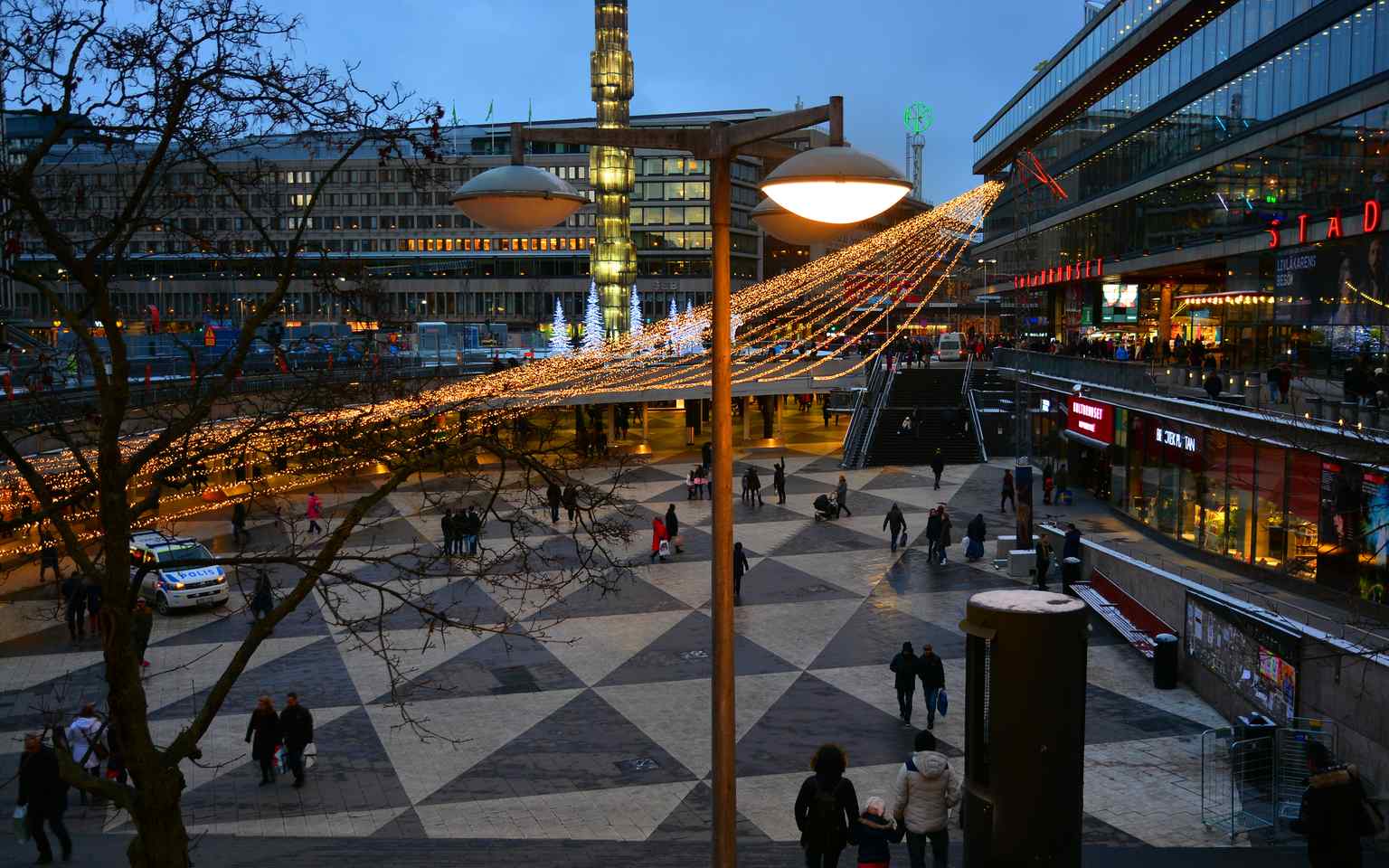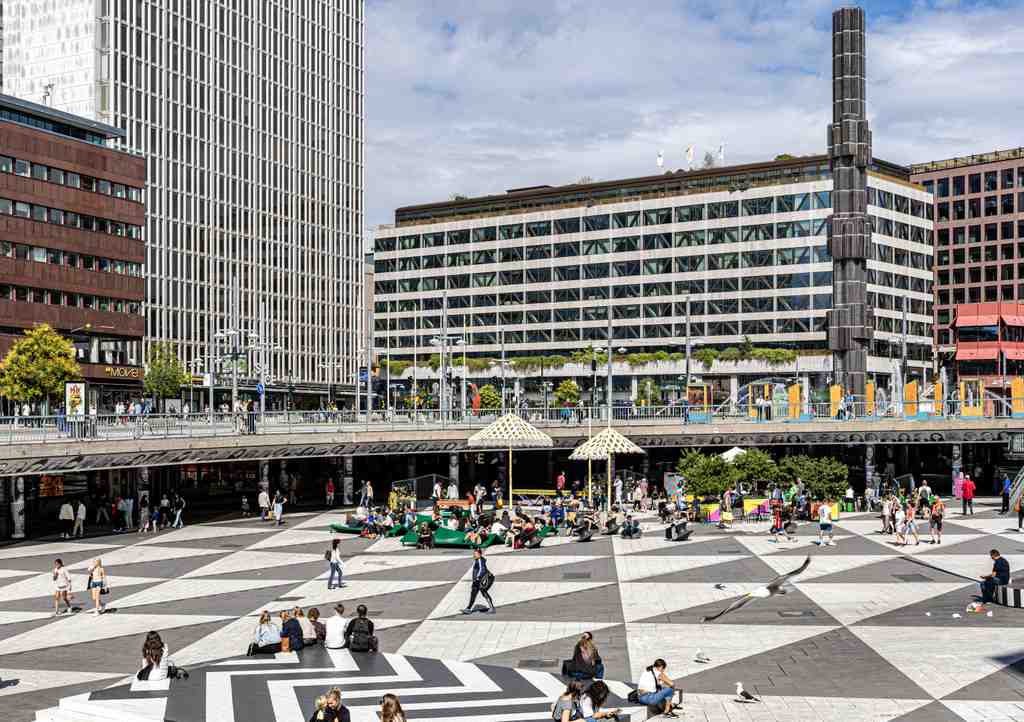
Look down into this vast, sunken plaza paved entirely in striking black and white marble and slate triangles, watched over by a towering obelisk made of stacked glass prisms.
Jörgen Kjaersgaard, the architect who designed this space, had a breathtaking dream for it. He envisioned a sweeping black and white canvas that, every evening, would be flooded by a thin, glowing sheet of water. The marble and slate were meant to sparkle like a vast mirror under city spotlights, turning a concrete basin into pure magic.
But budgets tightened, and that poetic vision was quietly scrapped. Instead, we got the dry, stark plaza you see today, locally known as Plattan, or The Slab. It is a little less romantic, isn't it? Take a look at your screen for a close-up of that original pattern Kjaersgaard designed. He actually had to sit by powerlessly in the 1990s as his iconic triangles were slapped onto cheap silk ties and commercial souvenirs, because the courts ruled that generic graphic shapes could not be copyrighted.
Imagine looking out over this sunken square, not at dry stone, but at a shimmering, living mirror of water reflecting the city lights... How does that change the feeling of this space for you?
The soaring glass pillar in the center suffered a similar fate. The sculptor, Edvin Öhrström, built it from sixty thousand handmade glass prisms. His grand plan was to have water cascading down its sides. But Stockholm is a windy city. They quickly realized the wind would just whip the water off the glass and drench any pedestrians walking by. So, the waterfall idea was abandoned.
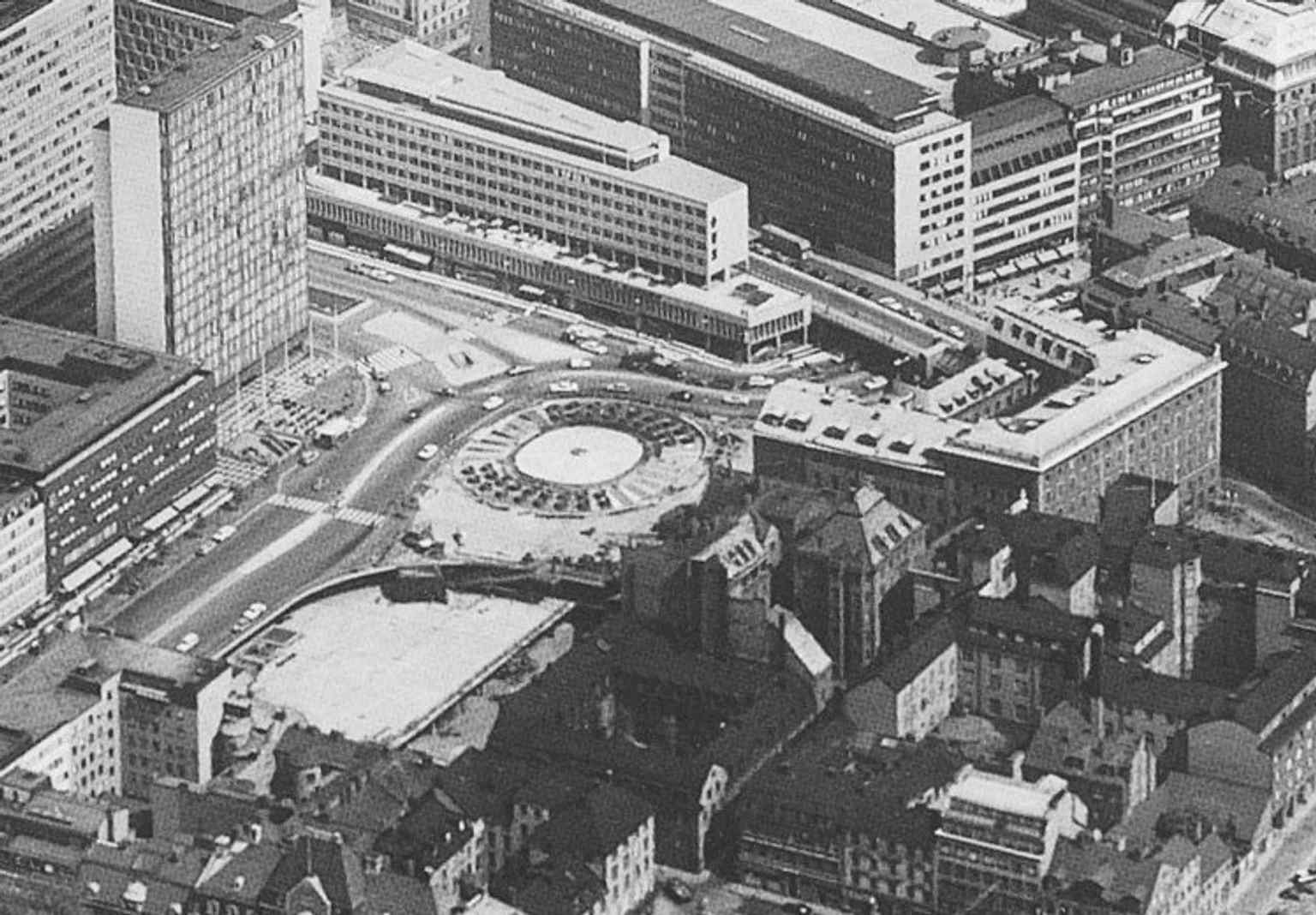
There is a deeper irony built into these stones. The square is named after Johan Tobias Sergel, a brilliant eighteenth-century sculptor. For generations, his historic studio stood right near here. But in 1953, the city bulldozers tore it down to make way for this very plaza. They wiped away a piece of the city's artistic soul for the sake of ruthless modern progress, and then named the concrete replacement after him as a kind of civic apology.
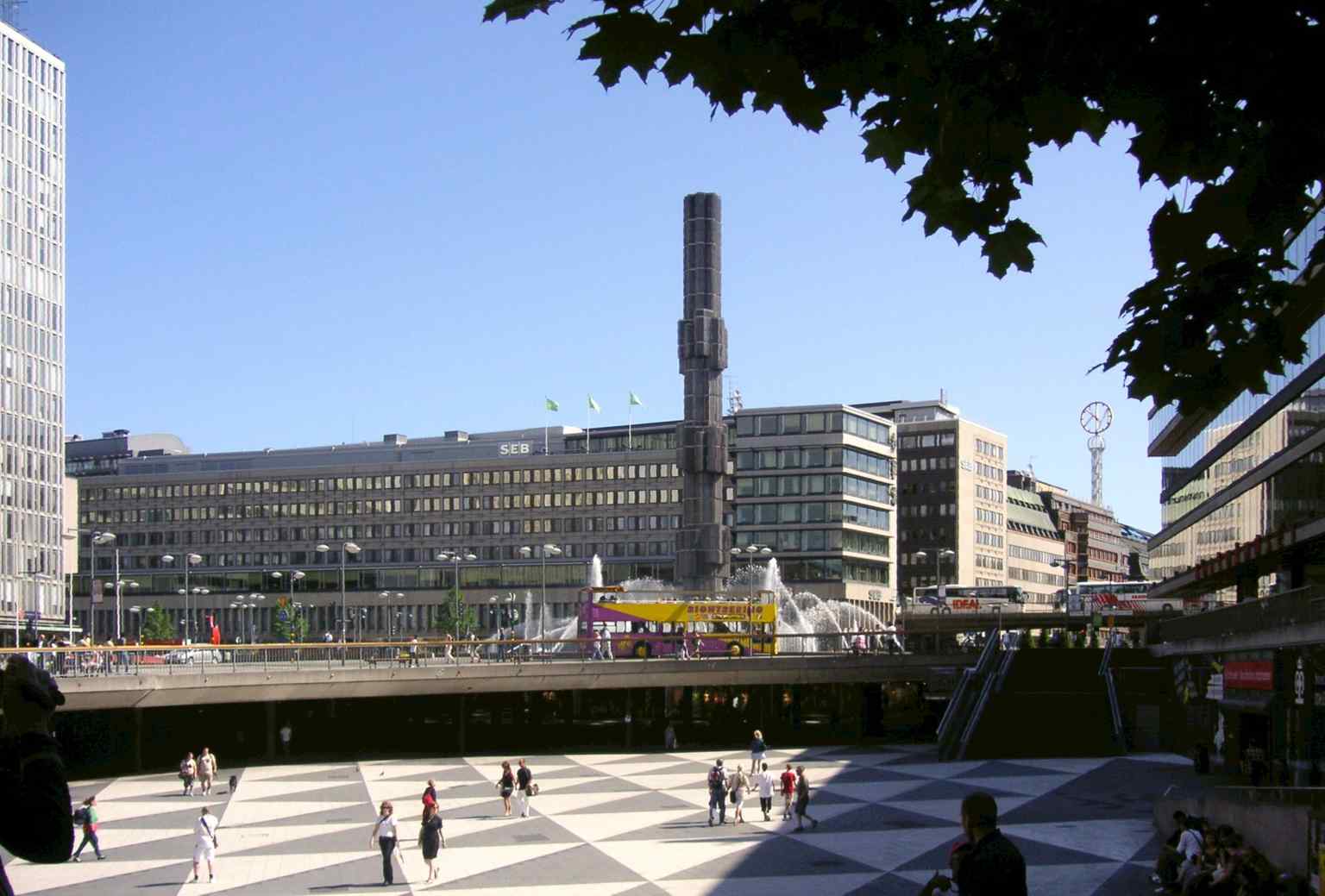
Over the last couple of decades, the city actually had to rip up and rebuild much of the leaking concrete deck underneath us, though they carefully preserved the iconic surface. You can check out a before and after image in your app to see how the plaza looked before and after those major structural renovations.
It leaves you wondering about the heavy gap between a creator's sweeping dreams and the stark reality of what actually gets built. Let's leave these dry stones behind and head toward our next stop, Jacob's Church, which is just about a seven-minute walk from here.