
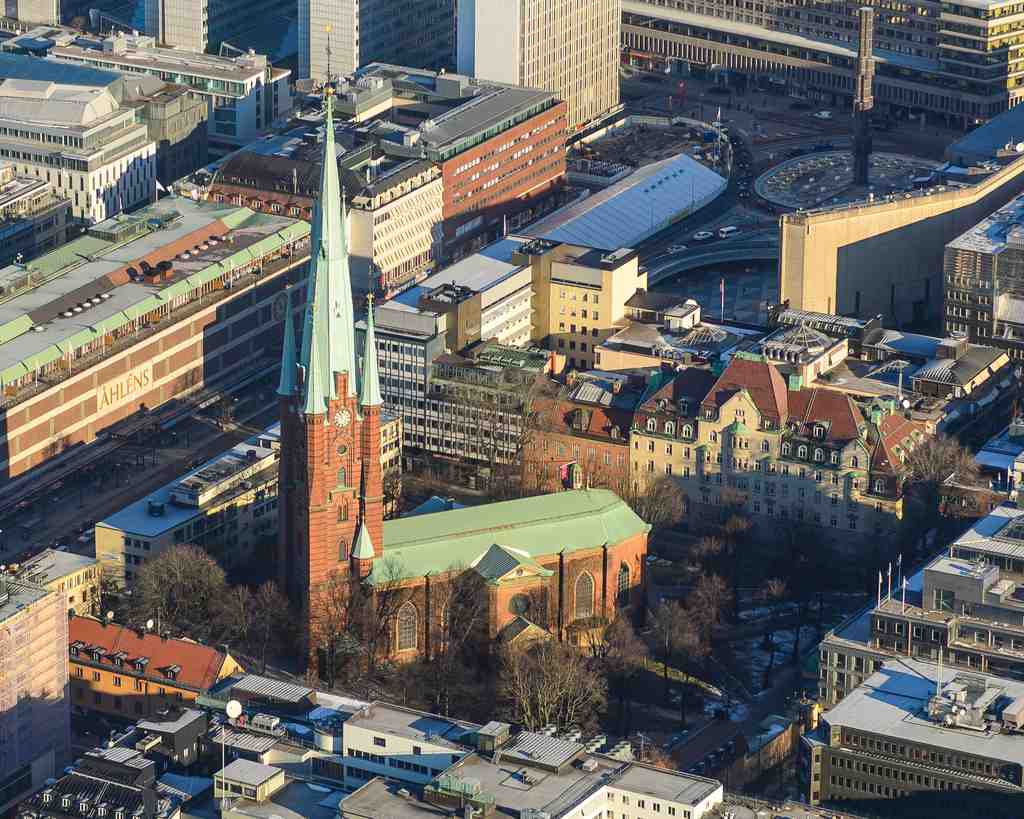
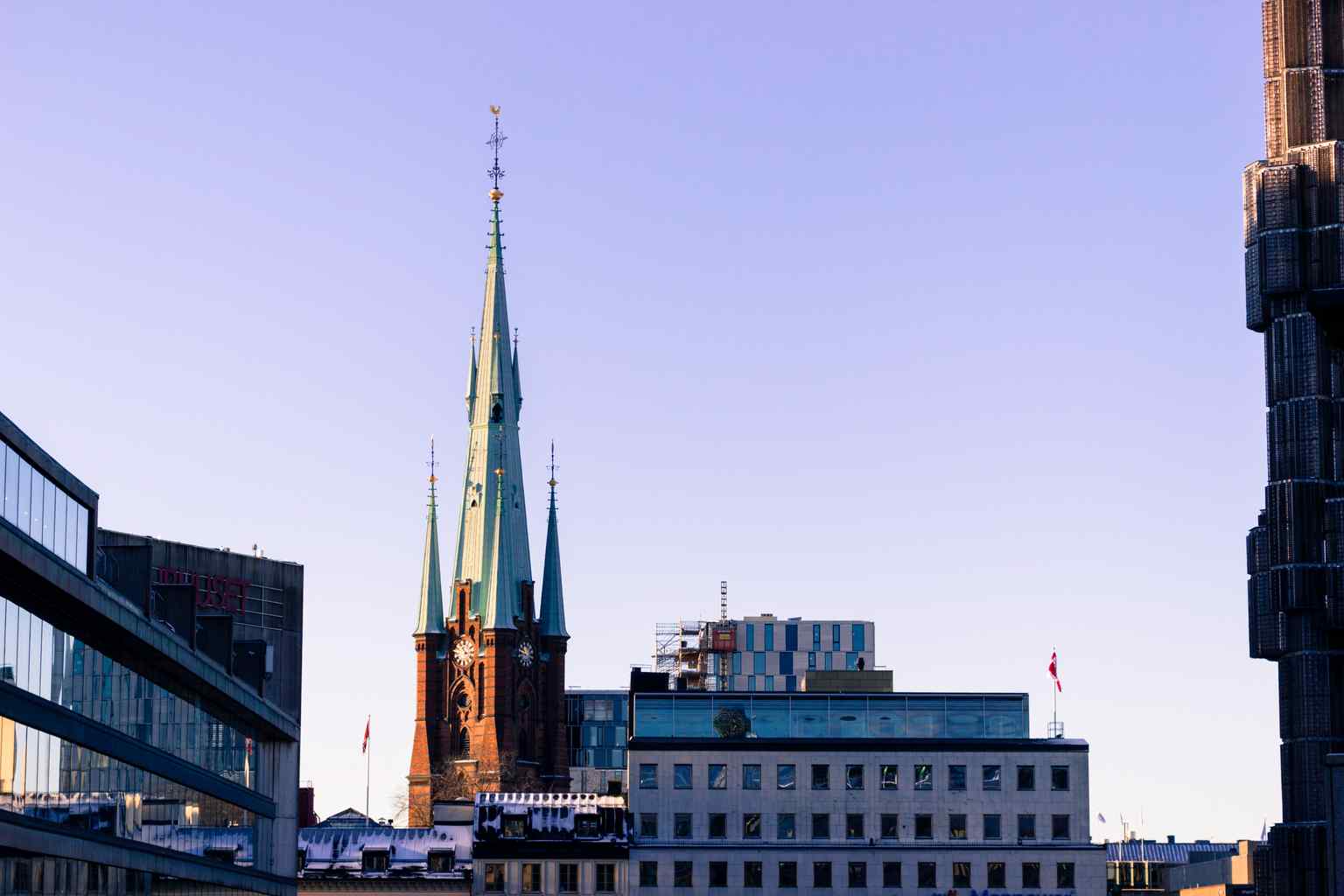
Take a look at the striking red brick building before you, shaped like a traditional Latin cross with one long main section intersected by a shorter crossway, and topped with a towering, green copper spire flanked by four smaller corner turrets. Cities like Stockholm are rarely built on empty land. Instead, they are forged through a brutal process of tearing down the old to make way for the new. Every modern street or square usually sits on top of buried ambitions, ruined fortunes, and centuries of erased history. Look at your screen to see an aerial view of how the modern city has completely swallowed this historic ground.
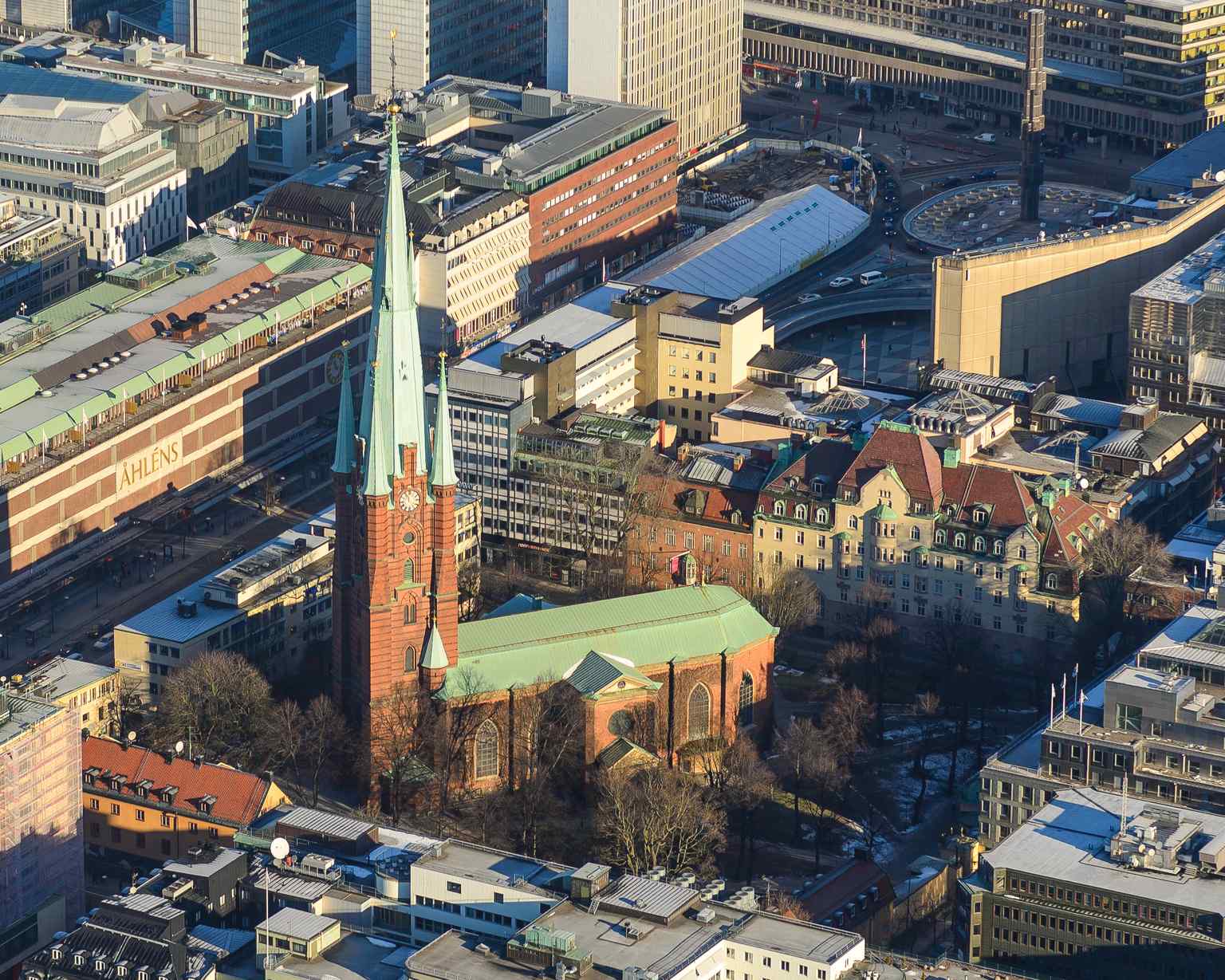
Here, in the 1280s, King Magnus Ladulås donated land to found the Sankta Klara nunnery, an incredibly powerful religious institution. By 1335, his own daughter, Princess Rikissa, became the abbess, the female superior in charge of the community of nuns. The convent grew to own vast tracts of land across what is now Östermalm, Södermalm, and beyond. It was a true empire of prayer and property.
But then came King Gustav Vasa in the 1520s, a monarch defined by his ruthless pragmatism and a sharp eye for seizing wealth to secure his own throne. When he led the Reformation, the convent's enormous riches became its death sentence. In 1527, Gustav Vasa ordered the total demolition of the nunnery and its church. His official excuse was military defense, claiming that foreign enemies might use the sturdy brick buildings to fire cannons at his castle. But quite conveniently, destroying the convent also allowed the crown to confiscate all of its vast, profitable estates. The surviving nuns were forced out to care for the city's sick, only to be pushed even further away when the King complained that the powerful stench of their patients was blowing toward his royal palace.
Decades later, his son Johan the third ordered a new church built on the very same spot, hiring the brilliant Dutch architect Hendrik van Huwen. Over the centuries, a parade of masterful creators poured their genius into this structure. When a catastrophic fire ripped through the area in 1751, an architect named Carl Hårleman drafted complete plans to rebuild it just twenty days after the flames died down, though he tragically died before the work was finished. The church you see today, with its 116 meter tower making it the second tallest in Scandinavia, is a monument to those who rebuilt from the ashes. Check your app for a glimpse of the beautifully restored sanctuary inside.
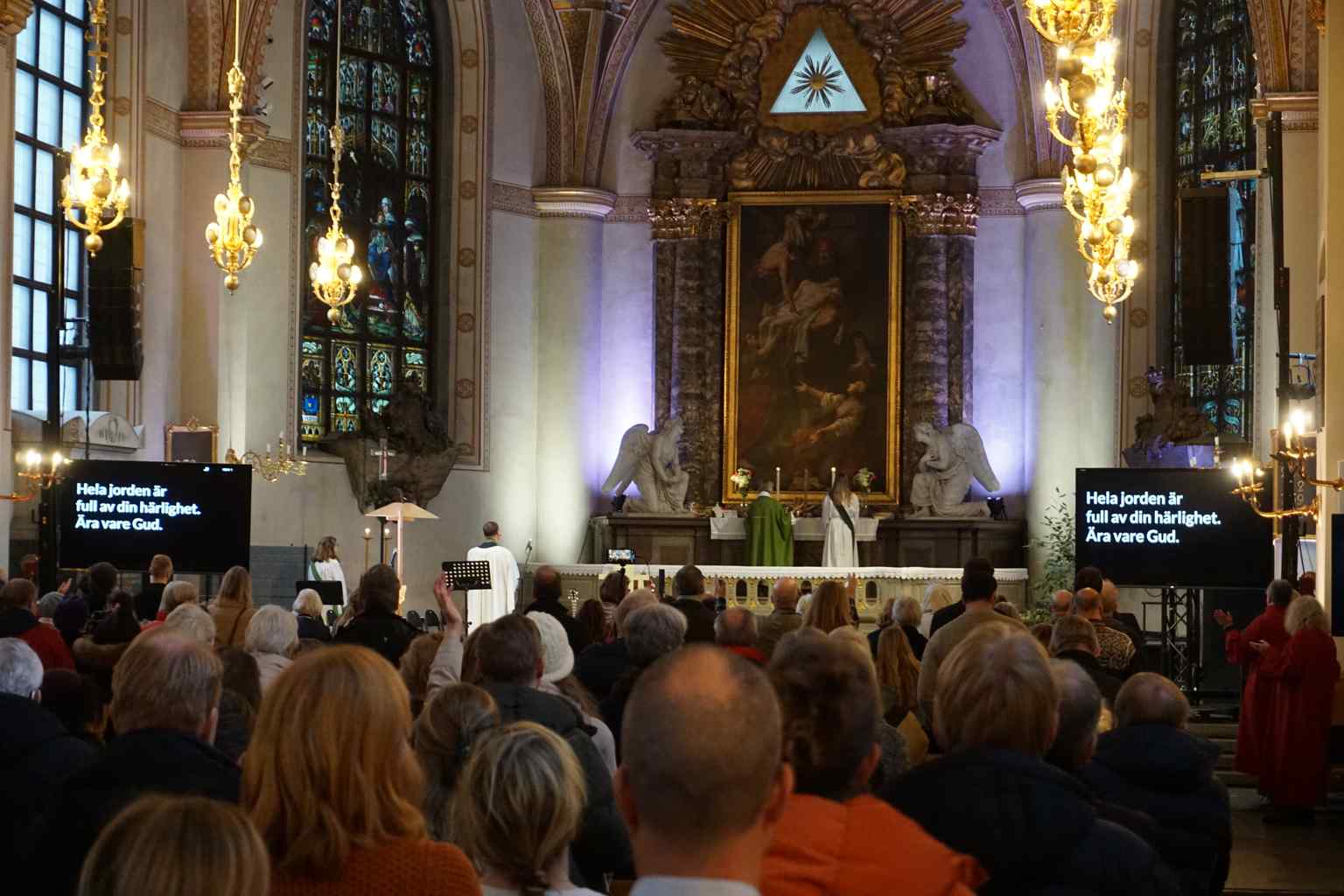
It makes you wonder how many ancient scars are hidden beneath the modern concrete we walk on every day. If you want to step inside, the church is generally open daily from ten in the morning to five in the evening, with slightly adjusted hours on Thursdays and Saturdays. Now, let us head toward Sergels torg, which is just a four minute walk away.






.jpg)

