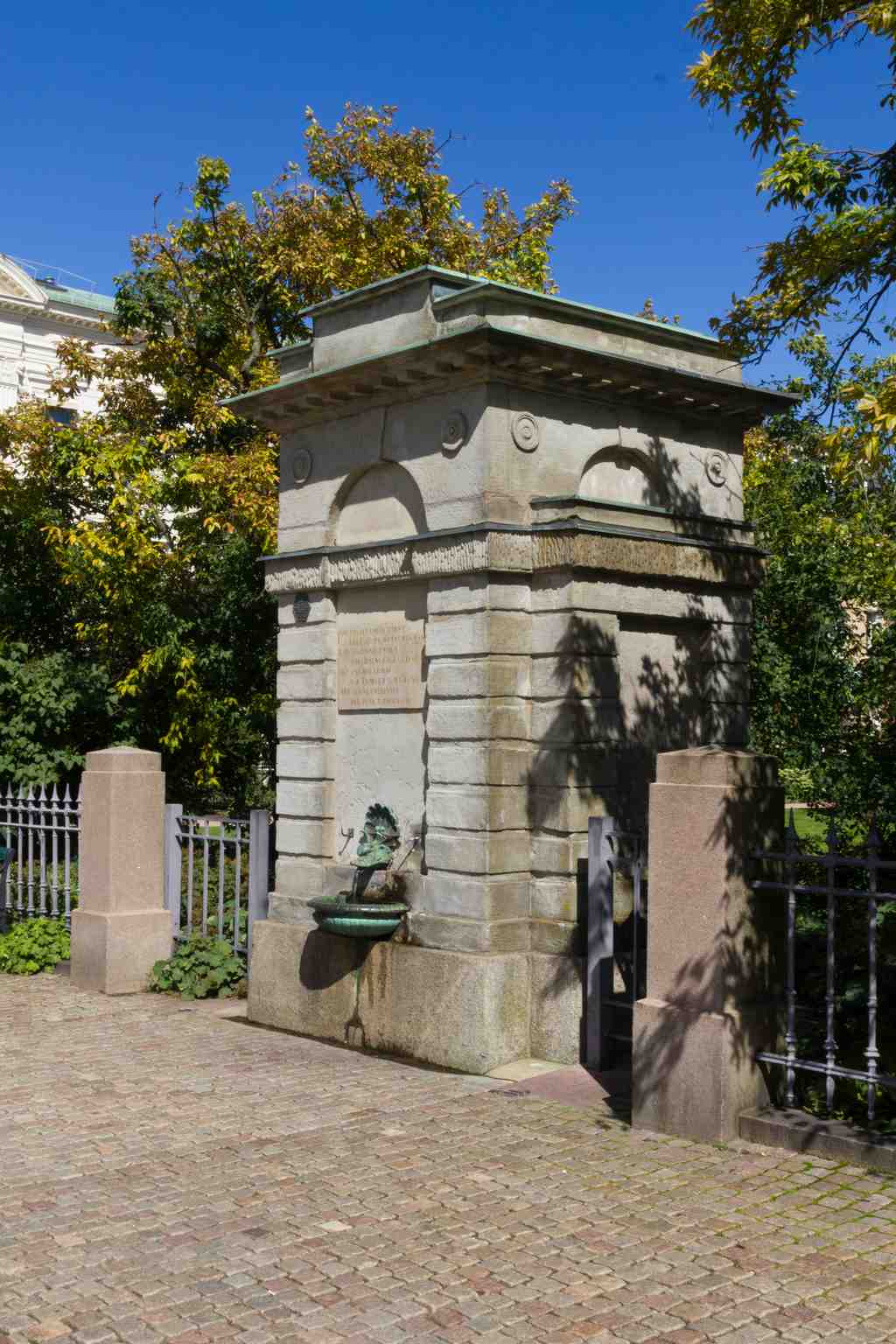
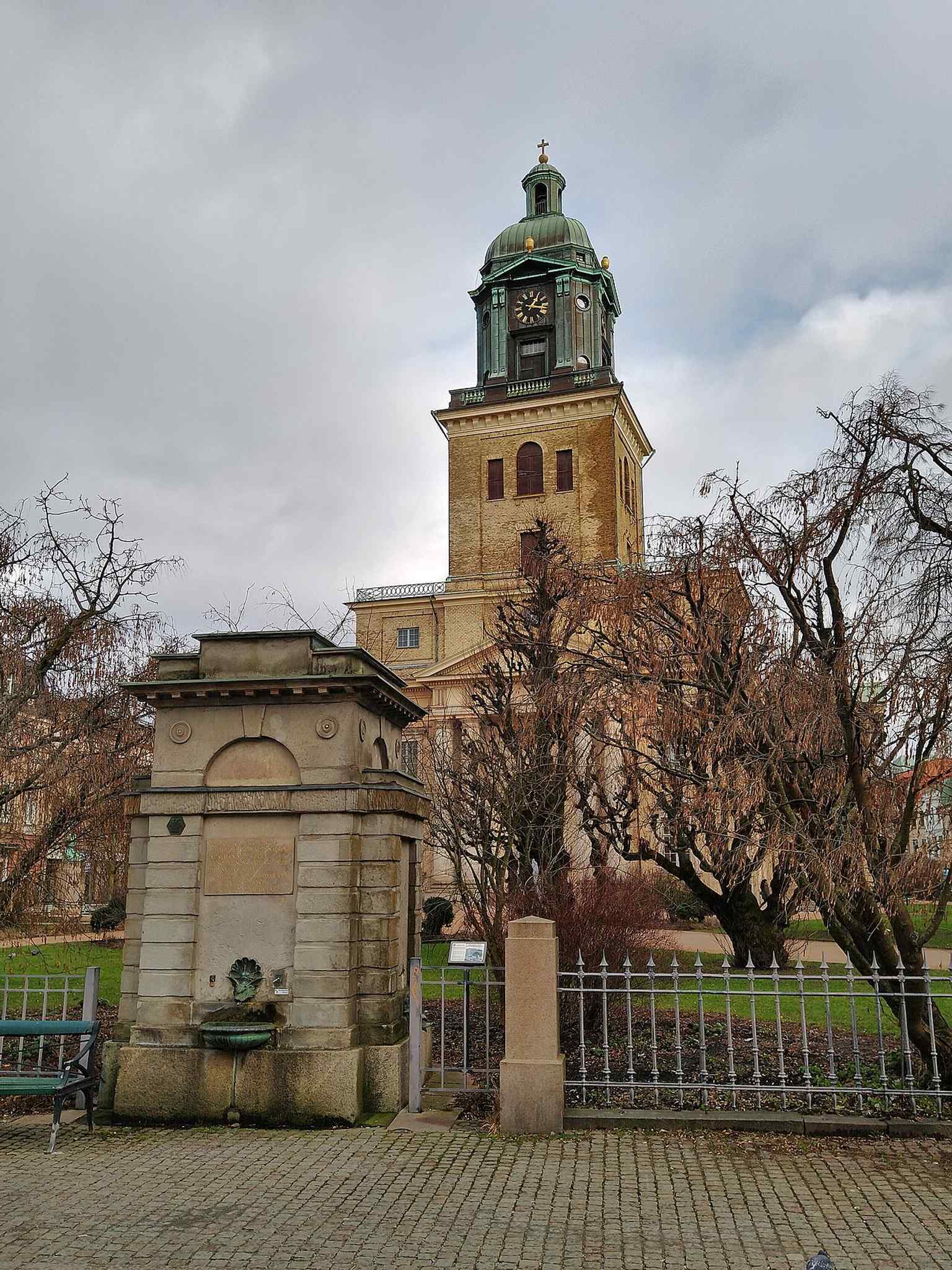
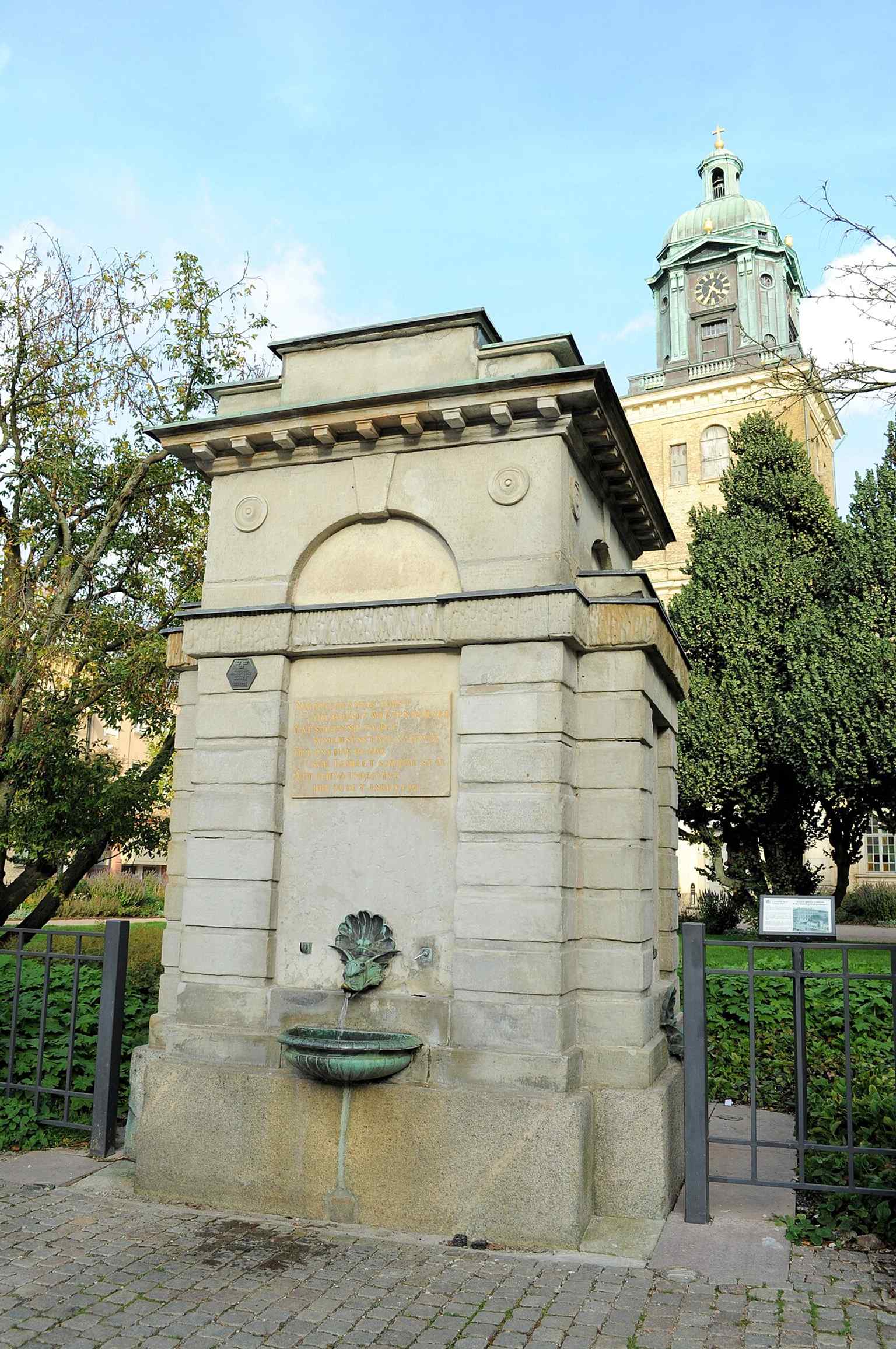
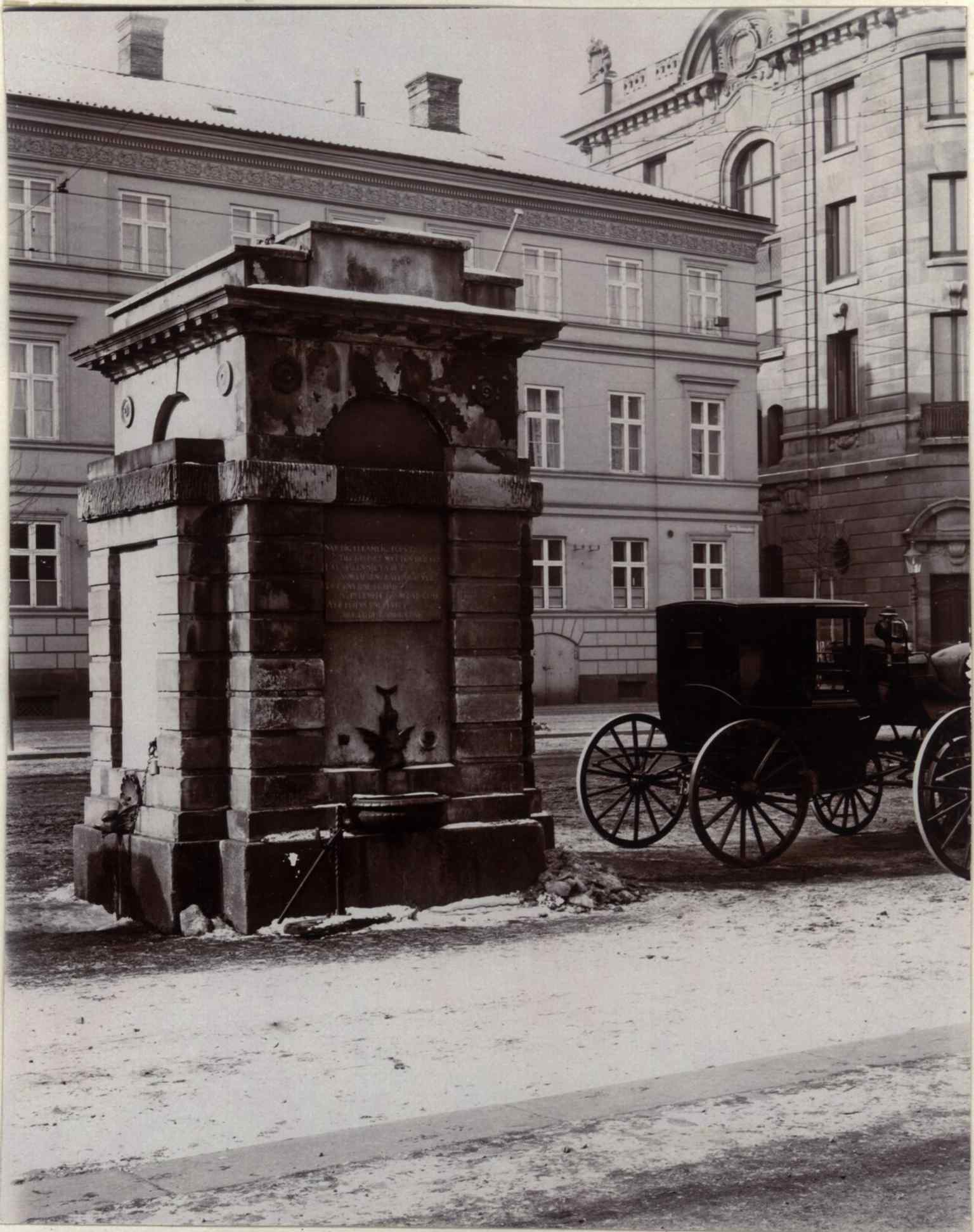
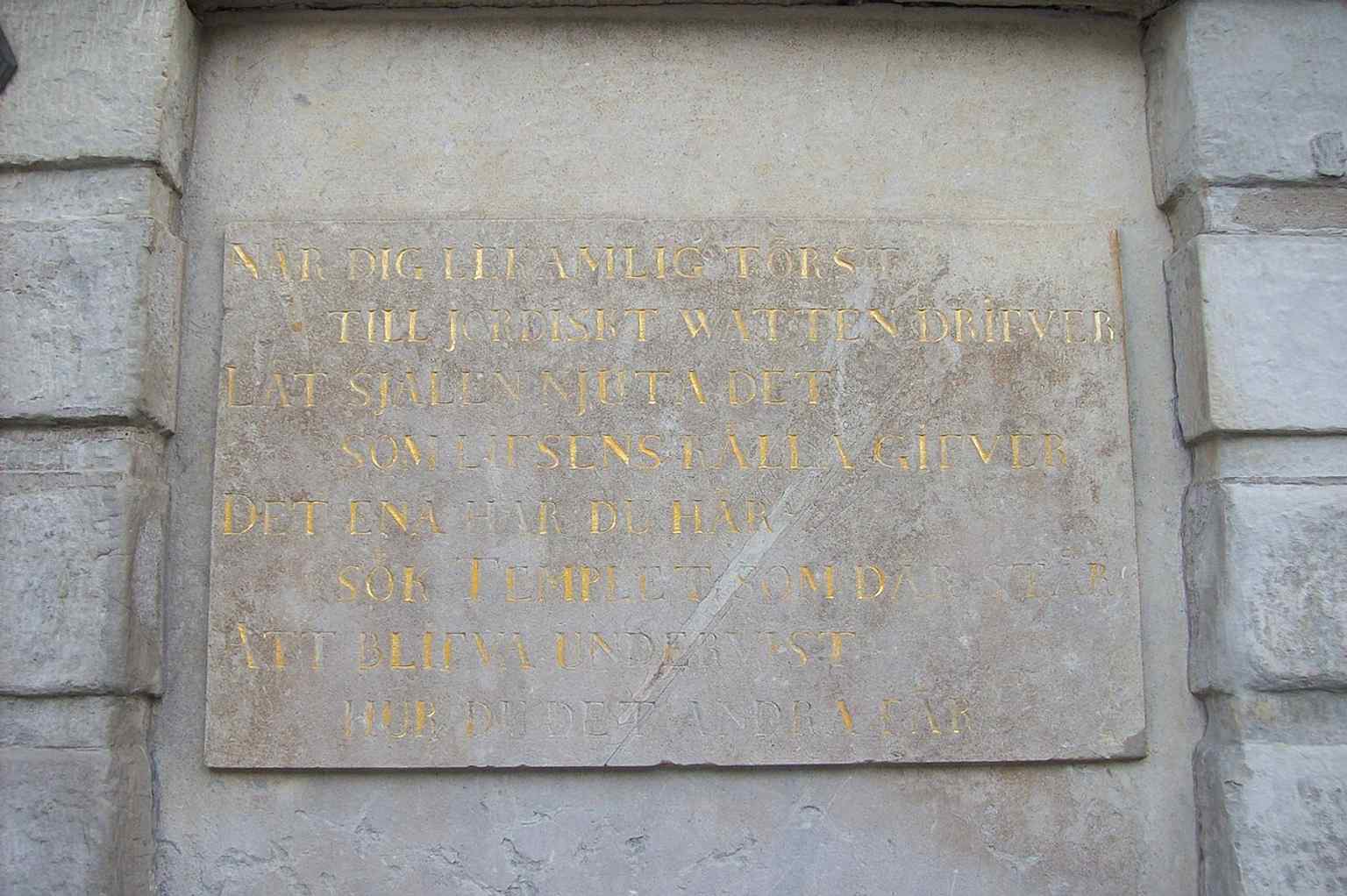
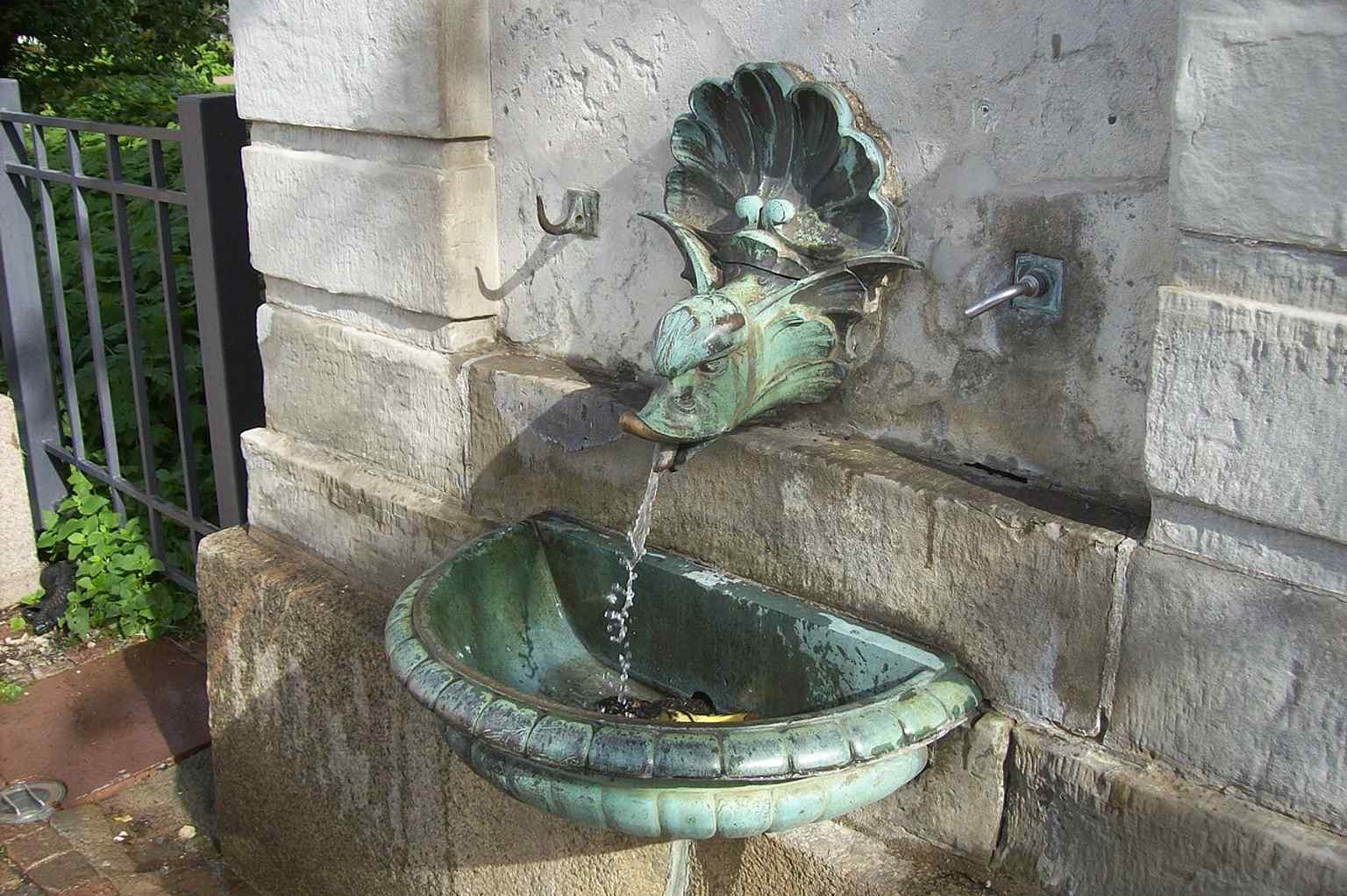
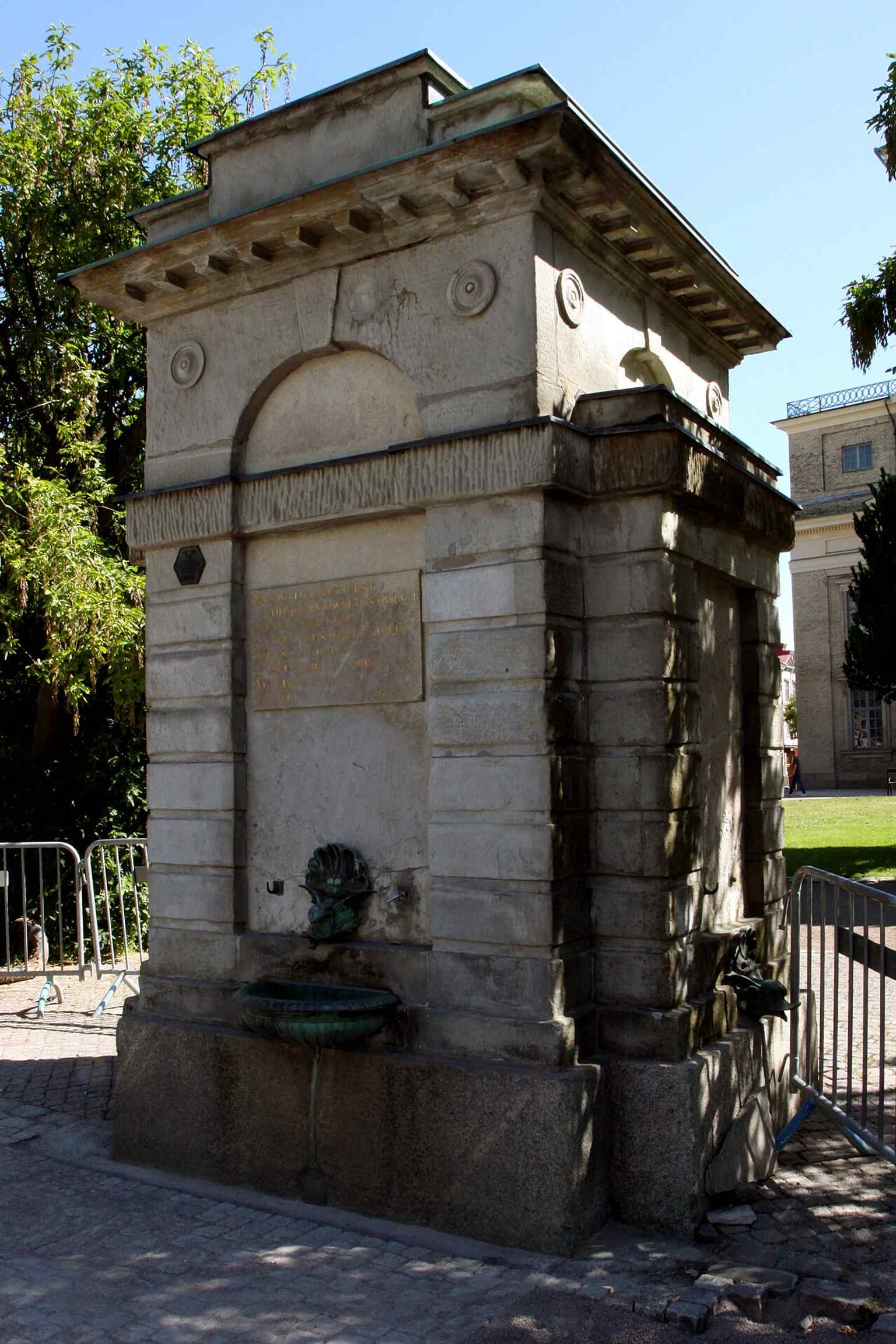
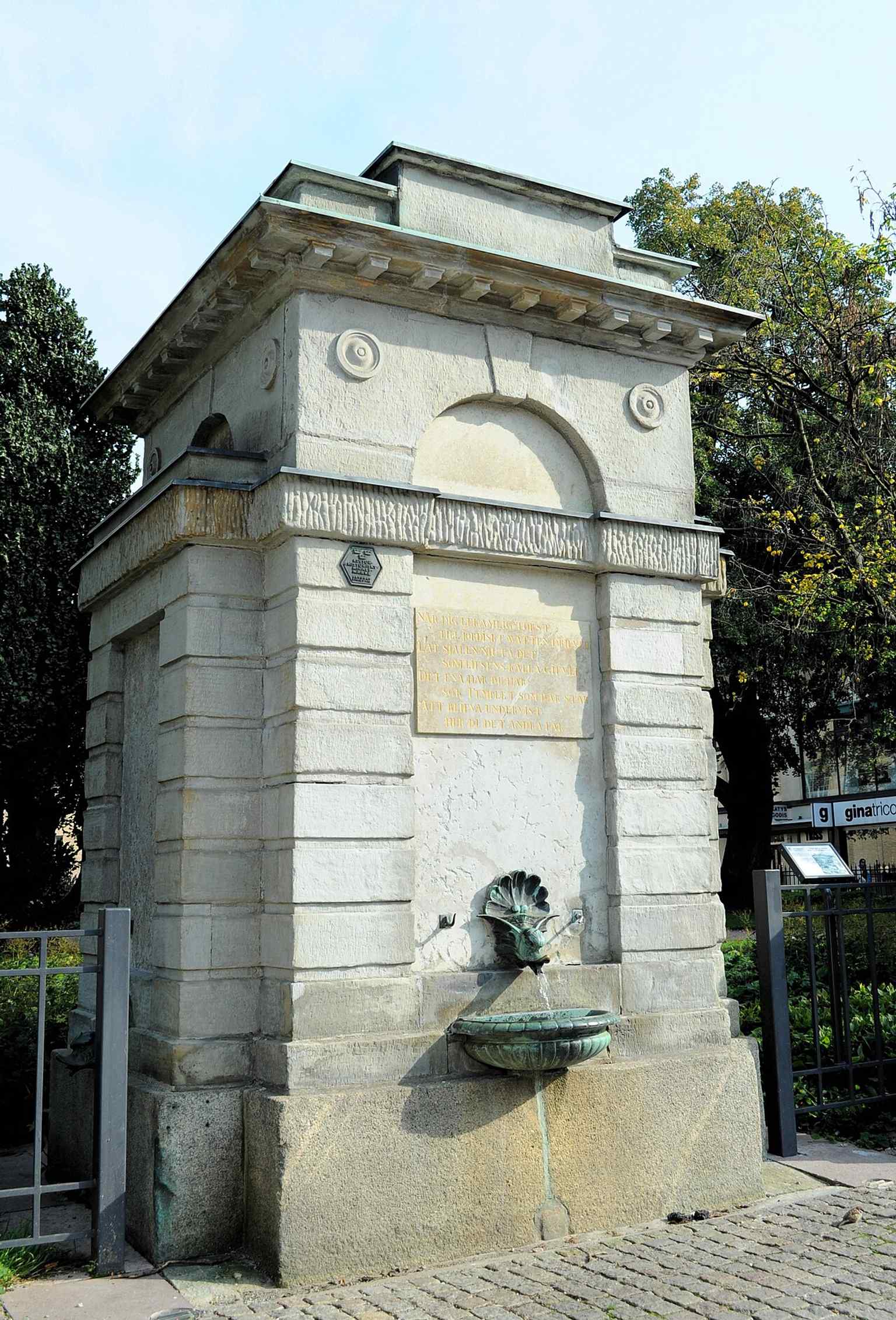
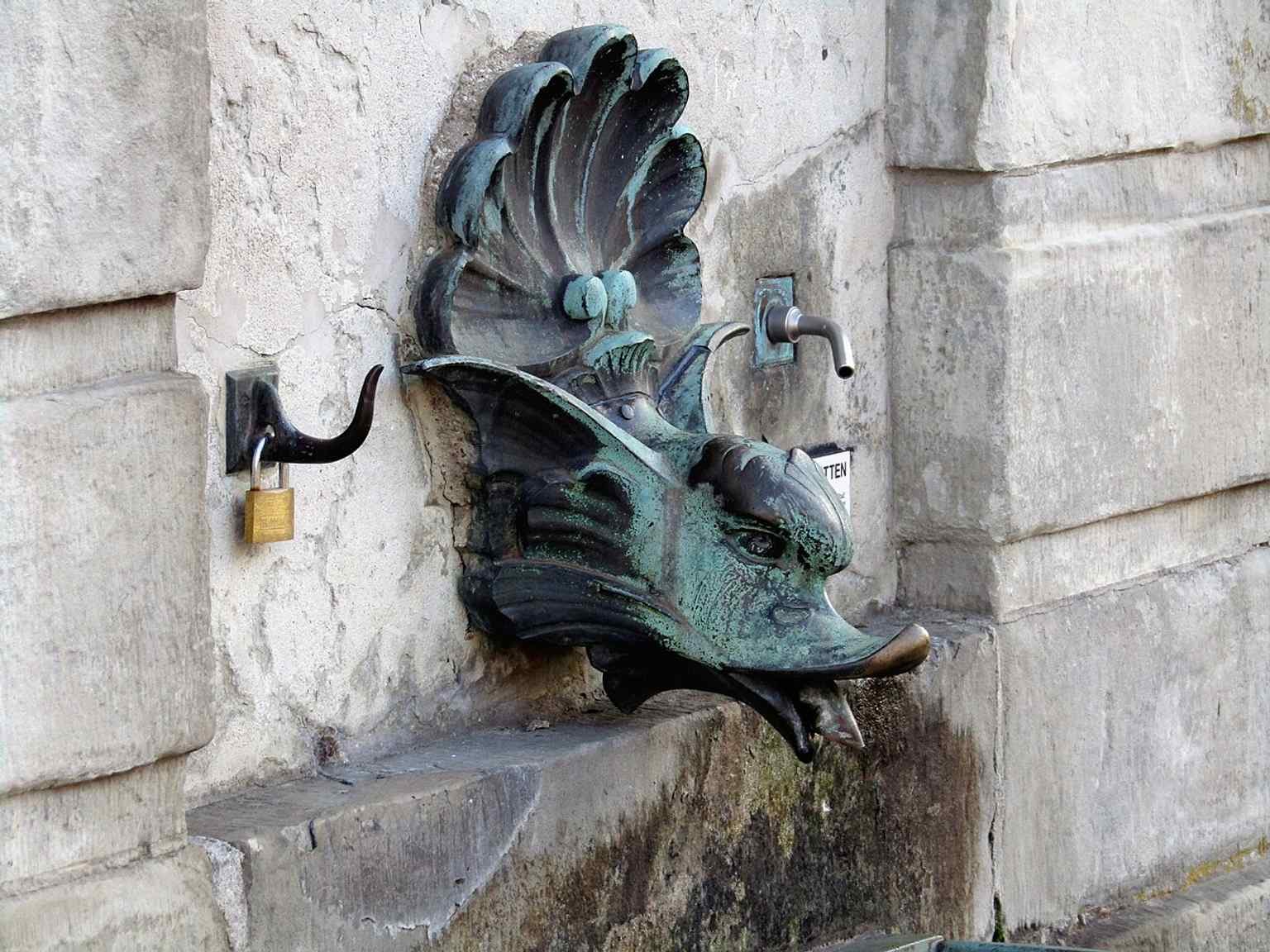
Just to your left sits the Cathedral Well, a square structure made of pale grey stone blocks with a flat roofline and a carved inscription plaque above the green metal spout. Built in 1816 by city architect Jonas Hagberg, this was once a vital urban lifeline. It brought fresh drinking water from the Kallebäck spring directly into the city. People loved this little stone well so much that when officials tried to tear it down in the 1890s, a fierce public protest saved it! Check out the before and after image on your phone to see how it has held its ground since the 1970s while the city evolved around it. Originally, it sat right on the street edge, but was moved here in 1967 after the old canal was filled. The inscription on the front carries a brilliant double meaning. It tells you that while this earthly water cures physical thirst, you should look toward the temple, the cathedral behind it, to quench your spiritual thirst. It is a beautiful piece of architectural survival. Let us leave this quiet corner and see what else awaits.
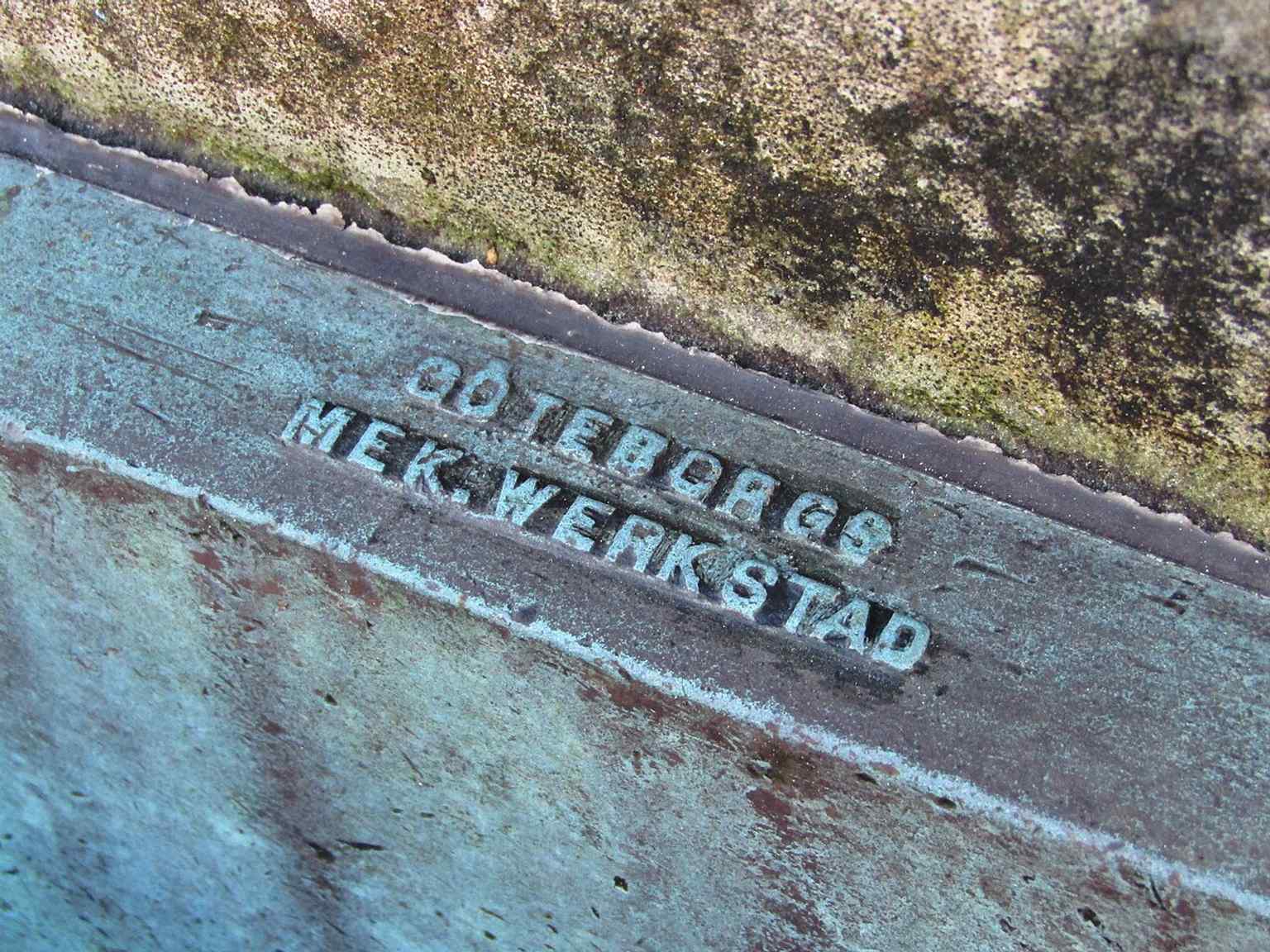
The Cathedral Well, located on Domkyrkoplanen's southwest side, stands proudly beside Gothenburg Cathedral, which is mentioned in the well's inscription.Photo: Sekreterare, Wikimedia Commons, CC BY-SA 4.0. Cropped & resized.A full view of The Cathedral Well, constructed in 1816 and designed by city architect Jonas Hagberg.Photo: Natonato, Wikimedia Commons, CC BY-SA 3.0. Cropped & resized.This historical photo from 1910 shows the well in its original location by Västra Hamngatan, before it was moved in 1967 after the Västra Hamnkanalen was filled in.Photo: unknown, Wikimedia Commons, Public domain. Cropped & resized.A close-up of the well's profound inscription, urging visitors to seek the spiritual 'source of life' in the nearby Temple.Photo: Lintoncat, Wikimedia Commons, CC BY-SA 3.0. Cropped & resized.Water gracefully streams from the mouth of the ornamental 'water monster', symbolizing the Kallebäcks källa pipeline that fed the well.Photo: Lintoncat, Wikimedia Commons, CC BY-SA 3.0. Cropped & resized.A less prominent inscription, 'GÖTEBORGS MEK. WERKSTAD,' reveals another layer of history or craftsmanship associated with the well.Photo: Alicia Fagerving, Wikimedia Commons, CC BY-SA 3.0. Cropped & resized.The Cathedral Well functioned as a tap for the water pipeline, bringing fresh water from the Kallebäcks källa, located four kilometers away.Photo: Fluff, Wikimedia Commons, CC BY-SA 3.0. Cropped & resized.This well house is recognized as the last remaining part of Gothenburg's first city-wide water plant, a testament to early urban infrastructure.Photo: Nato Morgoshia, Wikimedia Commons, CC BY-SA 3.0. Cropped & resized.A detailed view of the well's architecture, which was designed by city architect Jonas Hagberg in 1816.Photo: Alicia Fagerving, Wikimedia Commons, CC BY-SA 3.0. Cropped & resized.arrow_back Back to Gothenburg Audio Tour: Landmarks and Legacy
Loved by travellers
Thousands of tours started. Plenty of opinions.
4.8 across the App Store and Google Play. Here's a few we keep coming back to.
starstarstarstarstar
This tour was such a great way to see the city. The stories were interesting without feeling too scripted, and I loved being able to explore at my own pace.
Started this tour with a croissant in one hand and zero expectations. The app just vibes with you, no pressure, just you, your headphones, and some cool stories.