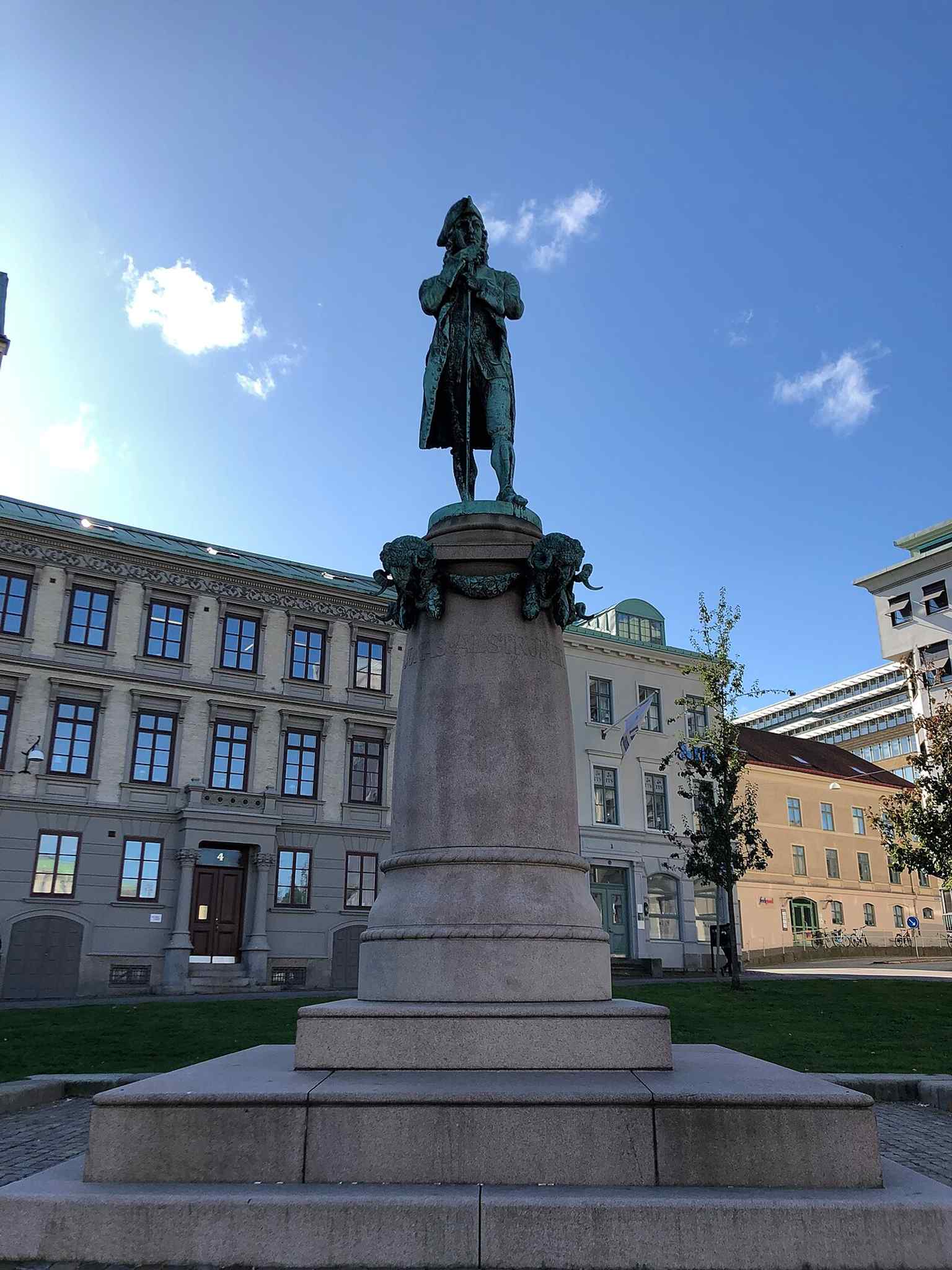
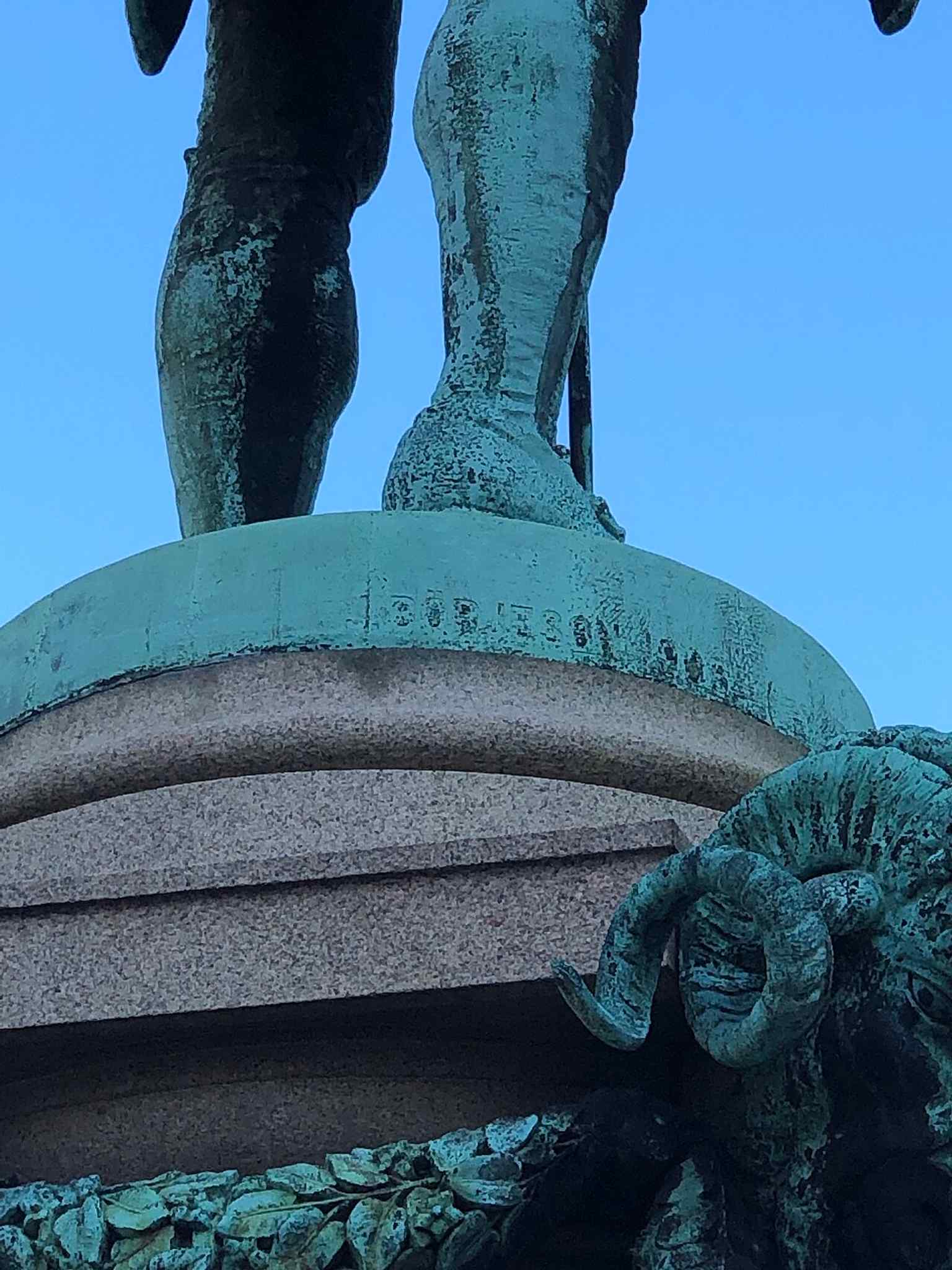
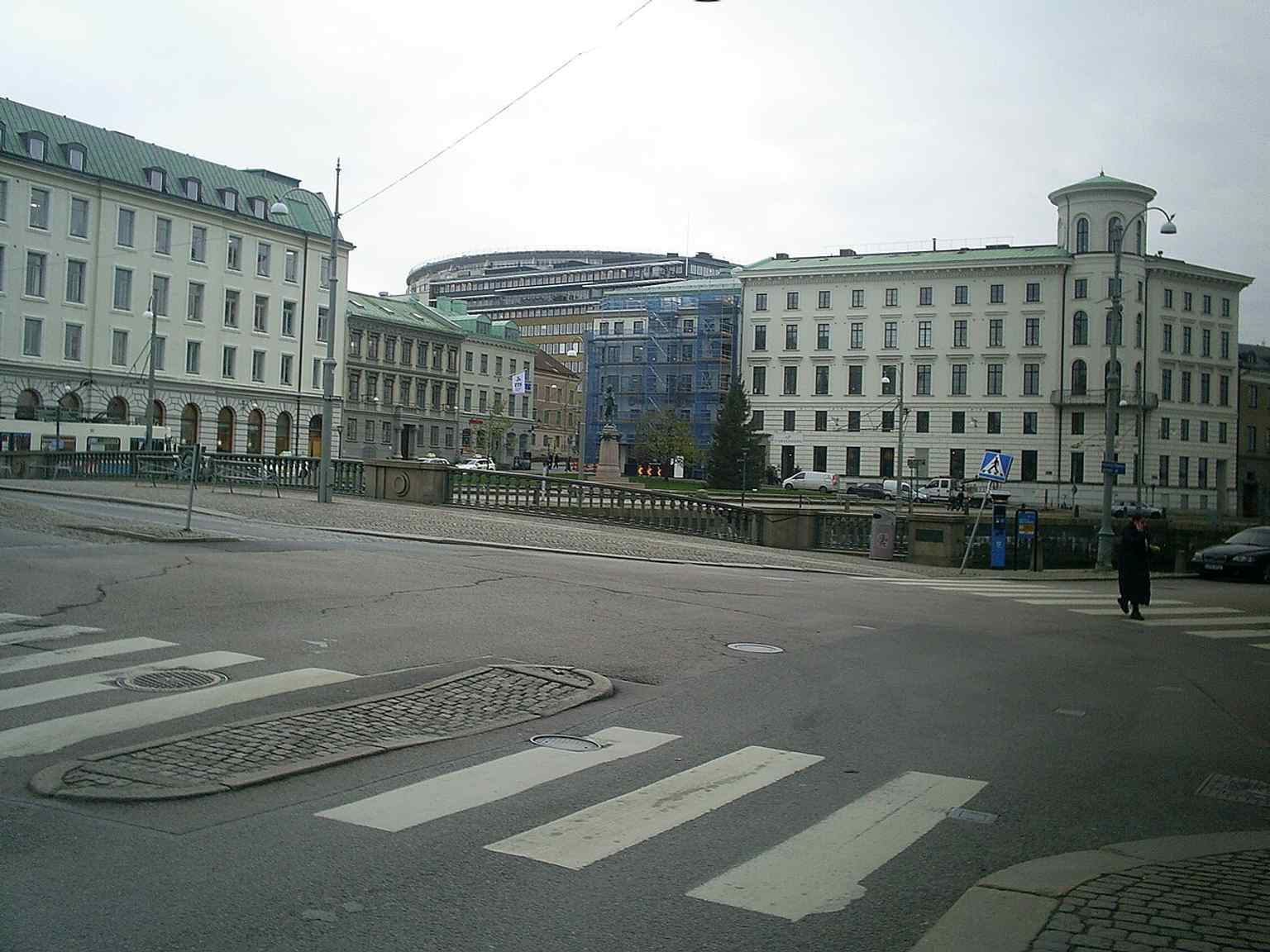
Turn to the right to see a towering four-meter bronze statue standing atop a smooth, cylindrical red granite column adorned with sculpted garlands. That is Jonas Alströmer, and this patch of green is Lilla Torget, or the Little Square.
Now, Alströmer might look highly distinguished up there, but for a long time, locals lovingly called him the parking attendant. As the city modernized, cars were allowed to park right up against his granite pedestal, completely boxing him in.
But long before cars existed, this space was defined by water. In the sixteen hundreds, this was Gothenburg's original fish market. Instead of stalls on solid ground, the merchants sold directly off a massive floating wooden raft called the Fish Fleet. By eighteen eleven, this floating market had evolved into a serious piece of engineering. It was constructed of four large, flat-bottomed pine barges, heavily tarred to keep the water out, and lashed together with heavy wooden planks to create a single giant platform. Take a glance at your phone to see a historical view of the canal from nineteen twenty, showing how closely the city interacted with the water.
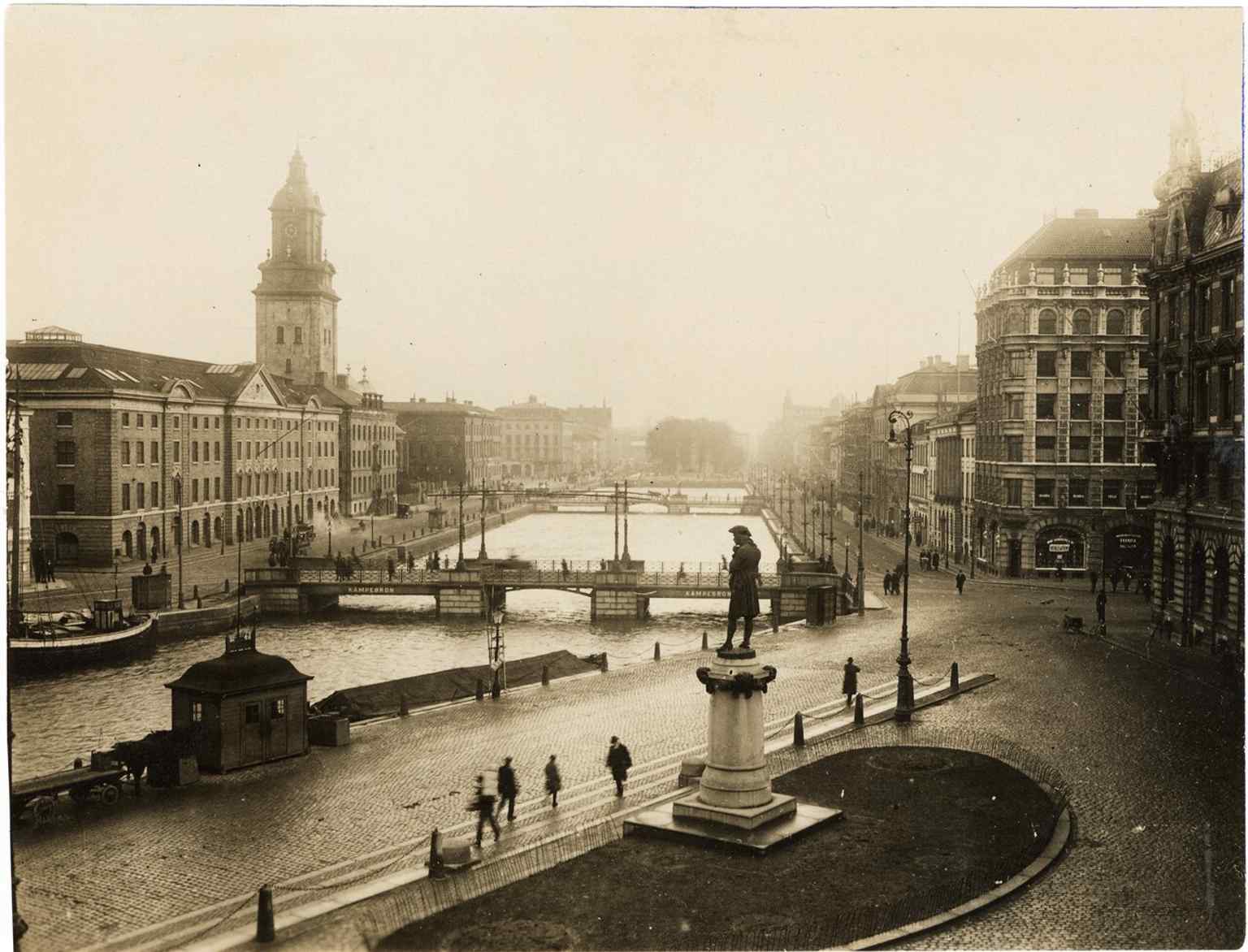
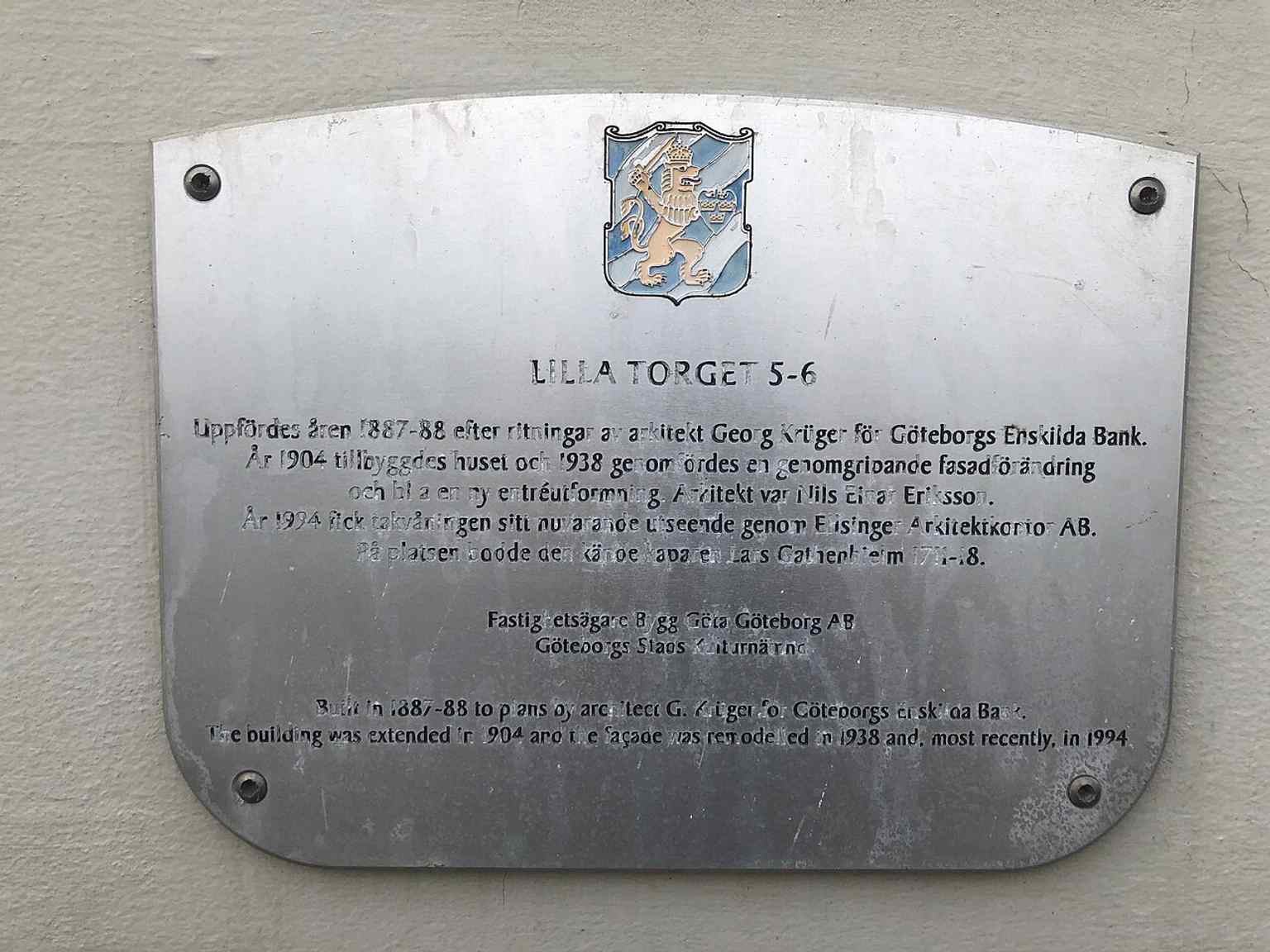
Lilla Torget was a chameleon over the centuries. At one point, it was the center of the local furniture trade. Later, it became known as Maid Square, because domestic workers would gather here in hopes of being hired by wealthy families. And there was plenty of wealth around. In seventeen eleven, Lars Gathenhielm, the infamous privateer we heard about earlier, bought a two-story wooden house here for two thousand four hundred silver coins. That was a staggering sum, easily translating to tens of thousands of dollars today.
Those wooden houses did not last. A devastating fire swept through in eighteen oh four, completely wiping out the timber structures and even incinerating the trees along the canal edge. When Gothenburg rebuilt, they used stone. If you look around, you will see grand masonry structures like the Wijkska house, a towering nineteenth-century merchant palace.
The square used to have some highly specific amenities, too. Up until nineteen forty-eight, there was a small wooden warming hut here, specifically built so horse-drawn cab drivers would not freeze while waiting for fares. You can actually spot that little cabman's shelter in a nineteen sixteen photo on your screen. And in a rather unglamorous twist, the eastern edge of the square also hosted the city's very last outdoor urinal, which somehow survived all the way until nineteen eighty.
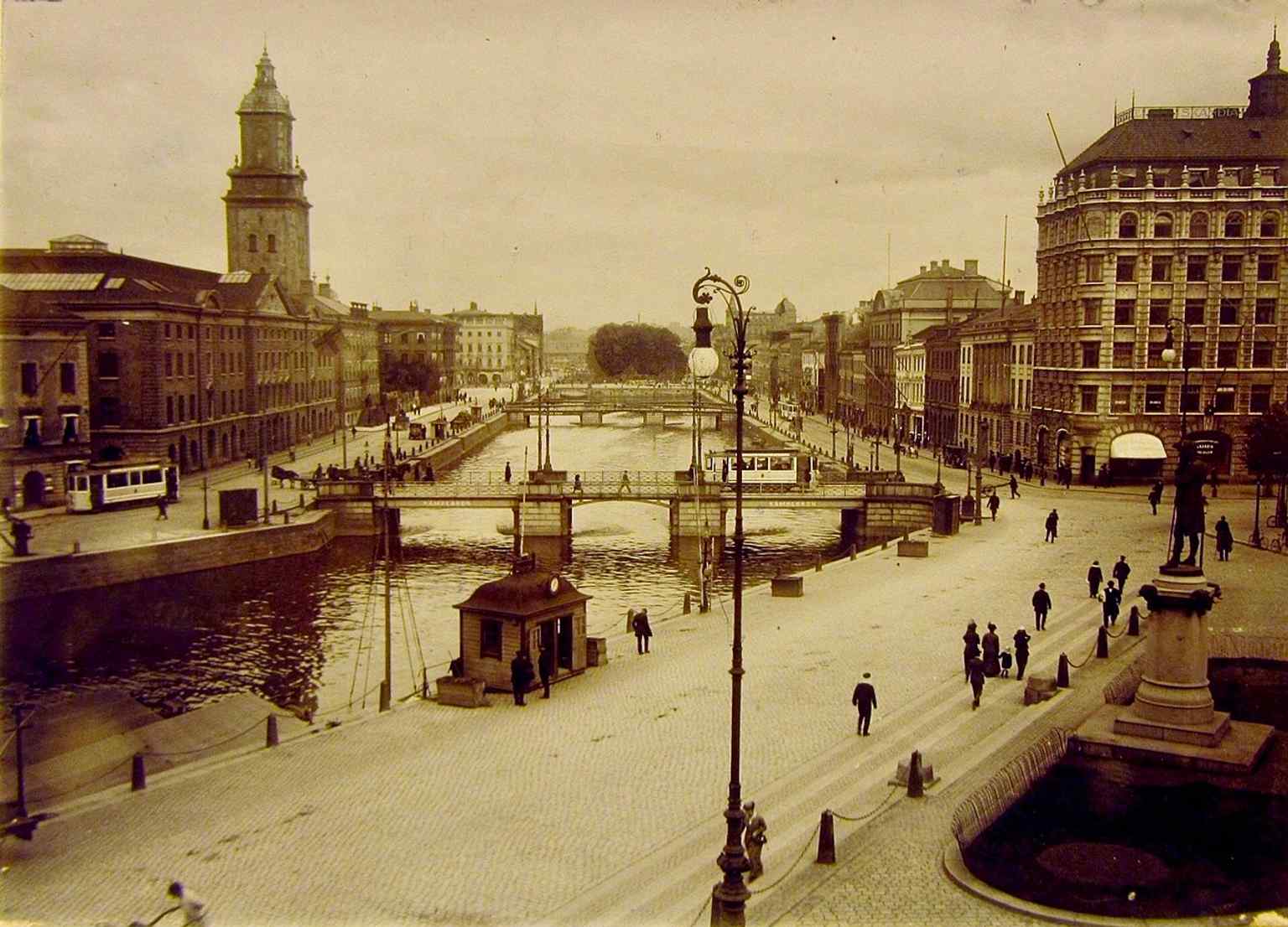
Today, Lilla Torget is a quieter piece of the city, cut off from the canal by modern roadways. Take in the surviving stone architecture, and when you are ready, let us make our way to our very last stop.