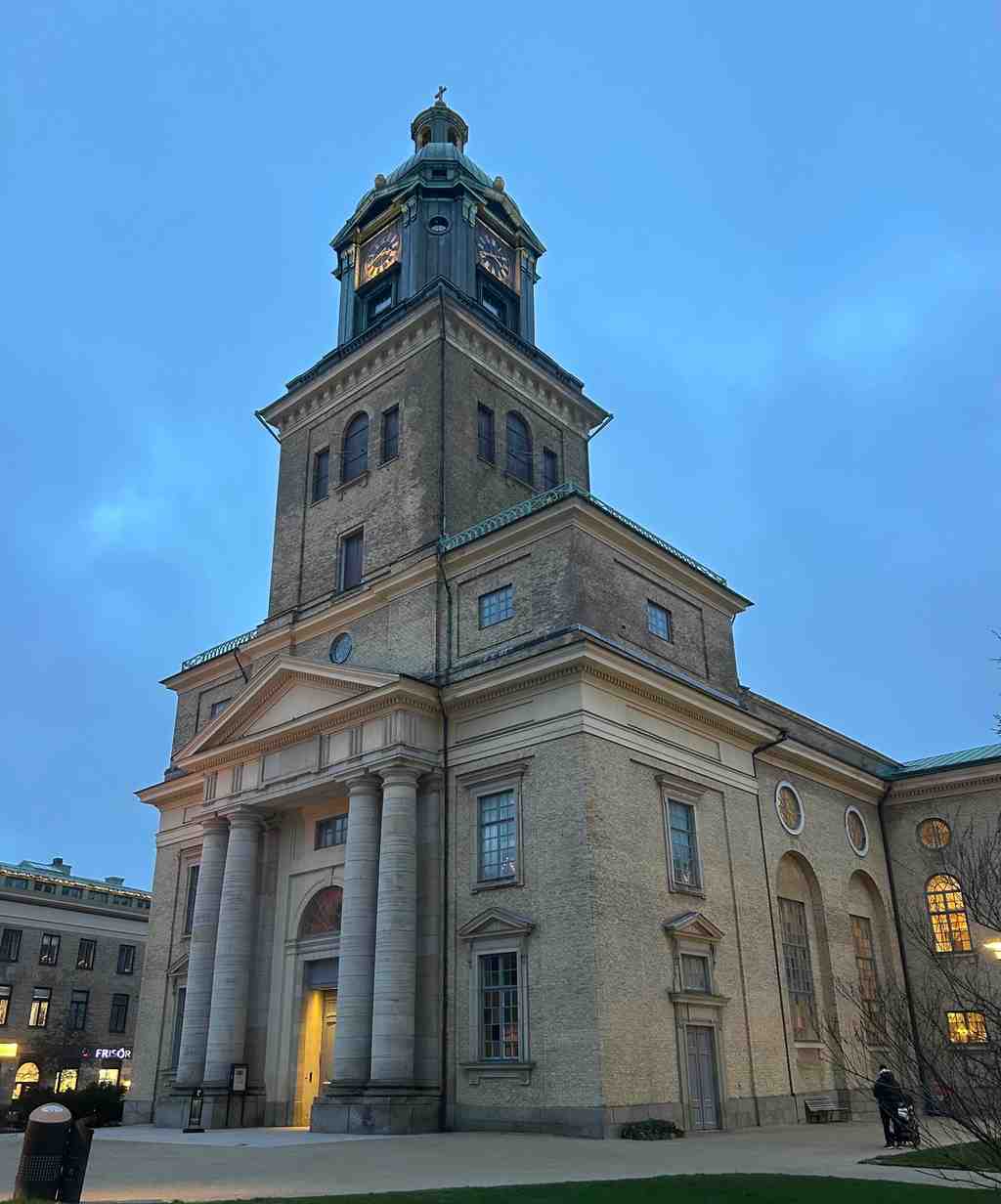
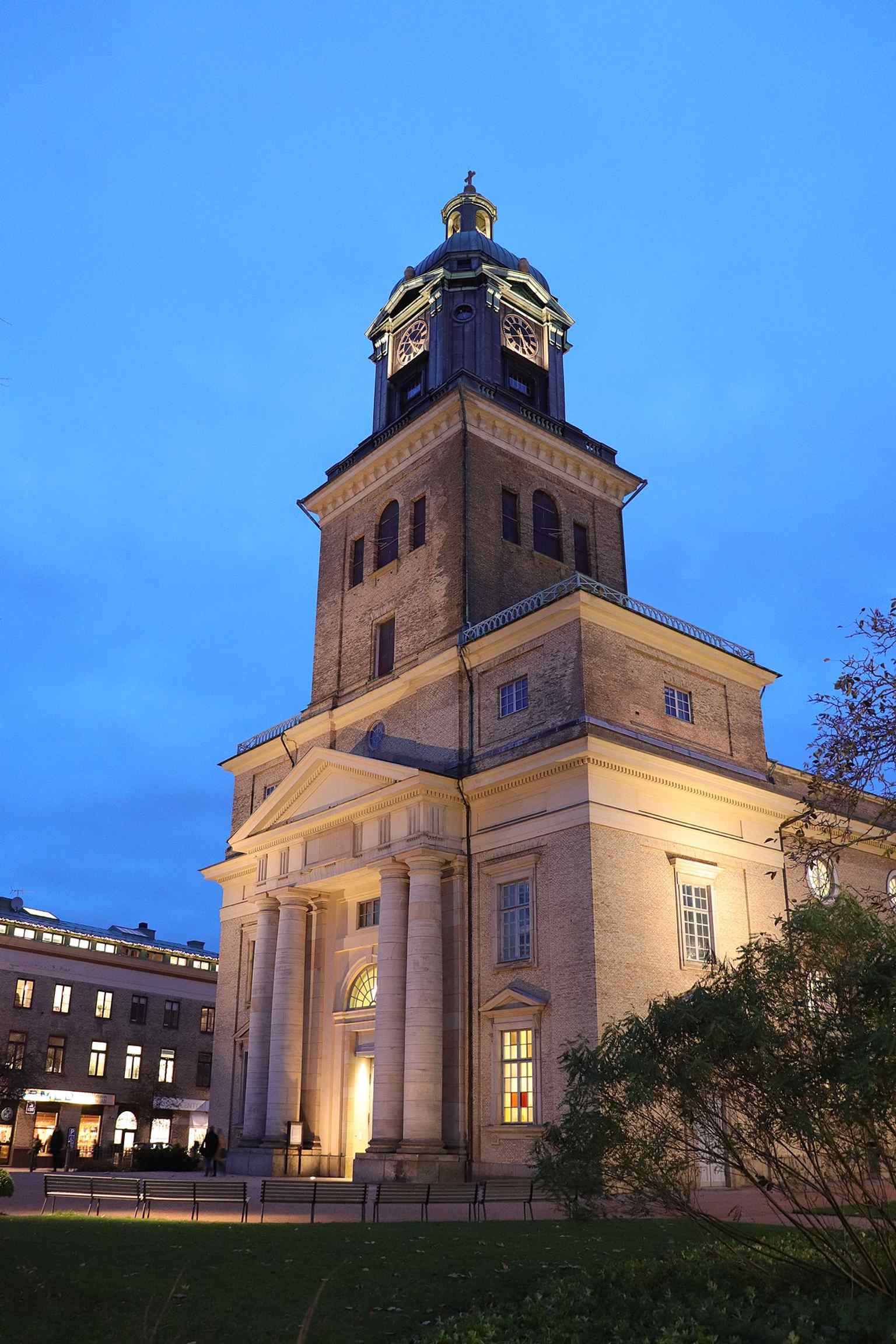
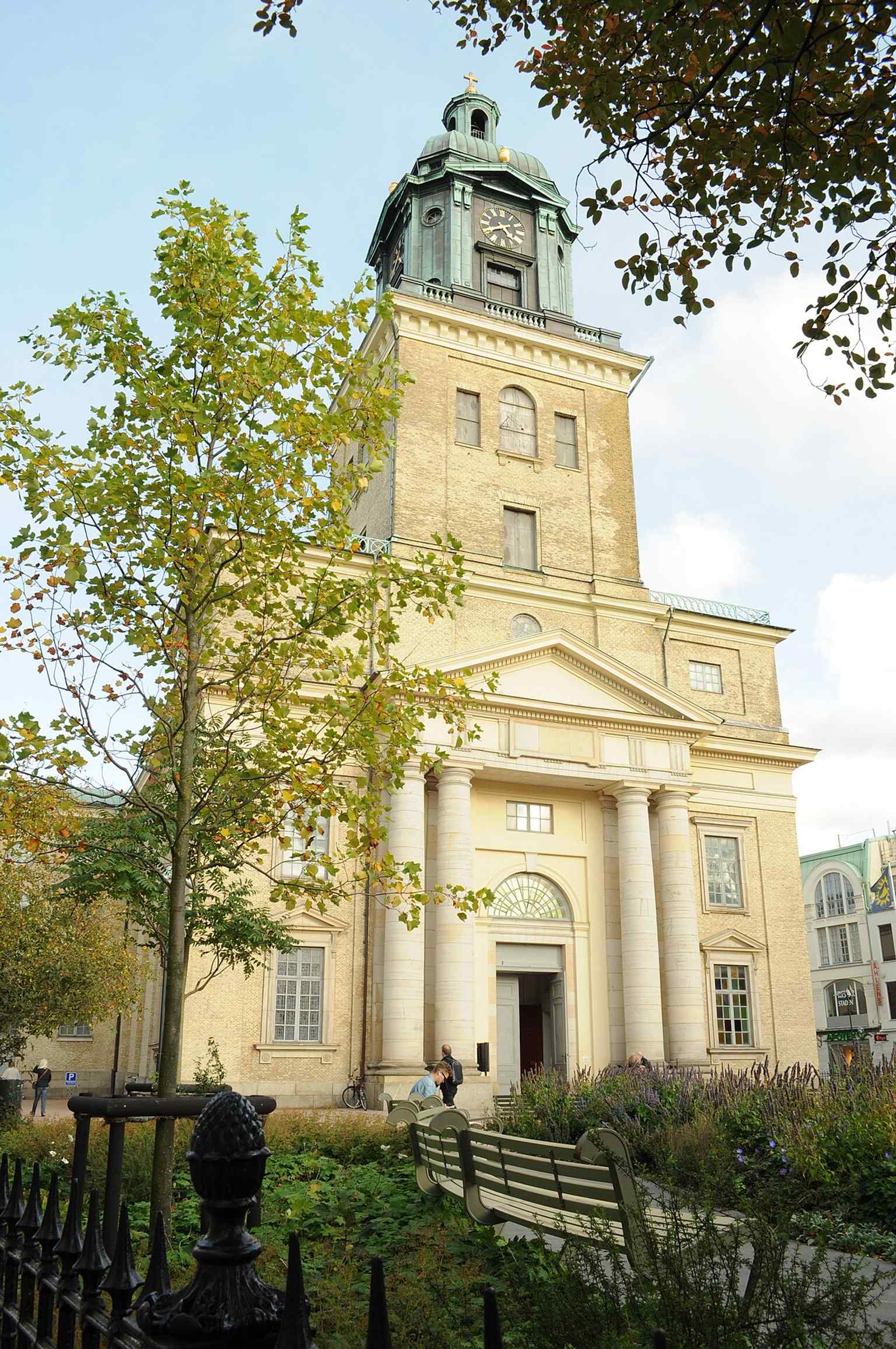
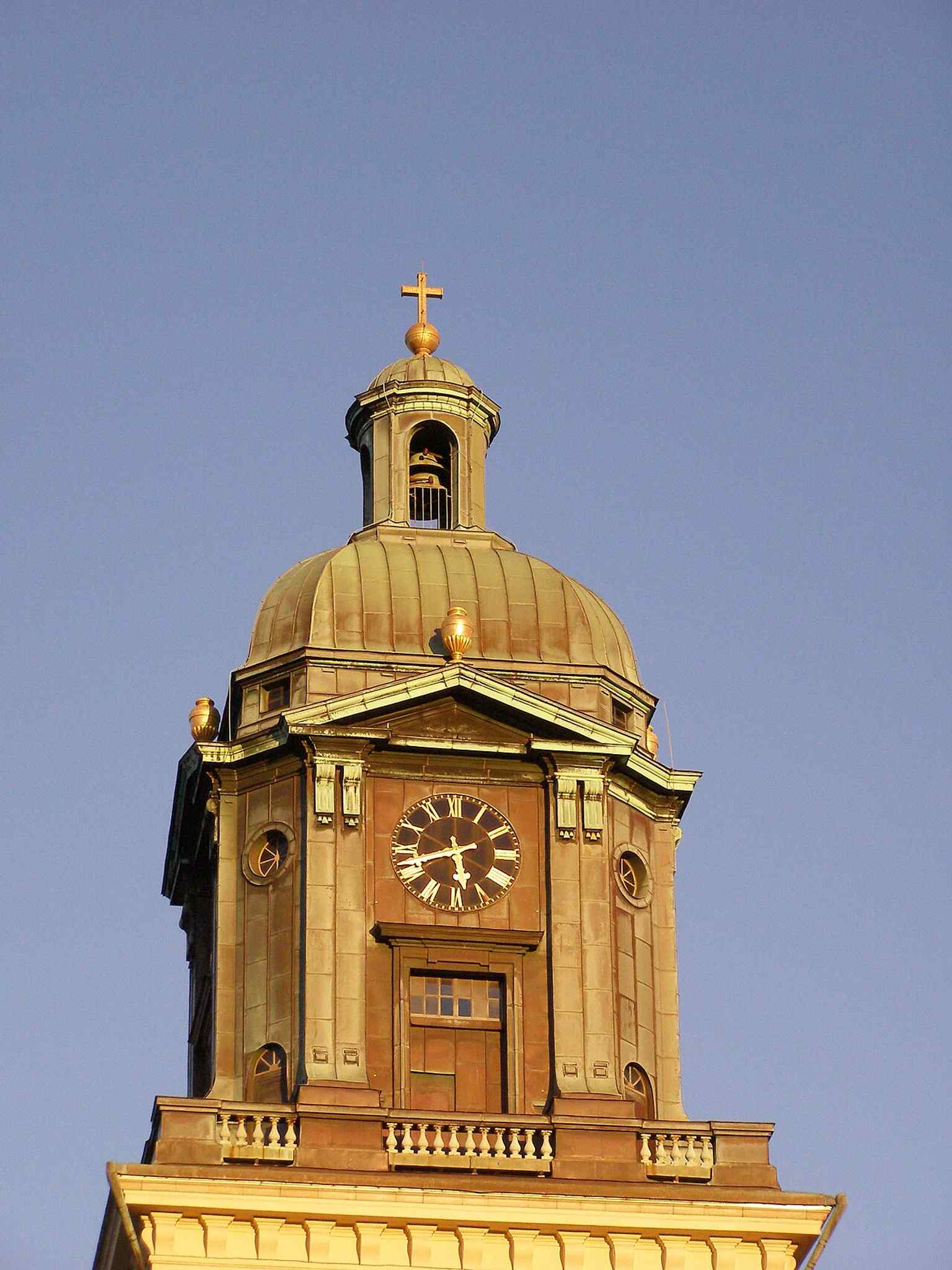
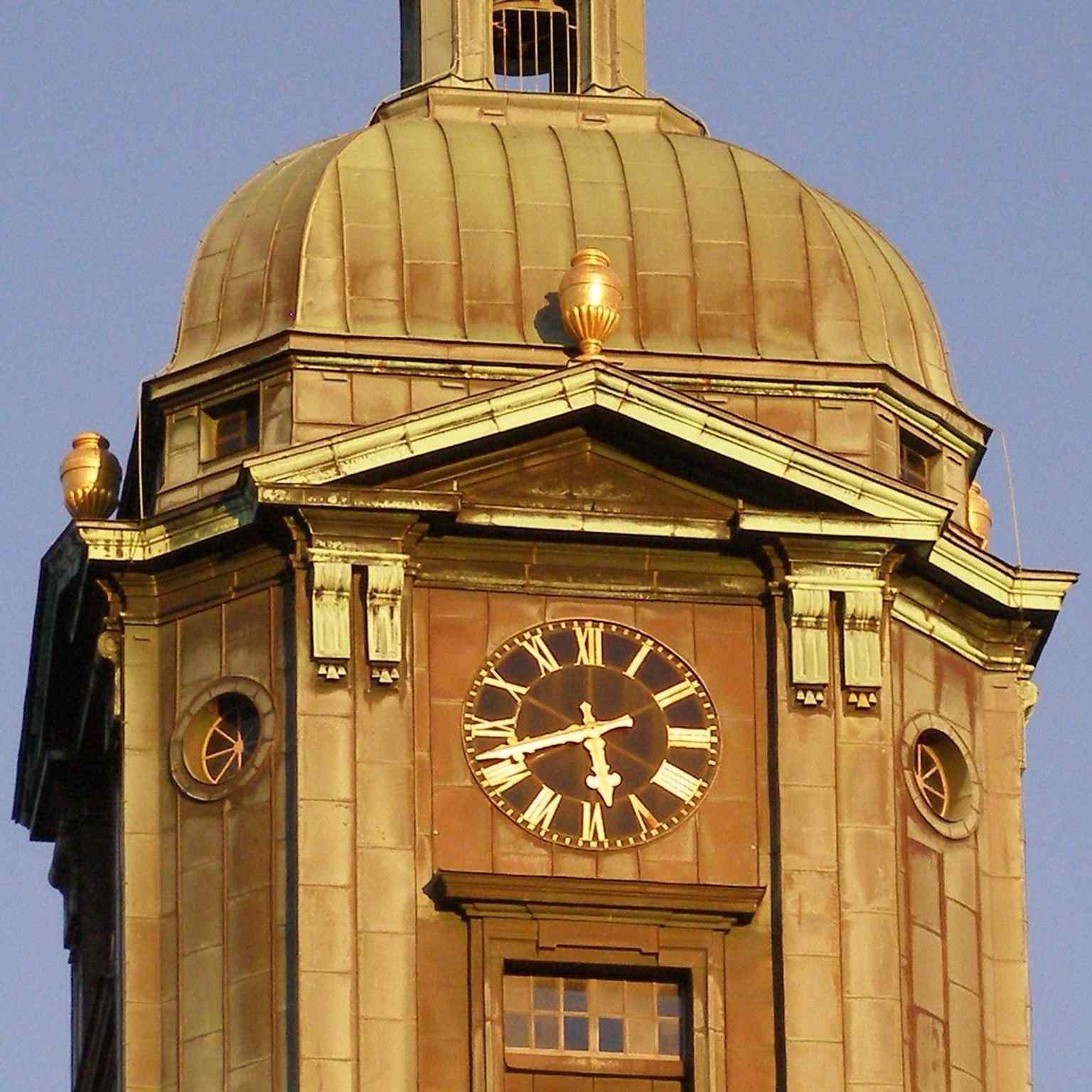
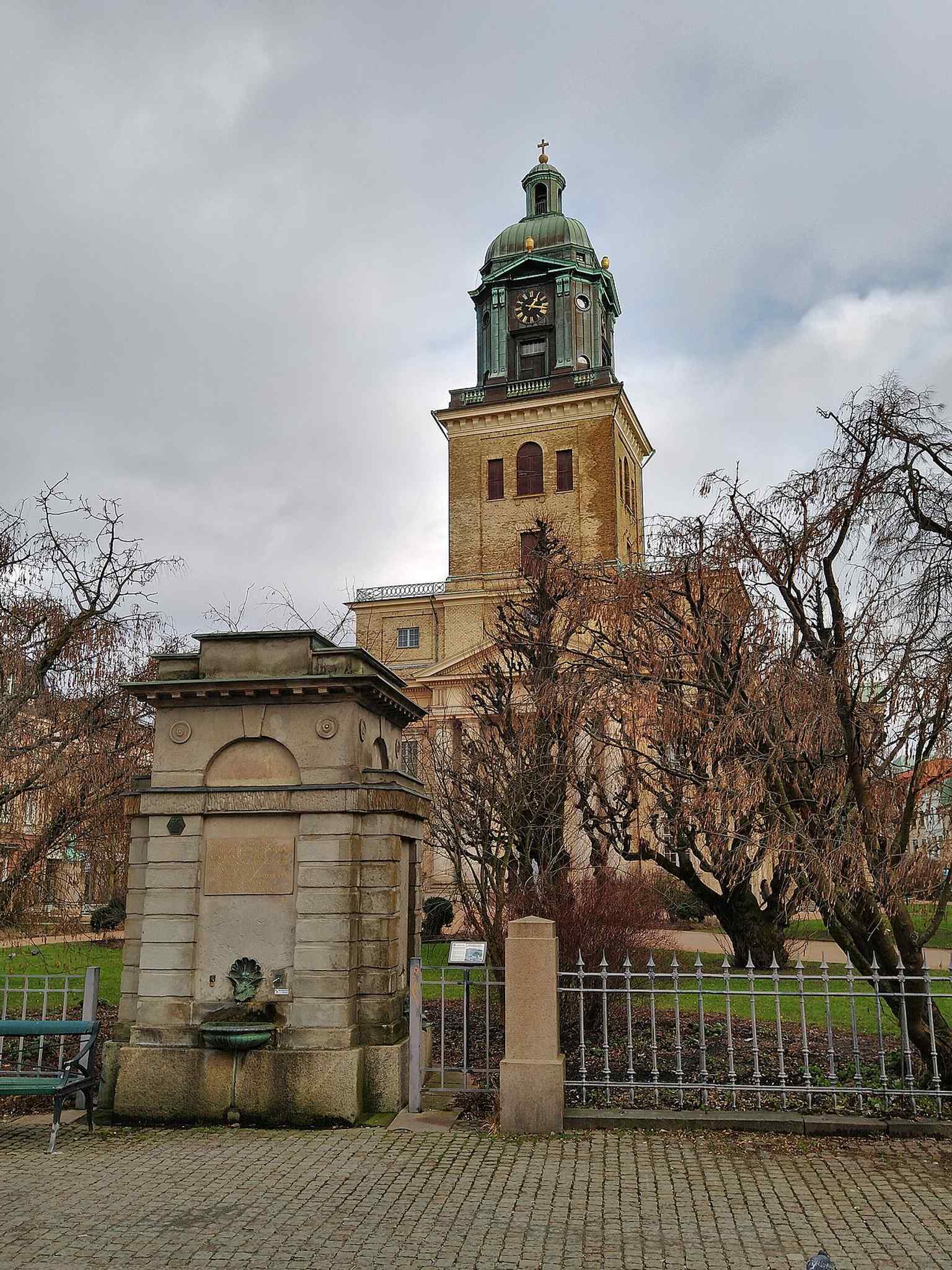
As you continue, notice the towering yellow brick facade of Gothenburg Cathedral, anchored by four sturdy, unadorned Doric columns at the main entrance and topped with a distinctive, copper-roofed clock tower. What you are looking at is actually the third cathedral to stand on this exact spot.
The story starts back in the sixteen twenties with a temporary stave church, an early medieval style of wooden building supported by heavy, load-bearing timber posts. To fund a proper stone replacement, King Gustavus Adolphus literally taxed the region in grains, demanding barrels of wheat, oats, and barley to pay the builders. That first stone cathedral stood for decades until a massive fire wiped it out in seventeen twenty-one.
So, they rebuilt it. But then came the disastrous night of December twentieth, eighteen hundred and two. A fire ripped through the city, destroying over a hundred and seventy buildings. The timing was especially grim for the family of a man named John Hall the Elder. His funeral had just been held right here in the cathedral, and his remains were still inside waiting to be moved to a permanent tomb. The inferno consumed the building, the costly coffin, and John Hall right along with it.
Incredibly, a few artifacts survived that inferno. Pull up your screen to see a photo of an ornate eighteenth-century grandfather clock made by a local watchmaker that was somehow rescued from the flames and still chimes inside today.
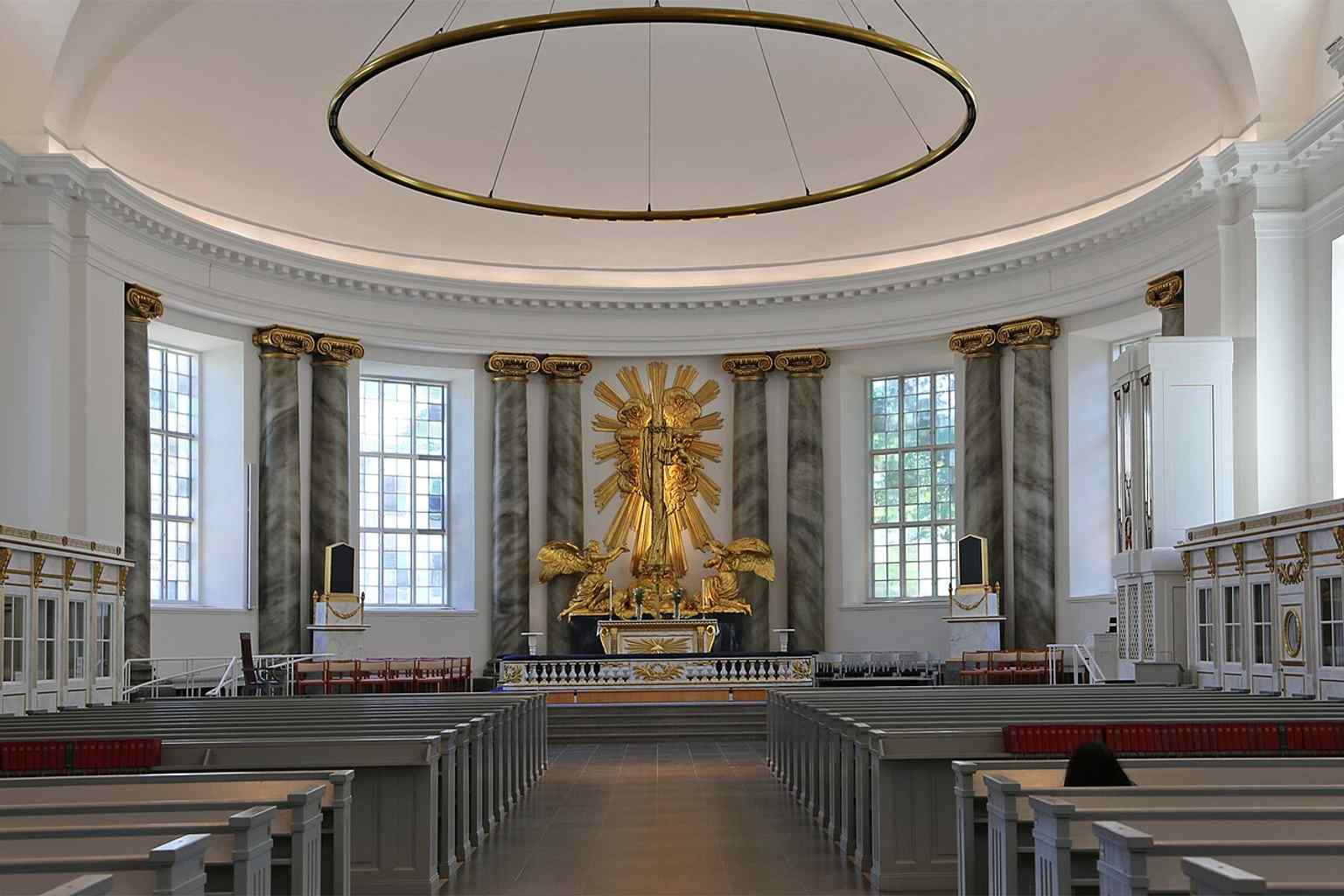
The cathedral you see right now rose from those ashes, designed by architect Carl Wilhelm Carlberg in the classical style, an architectural movement relying on clean, symmetrical lines inspired by ancient Greece and Rome. Carlberg actually died before the project was finished, so his pupil, Major Justus Frederick Weinberg, took over. But Weinberg was so terrified that the church's thin, flat ceiling arches were structurally flawed and going to collapse, he completely refused to attend the inauguration. Fortunately, his fears were unfounded, and the arches held firm.
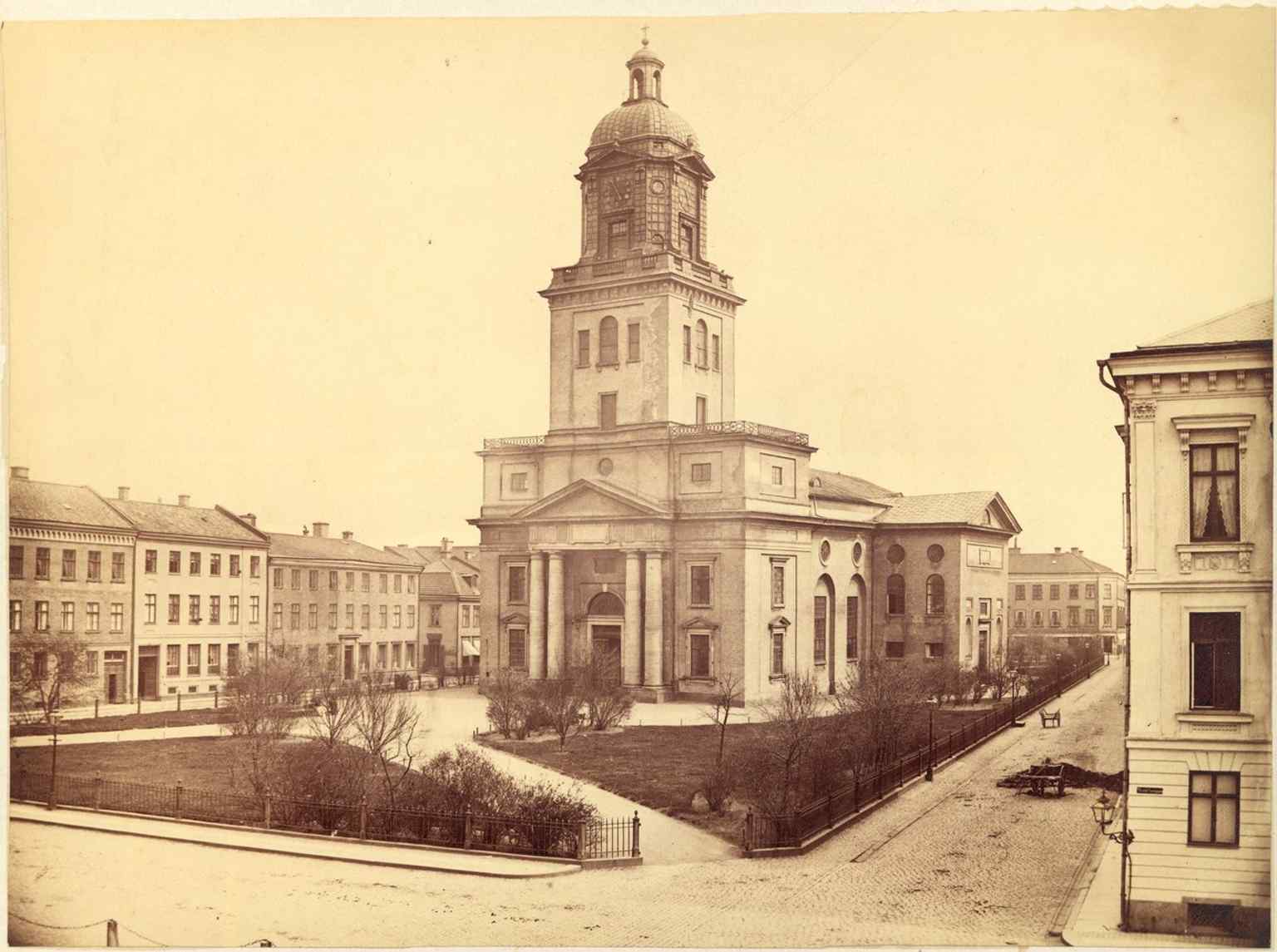
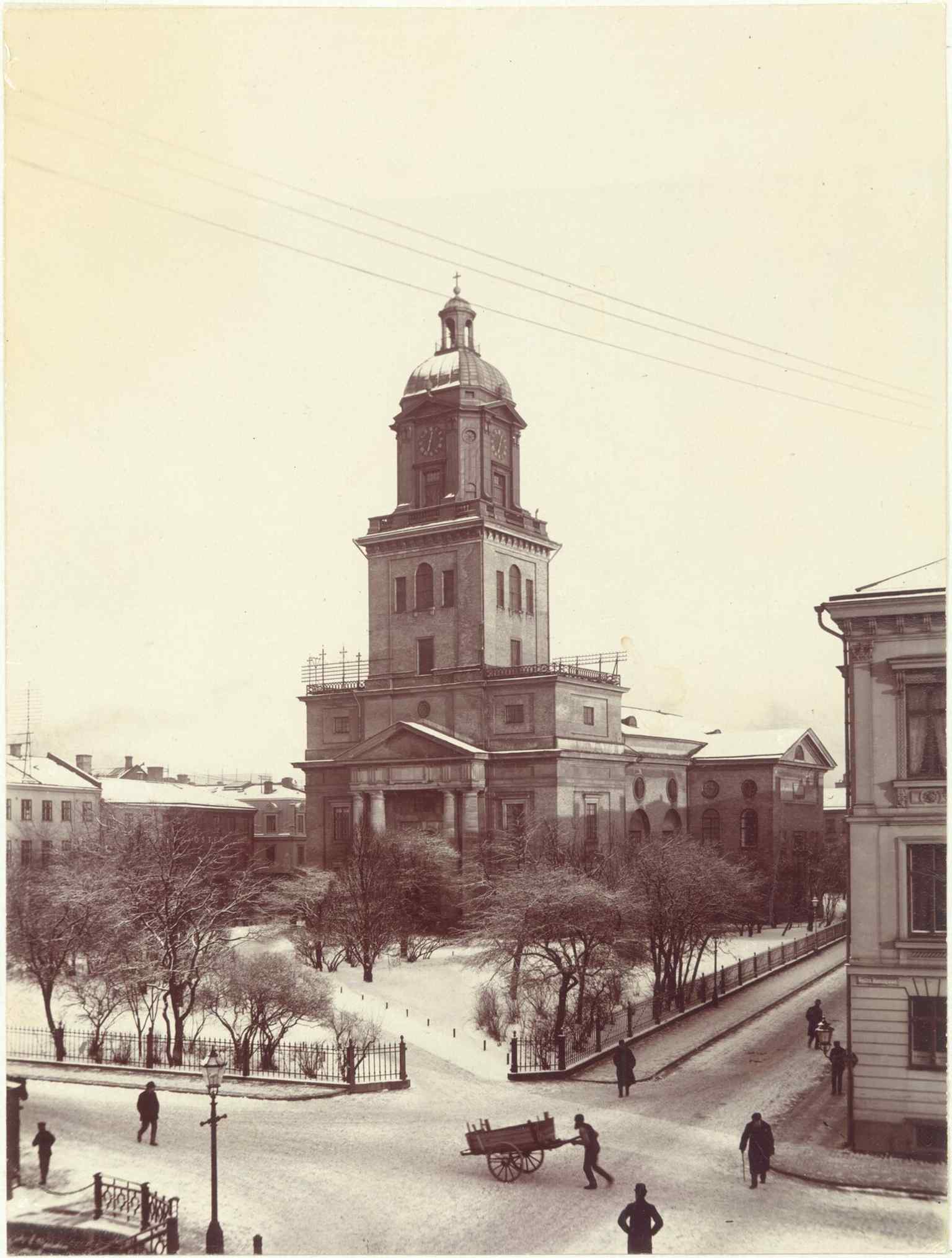
This building is an absolute survivor, and it was quite innovative, too. In eighteen fifty-two, it became the very first church in all of Sweden to install central heating. To see how much the world has changed around this steadfast building, tap the comparison photo to see the exact same angle captured decades apart. It is fascinating how the city morphs while this giant holds its ground.
If you want to peek inside those massive doors, the cathedral is open to visitors most days from ten in the morning until six thirty in the evening, though it closes a bit earlier at four on weekends.
Take your time admiring the grounds, and whenever you are set, we will carry on.
4.8 across the App Store and Google Play. Here's a few we keep coming back to.
starstarstarstarstar
This tour was such a great way to see the city. The stories were interesting without feeling too scripted, and I loved being able to explore at my own pace.
Started this tour with a croissant in one hand and zero expectations. The app just vibes with you, no pressure, just you, your headphones, and some cool stories.







.jpg)


