
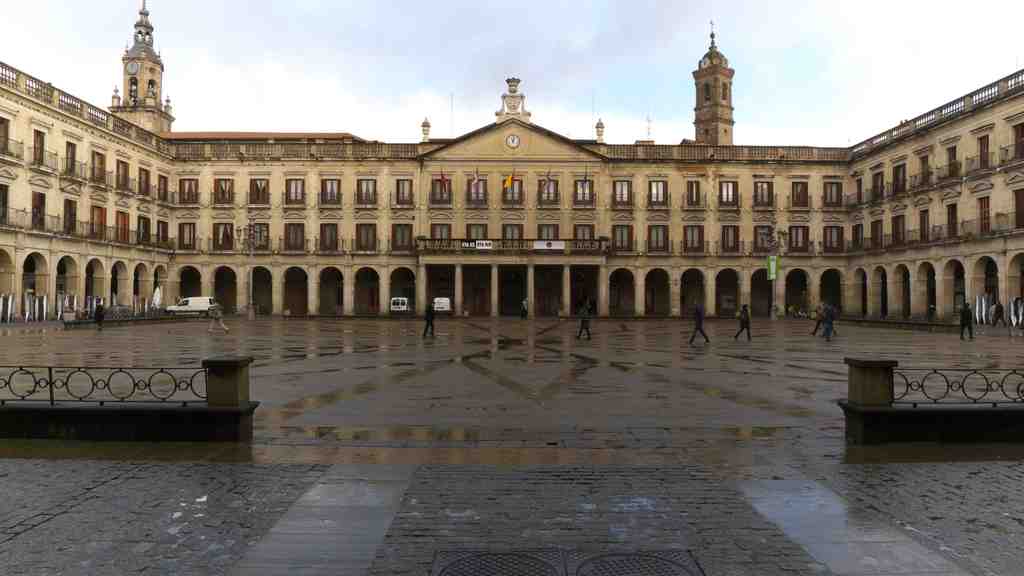
Just ahead, you’ll see a grand, almost regal building framing a wide, open square. As you walk closer, look for symmetrical rows of arched doorways on the ground floor, topped by a line of elegant balconies with tall wooden doors. Right in the center, the building rises a little higher with a triangular pediment, crowned by a small clock and a sculpted crest. The square stretches out in front of you, smooth and echoing slightly under your footsteps. The space feels open, but the tall stone walls wrapping around you make it cozy too.
Now, imagine you’re standing here not just in front of a building, but at the heart of the city’s story. This is Plaza de España, also lovingly called Plaza Nueva-the ‘New Square’… even though it has kept its same majestic look since the late 1700s. For centuries, people have gathered here under these arcades, sheltering from the rain to swap news or share a laugh while the bells above the square mark the passing hours.
This place is more than just stone and arches. It’s the stage for some of Vitoria-Gasteiz’s biggest moments-festivals, protests, and late summer nights when every inch of the square fills up with noisy, cheerful crowds eating local pintxos. If you close your eyes, you can almost hear the echoes of old markets and the chatter of people who’ve met here, over and over, for hundreds of years.
In 1984, Spain recognized the magic in these stones, officially protecting Plaza de España as a cultural treasure. The walls hold secrets of families, city council meetings, and impromptu music that spilled out late at night. When you stand here, don’t just look around-imagine what stories this square could tell if only it could talk.




