
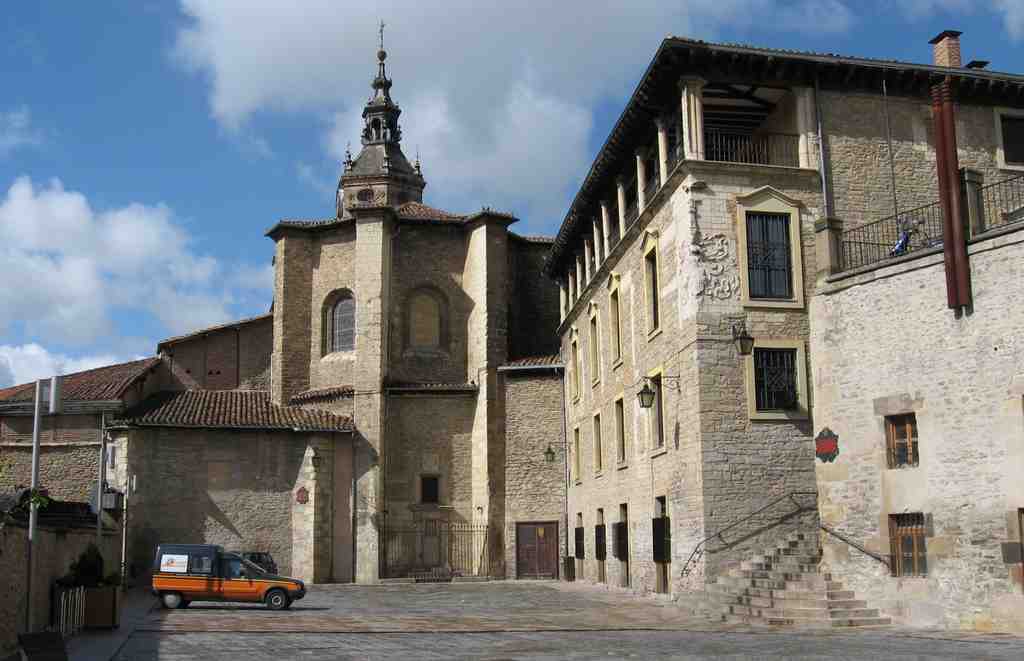
As you walk up towards Machete Square, look ahead for a cozy stone plaza hemmed in by several old buildings, their golden walls glowing against the sky. On your left, you’ll spot the grand yet simple walls of the Church of San Miguel Arcángel, rising up with their Gothic and Renaissance touches. On the right, there’s a distinguished building with many windows and a short flight of steps - that’s the Villa Suso Palace. You’re looking for a quiet, slightly sloped square with stone paving-right in the heart of Vitoria’s oldest streets.
Now, as you stand here, take a moment to imagine this very spot hundreds of years ago. This square, la Plaza del Machete, was once where the hustle and bustle of the emerging city met the ancient secretive maze of the medieval quarter. The air would have been filled with clattering carts, the smell of fresh produce, and the sharp shout of sellers at the busy market that once stood here.
Picture the drama that’s unfolded on these stones: long ago, the powerful leaders of Vitoria would gather right at that church wall, where there’s a small niche. Here, they would place a machete as they took a solemn oath to obey the laws-knowing that if they failed, the machete was a warning that their lives could be forfeit. The square even earned the nickname Plaza of Judgment because, believe it or not, executions once took place right where you’re standing.
Surrounding you, history is written in stone. To your right, the Villa Suso Palace started out as part of the city wall itself when Don Martín de Salinas built it in 1542. The arched walkways called the Arquillos-curving beyond the square-were built in the 1700s to connect old neighborhoods with new and today are recognized as a World Heritage Site. Close by, beneath the slope of San Vicente, the Covachas were once busy food stalls not unlike a medieval supermarket.
Originally, this was the Plaza de los Bueyes, full of market energy, with meat vendors calling out for buyers. Only later, in 1806, did it become Plaza del Machete-named for that blade used in pledges, a symbol of power, justice, and sometimes fear. Today, the original machete lives safely in the Municipal Archive, but here you’ll see a faithful replica.
Stand here a moment, and let yourself feel the echoes of old Vitoria. The shouts, laughter, and perhaps even some nervous silence from those swearing their lives to the city. Today, it’s a peaceful place, often filled with traces of music and art from cultural events, but the stories in these walls are just waiting to be remembered.




