
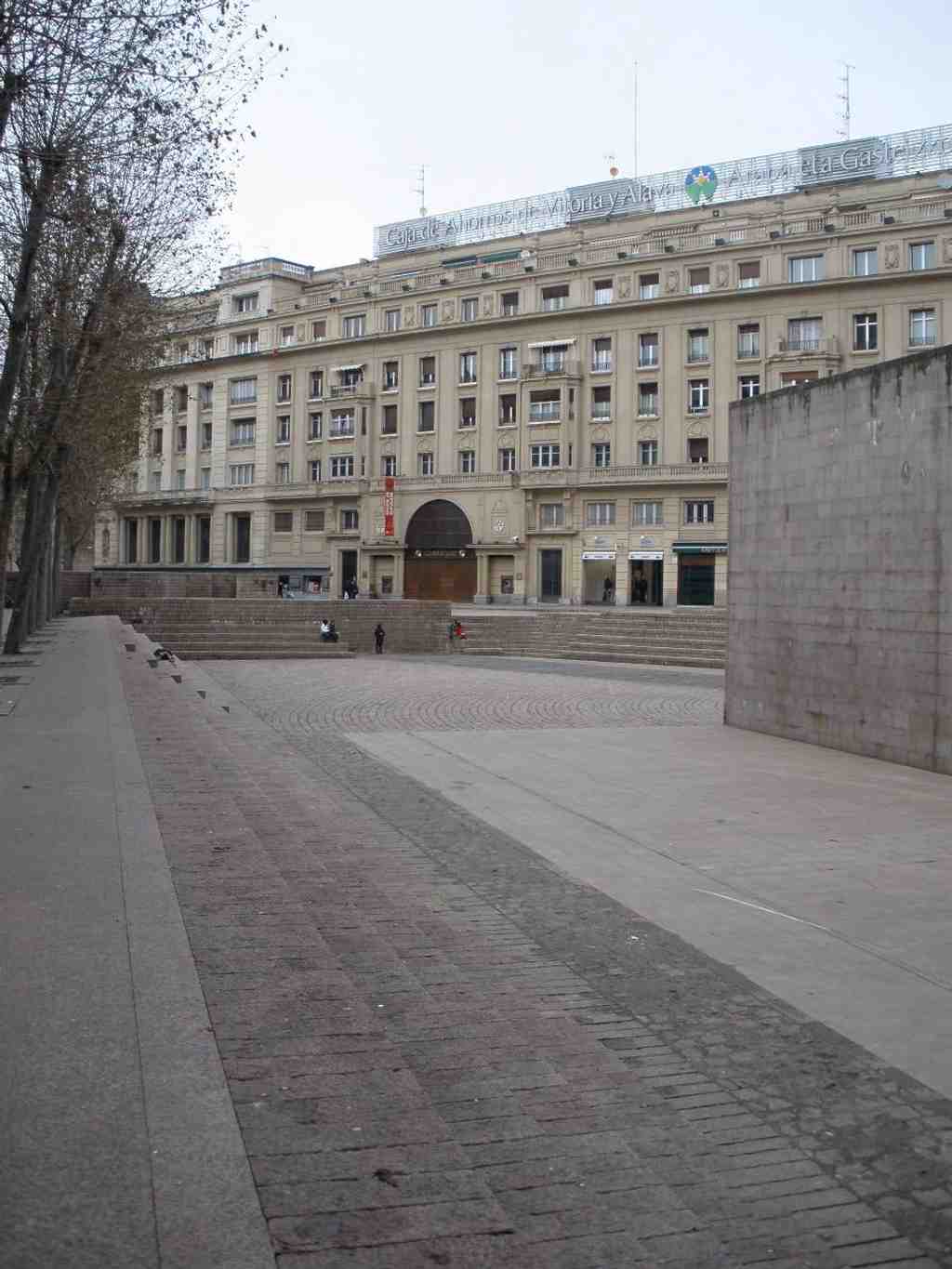
If you’re looking for Fueros Square, glance to your right for a wide, open space set below street level. Look for pink granite steps and large, simple stone walls, with a sweeping staircase leading down into the heart of the plaza. The square is wrapped by grand stone buildings, with a post office nearby and several rows of windows looking down over you. If you see children zooming around on scooters, or maybe a group playing pelota against one of the stone walls, you’ve found it.
Now, as you stand in front of Fueros Square, imagine yourself stepping into a giant sculpture. This isn’t just a simple meeting place-this whole space is like an artwork you can walk through. It was created in 1979 by Eduardo Chillida and Luis Peña Ganchegui, turning what was once a bustling food market, full of the sounds of buyers and stallholders haggling over baskets of onions and hams, into something entirely new.
But imagine, over a hundred years ago, this very spot was the site of heated arguments. Local shopkeepers grumbled, and the townsfolk could hardly agree. There was drama, suspense-who would win? The old market stood for nearly 80 years, with the smell of fresh bread and fruit everywhere. But the battle ended-though not everyone was happy-when the old building was replaced with the modern square you see now.
Notice the odd, block-shaped monuments, the sharp lines, the unexpected changes in level. Listen to your footsteps echo on the granite, and feel how the place is meant for gathering-a place that fills each August with the chaos and joy of the Virgen Blanca Festivities.
Hidden in plain sight, there’s a giant map of Alava carved into the square itself-although only the birds see its full shape. Here, with a special metal sculpture marking the Trebiño area, history is sealed into the stone. There are courts for Basque games like pelota and fronts for bowling, blending tradition with the bold shapes of Chillida’s art.
Stand here for a moment and soak in the atmosphere-the history, the arguments, the festivals, and everyday life, all layered over centuries in this one small corner of Vitoria-Gasteiz.




