
Santa Cruz de la Palma Audio Tour: A Journey Through the Heart of Santa Cruz
Beneath the watchful palms and bold façades of Santa Cruz de La Palma, stories hide in plain sight—whispering from grand estates, flickering through velvet-curtained theaters, and echoing along cobbled streets. This self-guided audio tour cracks open the city’s vibrant heart, leading you from misty green farmhouses to the dazzling stages where secrets and scandals once took center stage. Which political rival risked everything during a shadowy gathering at Green Farm? What mysterious performance sent shockwaves through Teatro Chico one stormy night? Why does the faded iron balcony of Teatro Circo de Marte still bear scars of an unusual rivalry involving caged birds and rogue actors? Wind your way through opulent courtyards, hidden staircases, and time-worn auditoriums as each turn invites you deeper into drama, rebellion, mystery—and the living pulse of La Palma. The curtain is about to rise on an adventure few have ever seen. Start listening now and let the city’s true spirit reveal itself.
Tour preview
About this tour
- scheduleDuration 30–50 minsGo at your own pace
- straighten2.6 km walking routeFollow the guided path
- location_onLocationSanta Cruz de la Palma, Spain
- wifi_offWorks offlineDownload once, use anywhere
- all_inclusiveLifetime accessReplay anytime, forever
- location_onStarts at Green Farm
Stops on this tour
Look up the hillside to your left and spot a large, white-walled manor nestled among terraced green palms and rugged stone walls-you can't miss its fortress-like silhouette…Read moreShow less
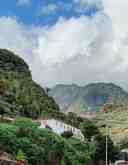
Look up the hillside to your left and spot a large, white-walled manor nestled among terraced green palms and rugged stone walls-you can't miss its fortress-like silhouette overlooking the city. Welcome, traveler, to the legendary Quinta Verde! Imagine yourself standing centuries in the past, right at the edge of Santa Cruz de La Palma, in the shadow of this aristocratic hacienda where the air is thick with the scent of ripe figs and wild flowers. The whoosh of a gentle breeze rustles through the palms above you, and just ahead, the bold, two-story façade of Quinta Verde stands guard over these hills. Long ago, when life moved at a different pace and the fanciest technology was a well-oiled grape press, this grand estate was built as a getaway for wealthy families eager to escape the city’s bustle. Picture the local nobility packing up their finery to spend days wandering sunlit gardens, sipping sweet wine under shady trees, or perhaps, if the gossip is true, hosting secret meetings of the island’s mysterious masonic lodge. The story here stretches all the way back to the 1500s. Imagine a world without cars or phones-just horse-drawn carts creaking along dirt paths as Álvaro González and his wife Cecilia oversaw their sprawling vineyards, fig orchards, and fruit trees. Life was a little slower, but the scenery just as stunning. Then, in 1672, destiny shuffled the deck: Captain Nicolás Massieu Van Dalle y Rantz, a bigwig in La Palma, took over, and soon the estate began to transform into what you see today. Take a closer look at the walls and you’ll spot the dark volcanic stone-like an old suit of armor-protecting the terraces. Climb through the first sturdy gate, framed in black stone and topped with four classic merlons, and you’d once have seen a colorful ceramic plaque showing off the Massieu family crest. That plaque now enjoys an indoor life at “La Cosmológica,” but the sense of pride lingers. Step further in your imagination and you come to the legendary 28-stone staircase, perfect for a dramatic entrance or, perhaps, a slightly less elegant tumble after one too many glasses of local malvasía wine. At the very top, another elegant red-stone gate-this one crowned with three merlons-guards the final approach to the house. Inside, the world of the Quinta opens like a storybook. Unlike the fortress-like appearance, much of the mansion is on a single sprawling floor, using its semi-basement cleverly to hug the hillside. There are actually two houses here, split by a sunlit courtyard: on one side, the ‘big house’ for the lords and ladies, with its oratory and feasts; on the other, the busy world of cellars, presses, and even a dove cote, where the staff would bustle about. In the main living room, an intricate ceiling painted with angelic faces and geometric patterns gleams overhead, all watched over by beams carved like playful monsters-imagine working here late at night and catching those mischievous faces in the flicker of a candle! Of course, the Quinta wasn’t all fancy dinners and secret symbols. It was a real home, rooted deeply in nature. Besides its architectural marvels-windows framed by smooth red stone, seats built right into the walls-it’s famous for its lush palm grove, which has become a final pocket of the ancient Canarian woodland. The estate evolved into a meeting point for some of La Palma’s brightest and boldest minds: poets, like Nicolás Massieu Salgado and Leocricia Pestana Fierro, found inspiration in the gardens; musicians and dreamers sheltered under its eaves. And when times were tough and the Quinta was in danger of vanishing into history, passionate locals-like the artist Luis Morera-fought to save it, turning its story into song and legend. So, as the gentle notes of distant birds drift across the terraces, take a moment to imagine life at the Quinta Verde: a place where nature, history, and a dash of mystery meet. And hey, if those old palm trees could talk, I bet they’d have some juicy stories to share!
Open dedicated page →You're looking at a tall, creamy building with bold brown woodwork, large shuttered windows above the entrance, and the words “TEATRO CHICO” spelled out right above two big wooden…Read moreShow less
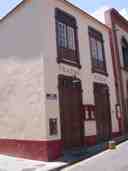
You're looking at a tall, creamy building with bold brown woodwork, large shuttered windows above the entrance, and the words “TEATRO CHICO” spelled out right above two big wooden doors - just look for the building on the corner with character, almost as if it’s giving a dramatic bow to the street. Welcome to Teatro Chico, one of Santa Cruz de La Palma’s most charming storytellers! Imagine you’re standing here in 1866, right outside what used to be a humble oratory of an old hospital. The wind buzzes softly through the streets, but back in the day, this was a place filled with whispered prayers and hurried footsteps, as the sick and weary came to the Hospital de Dolores y Concepción-founded all the way back in 1514. When the hospital moved to the Monjas Claras convent in 1837, this building was sadly left abandoned, its stones quietly gathering dust and secrets for years. But then - plot twist! Just like every good show, there’s a comeback. The city’s appetite for live entertainment was blossoming, and although Santa Cruz had two small theatres at the time, the old oratory got a surprising second act. In 1866, the city council signed over this abandoned oratory to a group of local culture-lovers, the “Sociedad Civil Terpsicore y Melponeme.” The mission? Turn the forlorn former chapel into a place of laughter, music, and public celebration. Out went the sacred silence, in came the buzz and cheers of a crowd! The grand plan was to make sure, if you stepped inside, you’d never guess this place used to be a church. The transformation was so complete that even the angels, if they were still hanging around, probably started humming show tunes instead of hymns. They filled the interior with bright, playful wooden structures, making a home for comedies and dramas rather than sermons and prayers. Step a bit closer and take in the details: see how the three parts of the façade stand out? The entry, the tall nave, and the back section-they mark where the old chapel ends and the world of theater begins. Back in its first life, this was a classic single-nave Canarian church, built in the elegant yet modest Mudéjar style, but inside, it was all about fun. Walk in, and you’d spot quirky, colorful woodwork, twin doors, and a staircase winding up like something out of a fairy tale. The upstairs even housed a café once-imagine the chatter of actors, artists, and perhaps a mischievous audience member or two tucking away a pastry before a show. Let’s listen in for a second to what this place might have sounded like in the 1950s, when it hosted “La Voz de la Isla de la Palma”-the radio station that filled the island with music, news, and, probably, some very confused birds singing along. Life here was never dull, and the old Teatro has seen as many transformations as the best actors. Peek inside your imagination and picture the main hall: a grand nave, still separate from the old entry by a delicate stone arch, but spruced up with wooden balconies and cast-iron pillars. It’s a mash-up of styles-classical, invented, and local Canarian-all coming together in a space lit by high windows and brightened by fanciful painted angels hovering overhead. And that magical red theater curtain, shining against the white and gold walls, waits eagerly to reveal each new story. The heart of the action, of course, is the audience space-the floor can even be raised or lowered. That means, with just a bit of carpenter’s magic, this place has been a theater, a ballroom, and who knows what else. Underneath, trapdoors and a little “hole” for the prompter hint at all the secrets swirling beneath the stage. And yet, despite all this theatrical glamour, you can still find clues to the building’s past. Step around back and you’ll see bits of classic Canarian style, old stone arches, and a touch of nostalgia. Over the centuries, this simple building has held stories of faith, drama, love, and laughter. It’s been patched up, painted over, and rediscovered again and again-rather like a favorite script that keeps getting fresh rewrites! So, take one more look at Teatro Chico - the little theater that could. From a chapel’s quiet prayers to the joyful thunder of applause and even the buzz of 1950s radio, this unassuming building has seen it all. Who knows, maybe if you listen closely, you’ll hear the echoes of a standing ovation… or just someone practicing their lines outside, hoping for a moment in the spotlight. Shall we see what stories await at the next stop?
Open dedicated page →To spot the Teatro Circo de Marte, look for a grand, pale blue and white building with tall arched windows and a black iron balcony directly above the entrance-it’s right on your…Read moreShow less
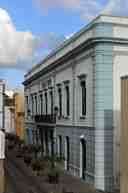
To spot the Teatro Circo de Marte, look for a grand, pale blue and white building with tall arched windows and a black iron balcony directly above the entrance-it’s right on your left along the cobblestone street! Now imagine this: over a hundred years ago, the very spot where you’re standing wouldn't have hosted theatergoers in fancy coats and sparkling dresses. Nope! At first, this building was actually created for cockfights, and its design was inspired by French circus architecture-so yes, applause was mixed with squawking and feathers flying everywhere! When times changed and the show had to go on, the builders wrapped the original “circus” ring with new walls, transforming it from a rough animal arena into a dazzling rectangular home for drama, music, and laughter. If these walls could talk, they’d tell you tales of how the interior once echoed with the excitement of crowds cheering for a different reason than they do today. The sound of actors rehearsing lines now fills space that once rang with the flapping of wings and rowdy bets. So, as you stand in front of the Teatro Circo de Marte, take a deep breath and picture both the clamor of the circus past and the velvet hush right before the curtain rises on a new play-because here, every stone is part of a wild, theatrical transformation.
Open dedicated page →
Show 7 more stopsShow fewer stopsexpand_moreexpand_less
 4
4Iglesia Matriz de El Salvador
Buy tour to unlock all 14 tracksTo spot the Iglesia de El Salvador, look for the grand stone doorway with tall columns and a statue above it, right in the center of a bright white wall-it’ll be impossible to…Read moreShow less
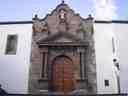
To spot the Iglesia de El Salvador, look for the grand stone doorway with tall columns and a statue above it, right in the center of a bright white wall-it’ll be impossible to miss! Now, let’s step back in time together, right here in the heart of Santa Cruz de La Palma. Imagine it’s the early 1500s: the world is full of explorers, the air smells of the ocean, and folks are bustling about, building what will become the city’s proud heart-this church. As you stand before its impressive entrance, notice the shape of the portal; doesn’t it look a bit like an ancient Roman arch? That’s no accident! The builders wanted to show off the victory of Jesus, making sure everyone felt inspired just walking by. Inside, the atmosphere changes-a little darker, grand and full of secrets, with three magnificent naves diving into Baroque drama. Now picture the main altarpiece glowing at the end, a neoclassical painting of the Transfiguration of Jesus, dazzling every visitor since it was installed. Over the centuries, earthquakes rattled these walls, architects dreamed up new designs, and each generation added their own twist. If you listen closely, you might just hear a stonemason’s proud laugh or a choir’s distant echo-after all, this church has seen more stories than a library with a leaky roof. So take a moment and let the centuries wash over you-who knows what whispers you’ll catch in the breeze?
Open dedicated page →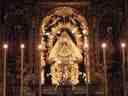 5
5Real Santuario de Nuestra Señora de las Nieves
Buy tour to unlock all 14 tracksTo spot the Fiestas Lustrales de la Bajada de la Virgen de las Nieves, look ahead for a dazzling, golden altar crowned by a shining statue of the Virgin, surrounded by twinkling…Read moreShow less
To spot the Fiestas Lustrales de la Bajada de la Virgen de las Nieves, look ahead for a dazzling, golden altar crowned by a shining statue of the Virgin, surrounded by twinkling candles and carved angelic figures, glowing like a little slice of heaven right in front of you. Now, find a comfortable spot-because the story of this festival will whisk you right through centuries of faith, danger, and a dash of good old fiesta spirit! Imagine Santa Cruz de La Palma in the 1600s: desperate townsfolk looking skyward as drought and disasters threatened their homes. There was no app for rain back then, so when hope seemed lost, the people carried their cherished Virgin of Las Nieves down from her mountain sanctuary, praying for a miracle. Picture a long procession of locals winding down foggy paths through the hills, the air buzzing with both anxiety and hope. Those first processions sparked a tradition. In 1680, the bishop-probably tired of random emergency pilgrimages-decided, “Let’s make this official!” and set the Bajada to take place every five years, with the Virgin traveling to town on a “decent throne.” If you think event planning is hard now, imagine coordinating a silver-laden throne carried on winding mountain paths while everyone sings and cheers... and no Google Maps. The festival blossomed, drawing inspiration from the Baroque era’s love of spectacle. Early celebrations blended religion, music, and dance in flamboyant, theatrical displays-even after a royal ban tried to shut them down. (Spoiler alert: islanders are persistent. If the king says “no theater,” expect even more theater.) By the 1800s, spirited parades of musicians, dancers, and even gymnasts became regular highlights, while the infamous Danza de los Enanos-yes, the Dance of the Dwarves-emerged as the wildest act. Picture a chorus of men twirling slowly in elaborate costumes, until, with a burst of music and a bit of magic, they duck into a tiny booth and come out as zippy, comical dwarves, bouncing through the night to the crowd’s delight. Over the years, the program expanded. There’s the whimsical Pandorga parade, fanciful paper lanterns lighting up the sky before ending in a spectacular bonfire. The giant-headed “mascarones” wobble and bob through the crowded streets, including Biscuit the ring-leader, who sports a Napoleonic hat and a mustache that could sweep the floor. And you can’t miss the Festival of the 18th Century-a splashy blend of courtly dances, rococo costumes, and poetry, as if the city fell into a time machine and landed at Marie Antoinette’s garden party. The five-year cycle gives the celebration a bittersweet edge-blink and you’ll miss it until the next decade. The official program starts with the solemn raising of the Virgin’s banner, a massive white flag embroidered with her symbol, which sways above the city until the festival ends, as if blessing every street and home below. When the grand day arrives, pilgrims in traditional dress carry the silver throne down the mountain, voices echoing through the lush landscape. As the Virgin finally arrives in town, a wave of triumphant music greets her; imagine trumpets, choirs, and drums blending with the cheers of thousands. And just when you think the party is over, the festival builds even more suspense. There’s the “Dialogue between the Castle and the Ship,” a theater piece that’s been reenacted since the 1800s-imagine a seaside opera, baroque costumes and all, played out in the city squares. There are acrobatic shows, children’s dances, and historic songs that fill the air with old-world charm. For weeks, the city becomes a living stage, where every narrow street hums with laughter and music, and where the faithful (and even the not-so-faithful) find a reason to celebrate together. At the end, just before the Virgin returns home, the festival erupts with one last joyful procession, fireworks lighting the night and hearts brimming with pride, history, and just a pinch of magic-the kind only found in Santa Cruz de La Palma.
Open dedicated page →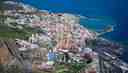 6
6Santa Cruz de La Palma
Buy tour to unlock all 14 tracksTo spot Santa Cruz de La Palma, just look ahead for a bustling seaside city hugging the blue Atlantic, with colorful buildings stacked on the hillside and a long curved harbor…Read moreShow less
To spot Santa Cruz de La Palma, just look ahead for a bustling seaside city hugging the blue Atlantic, with colorful buildings stacked on the hillside and a long curved harbor stretching into the waves on your right. Alright, take a deep breath-can you smell the salt in the air and hear the rustling palm trees? Welcome to Santa Cruz de La Palma, the historic heart and capital of this beautiful island, shimmering under the Canarian sun. Imagine yourself standing here more than five centuries ago, in 1493, when a determined Spanish adventurer named Alonso Fernández de Lugo founded a port called Villa del Apurón, right between a river and the mysterious cave of Tedote to the north. This new outpost grew fast-it was perfectly placed as a gateway between Europe and the untamed Americas, shipping out sweet sugarcane and other island treasures. But life was never as sweet as the sugar they grew! The city soon found itself on pirate maps, luring bold buccaneers to its shores. One day, the lookout would spot sails on the horizon and suddenly, the calm would be broken. Pirates stormed the town, plundering its riches, but the cityfolk were stubborn and strong-willed. After each attack, they rebuilt, raising mighty fortresses like the Castillo de Santa Catalina and the Castillo de la Virgen, determined not to let pirate boots dirty their pretty plazas ever again. As you stroll among sun-washed buildings, picture the throngs of early traders and their animated chatter, horses’ hooves echoing down narrow streets, and the hum of busy docks. Yet Santa Cruz wasn’t just a trade hub; it was a cradle of freedom-it boasted the first democratically elected town hall in all of Spain! There’s a little local pride there, and maybe a touch of mischief too-after all, these islanders love a good debate. Today, about 16,000 people call the city home, many in its maze of pastel houses. Santa Cruz’s unique microclimate means summers sizzle dry and winters bring warm, gentle showers, perfect for a scenic seaside stroll or a bustling ferry ride in the port, which still welcomes ships from Spain, Tenerife, and beyond. Soak up this place where legends of pirates, pioneering democracy, and island culture swirl around every corner-Santa Cruz de La Palma is so much more than just a pretty view!
Open dedicated page →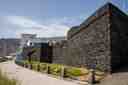 7
7Real Castillo de Santa Catalina
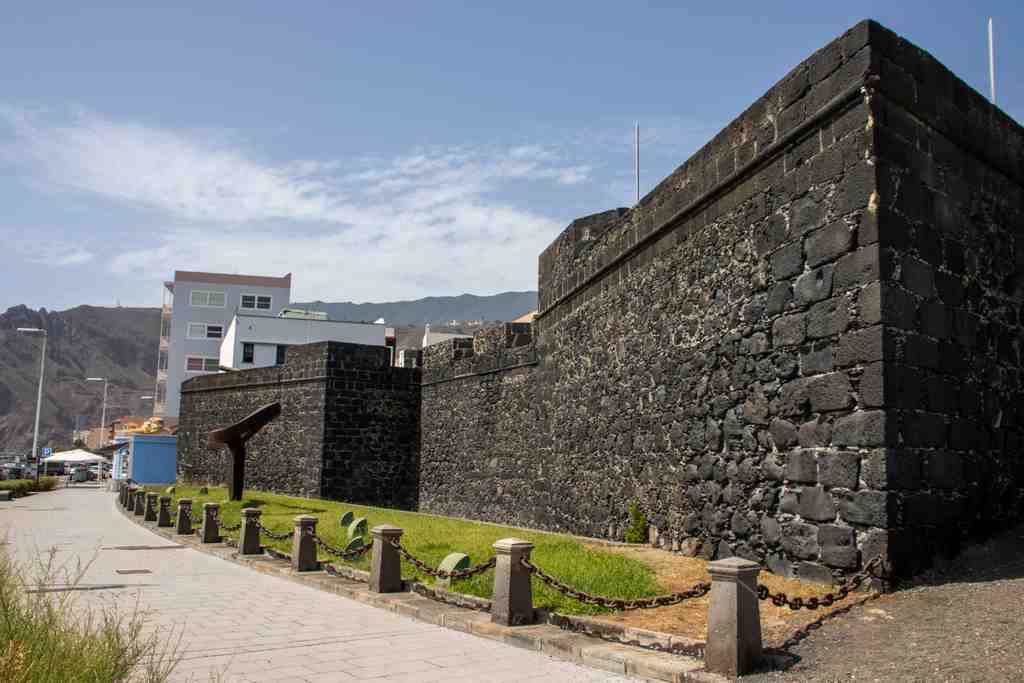
Buy tour to unlock all 14 tracksTo spot the Castillo de Santa Catalina, look to your left for an impressive stone fortress with thick, dark walls topped by triangular bastions-its sturdy, square shape stands…Read moreShow less
To spot the Castillo de Santa Catalina, look to your left for an impressive stone fortress with thick, dark walls topped by triangular bastions-its sturdy, square shape stands just behind the street, guarding over the coast like a silent sentinel. Go ahead and take it all in: imagine the salty Atlantic breeze brushing your face as you stand before these enduring stone walls-a place that has witnessed more than its fair share of adventure, drama, and just a little bit of pirate trouble! That’s right, this fortress came to life in the aftermath of a pirate attack. Back on July 21, 1553, French pirates stormed the city. Now, I wasn’t there, but I think we can imagine the chaos-shouts, clanging swords, maybe a few curses in French. The result? The citizens decided to seriously level up their home defense, and between 1554 and 1560, they built the very first Castillo de Santa Catalina, hoping that the next time pirates showed up, they’d be met with more than just a “no soliciting” sign. The original castle had an elliptical platform with a round tower, and in 1585, an expert named Leonardo Torriani swooped in to redraw its layout-clearly, castle makeovers were all the rage. But despite their best efforts, Mother Nature proved too fierce. By the mid-1660s, constant ocean storms and fierce rains from the Barranco de Las Nieves overflowed, slowly eating away at its foundations until, by the late 1670s, the old castle was nothing but a memory-one big pile of unhappy stones. Now, here’s where the drama really spices things up! In 1683, the city got new land, and between 1685 and 1692, this current castle rose- funded first with 30,000 silver reales from residents who probably checked their couches for change, and the rest from the island’s government. This version took inspiration from Italian military Renaissance style: picture thick, quadrangular walls, triangular bastions on every corner, a moat that you’d have to cross on a wooden bridge (watch your step!), and even a house for the governor inside! This castle wasn’t just a looker; it was fully kitted out-warehouse, dungeons (for bad guys and maybe the odd grumpy in-law), a weapons room, and a powder magazine. Oh, and it doubled as the town’s prison. One especially famous guest was a lawyer named Anselmo Pérez de Brito. I bet he wished he could lawyer his way out of this one. The castle became the city’s main defense and looked a lot like the no-longer-standing Castle of San Cristóbal in Tenerife. There was a permanent guard until 1808, after which the castle’s military life came to a slow, creaky halt. Fast-forward to 1949-this fortress was almost set for demolition! Yes, a group of merchants bought the castle at auction for 300,000 pesetas, hoping to put up modern houses. Just as the wrecking ball was warming up, the Spanish government swooped in with a decree to save Spanish castles-talk about a dramatic rescue! By 1951, it was officially protected as a Historic Monument, and today, it’s the only surviving Habsburg-era fortress in all the Canary Islands. In front of the castle, you’ll spot ‘El Alisio’, a striking sculpture made by Martín Chirino, installed in 1999 and restored just a few years ago. The trade winds still whistle through here-if you listen closely, you might hear the echoes of guards’ footsteps on the stone, the clatter of the drawbridge, and the waves below. So, next time someone brings up pirate attacks, you’ll have the perfect story-and the perfect castle-to show them!
Open dedicated page → 8
8Carretera del Norte de La Palma
Buy tour to unlock all 14 tracksLook ahead and you'll spot the Carretera del Norte as a soaring modern bridge stretching gracefully over a deep green ravine, with its tall pillars standing proud between the…Read moreShow less
Look ahead and you'll spot the Carretera del Norte as a soaring modern bridge stretching gracefully over a deep green ravine, with its tall pillars standing proud between the cliff's edge and little houses nearby. Alright, let’s take a moment to appreciate this mighty road! The Carretera del Norte de La Palma, or LP-1 for short, is the north’s main highway, connecting the hustle and bustle of Santa Cruz de La Palma on one side all the way to the laid-back Los Llanos de Aridane on the other. Imagine you’re a traveler long ago, zigzagging up mountain paths with the wind howling at your back and goats for company-you’d wish every day for a shortcut like this! Today, you can zip through tunnels, race across grand viaducts like the Los Tilos, and look down on wild ravines that would have made your ancestors break a sweat just thinking about crossing. And here’s where it gets exciting: thanks to a friendly pact between the Spanish government and the Canaries, this road keeps getting better. They’ve carved smoother lanes, built mighty bridges, and dream even bigger-there’s talk of a bridge over Las Angustias ravine that’ll be so high, clouds may need to pay tolls. With every upgrade, the island gets stitched a little closer together, making life easier-and adventure just a little bit faster. So next time you cross, give a quick “thank you” to the road builders-and maybe hold your breath as you look down!
Open dedicated page →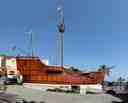 9
9Museo Naval - Barco de la Virgen
Buy tour to unlock all 14 tracksTo spot the Museo Naval del Barco de la Virgen, just look for a gigantic wooden ship-yes, a full-on galleon-right in the middle of Plaza de La Alameda, perched above the road like…Read moreShow less
To spot the Museo Naval del Barco de la Virgen, just look for a gigantic wooden ship-yes, a full-on galleon-right in the middle of Plaza de La Alameda, perched above the road like it’s about to set sail through the streets! So, you’re standing by the most legendary “beached” ship in the Canary Islands, and you don’t even need a pirate map to find it! This glorious galleon isn’t stranded here by accident. The Museo Naval del Barco de la Virgen is shaped just like Columbus’s Santa María, and it’s Santa Cruz de La Palma’s proudest symbol. Picture yourself in the salty air, the warm Canary sun on your face, and imagine being back in the days when palmwood ships, built by crafty local hands, conquered winds and waves, setting out from this very island to places unknown. Now, this isn’t just any ship. It’s a tribute to generations of island sailors so daring, their adventures echo in every creak of its hull. The whole thing came about thanks to Don Armando Yanes Carrillo, who must have woken up one morning and thought, “How about we put an enormous ship in the plaza - for real?” He teamed up with fellow dreamers, combed through blueprints in the Naval Museum of Seville, and used his own wizardry as the very last master shipbuilder of La Palma. In 1940, just in time for the grand festival called the Bajada de La Virgen, this ship was launched… or, well, planted, right here! Imagine the crowds gathering as, every five years, a statue of the Virgin arrives for the grand festival. Then, right next to this ship, a dramatic “dialogue” with the fortress across the plaza unfolds-a spectacle of music, poetry, and fireworks that’s been going strong since 1885, all in homage to the island’s seafaring past. Step inside, and you’ll find ancient sea charts on parchment, whispers of old adventures, and dreams set in ink on starry maps. Walking around here, you can almost hear the waves, the laughter, and maybe a salty old sailor’s joke or two-because after all, every ship needs a good story and a little mystery!
Open dedicated page →
Frequently asked questions
How do I start the tour?
After purchase, download the AudaTours app and enter your redemption code. The tour will be ready to start immediately - just tap play and follow the GPS-guided route.
Do I need internet during the tour?
No! Download the tour before you start and enjoy it fully offline. Only the chat feature requires internet. We recommend downloading on WiFi to save mobile data.
Is this a guided group tour?
No - this is a self-guided audio tour. You explore independently at your own pace, with audio narration playing through your phone. No tour guide, no group, no schedule.
How long does the tour take?
Most tours take 60–90 minutes to complete, but you control the pace entirely. Pause, skip stops, or take breaks whenever you want.
What if I can't finish the tour today?
No problem! Tours have lifetime access. Pause and resume whenever you like - tomorrow, next week, or next year. Your progress is saved.
What languages are available?
All tours are available in 50+ languages. Select your preferred language when redeeming your code. Note: language cannot be changed after tour generation.
Where do I access the tour after purchase?
Download the free AudaTours app from the App Store or Google Play. Enter your redemption code (sent via email) and the tour will appear in your library, ready to download and start.
If you don't enjoy the tour, we'll refund your purchase. Contact us at [email protected]
Checkout securely with 


