
Málaga Audio Tour: Art, Legends & Hidden Gems of the Historic Quarter
Beneath Málaga’s sun-soaked skyline, centuries of intrigue, power, and hidden artistry still echo through ancient stone. Set out on a self-guided audio adventure through the twisting streets of the Centro Histórico, delving deep into cathedrals, secret palaces, and galleries where most visitors only glance and pass by. Lift the veil on stories that lurk behind elegant façades and bustling plazas. Who risked everything in a midnight rebellion that shook the cathedral’s calm? What veiled secret made the Palace of the Marquis of Sonora the center of whispered scandal? Why do artists at the Carmen Thyssen Museum debate a single, strange painting that once disappeared? Move from soaring arches to narrow alleyways as the city’s lost legends come alive with every step. Málaga reveals itself not just as a place, but as an unfolding drama—yours to unlock. Step closer and listen—the past is waiting for you to discover its hidden heart.
Tour preview
About this tour
- scheduleDuration 40–60 minsGo at your own pace
- straighten2.2 km walking routeFollow the guided path
- location_on
- wifi_offWorks offlineDownload once, use anywhere
- all_inclusiveLifetime accessReplay anytime, forever
- location_onStarts at Museo Picasso Málaga
Stops on this tour
To spot the Museo Picasso Málaga, look for a sturdy stone façade with a modern sign in red and beige lettering that reads “museoPICASSOmálaga” right beside a simple arched…Read moreShow less
To spot the Museo Picasso Málaga, look for a sturdy stone façade with a modern sign in red and beige lettering that reads “museoPICASSOmálaga” right beside a simple arched doorway. Welcome to the Museo Picasso Málaga-right in the heart of the city where Pablo Picasso was born! Picture yourself hundreds of years ago, walking on these ancient stones, when the Buenavista Palace first rose here in the 1500s. Back then, you might've bumped into noblemen in flowing cloaks, their polished boots echoing on these very walls. Today, the air crackles with creativity instead, because you’re about to stand where history and modern art collide in style. Long before this museum ever existed, wild ideas of a Picasso tribute in Málaga had to battle through Spain’s Franco era-lots of bureaucracy and, I imagine, some impressively dramatic sighs of frustration. The city’s own Juan Temboury Álvarez dreamed up a gallery dedicated to Picasso as early as the 1950s, and yes, this building was in the running even then. But the idea faded away like a half-finished sketch. Fast forward a few decades to the 1990s-with the help of Christine Ruiz-Picasso, Picasso’s resourceful daughter-in-law-all those dreams were dusted off, and classic Picasso exhibitions packed crowds right here in Málaga. Imagine the excitement: “Could we really build a museum for Picasso, right where he played as a child?” Spoiler alert: Yes, they could! And so, in 2003, with Spanish royalty looking on, the museum opened its doors and Málaga went from “sunny seaside town” to “home of a world-class Picasso collection.” It wasn’t a simple paint job-turning a 16th-century palace into a high-tech gallery is no easy task. The legendary architect Richard Gluckman led an international team, wrangling centuries-old stonework and very modern demands for things like climate control and security. They acquired and joined no fewer than 18 old buildings, stretching from the bones of a Nasrid palace to forlorn houses of the city’s ancient Jewish quarter. One wrong move and you’d disturb Nafrid stones, Roman factory floors, or Phoenician city walls. Imagine the builders pausing as their shovels clinked against history-each scrape revealing forgotten towers or the scent of ancient garum, a fishy sauce beloved centuries ago. Today, if you look down in some parts of the museum, you’ll see glass panels in the floor, revealing those lost layers. Who knew Picasso would have to share his gallery with centuries of hidden Malagueño secrets? The palace itself once rang with the laughter and gossip of the Cazalla family, its courtyards blooming under patchy Andalusian sunlight. But now the main attraction is Picasso and his wild imagination-155 personal works donated by family and carefully displayed, ranging from his early studies to mind-bending Cubist portraits, tender ceramics, and sketches that seem to almost move on the walls. As you stand outside, notice the surprisingly modern touches: skylights brightening ancient halls, marble air vents shaped with pseudo-Mudéjar flair, and the subtle blend of old and new that fooled even the brightest architects. Designed for paintings but built for spectacular drama-it’s not every day you visit a place that survived fire, controversy, and a royal debut. Now, imagine little Pablo himself, toddling to nursery school just down this street, with his father-curator of the old city museum-painting in a studio nearby, sometimes showing off even very young Pablo’s crayon masterpieces. If you sneak a peek from the staircases today, you can glimpse the tower of the church where Picasso was baptized. So, as you take in the elegant stone, pause a moment and imagine the footsteps of artists, noblemen, and visionaries echoing down through the centuries, all leading to this very spot. In this palace, Picasso’s genius finds a home-surrounded by Málaga’s deepest roots and brightest dreams. Ready to walk in and see what masterpieces await? Intrigued by the founding and collection, the building or the picasso and the calle san agustín? Make your way to the chat section and I'll be happy to provide further details.
Open dedicated page →To spot the Historic site of Malaga, look for the open plaza with ancient stone ruins beneath your feet, right in front of the rows of palm trees and with the majestic Malaga…Read moreShow less
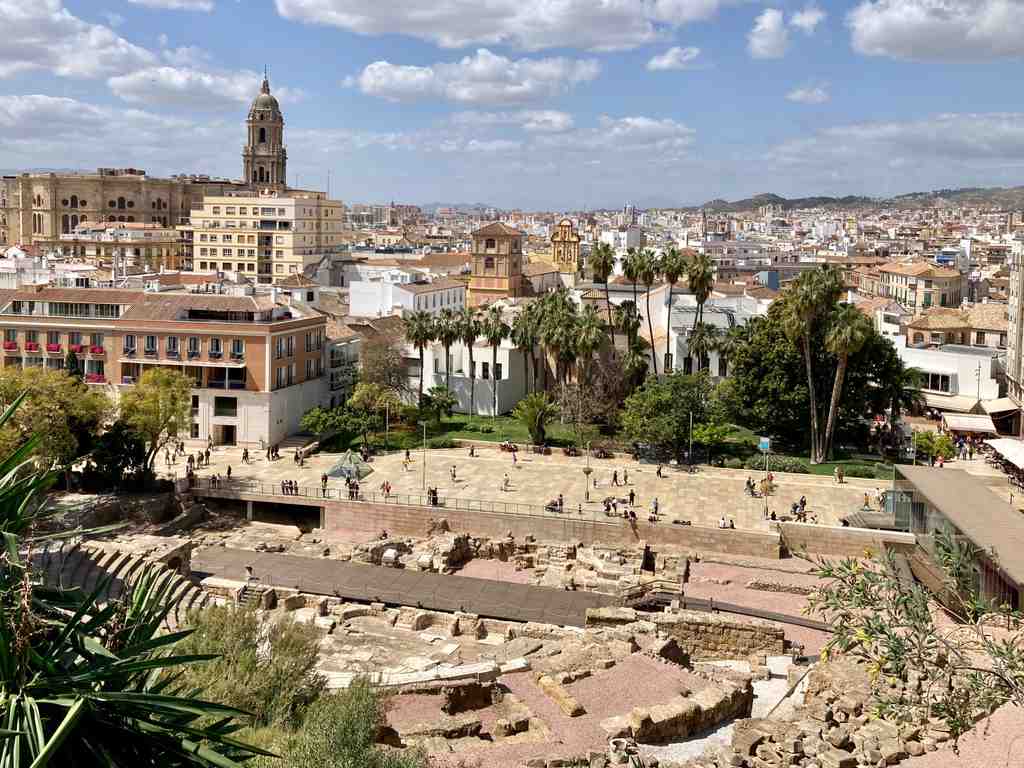
To spot the Historic site of Malaga, look for the open plaza with ancient stone ruins beneath your feet, right in front of the rows of palm trees and with the majestic Malaga Cathedral’s bell tower rising above the rooftops in the background. Welcome to the beating heart of Malaga’s history! As you stand here, close your eyes for a second-no, don’t worry, I won’t steal your map. Imagine the air carrying whispers from thousands of years ago. Under your feet, Romans once cheered at the theater, Phoenicians bustled with purple dye, and traders shouted out their bargains at lively markets. The Historic site of Malaga is not just a single monument, but an entire patchwork of civilizations: Eastern and Western, ancient and medieval, all squeezed into a little piece of urban magic. Let’s rewind all the way to ancient times. Picture Phoenician sailors unloading barrels of salty fish and purple dye right nearby. You can actually see some of their original city walls hidden in basements under modern buildings-Malaga’s version of secret treasure! Then Rome came marching in, building temples and the grand theater whose stones are just beneath you. When you walk here, you’re almost in their sandals. In fact, back in the first century, Malaga had its own law code, the Lex Flavia Malacitana, which was found only a short walk from here. Oh, and the Romans weren’t the only party animals. Their impressive mosaics are still hidden beneath museums and galleries around the city, and some of the fish-salting tanks from old Roman kitchens can be found under nearby streets. If you ever smell something fishy, it’s probably just history burping up lunch! Now, fast forward to the clashing swords and tunics of the Middle Ages! First came the Visigoths, and after them, the Byzantines. Battles raged, city walls crumbled, and got rebuilt. The Muslims took over in 711, and suddenly Malaga became Mālaqa, its city walls curling around the winding streets behind you. Ancient gates once opened to the medina, letting merchants and camels pass. Some of those gates, like the Puerta de Granada, left their bones hidden right where you walk today. Dizzy yet? The city changed hands again in 1487 with the arrival of the Catholic Monarchs, bringing new churches, hospitals, and grand convents-imagine nuns bustling about with baskets of oranges and city planners carving out straight, new streets. The great Cathedral behind the skyline grew slowly, stone by stone, as if it was capped by a builder with a serious case of procrastination. As you hear the chatter of people around you, remember this was also a city of celebrations: festivals, proclamations, and dramatic escapes echo across the centuries. The city morphed during the 18th century into a thriving trading hub, with the port redesigned, wide boulevards built, and decorative mansions springing up. Malaga even boomed with industry; King Felipe II ordered a new dock, but thanks to some construction hiccups, it became a multi-generational family project. Change rang out, especially in the 19th century-convents turned into parks, old walls tumbled, and grand avenues appeared, like the famous Marqués de Larios street. New neighborhoods exploded in leafy splendor, while Malaga’s taste for modernity shaped the buildings and boulevards you see today. So, wherever you stand here, you’re outside, inside, above, and below centuries of human ambition, faith, art, and the occasional disaster. You could toss a stone and hit Ancient Rome… but don’t actually do that-these ruins are older than your grandma’s grandma’s grandma! The Historic site of Malaga is a living palimpsest, every layer a new story waiting for you to discover it. And remember, just because history can’t speak, doesn’t mean it’s not whispering secrets right beneath your feet.
Open dedicated page →

Show 12 more stopsShow fewer stopsexpand_moreexpand_less
 4
4OXO Museo Málaga
Buy tour to unlock all 19 tracksYou’ll spot the OXO Video Game Museum right in front of you as a corner building with a glossy black sign, bold white “OXO” letters, and a big window showing off a giant Sonic the…Read moreShow less
You’ll spot the OXO Video Game Museum right in front of you as a corner building with a glossy black sign, bold white “OXO” letters, and a big window showing off a giant Sonic the Hedgehog inside-just look toward the center of Plaza del Siglo to see its playful entrance. Alright, get ready to journey through time and pixels! Imagine you’re standing at the crossroads of Málaga’s past and future, just 50 meters from the cathedral and right outside a sleek building that’s bursting with energy. The OXO Video Game Museum might look modern now with its shiny LED lights and interactive screens, but if these walls could talk, they’d have a wild story to tell. Picture it: once upon a time, this very spot was home to a bullfighting museum! But in 2022, an epic quest began-Kaiju Entertainment, famous for giving Málaga game events like Gamepolis, won a 30-year lease here. Their mission? To transform this 19th-century building into a playground of nostalgia and digital dreams. Step through the automatic doors (watch out for Sonic at the entrance-he’s always up for a race!). Instantly, you’re caught in a wave of excitement as you sense the buzz of consoles, flashes of colored lights, and the faint hum of laser projectors from the immersive 360° room on the ground floor. Here, the fun kicks off with giant screens encircling you, playing scenes from Pong all the way to Final Fantasy XVI-and rumor has it, you might even hear a few 8-bit sound effects squeaking in the background if you listen closely. Walking up the stairs? Don’t just climb-level up! Each stair is hand-painted in vibrant colors by the artist Play in Colors, with retro video game milestones like “Tetris 1984” and “Wii 2006” under your feet. If you feel a tingle of anticipation, that’s because you’re not just visiting a museum-OXO is Málaga’s time machine, throwing you from the very first video game era to a cutting-edge digital future faster than Sonic on caffeine. On the first floor, known as the Past, the story begins in 1952. Ever wondered what the world’s first graphical video game looked like? It’s called OXO-hence the museum’s name-and it’s here, running on a replica setup with an original Tektronix oscilloscope. You can even play it! Next to it sits Spacewar!, the great grandparent of everything from Mario to Fortnite, plus cabinets of Pac-Man, Atari’s Pong, and rows upon rows of 8-bit magic. There’s even a life-size DualShock controller-perfect for dramatic selfies or a new fitness challenge! The second floor is a shape-shifter, always changing. Some days, it’s home to legendary saga exhibitions-once, there were Animal Crossing, Call of Duty, and God of War consoles lined up for players. More recently, Final Fantasy took over with original art straight from Japan and a full-on photo zone where fans posed sword-in-hand, feeling like heroes. Even the walls here are alive, with projection mapping that keeps every visit wildly unpredictable. But wait, there’s more! Up on the third floor is OXO Labs, the future of gaming in full swing. Here, you’ll see everything from virtual reality arenas-think dueling in Beat Saber or surviving a Fallout adventure-to experimental arcades, homebrew Mega Drive games, and a real eSports arena buzzing with weekly Valorant tournaments. This zone isn’t just about playing-it’s about inventing, learning, sharing, and dreaming. Málaga’s very own digital playground for the gaming community, with workshops, OXO Talks, and art galleries showing hundreds of photos from Japanese arcade halls that seem straight out of a movie. Behind every joystick, controller, and flashing screen lies a story from Málaga’s own gamers-Kaiju’s private collection mixes with treasures loaned by Andalusian fans and mega-corporations like Nintendo, PlayStation, and SEGA, not to mention the legacy of Spain’s own first game company, Dinamic. So, whether you’re a hardcore gamer, a curious newcomer, or just here for the nostalgia, OXO will leave you grinning, inspired, and-if you’re lucky-maybe just slightly better at Pong than when you arrived.
Open dedicated page → 5
5Santa Iglesia Catedral Basílica de la Encarnación de Málaga
Buy tour to unlock all 19 tracksTo spot Malaga Cathedral, just look up for a massive, honey-colored stone structure with tall arched windows, ornate columns, and an impressive tower rising above the nearby…Read moreShow less
To spot Malaga Cathedral, just look up for a massive, honey-colored stone structure with tall arched windows, ornate columns, and an impressive tower rising above the nearby trees-a true giant among the surrounding buildings! Now, let’s step back in time, right here at the feet of one of Andalusia’s greatest treasures. Imagine the scent of oranges from the nearby courtyard mixing with the cool stone air, as the shadows of those high Renaissance towers stretch across the plaza. This is the Santa Iglesia Catedral Basílica de la Encarnación-or, if you’re friends, just call her “La Manquita,” or “The One-Armed Lady.” Why? Well, take a close look-she’s famously missing her second tower! It’s the city’s one-armed wonder, and trust me, the locals have more than a few stories about it. It all began in 1487, when Queen Isabella and King Ferdinand swept into Malaga after the city’s conquest. Picture victorious soldiers, banners flying, and church bells ringing out where the old Arab city walls once stood. The monarchs ordered their new cathedral to rise on the ruins of the main mosque-no easy feat. The first stones went down in 1528, but the work would last for centuries, with more cliffhangers than a TV drama. Renaissance masters like Diego de Siloé, Hernán Ruiz II, and Diego de Vergara tried their hand at turning Gothic dreams into a flourishing Renaissance landmark. For years, stonecutters chipped away, the sun beat down, and the echoes of chisels filled the air. The cathedral took shape-head, sacristy, and the majestic vaults-until the money ran out. And just when you thought the plot would pick up again, it did: in the 18th century, construction roared back to life, powered by hefty taxes on Malaga’s seafaring trade. Those who sailed from this harbor literally helped build this cathedral, one brick and barrel at a time. But then, in a plot twist fit for a Hollywood epic, King Carlos III sent the funds-supposedly destined for the cathedral-to help American revolutionaries fight for independence from Britain. That’s right! If you listen hard, you might even hear the echoes of a toast from across the Atlantic. But what about the missing tower? Well, thanks to the diverted funds, it was never finished, and “La Manquita” was born. To this day, debates stir about whether to finally fix her “arm.” Some say leave her as she is-a symbol of Malaga’s unique history and sense of humor. This grand building is more than just a monument-it’s survived wars, losing priceless art during the Spanish Civil War, including ornate altars and sculptures. Restoration efforts from the 1940s onward brought in new works and rescued masterpieces barely saved from the fires. Step inside and you’ll see soaring stone vaults nearly 42 meters high-higher than most cathedrals in Spain! The monumental choir is a masterpiece of Baroque woodwork with a dazzling gallery of saints and angels, carved by some of history’s finest hands. Keep your eyes peeled for the cathedral’s gardens and the patio of orange trees, remnants of an even older Islamic past. Inside, the colored light streaming through stained glass fills the air, and the mighty organs boast over four thousand pipes-enough to make angels dance. So, whether you feel awe, curiosity, or just the urge to photograph every inch, know that you are standing in a place where centuries of faith, creativity, surprise, and even a dash of international adventure come alive in every stone. Ready to continue? Don’t let “La Manquita’s” missing arm fool you-this cathedral always has another story up her sleeve! Yearning to grasp further insights on the outside, interior or the cathedral treasure? Dive into the chat section below and ask away.
Open dedicated page →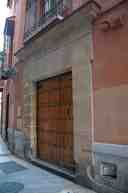 6
6Salinas Palace House
Buy tour to unlock all 19 tracksRight in front of you, you’ll spot the Salinas Palace House by its curved stone doorway and the large wooden door with dark metal studs, set into a salmon-colored façade - look…Read moreShow less
Right in front of you, you’ll spot the Salinas Palace House by its curved stone doorway and the large wooden door with dark metal studs, set into a salmon-colored façade - look for the thick stone frame and the classic ironwork above. Ah! Welcome to one of Málaga’s best-preserved secrets - the Salinas Palace House, sitting proudly on Calle Salinas, just a short hop from the hustle of Larios Street. As you stand here, try to imagine the winding, narrow street as it might’ve been in the late 1600s. Back then, this was the grand home of a wealthy landowner, set on a plot shaped to fit the old, twisting path left by centuries of Arabic influence. The city around you has changed dramatically, especially in the 19th century when broad streets and new buildings swept in, but the Salinas Palace House held onto its funky, irregular footprint like a stubborn mule at a dance lesson. You might not guess from the humble entrance, but you’re at the threshold of a genuine palace. This house was built following the classic ‘casa patio’ style-everything revolves around a central courtyard. That courtyard, if you could peek inside, is like a secret oasis, ringed with marble columns and filled with soft shadows. There you’d find arches resting on thick white stone, the columns tied together with glinting steel bands, as if wearing shiny medieval jewelry. But the crown jewel is the tall corner tower, rising above the building like a lookout on the prow of a ship. Now, here’s where the story gets juicy: some say this tower is a leftover from an old mosque that stood here in medieval times, and that long ago, the city council snatched it up and repurposed it for their own shenanigans. Others argue-no, no, it’s just a fancy watchtower built for a posh noble family in the 16th century. Imagine all the gossip whispered on those balconies over the centuries! Either way, the tower stands two stories higher than the rest of the building, its fat, rectangular sides decorated only by a snazzy painted frieze, giving it a “less is more” kind of style. And right at the top, a sturdy weather vane twists in the breeze, probably having spun around more times than a tourist looking for tapas at midnight. Down here at street level, the sober elegance of the palace is easy to miss-almost as if the building is trying not to brag. Three stories rise above you in simple lines, broken up by pilasters and horizontal stripes called ‘impostas’. The main doorway is framed with big stone blocks and topped by a cornice, and if you look up, you’ll see rows of iron balconies, each with its own small sheltering awning. It’s not flashy, but it’s definitely noble, in that stern Spanish Baroque way. This house has lived many lives. For centuries, it was just a single-family home, with wide rooms wrapping around the breezy patio. Then, during the 20th century, it was sliced and diced into apartments for local families-a lively period filled with clattering footsteps and evening chats echoing through the courtyard. But by the 1970s, the grand old place was on its last legs, officially declared a ruin. The floors drooped, the roof groaned, and mischievous pigeons probably held nightly parties in the rafters. Luckily, a restoration in the early 1990s brought this grande dame back, using traditional techniques (and plenty of elbow grease). The inside is still marked by those high, beamed ceilings and rooms opening onto the patio, many of which have barely been divided over the years. A sweeping staircase curves up through the southwest corner, topped with ornamental moldings and a decorative pinecone in the ceiling center-just to remind you that even staircases needed to dress up for visitors. Today, the palace has found a new rhythm: offices and local shops fill its cool halls. And at the back, a second, smaller patio lets in just a little more Andalusian sun. So, whether you’re a noble in a powdered wig or a weary office worker, the Salinas Palace House reminds you that life goes on-and it’s all about finding your own space under the Málaga sky. Onward, let’s see what other wonders are hiding just around the corner!
Open dedicated page → 11
11La Casa Invisible
Buy tour to unlock all 19 tracksTo spot The Invisible House, look for a tall, elegant 19th-century building with cream walls, long green shutters, wrought iron balconies, and banners draped from the upper…Read moreShow less
To spot The Invisible House, look for a tall, elegant 19th-century building with cream walls, long green shutters, wrought iron balconies, and banners draped from the upper floors-all right here on Nosquera street. Alright, take a moment to soak in this rather “invisible” sight-don’t worry, it’s just a name, not a magic trick! Strange as it might sound, The Invisible House has become one of Málaga’s most spirited landmarks, hiding in plain sight with a flair for making noise right where you’re standing. Picture it: the year is 2007, and a wave of creative energy is stirring here on Nosquera street. The building in front of you, finished in 1876 for Málaga’s nineteenth-century bourgeoisie, is suddenly buzzing as a network of neighbors, artists, and dreamers decides to “occupy” its forgotten corridors. What these citizens want isn't secrecy or silence, but to spark real change. They turn this classic townhouse, right inside the city’s old Muslim walls, into a social and cultural laboratory-one fueled by debates, music, dance, and activism. It might look peaceful now, but imagine the bustle inside: 2,000 square meters split between historic salons and a sun-splashed courtyard-home to a mighty mulberry tree, ivy twisting up the walls, and a gathering of all sorts of plants. Locals and visitors gather under the greenery, exchanging ideas and plotting how to make their voices heard. In a city quickly modernizing and changing, with many older spaces bulldozed or glossed over for new shops, The Invisible House stubbornly refuses to become another anonymous facade. After their bold occupation, the group faced a tug-of-war with Málaga’s city council. Endless meetings, complex paperwork, promises made and retracted-all the bureaucratic drama you could imagine. There was even a temporary agreement reached in 2011: the city, the region, and even the National Museum Reina Sofía recognized the space’s worth. In exchange for detailed reports and forming a foundation, Casa Invisible would stay open, becoming a beacon of creativity and dialogue. For years, the place pulsed with life: seminars, classes, debates, music, theater-you name it. Diverse collectives found a home, from the “Invisible Creators” to housing activists. Each spring after its founding, the Casa hosts the Free Culture Festival, challenging the city’s more commercial cinema scene and celebrating freedom of expression. Not everyone has loved its rebellious streak. In 2014, for example, the city sent in police to shut down all open-invitation events over “safety” issues-right before Christmas, as a not-so-merry gift. The Casa fought back, holding a press conference the next day in the street and promising to reopen with renewed determination. Legal battles and the threat of eviction have loomed ever since, even as official reports support the Casa’s mission. The tension only sharpens its reputation as a defiant heart of the city, sheltering people and ideas that might otherwise be swept away. What makes it special isn’t just the drama, though-it’s the layers of life within its walls. The Casa’s courtyard has become one of the most loved corners in all Málaga, offering not just shade but a sense of belonging. The House’s self-managed structure is a marvel in itself. Everything runs on open assemblies-democracy in action, quirkiness included. If you want to dive into culture, politics, new technologies, or just hear some wild ideas, this is your lab. And don’t be surprised if you bump into someone famous; artists, philosophers, even Nobel laureates have passed through, lending their voices and support. Here, you can almost hear the clatter of late-night debates and the buzz of another big idea taking shape. The Invisible House isn’t invisible at all-it's just been waiting for another curious mind like yours to step inside and see Málaga’s living history unfold. Shall we move on before it disappears again? Intrigued by the building, objectives or the activities? Make your way to the chat section and I'll be happy to provide further details.
Open dedicated page → 12
12Uncibay Square
Buy tour to unlock all 19 tracksJust ahead, you’ll spot Uncibay Square by its tall, modern obelisk rising in the middle of a nearly triangular open plaza, surrounded by colorful old town buildings and plenty of…Read moreShow less
Just ahead, you’ll spot Uncibay Square by its tall, modern obelisk rising in the middle of a nearly triangular open plaza, surrounded by colorful old town buildings and plenty of café umbrellas to one side. Standing here, picture the scene centuries ago, when this spot was seen as a prize to be won. It’s named after Captain Fernando de Uncibay, a daring Basque who rode into Málaga with the Catholic Monarchs-imagine him arriving, sword glinting, heart pounding, determined to help capture the city. He wasn’t just a war hero, but later became city governor in 1497, and even oversaw a nearby region. Fast forward a few hundred years, and in the nineteenth century, the square had its share of wild dramas-so much so, it was even renamed after the Spanish parliament at one point. Today, Uncibay Square trades swords for lively nights out, famous for its bars and late-night laughter, though local residents might not find the jokes so funny at three in the morning. Just look up at the striking obelisk, a product of the 1989 remodel-it replaced an old car park and traffic chaos. And, for a dash of myth, look for the bronze sculptures showing wild tales from ancient legends, courtesy of Malaga’s own artist, José Seguiri. From history’s battle cries to today’s laughter, this square has seen it all-and probably heard a few too many karaoke renditions, as well.
Open dedicated page → 13
13Interactive Music Museum
Buy tour to unlock all 19 tracksAlright, you’ve made it to the Interactive Museum of Music of Malaga-MIMMA, as the cool kids call it. Take a good look at that elegant building in front of you: it’s the Palace of…Read moreShow less
Alright, you’ve made it to the Interactive Museum of Music of Malaga-MIMMA, as the cool kids call it. Take a good look at that elegant building in front of you: it’s the Palace of the Count of Navas, dating back to another era, tucked away right in the heart of Malaga’s historic center. Once a noble residence, now it’s packed with history, sound, and a little chaos for your senses. Don’t worry, this is the one place in Spain where “Please, touch” signs are basically everywhere. That’s right-here, you’re not only allowed to touch the exhibits, you’re encouraged! Even the security guards want you to make some noise. Now, MIMMA opened its doors to the public’s curious hands and ears in 2003, but it wasn’t always here-in fact, at first it was down in a place so secretive, it was literally underground, below the Plaza de la Marina. But in 2013, the museum rose up (no more bats and shadows!) and claimed this magnificent palace, filling its grand rooms with more than a thousand musical instruments from every corner of the world and every chapter in history. Let’s just say, if these walls could talk, they’d probably sing! Inside, the adventure begins: think less dusty museum, more musical playground. There’s something magical here-a sense of discovery, a vibe that tickles your fingers as well as your ears. You might start in the room dedicated to the Origins of Music, where humanity’s first instruments were inspired by nature-bones, wood, and whatever else ancient musicians had lying around. Imagine our distant ancestors, making their first tentative beats and wailing out the world’s first melodies. Would they have passed the first round of a TV talent show? Hard to say. Then, you’ll walk into the Physics of Sound room, where sound isn’t just something you hear-it’s something you see, thanks to oscilloscopes and mesmerizing audiovisuals. Next comes a room where you can trace the evolution of music, not just in Malaga or Spain, but across all five continents. Each culture, each period, has left a mark-sometimes a gentle lullaby, sometimes a thundering drum. Don’t miss the Sensations Room, which will challenge you to feel how music can stir your soul or get your toes tapping when you least expect it. Then, step into the world’s musical diversity in the Ethnomusicology space-every instrument has a story, shaped by the people and the lands that created it. Local pride thrives here, too, in a room dedicated to Andalusian music. Try a few dance steps on the flamenco platform, or peek into the luthier’s workshop, where Malaga’s proud history of guitar making lives on, thanks to the Bellido family of Granada. More hands-on fun awaits in the Organology galleries-strum, pluck, blow, or thump your way through strings, winds, and percussion from every era. And don’t skip the modern beats, with synthesizers and electronic wonders showing how music keeps evolving. Finally, see-and hear!-how music became the soundtrack of daily life, with rooms dedicated to mechanical music, the dawn of recorded sound, and the golden ages of radio and cinema. What’s that? You never learned to play an instrument? No problem! The museum’s motto is “Please, play.” Here, everyone’s a musician. But beware: your audience might just be a room full of grinning strangers… or a ghostly Count of Navas himself, tapping along somewhere in the palace. So, what are you waiting for? Step inside, make some noise, and claim your fifteen minutes of fame. One thing’s for sure: in MIMMA, music isn’t just something you listen to-it’s something you create. And who knows? You might even hit the right note.
Open dedicated page → 15
15Palace of the Marquis of Sonora
Buy tour to unlock all 19 tracksTo spot the Palace of the Marquis of Sonora, look for an imposing three-story corner building with a grand old stone façade, much of it draped in protective black netting and…Read moreShow less
To spot the Palace of the Marquis of Sonora, look for an imposing three-story corner building with a grand old stone façade, much of it draped in protective black netting and wires, standing out from the neighboring structures. Now, take a moment to let your imagination roam back to the 18th century. Picture the clatter of horse-drawn carriages jostling their way through a lively Málaga street, with merchants and townsfolk bustling around, the air buzzing with gossip about a mysterious newcomer named Félix Solesio. Solesio was a nobleman from Genoa who’d just struck a deal with the King of Spain to produce playing cards-for the entire Spanish Empire! Where did he choose to build his grand headquarters for this huge operation? Right here, on this very corner of Calle Granada, in 1789. The palace he created became the crowning jewel of Málaga’s civil architecture during the Age of Enlightenment. Imagine stone pilasters, festive garlands, and delicate floral decorations framing elegant windows, while massive marble columns inside seemed to whisper the secrets of a new and prosperous era. The carts rolling in? They were loaded with fine paper from Arroyo de la Miel, and with precious playing cards, ready to be shipped all the way to the New World. If you listen closely, you might almost hear the shouts of dockworkers and the flap of sails in the nearby port. But if you’re taking a good look now, you’ll see the story didn’t keep its fairytale sparkle. Over two centuries, the palace changed hands and lost its luster. By the 20th century, it was even a girls’ school called La Minerva, echoing with the laughter and footsteps of its students-who probably didn’t care much for the noble history and were more interested in who was passing notes in class! Here’s where the plot thickens. You might have heard this called the Palace of the Marquis of Sonora or even the Palace of the Gálvez family. But that’s like calling your least favorite vegetable “dessert”-it’s just not true. The famous Gálvez never actually lived here, though, in a twist worthy of a detective novel, the family shield ended up above the door long after the original owners. Historians scratched their heads, and rumor had it the grand Marquis would stay here on visits, but the dates don’t add up-he passed away before the place was even finished! The coat of arms was likely recycled from a demolished palace in Macharaviaya, and fastened here when everyone started mixing up the lineage. Fast forward: the 21st century gave this palace a rough time. The grand interior you would have marveled at was gutted, leaving the iconic façade as a lonely witness on Calle Granada. Developers eyed it for a glamorous hotel but ran into ancient Roman ruins below, planners and lawyers traded angry letters, and debates over rooftops echoed in city hall. The project stalled; locals shielded the battered walls with nets and scaffolding, as if hiding a wounded old friend. Eventually, a court judged that the building’s decay wasn’t bad luck, but the result of reckless speculation, and a neighboring optician even won a lawsuit for being forced out mid-chaos-proof, perhaps, that justice, like history, comes in many layers. Today, what you see here is just a shell, guarding memories of secret deals, noble ambitions, party girls, controversy, and Málaga’s ever-changing fortunes. Yet, through all the twists and turns, the Palace of the Marquis of Sonora (or Solesio, if we’re being proper) endures-reminding us that behind every elegant stone, there’s a story full of plot twists, mistakes, and maybe, just maybe, a chance for another chapter. And that, my friend, is the end of our tour-but as this palace proves, history is never really finished!
Open dedicated page →
Frequently asked questions
How do I start the tour?
After purchase, download the AudaTours app and enter your redemption code. The tour will be ready to start immediately - just tap play and follow the GPS-guided route.
Do I need internet during the tour?
No! Download the tour before you start and enjoy it fully offline. Only the chat feature requires internet. We recommend downloading on WiFi to save mobile data.
Is this a guided group tour?
No - this is a self-guided audio tour. You explore independently at your own pace, with audio narration playing through your phone. No tour guide, no group, no schedule.
How long does the tour take?
Most tours take 60–90 minutes to complete, but you control the pace entirely. Pause, skip stops, or take breaks whenever you want.
What if I can't finish the tour today?
No problem! Tours have lifetime access. Pause and resume whenever you like - tomorrow, next week, or next year. Your progress is saved.
What languages are available?
All tours are available in 50+ languages. Select your preferred language when redeeming your code. Note: language cannot be changed after tour generation.
Where do I access the tour after purchase?
Download the free AudaTours app from the App Store or Google Play. Enter your redemption code (sent via email) and the tour will appear in your library, ready to download and start.
If you don't enjoy the tour, we'll refund your purchase. Contact us at [email protected]
Checkout securely with 


