
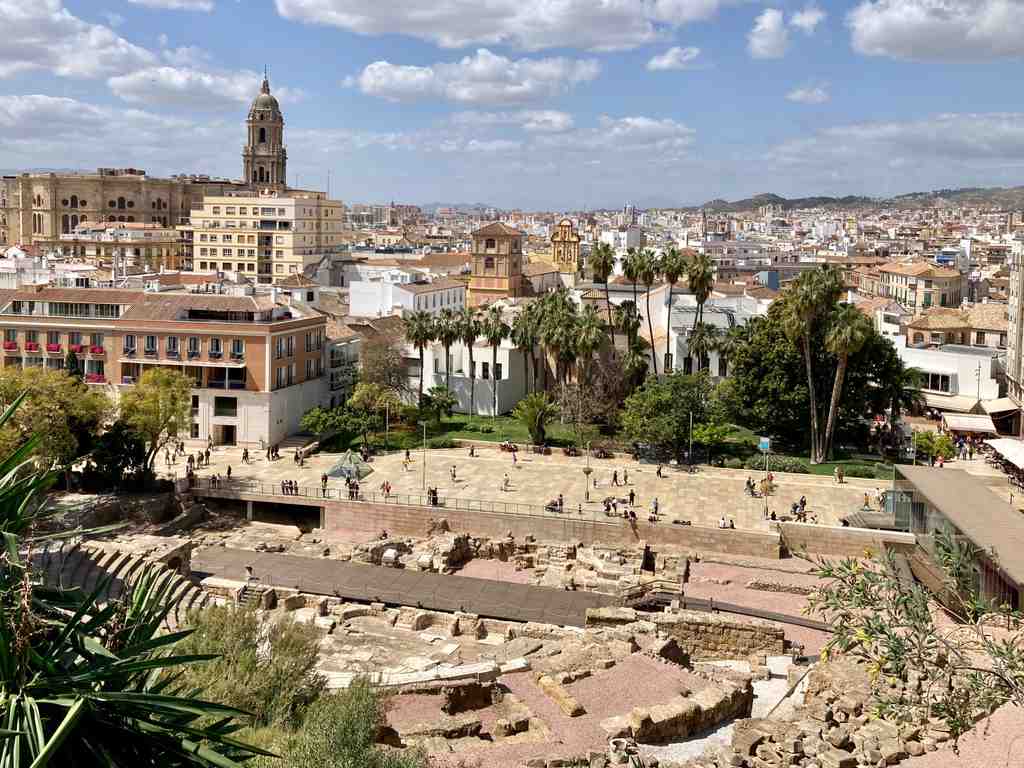
To spot the Historic site of Malaga, look for the open plaza with ancient stone ruins beneath your feet, right in front of the rows of palm trees and with the majestic Malaga Cathedral’s bell tower rising above the rooftops in the background.
Welcome to the beating heart of Malaga’s history! As you stand here, close your eyes for a second-no, don’t worry, I won’t steal your map. Imagine the air carrying whispers from thousands of years ago. Under your feet, Romans once cheered at the theater, Phoenicians bustled with purple dye, and traders shouted out their bargains at lively markets. The Historic site of Malaga is not just a single monument, but an entire patchwork of civilizations: Eastern and Western, ancient and medieval, all squeezed into a little piece of urban magic.
Let’s rewind all the way to ancient times. Picture Phoenician sailors unloading barrels of salty fish and purple dye right nearby. You can actually see some of their original city walls hidden in basements under modern buildings-Malaga’s version of secret treasure! Then Rome came marching in, building temples and the grand theater whose stones are just beneath you. When you walk here, you’re almost in their sandals. In fact, back in the first century, Malaga had its own law code, the Lex Flavia Malacitana, which was found only a short walk from here.
Oh, and the Romans weren’t the only party animals. Their impressive mosaics are still hidden beneath museums and galleries around the city, and some of the fish-salting tanks from old Roman kitchens can be found under nearby streets. If you ever smell something fishy, it’s probably just history burping up lunch!
Now, fast forward to the clashing swords and tunics of the Middle Ages! First came the Visigoths, and after them, the Byzantines. Battles raged, city walls crumbled, and got rebuilt. The Muslims took over in 711, and suddenly Malaga became Mālaqa, its city walls curling around the winding streets behind you. Ancient gates once opened to the medina, letting merchants and camels pass. Some of those gates, like the Puerta de Granada, left their bones hidden right where you walk today.
Dizzy yet? The city changed hands again in 1487 with the arrival of the Catholic Monarchs, bringing new churches, hospitals, and grand convents-imagine nuns bustling about with baskets of oranges and city planners carving out straight, new streets. The great Cathedral behind the skyline grew slowly, stone by stone, as if it was capped by a builder with a serious case of procrastination.
As you hear the chatter of people around you, remember this was also a city of celebrations: festivals, proclamations, and dramatic escapes echo across the centuries. The city morphed during the 18th century into a thriving trading hub, with the port redesigned, wide boulevards built, and decorative mansions springing up. Malaga even boomed with industry; King Felipe II ordered a new dock, but thanks to some construction hiccups, it became a multi-generational family project.
Change rang out, especially in the 19th century-convents turned into parks, old walls tumbled, and grand avenues appeared, like the famous Marqués de Larios street. New neighborhoods exploded in leafy splendor, while Malaga’s taste for modernity shaped the buildings and boulevards you see today.
So, wherever you stand here, you’re outside, inside, above, and below centuries of human ambition, faith, art, and the occasional disaster. You could toss a stone and hit Ancient Rome… but don’t actually do that-these ruins are older than your grandma’s grandma’s grandma! The Historic site of Malaga is a living palimpsest, every layer a new story waiting for you to discover it. And remember, just because history can’t speak, doesn’t mean it’s not whispering secrets right beneath your feet.




