
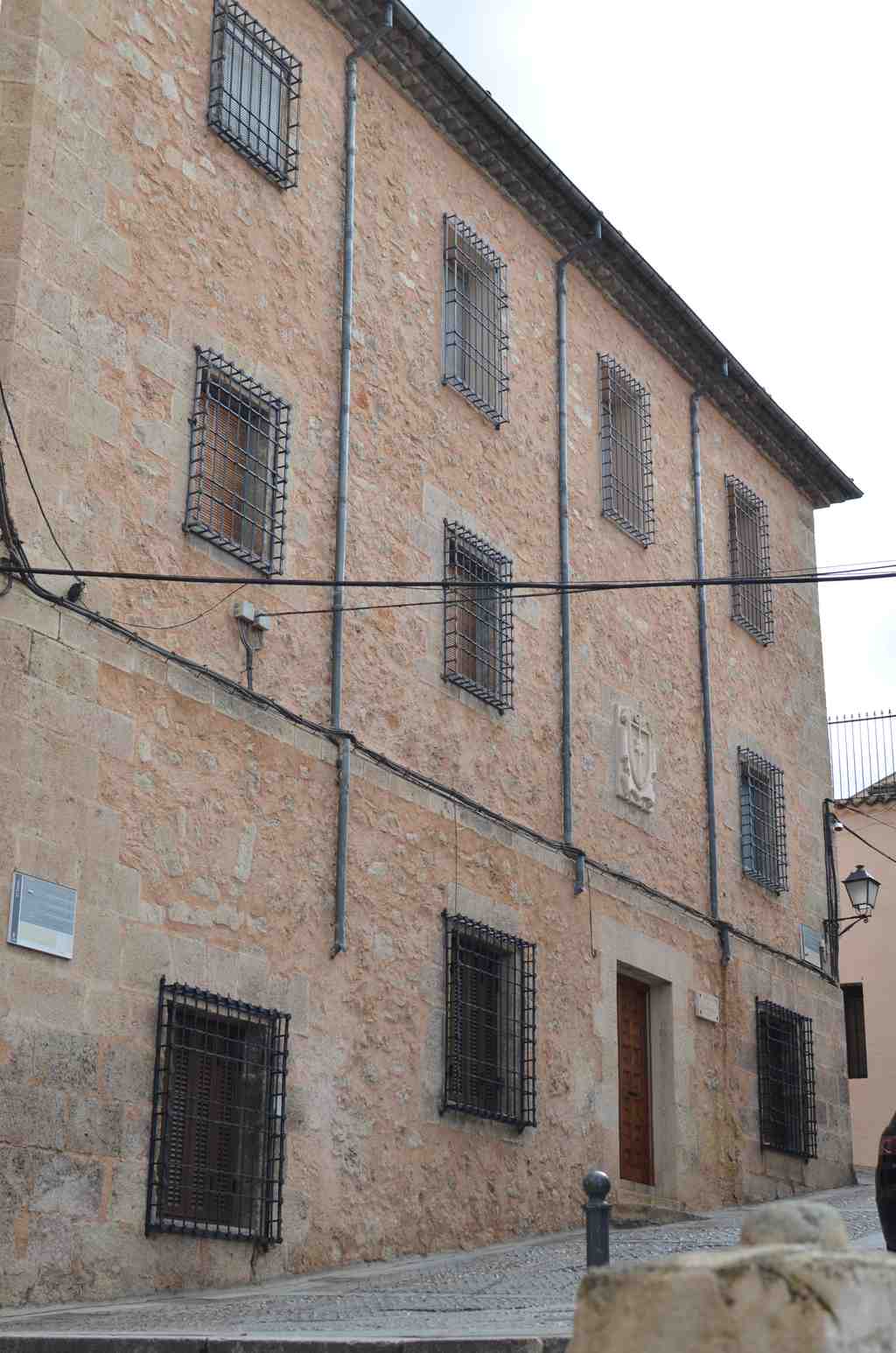
You’re looking for a sturdy pinkish stone building with lots of tall, rectangular windows covered in strong black metal bars-head up the street and you’ll spot its main wooden door and a simple coat of arms above it.
Now, let’s take you back in time to the birth of the Monasterio de Madres Benedictinas-if these ancient stones could whisper, they’d have quite the tales to tell. Picture yourself in the biting chill of December 1448: Cuenca’s cobblestone streets echo underfoot, and the ambitious canon Pedro Arias de Vamonde, with parchment and determination in hand, decides it’s time to build a sanctuary hearty enough to defy centuries-and not even the steep hillside by the river Huécar would stop him.
He teamed up with another local bigwig, Nuño Álvarez de Fuente Encalada, and together they summoned up what you now see brooding before you: a fortress-like five-story monastery that’s held strong on this oddly shaped block for generations. Stand here, and you can almost sense the mix of seriousness and peace that’s marked the life of the Benedictine sisters within these walls. The main face of the monastery-the one you’re looking at with its stonework and iron-barred windows-radiates both protection and calm. Every window, regardless of size or placement, is armed with sturdy ironwork, as if the nuns were expecting a medieval heist or perhaps just a very persistent salesman.
Don’t let the fortress vibes fool you-the inside hummed with the rhythm of daily devotion, learning, service, and even a bit of mystery. Imagine the hush at dawn as young students crept from their beds in the residence that filled the lower floors, their slippers scuffing ancient timber as they headed to their lessons. The staircase spiraled between levels, linking all five floors: the lower ones bustling with students and guests, and the upper ones reserved for the secluded, contemplative life of the cloistered sisters. At the heart of the complex lay the beautiful church with its stunning 16th-century ribbed vaulted ceiling, crafted by the master architect Pedro de Alviz-a ceiling that surely drew many upward gazes and perhaps a bit of daydreaming during silent prayers.
But every layer of this place tells a story. The southwestern façade-you’re seeing it front and center-was built for strength and elegance. It had the dignity of cut stonework, though someone got a bit lazy centuries later and popped a modern, uninspired coat of arms above the door. If that stone plaque could talk, I wonder if it would sigh about the good old days. Meanwhile, the González Francés side of the building, with its severe gray stone and unevenly placed windows, almost looks like it’s trying to be a castle-ready to defend its treasures, or perhaps, just a particularly valuable batch of homemade jam.
Take a stroll along the Esperanza side, and you’ll notice how the building seems to change personalities-here it’s a patchwork of styles and renovations, the result of centuries of tinkering and expansion. It almost seems to argue with itself, each era of construction vying for attention. But at the highest corner, where the hill crests, the true prize peeks out: two sections of the church whose plaster-banded walls and modest cornices step up in graceful levels, a visible nod to changing times and needs. In the lower wing, a bricked-up pointed Romanesque arch and a sealed oculus hint at the secrets of a former chapel, now hidden from view-what stories might be locked away, you think?
Above it all, the whisper of history is occasionally drowned out by more recent additions: second-story expansions thrown up for practical reasons, poking up like a hat that doesn’t quite fit. But step back and let your gaze climb the facade-can you feel the flow of centuries? Here, nuns in black habits once bustled about, climbing higher and higher into the house’s secretive upper reaches, where the refectory, cells, and cloisters formed a quiet world unto themselves.
So next time you hear a bell or catch a whisper of wind swirling around the old stone corners, you’ll know it’s just the Monasterio de Madres Benedictinas keeping its centuries of stories alive, waiting for the next curious soul to listen. And don’t worry-if the walls ever do start talking, I promise they’ll have nothing but good things to say about you!


