
Echoes & Arches: Unveiling Córdoba’s Hidden Sanctuaries
In Córdoba’s tangled old streets, secrets linger behind grand stone facades and sun-bleached domes. Every building holds a hidden struggle or silent victory, waiting just off the tourist track. This self-guided audio tour will lead you into the heart of the city, unlocking stories most visitors never hear—tales of rebellion, innovation, and forgotten ambition. Which ambitious family almost broke the city’s future to build a single church? What silent sentinel still guards lost medieval mysteries from its weathered tower? And why did a dome at Santa Victoria nearly spell disaster for Cordoba’s first school for girls? Step through echoing courtyards and timeworn plazas as this journey peels back layers of drama, devotion, and debate. Hear whispers from vanished kings, bold women, jealous architects, and the students who shaped centuries to come. Dare to discover what really happened behind these walls—begin your adventure where Cordoba’s secrets live on.
Tour preview
About this tour
- scheduleDuration 100–120 minsGo at your own pace
- straighten3.4 km walking routeFollow the guided path
- location_on
- wifi_offWorks offlineDownload once, use anywhere
- all_inclusiveLifetime accessReplay anytime, forever
- location_onStarts at Church of Salvador and Santo Domingo de Silos
Stops on this tour
lock_open 3 free previews · 17 unlock with purchase
Here’s how to spot the Church of Salvador and Santo Domingo de Silos: As you walk, keep an eye out for a large, almost fortress-like white building with a simple, tall façade. The…Read moreShow less
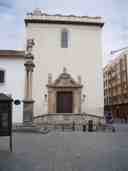
Here’s how to spot the Church of Salvador and Santo Domingo de Silos: As you walk, keep an eye out for a large, almost fortress-like white building with a simple, tall façade. The walls are smooth and pale, and there’s a single arched window high above a grand door made from heavy, studded wood. The entrance is framed by stonework and is raised above street level by a stone platform. Nearby, you’ll see an old column with a statue on top, just to the left of the door. If you see all this, you’ve definitely arrived! Now, imagine you’re here in the 16th century-dust swirling in the square, the sound of footsteps echoing as workers carry tools and chunks of stone. This wasn’t just a church, but one big idea: The Jesuit order, freshly founded by Pope Paul III in 1540, wanted to make Córdoba their home in Andalucía. Thanks to the generosity of the powerful Catalina Fernández de Córdoba-who probably had more influence than a modern social media star-they did just that. She had a good reason for supporting the project: her own son had just become a Jesuit! Building started in 1555, and let me tell you, it was not smooth sailing. There were arguments about designs, money troubles, and even a bit of architectural drama-one Jesuit would leave for a bit, and when he came back, the plans had changed. Sometimes the neighbors probably wondered if there’d ever be more than half-finished walls and piles of rubble! The original school and church saw enough delays that even the pigeons started gossiping-especially during a big pause in 1569 when they ran out of money entirely. Imagine hearing the frustrated sighs of the builders and the occasional clatter of hammers and tools tossed aside. Yet, the community kept at it, stone by stone, dreaming bigger every year. Inside today, you'd find a staircase fit for a king-built with colorful marble and topped off by a giant carved dome. The architect, Hernán Ruiz II, fancied himself Cordoba’s answer to Michelangelo, and the results were pretty grand, even if it took a little longer than expected. So, as you stand here, let your mind wander. Picture the swirl of cloaks, the debates about architecture whispered on the wind, and the hope for something lasting. This church is a symbol of stubborn faith, a bit of luck, and-let’s be honest-a whole lot of patience. Ready to move on to the next stop, or are you tempted to try building your own staircase first?
Open dedicated page →As you walk into the Plaza de la Compañía, look straight ahead and slightly to your left. You’ll spot a tall, slender tower with a gentle salmon-pink trim around its cream-colored…Read moreShow less
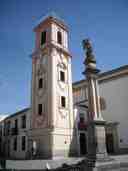
As you walk into the Plaza de la Compañía, look straight ahead and slightly to your left. You’ll spot a tall, slender tower with a gentle salmon-pink trim around its cream-colored façade. It almost looks like it’s wearing decorative icing over stone! Notice those three stacked sections-each one getting a bit more narrow as it goes up. The top is flat, with a simple railing, missing what used to be the crowning ornament. Next to it, there’s a figure of an angel atop a stone column. If you see that, you’re in the right place. Now, let me take you back in time for a moment. Imagine the year is 1236. The sound of boots and horses echo across the cobblestone. King Fernando III has just conquered Córdoba, and he wants to make a lasting mark. So, he builds the Church of Santo Domingo de Silos, one of fourteen new parishes that would define Córdoba. But while the centuries swept most of that church away, this tower has stubbornly stood its ground-like a guardian from an almost vanished city. This tower, as you see it now, mostly dates back to the late Baroque period, around 1762. Don’t be fooled by its soft colors and delicate decorations, though. Its foundation is thick and solid, meant to last. The second level lets in beams of light through squared windows, topped with little triangular hats (those are the pediments), and wrapped with lacy, almost playful lines inspired by Cordoba’s unique mix of Christian and Mudéjar styles. Go ahead, imagine sunlight streaming through those old windows, lighting up the swirling dust inside. On the third story, you’ll notice the round-topped windows-framed by flat pillars and decorated with the shields of the Church. If you look really closely, you might spot faded patches of old paint, hints that, years ago, this tower was much more colorful than it seems today. It’s like a faded party hat after a long celebration. Declared a “Bien de Interés Cultural” (a national monument) in 2001, the Torre de Santo Domingo de Silos is one of Córdoba’s few remaining whispers from a world built by kings, monks, and dreamers. It’s a monument that, no matter what time you visit, always seems to be keeping its secrets-so linger as long as you need, and see what echoes of history you can catch on the breeze.
Open dedicated page →
Show 17 more stopsShow fewer stopsexpand_moreexpand_less
Coming up on your right, you'll spot a tall whitewashed wall, a little window here and there, and-impossible to miss-a proud, baroque stone doorway with a huge wooden door.…Read moreShow less
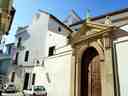
Coming up on your right, you'll spot a tall whitewashed wall, a little window here and there, and-impossible to miss-a proud, baroque stone doorway with a huge wooden door. There’s a pointy triangular top to the entrance, almost like a crown, and if you look closely, you’ll see small orb-shaped decorations at the very top. The whole effect? Kind of secretive and very inviting, like an invitation to a mysterious story just behind those thick wooden doors. Alright, take a deep breath and imagine: it’s the 1600s, and nuns are gliding through cool, shaded halls behind these walls. But today? You’re standing before the Convent of Corpus Christi-a place that holds centuries of whispers, prayers, and even a little bit of drama. This old convent was built in the 17th century, and get this: it’s now home to the Antonio Gala Foundation, a spot buzzing with creativity and new ideas. Owned these days by CajaSur, it also sits on the city's list of protected historical gems. Just think-inside, there are quiet courtyards where sunbeams dance on stone columns, thick arches that carry stories from long ago, and old nuns’ cells with windows looking out onto peaceful cloisters. The church here is just one big, beautiful hall-imagine voices echoing up from a high choir and down from below. And that stunning entrance you’re facing right now-with its grand brickwork, swirling decorations, and the bishop’s crest? That’s pure baroque style, meant to impress anyone who walked by, whether they were a local or someone looking for shelter from the Spanish sun. There’s even a touch of mystery: not so long ago, a painting was stolen from within these walls… only to reappear years later! Maybe the convent didn’t want to give up its secrets after all. So, take a moment to soak it in-here at Corpus Christi, the echoes of sacred tradition and a few mischievous secrets are still alive if you listen closely. Or maybe, if you look at the top windows, you’ll catch a glimpse of a ghostly nun peeking out… or maybe that’s just the afternoon sun playing games with us!
Open dedicated page →To spot the Archaeological and Ethnological Museum of Córdoba, just look ahead for an impressive old stone building. Its main entrance is framed by tall columns and detailed stone…Read moreShow less
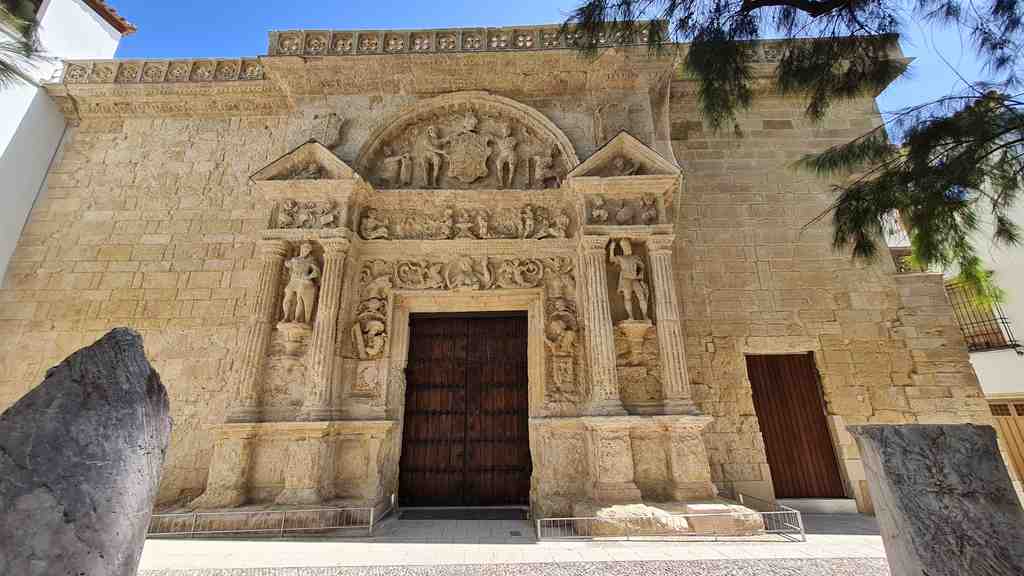
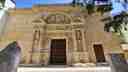
To spot the Archaeological and Ethnological Museum of Córdoba, just look ahead for an impressive old stone building. Its main entrance is framed by tall columns and detailed stone carvings that almost look like frozen actors in a Roman play. The heavy wooden door at the center is guarded by stories in stone-heroes, symbols, and gods-while the walls stretch out in pale golden blocks. If you’re standing just outside, the sunlight bounces off these ancient carvings, and sometimes the breeze shakes nearby tree branches, flickering shadows over the stone. Alright, picture yourself back in time-get ready, because where you stand right now, history is practically bursting out of the walls! This museum actually started its life as a grand palace for the Páez de Castillejo family-imagine high society, silk robes, and dramatic gossip echoing off these walls. But today? You’ll find treasures that date from the dawn of human history all the way to the end of the Middle Ages, like a time capsule, but far bigger and heavier. Look beneath your feet, too! Deep below, hidden in the belly of the museum, are the remains of a real Roman theater, where the people of Corduba once gathered to cheer, boo, and maybe even throw the odd olive at the actors. Over the years, all kinds of incredible objects have found a home here-statues and pottery, coins and weapons-that took their own long, dusty journey through convents, hospitals, and official buildings before settling in this historic palace. Sometimes, it seemed like the museum’s treasures were playing hide-and-seek with the city, moving from one building to another, until, at last, they found peace here. And, not to brag, but in 2022, more than a quarter of a million people visited-so you’re sharing space with a lot of curious minds! The walls themselves could probably tell you the juiciest tales: secret deals, great discoveries, and maybe even a little drama over whose helmet looked the coolest. Imagine the museum as a giant puzzle, and every object inside is a piece that helps you see the full picture of Córdoba’s wild past. When you step through those doors, you’re traveling through time-even if you don’t find a portal, you might just find something that makes you see the city in a whole new way.
Open dedicated page →Alright, let’s play a little “spot the palacete”! As you stroll along Calle Julio Romero de Torres, keep your eyes peeled for number 14. You’ll be looking for an elegant building…Read moreShow less
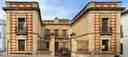
Alright, let’s play a little “spot the palacete”! As you stroll along Calle Julio Romero de Torres, keep your eyes peeled for number 14. You’ll be looking for an elegant building with a touch of old-world charm-a beautiful main façade made of exposed brick in shades that are warm, earthy, and striking. The roofline catches your eye too: some sections slope gently down in one direction, while others break off with a more dramatic, double pitch. It’s almost as if the building was designed to catch a breeze and your admiration at the same time. Notice how the entrance gracefully opens out-like it’s inviting you into a secret courtyard. That U-shaped layout reaches around a central patio, just waiting for stories to echo off those walls. Now, imagine you’re standing here over a hundred years ago, at the end of the 1800s. Cordoba was bustling with new ideas and styles-locals with mustaches and elegant hats strolling by, horse-drawn carriages clattering on the cobblestones, maybe someone sneaking a peek inside, hoping to see how the other half lives. The Burgos Palacete was the kind of home that might make you sigh with envy. All these rooms looked onto the big courtyard-just picture the laughter, hurried footsteps, and maybe a nosy neighbor or two peeking through a window. But this wasn’t just a cozy home-there were helper’s quarters, carriage garages, and storage rooms, so you know this place has seen its fair share of drama and daily life. Perhaps a mysterious love letter stashed in a dusty corner, or a secret recipe being passed down in the kitchen? These days, there’s talk of transforming the palacete into a hotel. So if you hear a few construction whispers, don’t be surprised-they’re dreaming of swapping family secrets for room service. But right now, the building stands quietly, holding on to its little mysteries. So, take a look at that brickwork, smile at that grand entrance, and know you’re standing where stories-some grand, some wonderfully ordinary-have been unfolding for more than a century. Isn’t it tempting to imagine what those old walls would say if they could gossip?
Open dedicated page →To spot the Arab Baths of Santa María as you walk up, look for a whitewashed building tucked along the narrow street, with a heavy wooden door. If you peek inside or step through,…Read moreShow less
To spot the Arab Baths of Santa María as you walk up, look for a whitewashed building tucked along the narrow street, with a heavy wooden door. If you peek inside or step through, what catches your eye immediately are the beautiful striped arches-bold red and creamy white blocks, just like a giant’s candy cane, curving over chunky old columns. The floor is made of smooth cobblestones, and there are little mosaic tables and chairs set out beneath open sky. Up above, you’ll see a small balcony peppered with plant pots and green leaves spilling over into the light. Alright, step right up-imagine you’re just leaving behind the noise of the street, and suddenly, you’re in a world of soft echoes and cool shadows. Over a thousand years ago, this wasn’t a café, but the place to be clean, gossip, and plot Cordoba’s next big thing. These are the Arab Baths of Santa María, built in the time of caliphs, and then, like a good soap opera character, reinvented several times through history. Picture it: pools of hot water steaming, friends chatting under these same arches, water trickling somewhere in the background. The frigidarium was chillingly cold, the tepidarium was perfect for lingering, and the caldarium was the fiery hot room that probably left people redder than these famous arches. Even after Christian times came to Cordoba, people just couldn’t let go of a good steam. Nowadays, you’re more likely to be served tapas than a towel, but if these walls could talk, you’d hear tales of secret deals, royal trades, and maybe even the odd bath-time prank. Over the centuries, the baths were patched, prodded, and at one point, even rented out as a home-imagine explaining that to your friends: “Oh yes, I live in an old bathhouse. The heating’s fantastic!” The place nearly disappeared a few times but was saved, restored, and, like any good local, now pulls double duty: museum by day, and a spot for food and flamenco by night. Sometimes when you walk in, you can feel how the cool air holds the memory of ancient laughter and history-almost like Cordoba’s spirit never left this spot. So, take a deep breath, let your mind drift back in time, and ask yourself: would you survive the heat of a medieval steam bath, or would you bolt straight for the patio instead? Don’t worry-we won’t make you take a plunge… unless you fancy a splash of cold water to wake you up!
Open dedicated page →To spot the Historic Center of Córdoba, take a look straight ahead. You’ll see a magnificent stretch of honey-gold stone, where ancient buildings rise behind a Roman bridge of…Read moreShow less
To spot the Historic Center of Córdoba, take a look straight ahead. You’ll see a magnificent stretch of honey-gold stone, where ancient buildings rise behind a Roman bridge of grand arches that stretches across the river. The Mezquita-Catedral, with its towers and domes, stands as the star of the scene, surrounded by a sea of terracotta rooftops. To your left and right, palm trees and lush greenery frame the view, and beyond the rooftops, gentle hills roll under the sunny Spanish sky. The city’s winding streets are just behind those inviting old walls. Ready for a leap through time? You’re standing at the heart of Córdoba’s storybook-one of Europe’s largest historic centers. You’re walking on stones that saw Romans march, Moorish poets stroll, and Christian kings plot. Think of this as an outdoor time machine, though the only time travel hazard here is probably spilling your ice cream on your shoes. Long, long ago, this city was a Carthaginian outpost before being snatched by the Romans. Back then, the Romans built mighty walls-and maybe complained about parking, just like modern folks. In the 8th century, the Moors took over. Suddenly, Córdoba was the glittering capital of Al-Andalus, with libraries, palaces, and over 300 mosques. Imagine walking these streets then, lanterns glowing, the scent of spices in the air, and markets humming with stories from faraway lands. Look around-see the tall bell tower? It was once a minaret. The great arches of the bridge in front of you? Those are Roman. The giant mosque-turned-cathedral at the center, layered in mystery and mosaics? That’s seen more swaps than a high-stakes card game. When Christians took over in 1236, they built new walls, churches, even a fortress right where you stand. Every twisty alley behind these walls is loaded with tales-some might say there’s more history per square meter here than in a whole library. There’s a neighborhood called La Judería, once buzzing with Jewish families and scholars like Maimonides, one of history’s greatest thinkers, who may have dodged flying figs instead of paparazzi. From Visigoth palaces to the old hospital turned art museum, and elegant courtyards hiding under balconies, this center is alive with echoes. Listen close: you might hear the swish of silks, the clatter of Roman sandals, or the distant clanging of church bells... or that’s just the local café getting ready for another busy afternoon. So breathe deep. You’re sharing a place where Roman columns reach skyward between Moorish tiles and Christian spires-where no two corners look the same. Welcome to Córdoba’s timeless heart. Keep your eyes open and your imagination ready. Around every bend, the city has another surprise-just try not to get lost in the maze of history!
Open dedicated page →Okay, just ahead and a bit to your left, you’ll see a striking old house with a simple white façade, lovely wooden doors, and elegant wrought iron details framing the windows. If…Read moreShow less
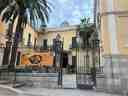
Okay, just ahead and a bit to your left, you’ll see a striking old house with a simple white façade, lovely wooden doors, and elegant wrought iron details framing the windows. If you look up, you might catch a glimpse of the tiled roof and maybe even hear a bit of echo as you walk past the entrance. Don’t be fooled by its quiet exterior-this house is hiding a treasure trove of modern art inside. Now, take a moment to imagine: you’re standing at the doorway of an 18th-century Cordoban house, the kind with a hidden patio in the center, where once only whispers and secrets drifted through lemon trees. Today, though, those secrets hang on the walls, and they’re a little more colorful! This is the Pepe Art Center Epiiú, dedicated to Córdoba’s own Pepe Espaliú. You’re about to step into a world that blends the past and present in the most artful way. Inside, you’ll find 43 works from Espaliú-paintings, drawings, and sculptures, each with their own story. Some were bought by the city of Córdoba, others by a local company, and even one was given by a group supporting AIDS patients-a cause close to the artist’s heart. But the centerpiece? The bond between Pepe and his father. In fact, Pepe’s father helped create this very center, donating a huge part of his son’s personal archive and making sure his art would always have a home here. It’s sort of like walking into a family album-if the photos could jump off the pages and tell you how they felt. This collection is about courage, emotion, and expressing what’s most difficult to say. Sometimes, Pepe’s art looks mysterious and a little melancholy. Sometimes, it even gets a bit cheeky-like it’s challenging you to crack its code. So, give yourself a moment before heading inside. In a city where Roman ruins and medieval towers tend to steal the show, this art center proves Cordoba also knows how to celebrate the modern and the personal. Trust me, even if you aren’t the artistic type, you’ll feel something echo around this quiet house. And if you start feeling inspired, don’t worry-it happens to the best of us! Who knows, maybe you’ll leave here with ideas for your own masterpiece.
Open dedicated page →To spot the Minaret of San Juan, look just ahead-rising right off the street, there’s a tall, square tower built from weathered golden stone blocks. Its surface is irregular,…Read moreShow less
To spot the Minaret of San Juan, look just ahead-rising right off the street, there’s a tall, square tower built from weathered golden stone blocks. Its surface is irregular, almost like a patchwork of ancient and newer stones. Near the top, you’ll notice double horseshoe arches decorated in faded red and white, supported by slim marble columns, and above those arches you’ll see a row of blind archways. The very top is capped with a small, modern roof that contrasts with the centuries-old stone below. The tower stands out because it’s nestled right beside more modern buildings, so just look for that blend of history and mystery squeezing into the urban scenery. Alright, take a good look up at this mysterious tower-now let’s bring it to life. Imagine yourself here in the bustling center of Córdoba, but let’s rewind about 1,100 years. The Minaret of San Juan was part of a mosque where a call to prayer echoed down these streets, its voice bouncing off the stone walls. Every time you hear a pigeon flap above, pretend it’s a ghost of the crier, calling the city to attention. This isn’t just any tower-this is one of only four minarets in all of Spain protected as a national treasure. It was built sometime between the end of the Emirate and the start of the Caliphate in Córdoba. The judge, Umar ben Hadabas, gave the order while the mighty Abderramán II ruled. Back then, the minaret would have been even taller, crowned with battlements gleaming in the sun-a real beacon to the faithful below. But times changed. In 1236, King Ferdinand III’s Castilian troops took the city, and suddenly, this minaret had new landlords: the Knights of the Order of San Juan. Feel that tension? The Muslim world blending into Christian knights, each leaving their mark. They built a whole church over the old mosque-so if you spot a knight charging by in your imagination, just give him a wave. Look closely at the tower’s base-the big stone blocks, some patched in different shades, like the city itself patching over its stories. Up top, see those horseshoe arches and columns? The marble is even older than the tower; some columns were borrowed from vanished Visigothic buildings. See those tiny, decorative arches just beneath the modern roof? Most are lost to time, but a few survive, stubborn and proud. People almost forgot this was a minaret until a local historian came snooping around in the late 1800s, curious enough to recognize its Arabic heart beneath all the Christian tweaks. Everything above the arches, including the new roof, that’s just a modern hat for a very old head. And if you catch the smell of dust, that’s history leaking out after recent restorations-they’ve been working hard to keep this grand old storyteller from crumbling into silence. So, whether you see it as a relic or a survivor, remember: in all of Córdoba, this is the only minaret that’s still mostly the real deal from the days when it stood watch over Qurtuba. Makes you wonder, doesn’t it? If towers could talk, what secrets would this one whisper at night?
Open dedicated page →As you walk down the narrow Calle Jesús María, keep your eyes to the right. See that building with the warm, sun-baked orange facade? Look for the bold letters spelling “TEATRO…Read moreShow less
As you walk down the narrow Calle Jesús María, keep your eyes to the right. See that building with the warm, sun-baked orange facade? Look for the bold letters spelling “TEATRO GONGORA” right above three elegant arches over the entrance. The building almost looks like it’s glowing, with classic Mediterranean touches-arched windows above and pergolas casting dramatic shadows across the front. You’ll notice a mix of old-world charm and modern touches if you look up, especially that wide balcony and geometric latticework. If you’re wondering, no, the sun-drenched color isn’t a trick of your sunglasses-this theater really does stand out! Now that you’re right in front of the Teatro Góngora, imagine it’s the 1930s. There’s a buzz in the air and everyone in Córdoba seems to be here for the newest film. The theater was originally built between 1929 and 1932 by the famous Madrid architect Luis Gutiérrez Soto, designed to be a top-notch cinema. It sits on land once owned by a convent, but instead of silence and prayer you’d hear movie goers’ laughter and music echoing up from the wide terrace. But this isn’t just any cinema-this is Córdoba’s Art Deco super-star, with a splash of Andalusian charm. The outside is pure Mediterranean with those pergolas and half-moon arches, while inside you get smooth, modernist design. And let me tell you, when summer came, the theater’s terrace was the place to be. You could ride the elevator up, flop down in a rocking chair (fancy, right?), and watch movies under the stars. Some people say it was the quietest open-air cinema in town-so well-behaved you could hear a popcorn kernel drop! Through the decades, Góngora wasn’t just about films. From concerts to political rallies, from drama to dance parties-if the walls could talk, they’d have more stories than a soap opera. By the 1980s, it was basically Córdoba’s stage for everything, especially after the big Gran Teatro closed its doors. The building was designed with safety in mind-concrete, brick, air-vents, speedy escape routes, and even fire-resistant features, just in case a film reel got too hot. And for comfort? There were three floors, velvet seats, elegant balconies, and a bar to keep thirst at bay. Sadly, by 1997, the theater had seen better days and was closed for repairs. But even today, this place feels alive. Stand here for a moment and just listen. Sometimes, you can almost feel the magic of all those opening nights, and imagine yourself stepping into a world of lights, music, and movie magic-just don’t blame me if you start feeling dramatic!
Open dedicated page →Directly in front of you, look up and you’ll see a row of tall, pale columns standing upright in the middle of the city like a team of ancient Roman athletes who never left! These…Read moreShow less
Directly in front of you, look up and you’ll see a row of tall, pale columns standing upright in the middle of the city like a team of ancient Roman athletes who never left! These columns are set on top of a thick, rugged stone base, and they tower above you, even as modern buildings crowd around on all sides. If you’re wondering which way to look, just spot the six marble columns popping up above the old stone wall-that’s the Roman Temple of Córdoba. Alright, here’s a story: Picture yourself standing in the heart of ancient Córdoba, the smell of fresh marble dust in the air, the chatter of Roman workers echoing all around you, and, if you listen closely, the faint stomp of a centurion’s sandals nearby. This temple was discovered by accident in the 1950s. City Hall was being expanded-imagine the surprise when workers hit something harder than they bargained for. Suddenly, Córdoba’s most important Roman secret was out! This temple was once the city’s superstar, even though there were others. It was special, standing on a massive artificial terrace, with its shiny marble columns gleaming bright enough to make even Jupiter jealous. Built over forty years, from Emperor Claudius to Domitian, each block of stone and piece of column was so well crafted, you’d think the builders were auditioning for a reality show called “Rome’s Got Talent.” Back in the day, Córdoba flashed its title "Colonia Patricia" with pride and this spot became its grand stage. Now, the only actors left are the stone columns and foundations. Imagine six columns up front, ten running down each side, all made from marble. Even the roof was marble-talk about a heavy hat! The foundation had to be especially tough, with huge slabs and fancy supports called antérides holding it all steady. That’s how you make sure a temple doesn’t topple when someone blasts a trumpet too loudly. All around you, you might spot ancient marble drum pieces or bits of column-the temple’s own ancient costume jewelry. Back then, this place buzzed with ceremonies and probably more than a few dramatic speeches. If walls could talk, I’m sure these stones would have some juicy gossip. So there you have it: Córdoba’s Roman Temple-part ruin, part treasure, always mysterious. It hid underground for centuries, waiting to burst onto the stage and remind us that, sometimes, the past is just a few steps beneath our feet-or in this case, towering right over your head! Exploring the realm of the historical overview, description or the current situation? Feel free to consult the chat section for additional information.
Open dedicated page →Take a look ahead-you’ll spot the Bow, or Arco del Portillo, right in front of you. It’s a charming, old archway built of golden stone blocks, squeezed between whitewashed…Read moreShow less
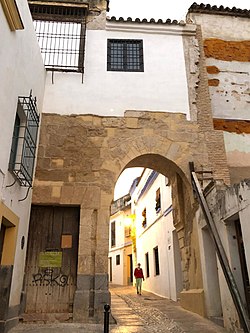
Take a look ahead-you’ll spot the Bow, or Arco del Portillo, right in front of you. It’s a charming, old archway built of golden stone blocks, squeezed between whitewashed townhouses. The arch curves gently overhead and you’ll notice how one side of it is supported with a thick stone wall, while the top forms a pointed “horseshoe” shape typical of Moorish style. The easiest way to find it? Just look for the big doorway in the wall where the narrow street continues beyond-a scene that feels like it just popped out of a storybook. Now that you’re standing right in front of it, let’s travel back in time. Imagine the clatter of horses’ hooves and the rattling of old wooden carts as they rolled right under this very arch. This isn’t just any old archway: it’s the only remaining door that once connected two buzzing worlds inside Córdoba-the high, old city of Medina behind you, and the bustling, lower Axerquía ahead. Built way back in the late 1300s, in a wall that marked the boundary between these districts, the Bow was all about making life easier for Cordobans-no more long detours just to get across town! It went through a lot over the centuries, too-sometimes people called it the Bow of Merchants, because traders would crowd all around here, showing off their goods and filling the air with shouts and haggling voices. And see the hanging lamp under the arch? That was added in the 1920s to light up the night, thanks to an art-loving city official. The arch was even given a concrete shoe-yes, a shoe!-to keep it steady when it started to wobble. It’s true, sometimes I feel like I need a concrete shoe on a Monday morning, too. If you sense a bit of mystery here, you’re spot on. Imagine, just recently, workers uncovered remains of a hidden Roman tower next door-proof this spot has been a city gate for nearly two thousand years. So, take a breath and imagine yourself stepping through this ancient door, following in the footsteps of merchants, townsfolk, and maybe even a sneaky cat or two trying to snag a fish from the market. Onward, explorer!
Open dedicated page →Right in front of you is the famous Fuente del Potro, standing proudly in the Plaza del Potro. To spot it, just look for an elegant octagonal stone basin at the center of the open…Read moreShow less
Right in front of you is the famous Fuente del Potro, standing proudly in the Plaza del Potro. To spot it, just look for an elegant octagonal stone basin at the center of the open square. Rising up from the middle is a circular bowl crowned with a rather dramatic sculpture: a rearing colt, or “potro,” which is what gives this fountain its name. Four spouts above and four below send streams of water gently into the basin-perfect for a refreshing soundtrack on a warm Córdoba afternoon. Now, let’s imagine it’s the year 1577, and you’re wandering into this bustling square. Traders are shouting, horses are stampeding, and locals crowd around this beautiful Renaissance fountain, thirsty and maybe just a bit nosey about everyone else’s business. Back then, the fountain was the work of Garcí Suárez de Carvajal, the city’s no-nonsense corregidor. But our star attraction, the brave little potro on top, didn’t actually leap up there until a century later. So if you hear someone bragging they saw the colt up there in the 1500s, you’ll know they’re horsing around. What’s really mysterious is where the name comes from. Some say it’s because this square was the go-to spot for buying and selling horses and mules. Picture travelers and townsfolk haggling under the hot sun-makes you almost wish the fountain could squirt a little lemonade, doesn’t it? Others argue the name comes from the colt on the fountain, or maybe even from the nearby old inn called Posada del Potro. History is sometimes as slippery as the stones under your feet. In 1847, they actually moved the fountain across the plaza to where you see it now. Can you imagine a team of sturdy Cordobeses pushing and pulling this heavy monument across the square? Sounds like a sight worth a ticket. There’s even a touch of international mystery here. In 1964, a copy of the colt sculpture was gifted to Jerez on the 700th anniversary of its Christian conquest, all thanks to an old story about Cordoban soldiers defending against an attack back in 1325. So, even if you’re not a history buff, it’s safe to say this little horse has traveled-well, at least his twin has! Stand for a moment, close your eyes, and listen to the water. You might just hear echoes of horses’ hooves and the shouts of long-ago Cordobans. Or, if you’re lucky, maybe a singing tour guide like me, trying to make history gallop right into your imagination.
Open dedicated page →You’re almost there! Look for a row of white traditional houses with wrought-iron balconies and plenty of potted plants-the kind you’d swear are secretly plotting world…Read moreShow less
You’re almost there! Look for a row of white traditional houses with wrought-iron balconies and plenty of potted plants-the kind you’d swear are secretly plotting world domination, one geranium at a time. On the ground floor, notice the grand stone doorway with a little arch and the number plaques above it. There's a small sculpture outside and some greenery in pots leading up to the entrance. This spot stretches across several addresses and might not jump out at you right away, but trust me, standing here, you’re at the threshold of some incredible history. Right here, beneath your feet and hidden behind these sleepy doorways, lies a little-known secret: the Arabic Baths from La Pescadería. Imagine it’s the 10th century-Cordoba is buzzing, filled with vibrant life, spicy scents, and the sound of water echoing through ancient halls. These baths, or hammam, were the place to relax, catch up on the latest city rumors, and escape the dust and heat. Over time, Christian hands took over, adding new rooms in a style still tinged with eastern mystery. Even though you can’t wander inside-the baths are waiting for their next chapter of study and restoration-you can picture them: steamy rooms crowned by softly glowing skylights, stone floors cool beneath your toes, magnificent archways whispering the secrets of a thousand stories. These walls must have heard everything: love tales, conspiracies, probably even complaints about the temperature of the water! Centuries later, as Cordoba changed, so did these baths. By the 15th century, the city council sold the property to a local shoemaker. Now, just a clue remains-a sculpture by the doorstep and a few haunting verses reminding us there are still two vaulted chambers behind these walls, their secrets patiently waiting. Maybe one day soon, thanks to new excavations and 3D studies, the silence will be broken, and these ancient baths will hum with life again. So take a deep breath, listen for the echoes of splashing water, and imagine the chatter and laughter that filled these rooms long before you arrived. How about that? You’ve reached the end of our journey together, at a corner where time stands still-don’t worry, you can skip the cold plunge pool today!
Open dedicated page →






Frequently asked questions
How do I start the tour?
After purchase, download the AudaTours app and enter your redemption code. The tour will be ready to start immediately - just tap play and follow the GPS-guided route.
Do I need internet during the tour?
No! Download the tour before you start and enjoy it fully offline. Only the chat feature requires internet. We recommend downloading on WiFi to save mobile data.
Is this a guided group tour?
No - this is a self-guided audio tour. You explore independently at your own pace, with audio narration playing through your phone. No tour guide, no group, no schedule.
How long does the tour take?
Most tours take 60–90 minutes to complete, but you control the pace entirely. Pause, skip stops, or take breaks whenever you want.
What if I can't finish the tour today?
No problem! Tours have lifetime access. Pause and resume whenever you like - tomorrow, next week, or next year. Your progress is saved.
What languages are available?
All tours are available in 50+ languages. Select your preferred language when redeeming your code. Note: language cannot be changed after tour generation.
Where do I access the tour after purchase?
Download the free AudaTours app from the App Store or Google Play. Enter your redemption code (sent via email) and the tour will appear in your library, ready to download and start.
If you don't enjoy the tour, we'll refund your purchase. Contact us at [email protected]
Checkout securely with 




