
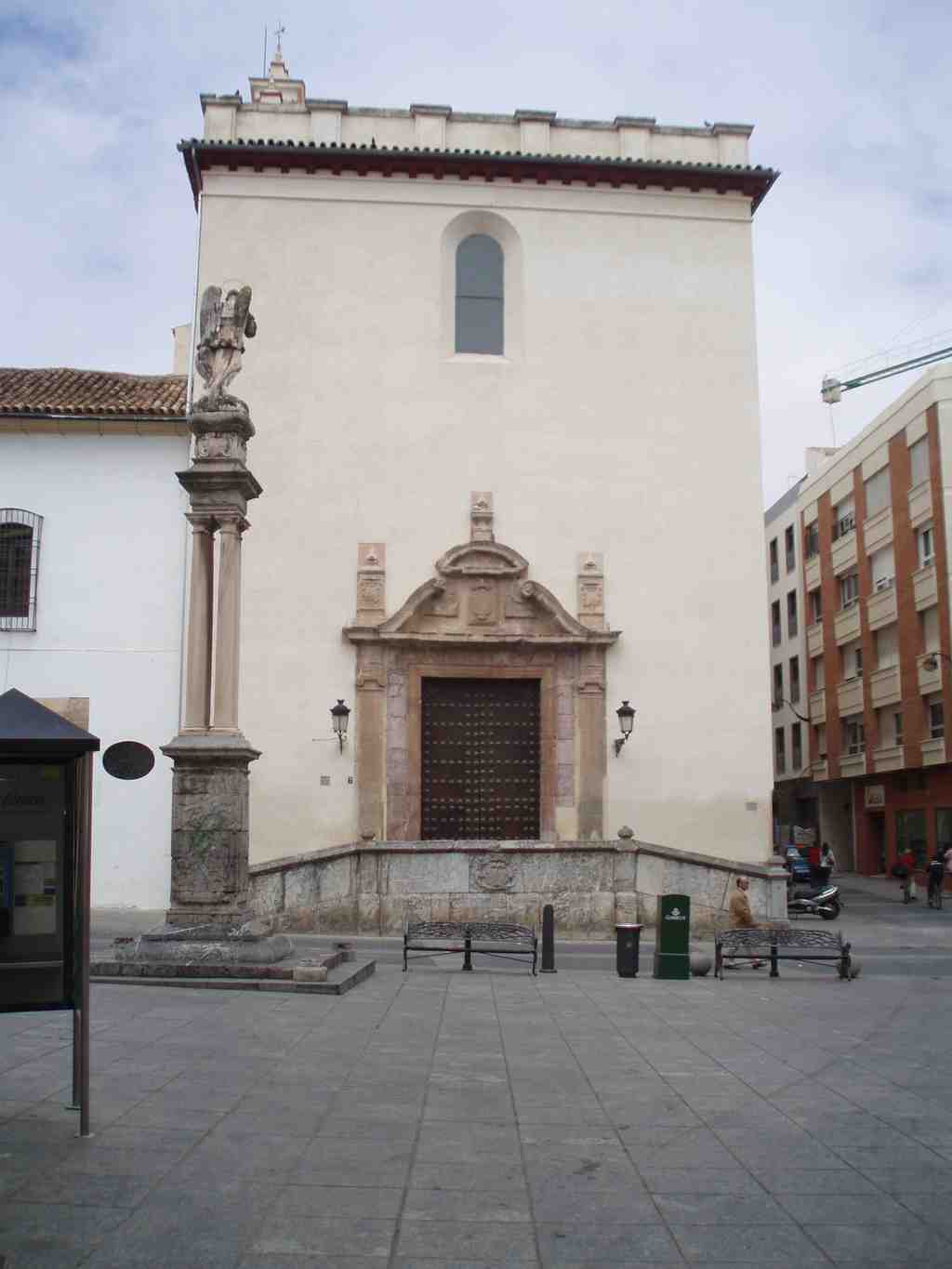
Here’s how to spot the Church of Salvador and Santo Domingo de Silos: As you walk, keep an eye out for a large, almost fortress-like white building with a simple, tall façade. The walls are smooth and pale, and there’s a single arched window high above a grand door made from heavy, studded wood. The entrance is framed by stonework and is raised above street level by a stone platform. Nearby, you’ll see an old column with a statue on top, just to the left of the door. If you see all this, you’ve definitely arrived!
Now, imagine you’re here in the 16th century-dust swirling in the square, the sound of footsteps echoing as workers carry tools and chunks of stone. This wasn’t just a church, but one big idea: The Jesuit order, freshly founded by Pope Paul III in 1540, wanted to make Córdoba their home in Andalucía. Thanks to the generosity of the powerful Catalina Fernández de Córdoba-who probably had more influence than a modern social media star-they did just that. She had a good reason for supporting the project: her own son had just become a Jesuit!
Building started in 1555, and let me tell you, it was not smooth sailing. There were arguments about designs, money troubles, and even a bit of architectural drama-one Jesuit would leave for a bit, and when he came back, the plans had changed. Sometimes the neighbors probably wondered if there’d ever be more than half-finished walls and piles of rubble!
The original school and church saw enough delays that even the pigeons started gossiping-especially during a big pause in 1569 when they ran out of money entirely. Imagine hearing the frustrated sighs of the builders and the occasional clatter of hammers and tools tossed aside. Yet, the community kept at it, stone by stone, dreaming bigger every year.
Inside today, you'd find a staircase fit for a king-built with colorful marble and topped off by a giant carved dome. The architect, Hernán Ruiz II, fancied himself Cordoba’s answer to Michelangelo, and the results were pretty grand, even if it took a little longer than expected.
So, as you stand here, let your mind wander. Picture the swirl of cloaks, the debates about architecture whispered on the wind, and the hope for something lasting. This church is a symbol of stubborn faith, a bit of luck, and-let’s be honest-a whole lot of patience. Ready to move on to the next stop, or are you tempted to try building your own staircase first?




