
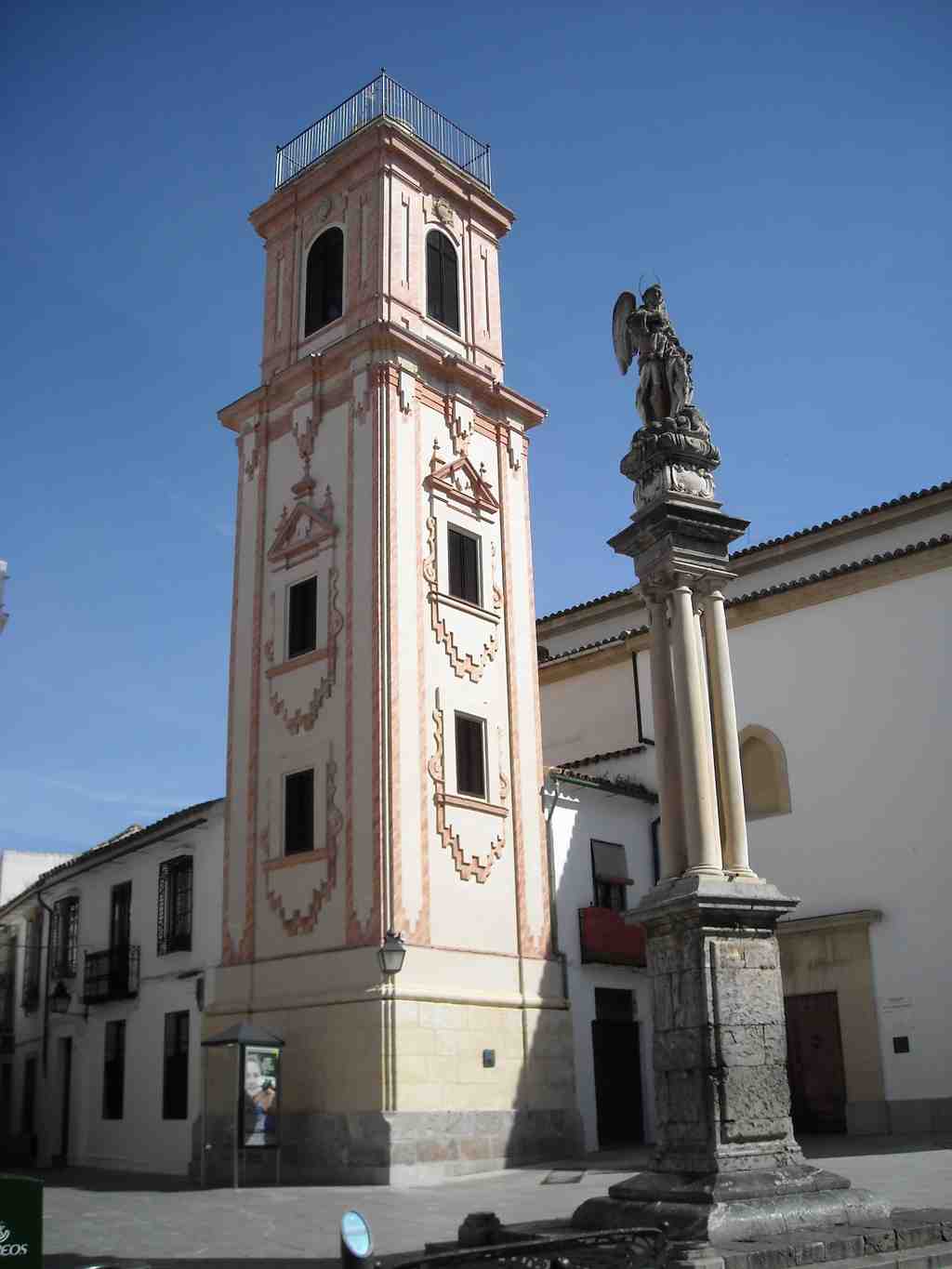
As you walk into the Plaza de la Compañía, look straight ahead and slightly to your left. You’ll spot a tall, slender tower with a gentle salmon-pink trim around its cream-colored façade. It almost looks like it’s wearing decorative icing over stone! Notice those three stacked sections-each one getting a bit more narrow as it goes up. The top is flat, with a simple railing, missing what used to be the crowning ornament. Next to it, there’s a figure of an angel atop a stone column. If you see that, you’re in the right place.
Now, let me take you back in time for a moment. Imagine the year is 1236. The sound of boots and horses echo across the cobblestone. King Fernando III has just conquered Córdoba, and he wants to make a lasting mark. So, he builds the Church of Santo Domingo de Silos, one of fourteen new parishes that would define Córdoba. But while the centuries swept most of that church away, this tower has stubbornly stood its ground-like a guardian from an almost vanished city.
This tower, as you see it now, mostly dates back to the late Baroque period, around 1762. Don’t be fooled by its soft colors and delicate decorations, though. Its foundation is thick and solid, meant to last. The second level lets in beams of light through squared windows, topped with little triangular hats (those are the pediments), and wrapped with lacy, almost playful lines inspired by Cordoba’s unique mix of Christian and Mudéjar styles. Go ahead, imagine sunlight streaming through those old windows, lighting up the swirling dust inside.
On the third story, you’ll notice the round-topped windows-framed by flat pillars and decorated with the shields of the Church. If you look really closely, you might spot faded patches of old paint, hints that, years ago, this tower was much more colorful than it seems today. It’s like a faded party hat after a long celebration.
Declared a “Bien de Interés Cultural” (a national monument) in 2001, the Torre de Santo Domingo de Silos is one of Córdoba’s few remaining whispers from a world built by kings, monks, and dreamers. It’s a monument that, no matter what time you visit, always seems to be keeping its secrets-so linger as long as you need, and see what echoes of history you can catch on the breeze.




