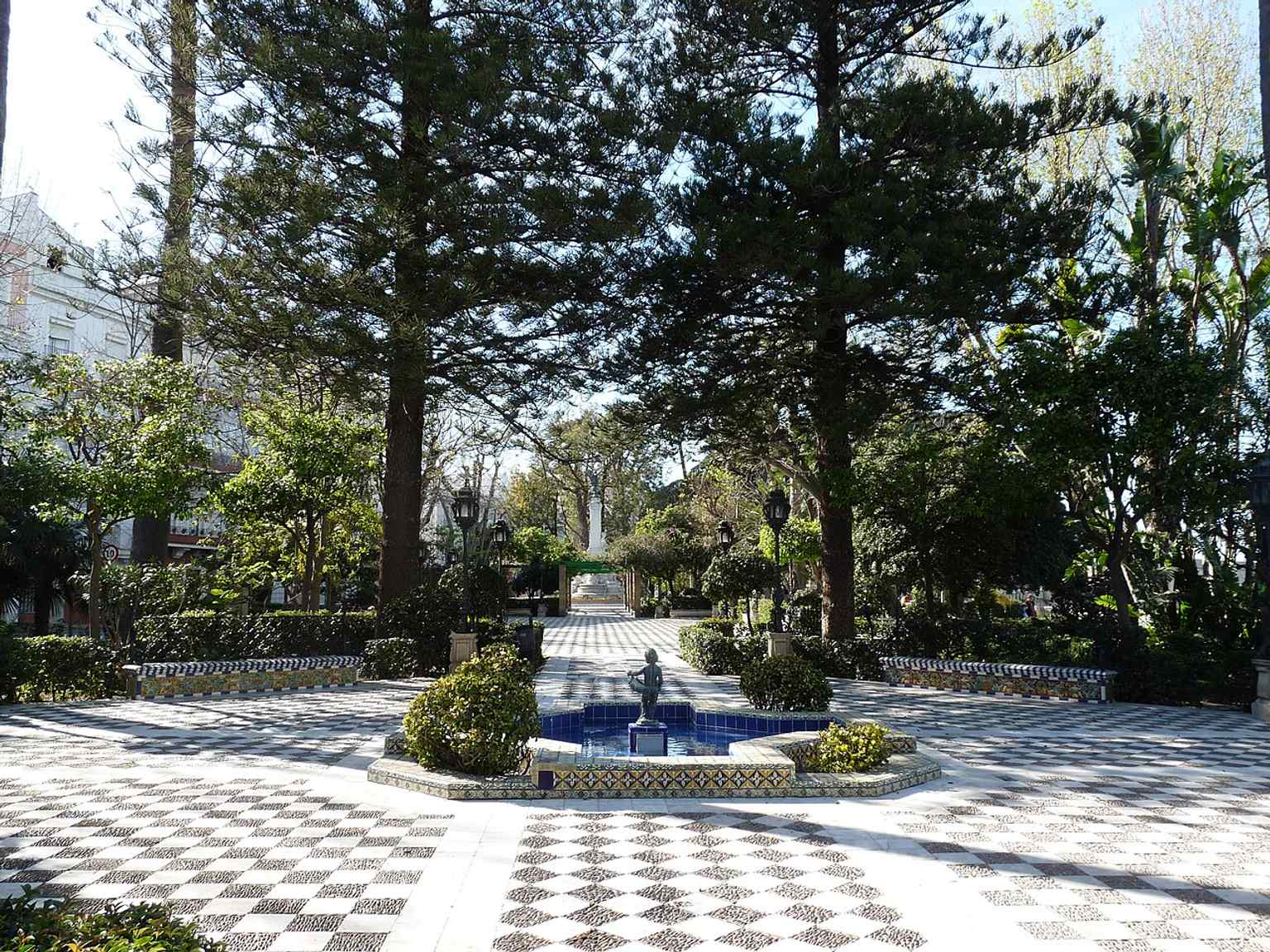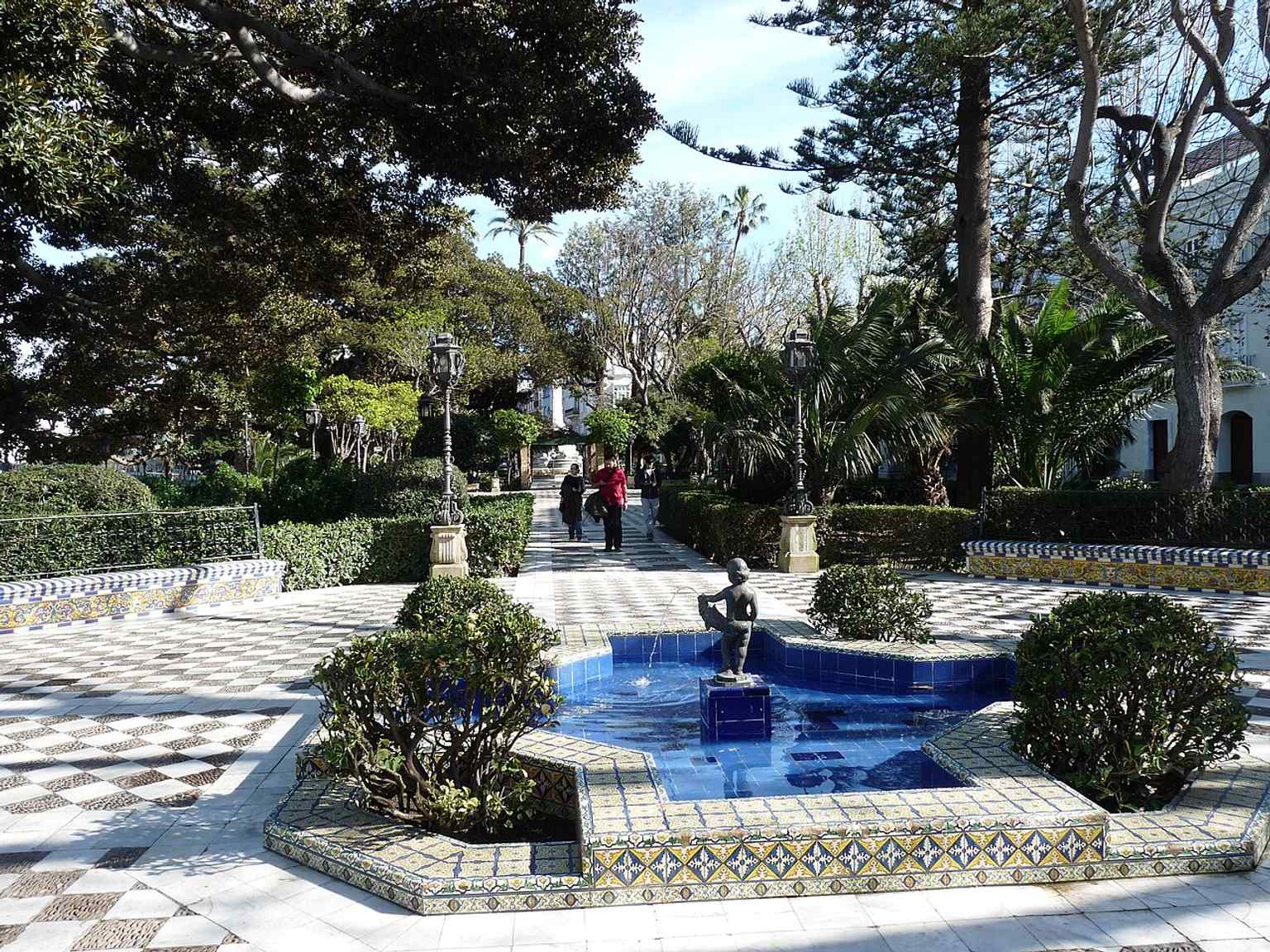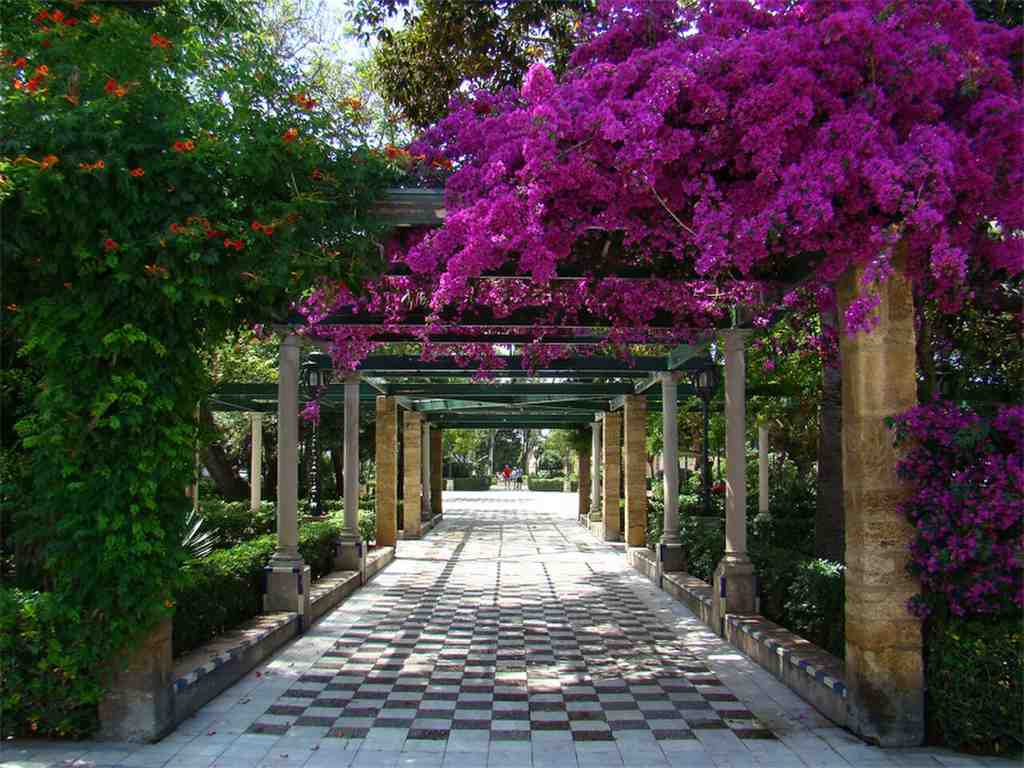
Look for a long stone-and-garden promenade with a slightly broken, linear layout, circular and rectangular planted spaces, and glossy ceramic benches and iron lampposts that give it a distinctly Andalusian flourish.
This is the Alameda many people still call Apodaca, though its official names changed on the twenty-ninth of November, two thousand and twenty-one: the eastern stretch became Alameda Clara Campoamor, and the western side Alameda Hermanas Carvia Bernal. Cádiz, like any old city with opinions, does not always give up familiar names quickly.
The ground here had a life long before these polished garden rooms appeared. People knew this area as Caletilla de Rota even before the city wall rose nearby. In sixteen seventeen, Cádiz created an early promenade here, broader than what you see now. Then, between seventeen fifty and seventeen fifty-four, the city laid out a formal walk with three lanes divided by rows of trees. By eighteen thirty-six, Manuel Bayo, with Juan de la Vega directing the work, turned it into a proper garden promenade split into three parts: an upper salon, a lower salon, and a narrower strip between them.
What really shaped the Alameda you see now came later, in nineteen twenty-six and nineteen twenty-seven. Architect Juan Talavera y Heredia, the same mind behind works in Seville’s Murillo Gardens, remade the promenade in the Regionalist style - that means a design language that borrowed local Andalusian ingredients and arranged them with a bit of ceremony. Here, that shows up in glazed ceramic tile, or azulejo, and in the wrought-iron benches and lamp standards. If you glance at the image on your screen, you can catch those details up close in the tile and fountain work.
The layout feels almost like a chain of outdoor rooms: little circular spaces, rectangular salons, and planted parterres - formal flower beds - all organized around the monument to Claudio López Bru, the second Marquis of Comillas. Sculptor Antonio Parera Saurina created it, and the monument opened in nineteen twenty-two. Beneath it sits a crypt that once served as a library, which is a very Cádiz detail: even the monuments have a second job.
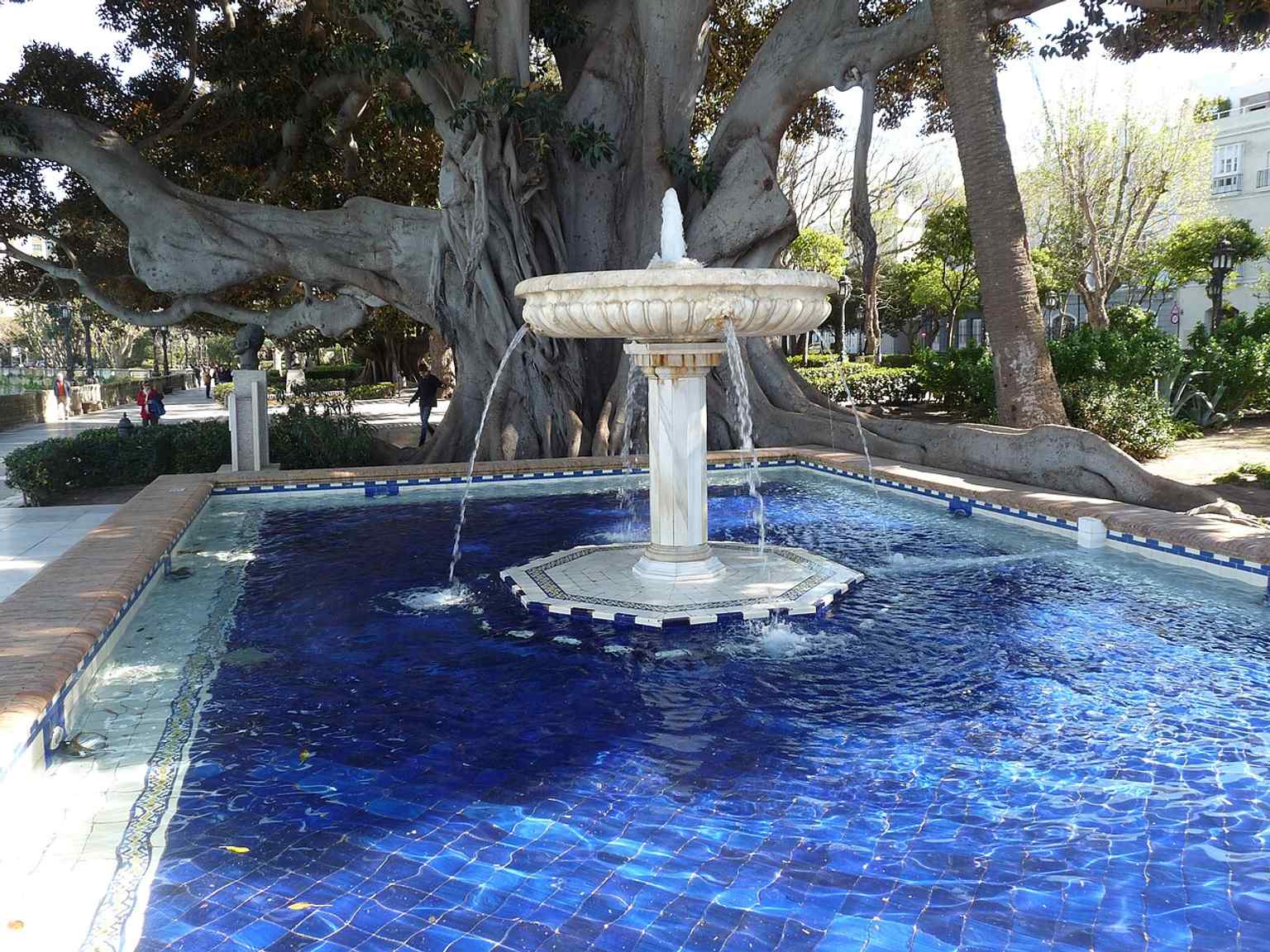
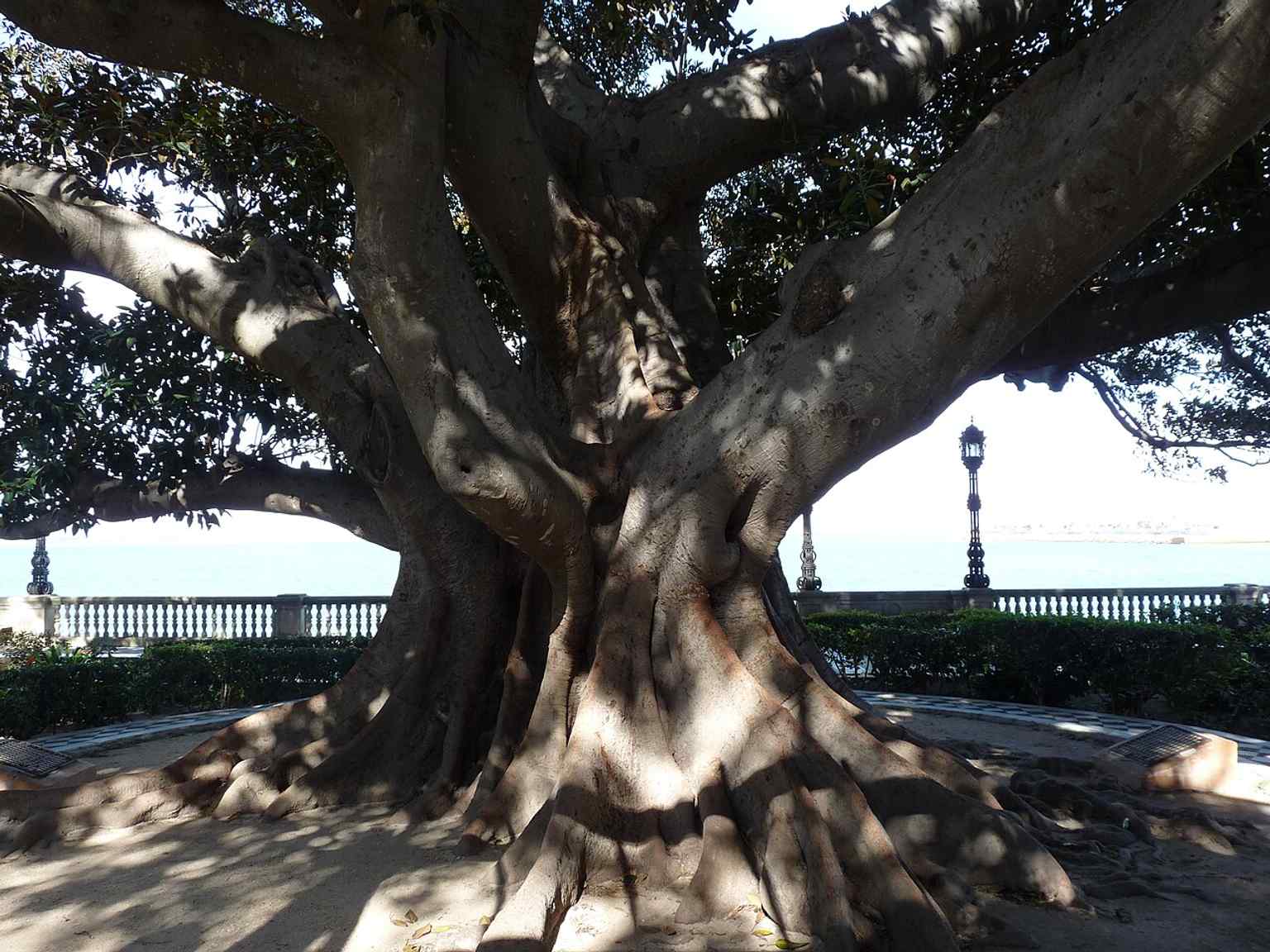
The planting matters just as much as the stone and iron. Along the seaward side stand some of the promenade’s great characters, especially the huge ficus macrophylla trees brought from Australia and planted in the early twentieth century. Have a look at the close-up in the app and you’ll see why they dominate the scene with such confidence. Around them, the Alameda also holds ombús, a cherimoya tree, twin fountains with bronze boys carrying fish, and a whole cast of busts honoring figures from former Spanish colonies, including José Martí, José Rizal, Rubén Darío, and Juan Pablo Duarte.
No wonder Andalusia added these gardens to its General Catalogue of Historic Heritage in two thousand and four.
This promenade shows Cádiz at its most elegant and slightly theatrical.
Take your time here, and when you’re ready, we can continue toward the Baluarte de la Candelaria.