
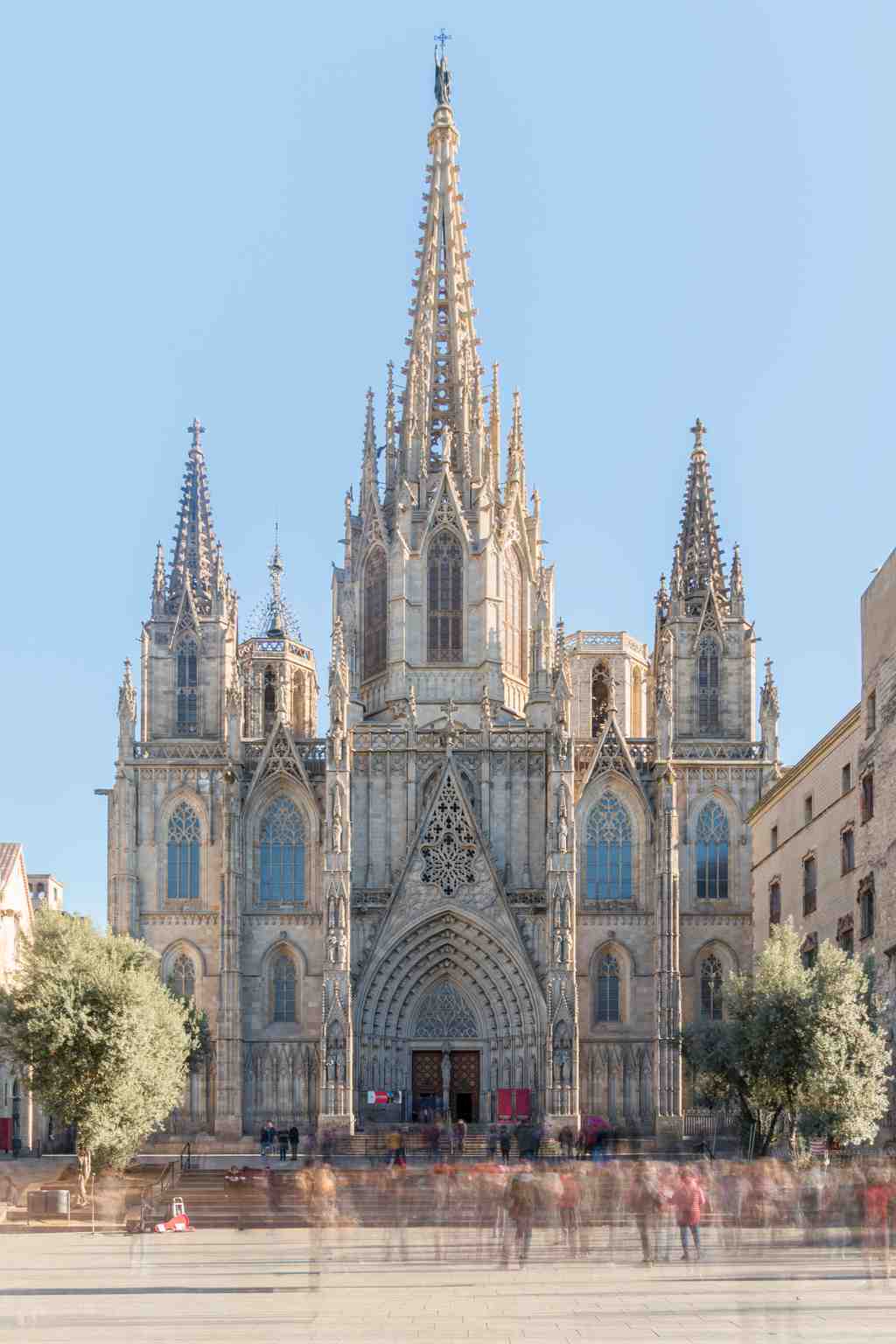
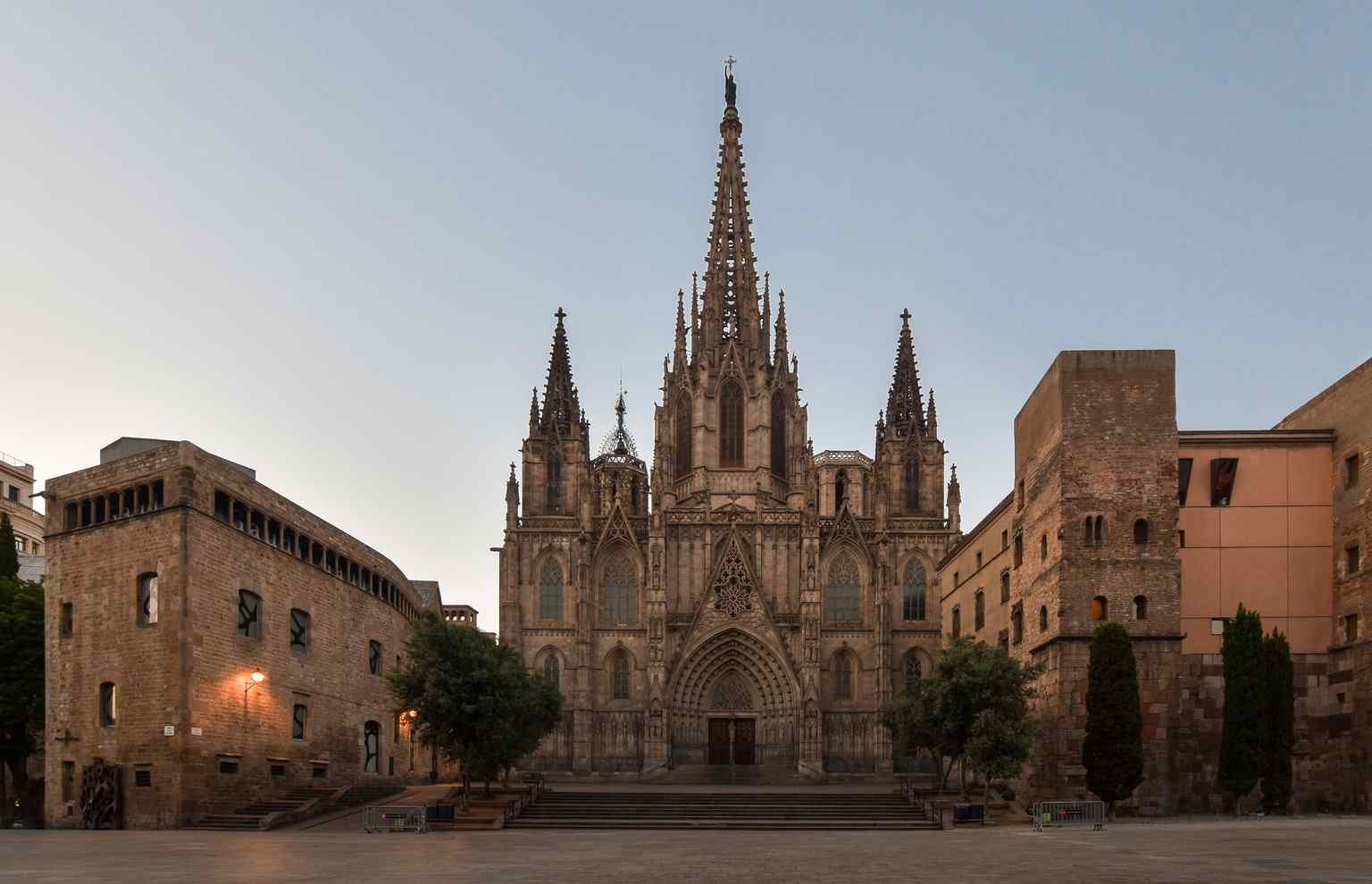
Notice the soaring pale stone spires to your left, a massive arched central doorway covered in intricate carvings, and a towering octagonal dome crowning the roof. It looks like a pure medieval masterpiece, right? Well, that is not quite the whole story. The church itself dates back to the thirteenth century, but this incredibly elaborate exterior is surprisingly modern. For centuries, the front was basically a flat, unadorned wall. It was not until the late nineteenth and early twentieth centuries that a wealthy banker funded this soaring neo-Gothic facade, an architectural style that revived medieval designs with even more dramatic flair.
The cathedral is dedicated to the Holy Cross and to Santa Eulalia. She was a young patron saint of Barcelona who, according to Catholic tradition, stood up to Roman persecutors when she was just thirteen years old. Her fierce refusal to back down led to thirteen brutal tortures, one for each year of her life, before her ultimate martyrdom. Her sacrifice quickly became a lasting symbol of the city's endurance. If you walk into the cathedral's cloister, which is the open courtyard and garden area used by the clergy, you will find a flock of thirteen live white geese. They represent Eulalia's age when she died, and supposedly, the fact that she tended geese as a young girl in the nearby countryside. But beyond the sweet symbolism, these birds served a very practical medieval purpose. Geese are highly territorial and incredibly loud, making them a perfect biological alarm system against anyone trying to sneak in at night.

This building has survived a lot, constantly being shattered, rebuilt, and reimagined as the civilization around it evolved. During the Spanish Civil War in 1936, when armed anarchist militias were burning churches across Barcelona, this cathedral was saved by an unexpected hero. An anarchist poet named Peret Nau stood on the steps right in front of you and convinced the angry crowd that this was not a monument to the wealthy, but a masterpiece built by the hands of the working people. His impassioned words, combined with a wild, completely fabricated rumor that thousands of heavily armed priests were hiding in the underground crypts, kept the cathedral safe from the flames.

We are going to leave the heavy sacred stone of the Gothic Quarter now and head toward some vibrant, modern energy at the Santa Caterina Market, just a four-minute walk away. If you want to step inside the cathedral before we go, it is generally open from nine thirty in the morning to five forty-five in the evening most days, with shorter hours on weekends.






