
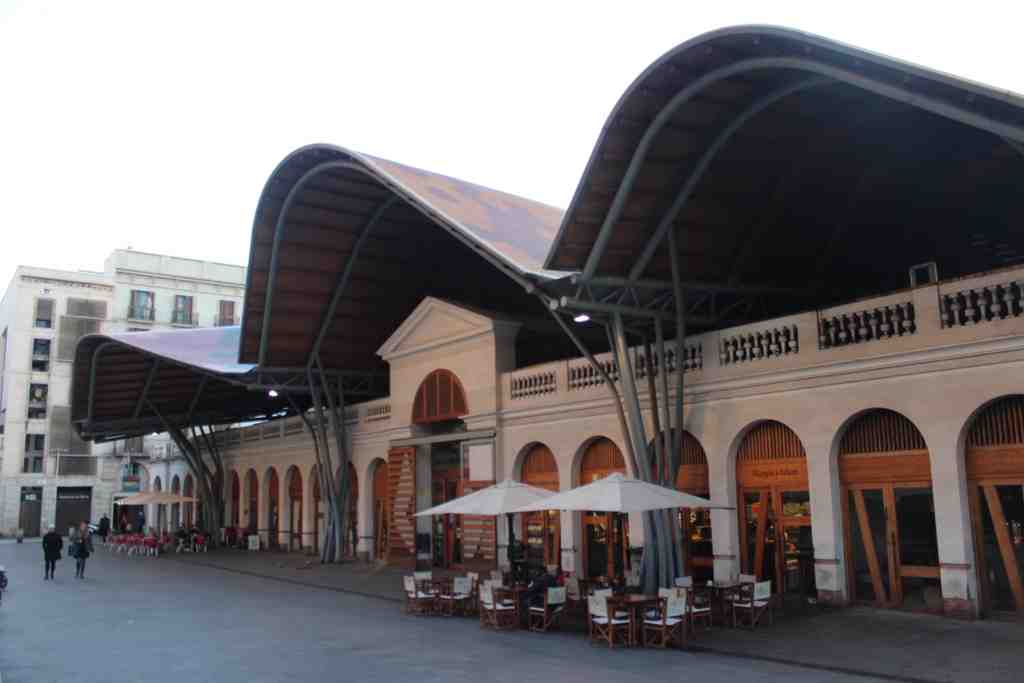
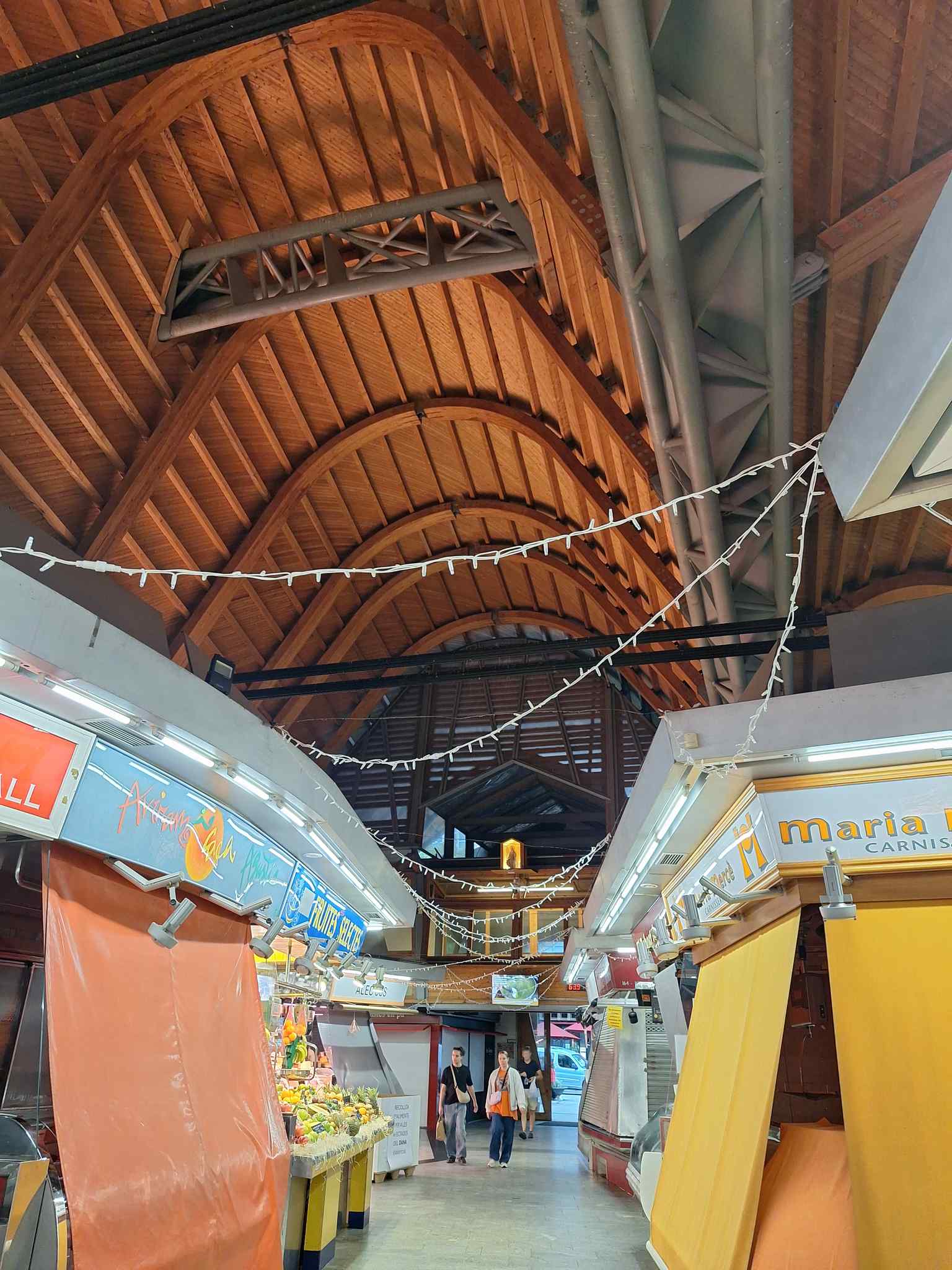
On your left, you will spot Santa Caterina Market, easily recognizable by its classical white stone arches suddenly topped by a massive undulating roof supported by twisting grey metal pillars. Notice how that futuristic canopy seems to swallow the old nineteenth-century facade. That physical clash perfectly captures how this city builds its future right on top of its own ruins. You might remember the lost convents we talked about earlier. Right where you are standing was once a massive Dominican convent built in 1243. Its end was not a quiet administrative handover. In the summer of 1835, during a wave of anticlerical riots known as the bullangues, an angry mob stormed the convent and set it ablaze. Monks fled for their lives as centuries of history, including two beautiful cloisters and a priceless library, went up in smoke. The state confiscation of church lands was often a brutally violent affair.
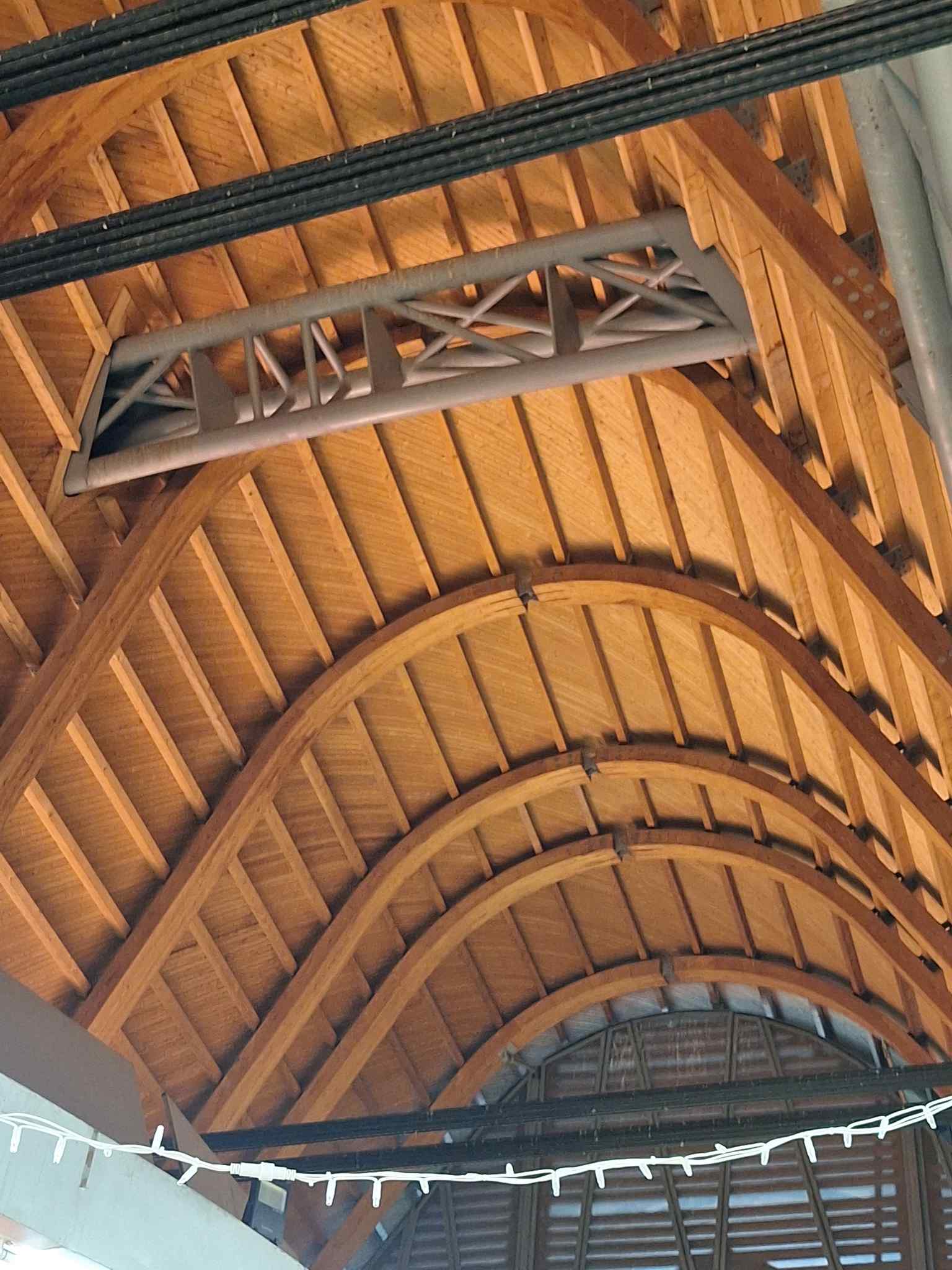
From those smoldering ashes, the city's oldest covered market was born in 1844. Fast forward to the harsh years following the Spanish Civil War, and these stalls became a notorious hub for the estraperlo, the underground black market. Beneath these counters, desperate citizens and clever smugglers traded rationed foods at exorbitant prices just to survive.

By the late 1990s, the market needed a revival. Architects Enric Miralles and Benedetta Tagliabue designed a spectacular renovation. But as workers dug into the foundation, they hit a rather large historical snag. They uncovered not just the medieval convent, but four thousand years of layered history, including a Roman necropolis, which is an ancient and elaborate burial ground. Preserving these layers delayed the project by four agonizing years. The vendors were exiled to temporary tents down the street, and the toll was heavy. Out of the original merchants, twenty-two family businesses did not survive the transition.

Tragedy also struck the design team. In the year 2000, Enric Miralles passed away from a brain tumor at just forty-five. His wife and partner, Benedetta Tagliabue, took over, turning the finished market into a soaring, vibrant tribute to his genius. Look closely at the roof. Those complex, wavy curves are not just for show. They are cleverly designed to draw hot air up and out, naturally ventilating the stalls below. The outside is covered in a massive mosaic of over four thousand square meters of ceramic tiles, colored to match the fresh fruits and vegetables sold inside. The redesign even carved out space for a large modern restaurant, bringing an international energy that forever altered the traditional neighborhood ecosystem.

It is the ultimate example of a vibrant civic space blooming from violent ashes. Assuming you are hungry, the market is usually open mornings and early afternoons Monday through Saturday, with extended evening hours on Tuesdays, Thursdays, and Fridays, but completely closed on Sundays. Let us continue our walk through the Ribera neighborhood, heading toward our next stop, the Palau de la Música Catalana, which is just a short six-minute stroll away.






