
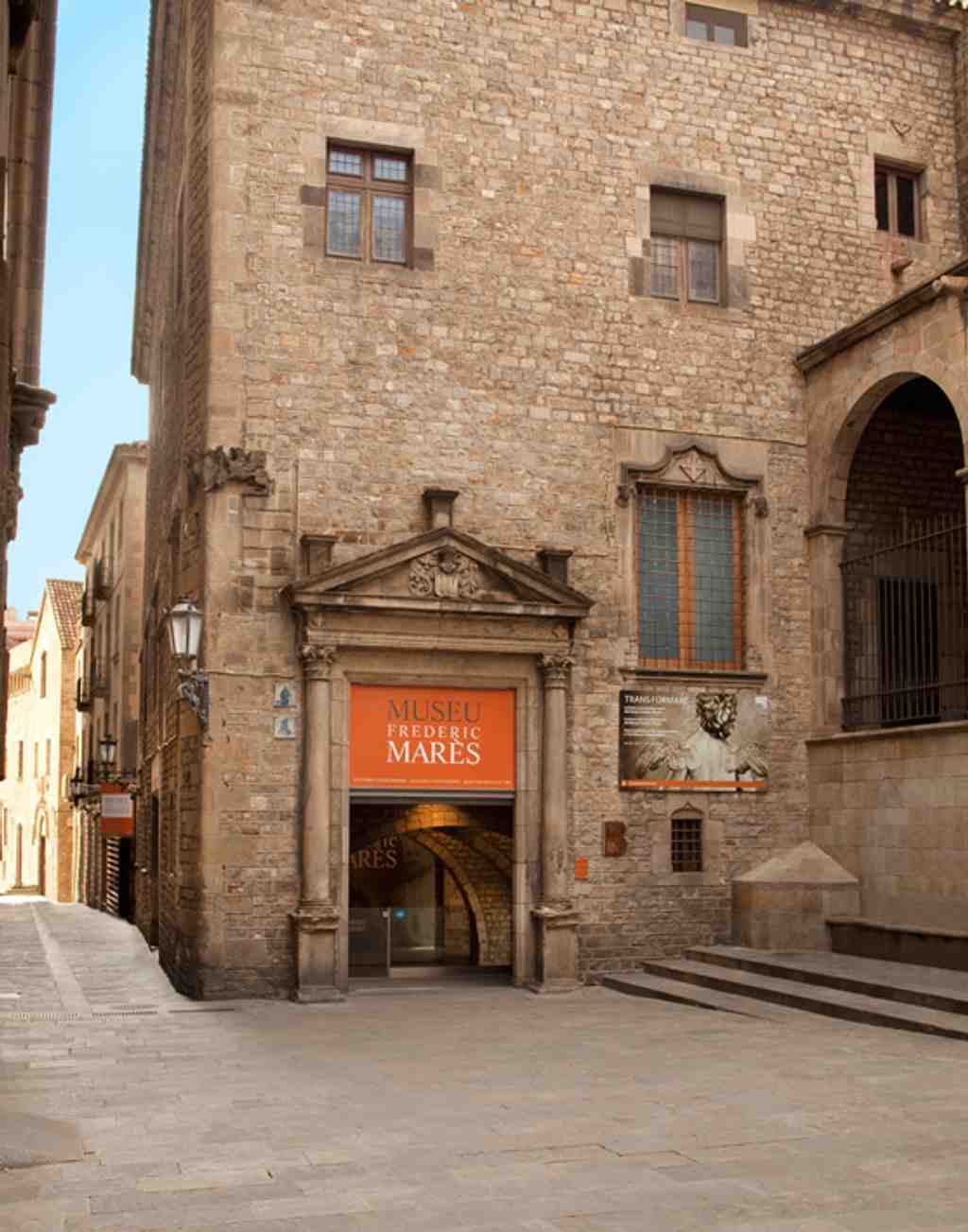
Notice the sturdy block stone building to your right featuring a classical triangular pediment over the doorway, marked clearly by a bright orange banner reading Museu Frederic Marès.
You have just stepped away from the grand halls of the Royal Palace, and right next door lies the chaotic, fascinating mind of a man who could not stop collecting the past. Frederic Marès was a sculptor who amassed over fifty thousand objects during his ninety-eight years of life. Despite his conservative politics and comfortable relationship with the Franco dictatorship, in his later years he grew his hair so unusually long that locals ironically nicknamed the eighty year old man the hippie.
His obsession began at age four, carefully saving chocolate wrappers. But it transformed into a monumental rescue mission during the Spanish Civil War. As revolutionary committees set fire to churches and anarchists melted down public bronze statues for ammunition, Marès walked into the smoke. He worked with the government to pull medieval statues from the flames and took commissions to recreate the melted monuments. The city was actively tearing its own history to pieces, and Marès was the man quietly gathering those shattered fragments to forge a newly imagined heritage.
Yet, his legacy as a savior is complicated. In the desperate postwar years, Marès acquired priceless, often looted art for practically nothing. A major controversy still surrounds two stone reliefs in this museum, originally from a monastery in Galicia. They were stolen in the 1970s, passed through the hands of a German businessman with Nazi ties, and eventually bought by Marès. When the Galician town demanded them back, the museum refused, sparking a bitter modern battle over who truly owns the spoils of history.

When he wanted a piece, he got it. He bought a magnificent twelfth-century marble carving on an installment plan and kept it in his own dining room for years. That piece is a palimpsest, meaning the artist took an existing ancient Roman block and simply carved his new biblical scene onto the blank back of it.
If you venture upstairs, the grand reverence of medieval art gives way to his deeply intimate Collector's Cabinet. It is a staggering hoard of nineteenth century life that borders on the macabre. You will find elaborate mourning jewelry woven entirely from the hair of deceased loved ones, alongside post mortem photographs where grieving families posed their dead children as if they were merely sleeping.

Even his own art was subject to the city's turbulent rewritings. During the Republic, he sculpted a nude female figure. After the war, the victorious Franco regime repurposed his statue as a fascist monument. However, the strict national catholic censors found her bare chest far too scandalous, and they forced Marès to censor his own work, adding bronze drapery to cover her up.
The museum is open Tuesday through Sunday if you want to explore the bizarre labyrinth of his life's work. For now, let us follow the cobblestones just a minute further, letting the towering, intricate facade of the Barcelona Cathedral guide our next steps.






.jpg)
