AudaTours logoAudaTours

Stop 15 of 20

Palau de la Música Catalana

headphones 03:03 Buy tour to unlock all 16 tracks
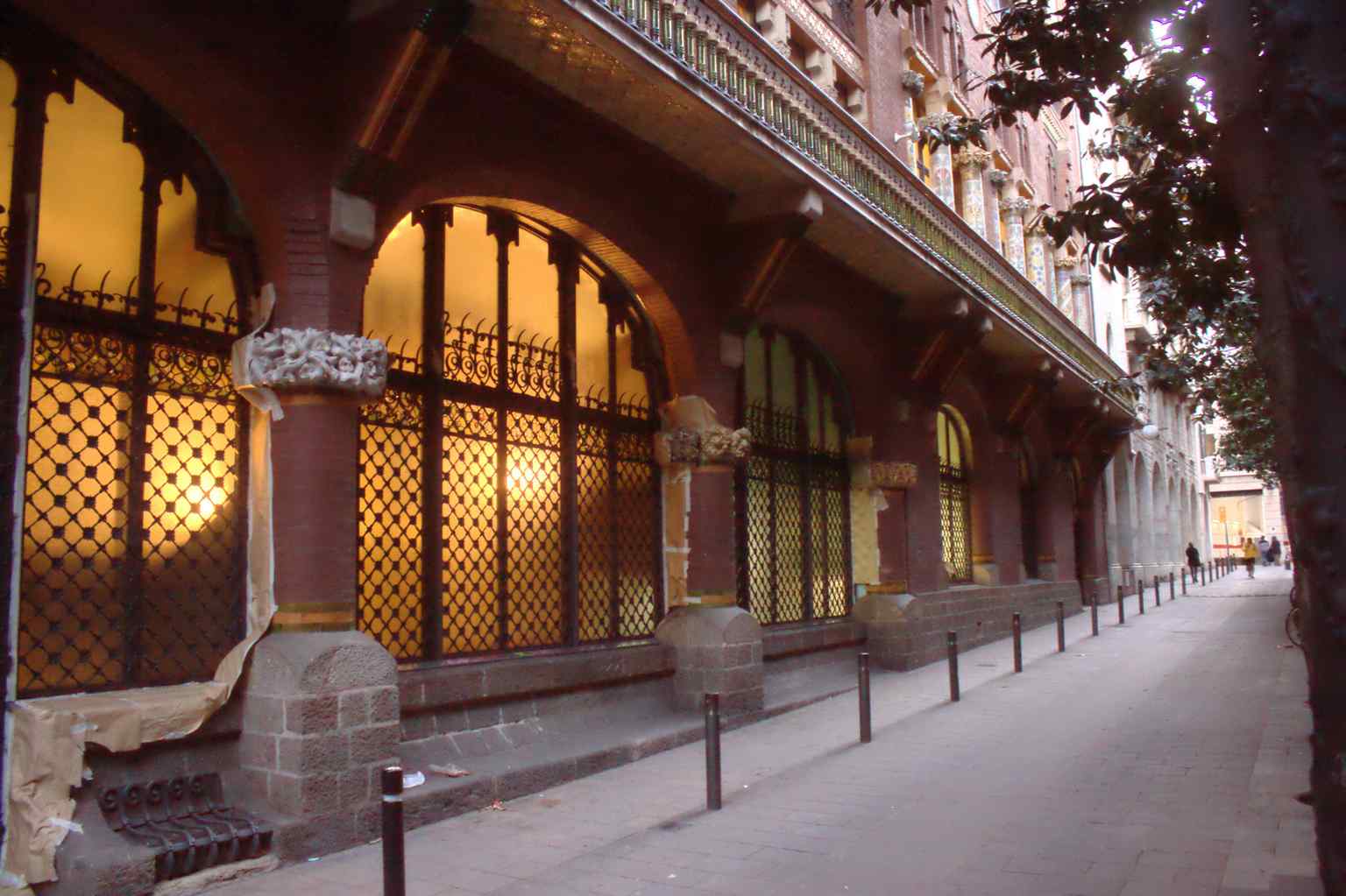
The striking exterior of the Palau de la Música Catalana, captured here in 2019, stands as an impressive architectural monument to Catalan heritage.
The striking exterior of the Palau de la Música Catalana, captured here in 2019, stands as an impressive architectural monument to Catalan heritage.Photo: being notified, Wikimedia Commons, CC BY-SA 4.0. Cropped & resized.

Notice the massive red brick building to your right with its rounded corner, towering columns, and an explosion of colorful floral mosaics across its upper balcony. This is the Palau de la Música Catalana, and it is a pure, unadulterated temple to Catalan pride.

Vibrant floral mosaics line the balconies of the concert hall. This meticulous detailing, seen here in 2022, reflects the original 'blank check' budget from Barcelona's elite.
Vibrant floral mosaics line the balconies of the concert hall. This meticulous detailing, seen here in 2022, reflects the original 'blank check' budget from Barcelona's elite.Photo: Elena.laps, Wikimedia Commons, CC BY-SA 4.0. Cropped & resized.

Designed by architect Lluís Domènech i Montaner and built between 1905 and 1908, this concert hall was not funded by the government. Instead, the wealthy industrial bourgeoisie of Barcelona, the elite upper-class families of the era, opened their very deep pockets. These wealthy patrons used their money to forge a spectacular monument to their own culture, specifically dedicated to choral music. They gave the architect essentially a blank check, and he certainly used it. Domènech i Montaner was notoriously stubborn, insisting on top-tier red brick, forged iron, and sculpted column tops even on a wall completely hidden by a narrow three-meter courtyard. The budget doubled from 450,000 to over 900,000 pesetas, a staggering sum equal to millions of dollars today.

A 1912 performance by the Orfeó Català choir. The historic hall would later become a battleground for Catalan identity, where defiant audiences risked imprisonment to sing forbidden hymns.
A 1912 performance by the Orfeó Català choir. The historic hall would later become a battleground for Catalan identity, where defiant audiences risked imprisonment to sing forbidden hymns.Photo: Desconegut, Wikimedia Commons, Public domain. Cropped & resized.

But this place is more than just pretty glass and brick. It is a fortress for the enduring Catalan spirit. In 1960, during the repressive regime of dictator Francisco Franco, authorities strictly banned the singing of a beloved traditional Catalan hymn here. The audience rebelled. They stood up and sang the anthem at the top of their lungs while showering the floor with illegal anti-dictator pamphlets. The retaliation was brutal. A young activist and future political leader, Jordi Pujol, was arrested, tortured, and sentenced to seven years in prison just for organizing the protest.

The historic main floor, or platea, pictured in 1908. This grand space was scandalously transformed into a private banquet hall for extravagant, illegally funded weddings a century later.
The historic main floor, or platea, pictured in 1908. This grand space was scandalously transformed into a private banquet hall for extravagant, illegally funded weddings a century later.Photo: Frederic Ballell i Maymí, Wikimedia Commons, Public domain. Cropped & resized.

Yet, the greatest threat to the Palau eventually came from within. In 2009, investigators raided the building and uncovered the biggest cultural embezzlement scandal in European history. For decades, the director, a man named Fèlix Millet, had treated the foundation like his personal piggy bank, looting over 34 million euros. He even used the stunning main concert hall to throw wildly extravagant weddings for his two daughters. He transformed the historic floor into a private banquet hall with an open bar, charging roughly 200,000 euros directly to the public accounts. He even had the nerve to charge his own consuegro, the father of the groom, for half the wedding costs and pocketed the cash. Eventually, the law caught up with him, and he was sentenced to nearly ten years in prison.

As we leave this beautiful but complicated sanctuary, our journey takes a more reflective turn. We are moving from the cultural resilience of the elite to the grim, physical sacrifices that forever altered Barcelona. Follow the path ahead toward the Ronda de San Pedro, and we will walk about seven minutes to the Rafael Casanova Monument.

arrow_back Back to Barcelona Audio Tour: Markets, Palaces & Gothic Whispers
Loved by travellers

Thousands of tours started.
Plenty of opinions.

4.8 across the App Store and Google Play. Here's a few we keep coming back to.

starstarstarstarstar
This was a solid way to get to know Brighton without feeling like a tourist. The narration had depth and context, but didn't overdo it.
Christoph
Christoph
Brighton Tour
starstarstarstarstar
Started this tour with a croissant in one hand and zero expectations. The app just vibes with you, no pressure, just you, your headphones, and some cool stories.
download Get the app

Pop your headphones in.
Step outside.

Free to download. Tours in every city. Start in 60 seconds — no account, no card.

Download on the App StoreGet it on Google Play
starstarstarstarstar_half
4.8
AudaTours app icon
headphones
~ 4 min until your first tour starts
public
1,000+ cities worldwide
all_inclusive
AudaTours
Unlimited

Every tour. Every city. One subscription.

3101 tours2271 cities138 countries50+ languages

