
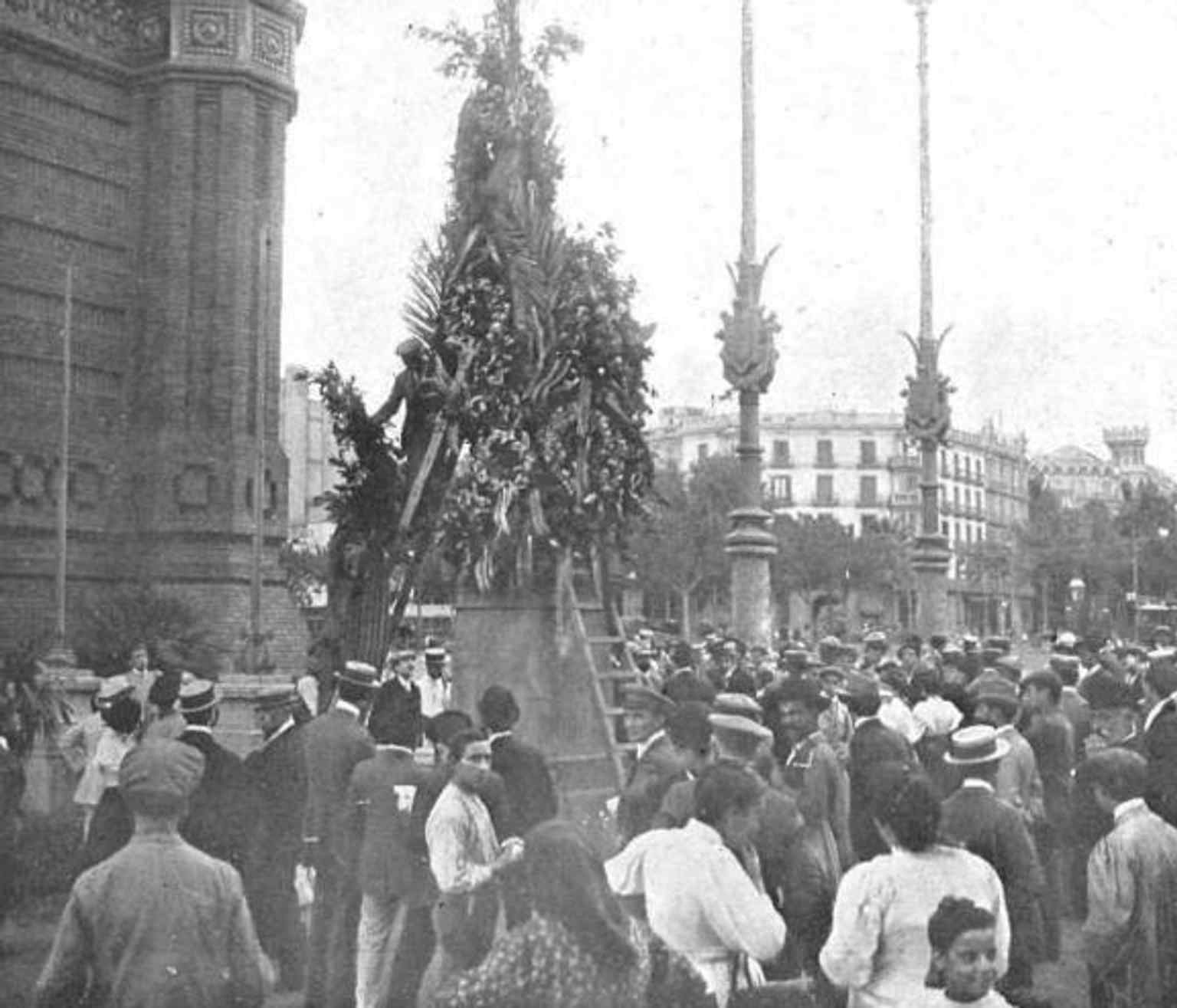
Notice the bronze statue of a wounded man leaning heavily on his sword to your left, standing on a tall stone pedestal decorated with grieving female figures. That is Rafael Casanova, the chief counselor, essentially the mayor and highest official of Barcelona, during the grueling military siege of 1714. It is a stunning piece of work. The sculptor, Rossend Nobas, deliberately chose not to carve a victorious, invincible warrior. Instead, he captured the agonizing exact moment of defeat. It was the morning of September eleventh, 1714. The city was falling to the Bourbon army after a brutal siege. In a desperate bid to rally the exhausted local militia, Casanova grabbed the flag of Santa Eulalia, the city's co-patron saint. Taking that flag out was no small gesture. It was a sacred standard only brought into the streets when the city faced absolute destruction. He charged forward and was hit by a musket ball in the thigh right here, on this exact spot. He survived, actually. He was smuggled into a hospital and managed to escape the fallen city disguised as a simple friar, eventually receiving a pardon years later. Yet, the moment of his fall on this street became the bedrock of modern Catalan identity. Every year, out of that devastating military loss, grew a fierce, unifying pride that reshaped the city.
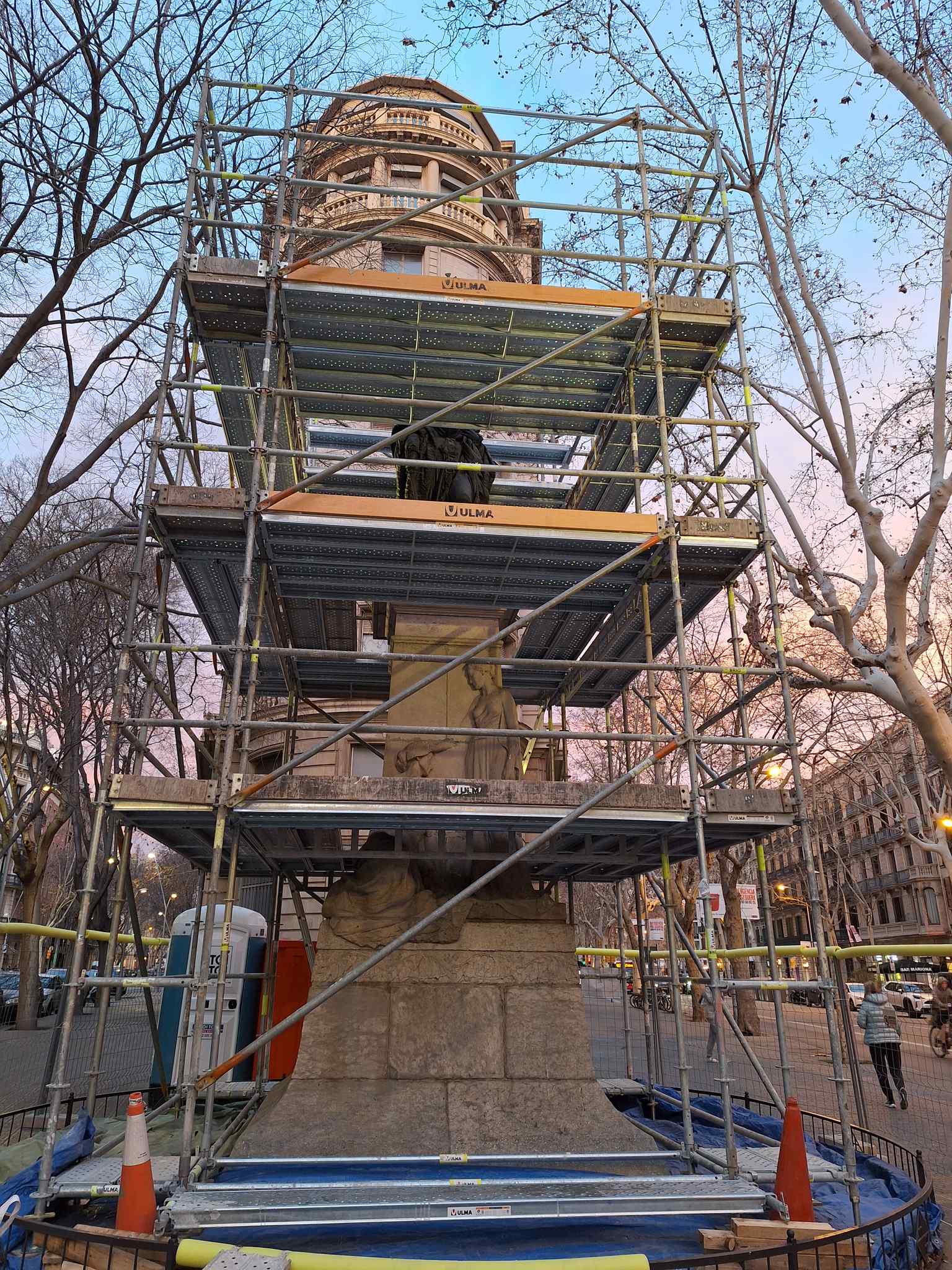
In 1914, to mark the second centennial of the battle, the city moved the statue to this corner where he fell. They added the sweeping, mournful stone pedestal you see today, designed by Alexandre Soler and Josep Llimona, with female figures representing the immense grief of the defeated city. The fact that you are looking at the original bronze statue is a minor miracle of quiet defiance. In 1939, following the Spanish Civil War, the new authoritarian regime ordered this monument completely destroyed and melted down to erase its powerful political memory. But the city's mayor discretely ignored the angry orders from his superiors. He had the massive bronze figure carefully dismantled and hidden in secret under tarps in a dusty municipal warehouse. It sat in darkness for nearly forty years. Then came 1977, and the turbulent transition back to democracy. More than a million people flooded the streets of Barcelona, demanding the return of their historical rights. And right at the emotional center of that massive, joyful uprising was Rafael Casanova, brought back into the sunlight and reinstalled exactly where he belonged. A city broken and hidden away, rising back up stronger than before. Since it stands in the public street, this resilient piece of history is open 24 hours a day for anyone who wants to pay their respects. Let us keep moving now. Head straight down the wide avenue ahead of you toward the Arc de Triomf, which will be about a five minute walk.






