
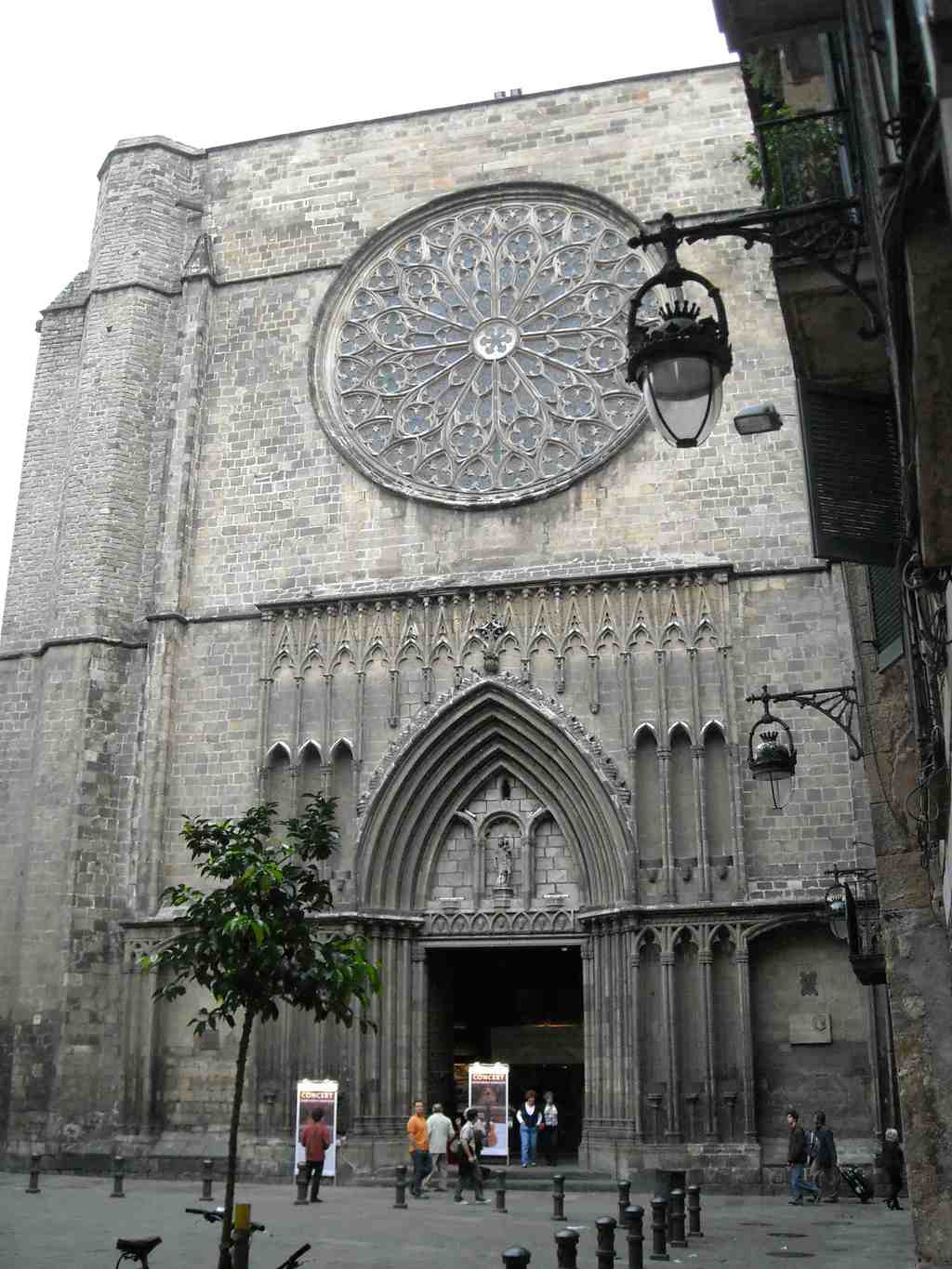

Notice the massive block of grey stone shaped like a fortress to your left, dominated by a gigantic circular stained-glass window right above a pointed, deeply recessed archway.
Welcome to the Basilica of Santa Maria del Pi, or Saint Mary of the Pine. It is quite a contrast from the lively Plaça Reial we explored just a few minutes ago. Now, if the high society of medieval Barcelona had a favorite place to whisper their secrets, this Catalan Gothic marvel was surely it.
You might be wondering why a grand church is named after a simple pine tree. Well, local lore claims an image of the Virgin Mary was discovered right inside the trunk of a pine on this very spot. To honor this, a pine has always been planted out front, a towering symbol of evergreen purity and life everlasting. Though eternal life for the tree itself has been somewhat elusive. Back in fifteen sixty-eight, they planted a magnificent pine that grew as tall as the surrounding palaces. It survived for centuries until eighteen o two, when a rather grumpy soldier quite literally stabbed the tree to death with his bayonet. Can you imagine the scandal? They simply had to plant a new one.
But that petty vandalism is nothing compared to what the church itself has endured. This building is a masterclass in getting knocked down and clawing its way back up again. Take that magnificent rose window on the front facade, the colossal circular window made of intricate stone and glass. In fourteen twenty-eight, a massive earthquake struck. The tremors sent that glorious window plummeting into the plaza, tragically crushing several unfortunate parishioners.
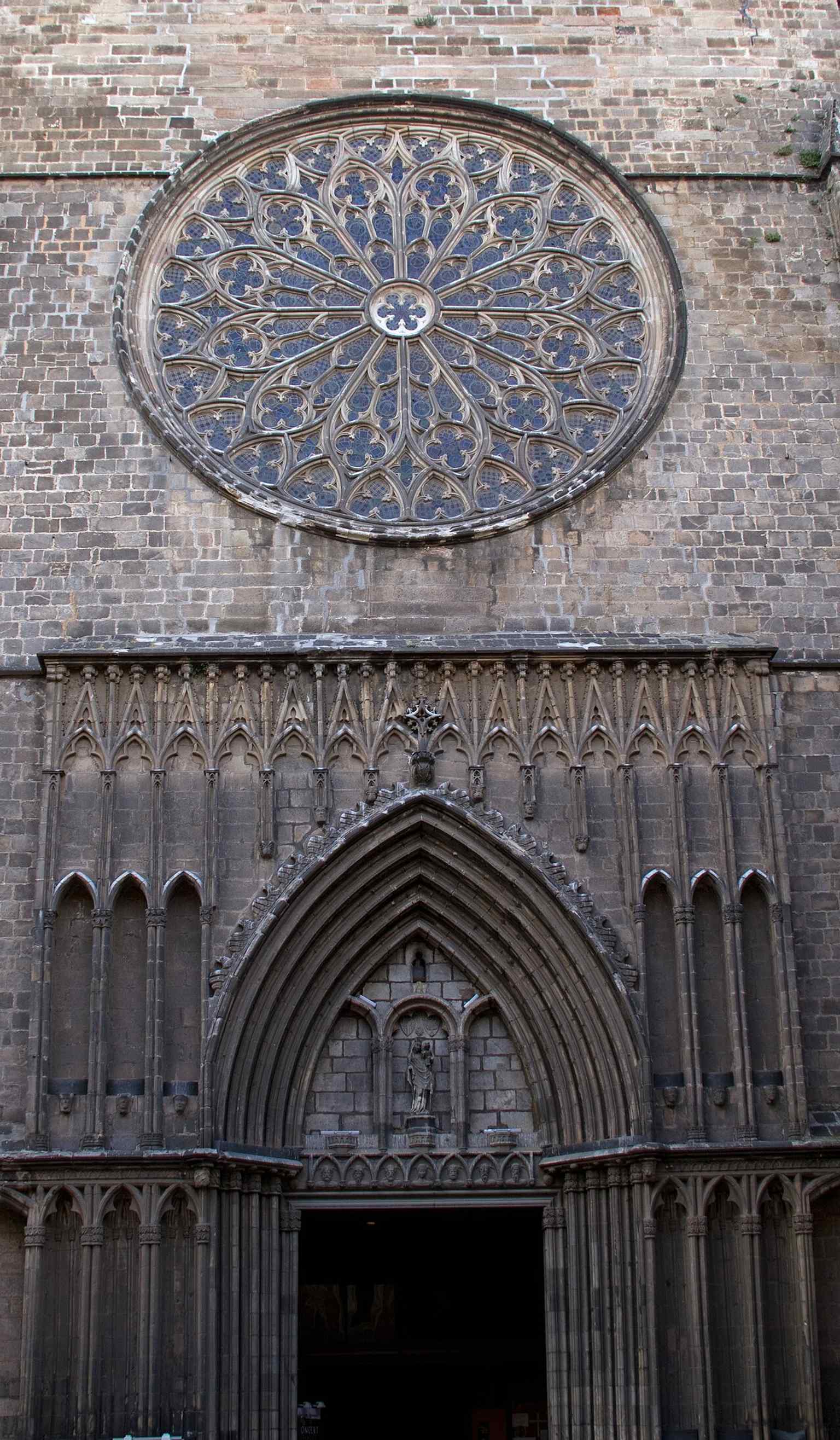
They rebuilt it, naturally. But the universe was not finished testing them. It survived the bombings of the 1714 siege, only to face the Spanish Civil War in 1936. Militiamen set the church ablaze. The heat was so intense that the vaulted ceilings of the nave, the vast central hall of the interior, completely collapsed. The grand rose window exploded into thousands of pieces. Yet, amidst the blazing inferno, aristocratic patrons and humble neighbors alike rushed in, stuffing centuries of irreplaceable parish archives under their coats and hiding them in their own homes until the war ended.
And I simply must tell you the rumor about the towering octagonal bell tower. They say the master builder was so desperate to finish it that he made a dark pact with the devil. Lucifer agreed to help, but demanded the architect's soul the moment he stepped on the hundredth stair of the spiral staircase. Our clever builder simply stopped at step ninety-nine, leaving the final stair unbuilt and keeping his soul. When his successor finally added the hundredth step years later, an enraged devil stomped his foot so hard he left a hoofprint in the stone, which the church authorities quietly cemented over in the nineteenth century to stop people from staring.
The basilica is open to visitors every day from nine thirty in the morning until eight at night, though it closes a bit earlier on Sundays at six. Let us keep moving, our next stop is just a one minute walk around the corner to the grand Palau Maldà.






