
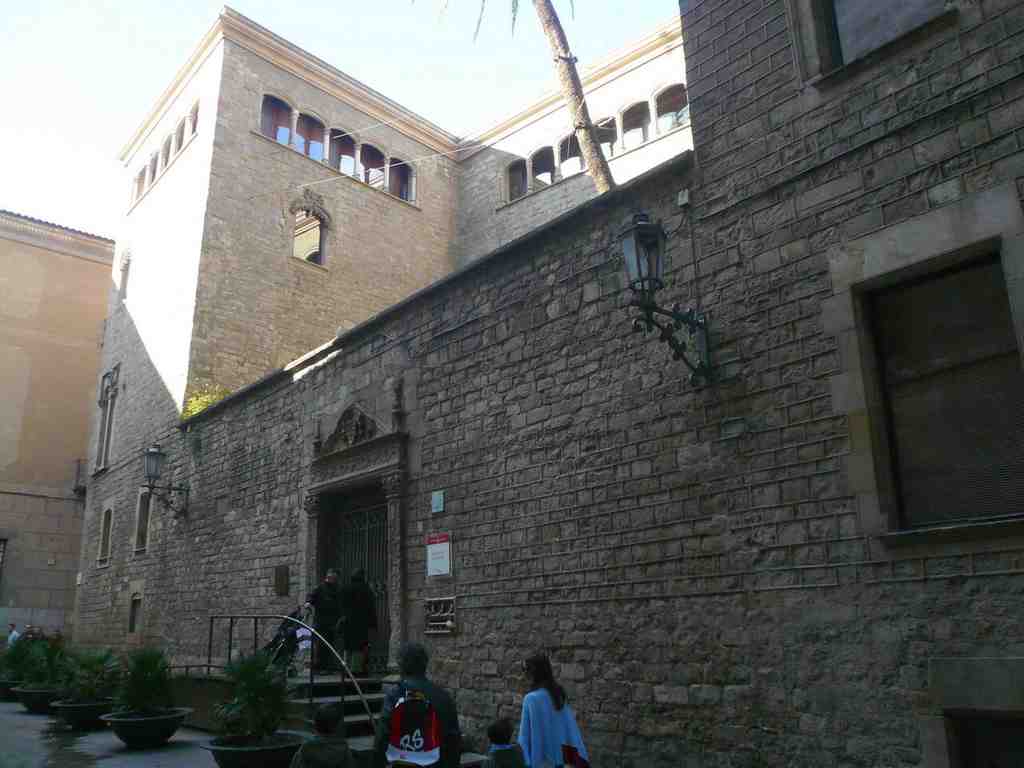
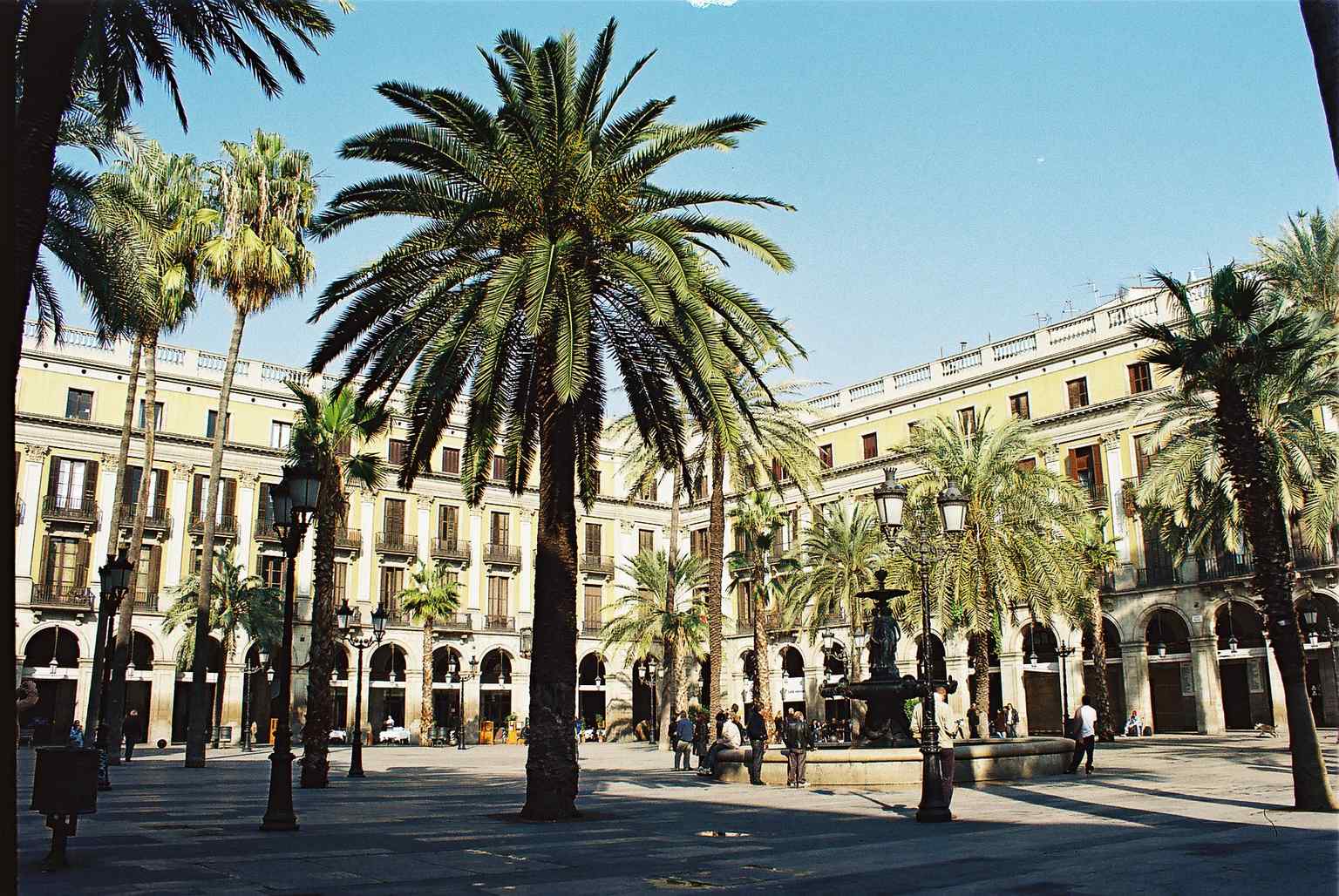
Step through the passage to find a grand rectangular courtyard framed by uniform yellow facades, towering palm trees, and elegant arched porticos running along the ground floor. Welcome to Plaça Reial.
Beneath these elegant cobblestones lies a rather dark history. This perfectly balanced space is another striking example of how this city builds its grandest visions directly on top of its ruins. Exactly where you are walking right now, a massive Capuchin convent once stood. After the mid-nineteenth century confiscations you heard about earlier, the convent was eventually reduced to rubble.
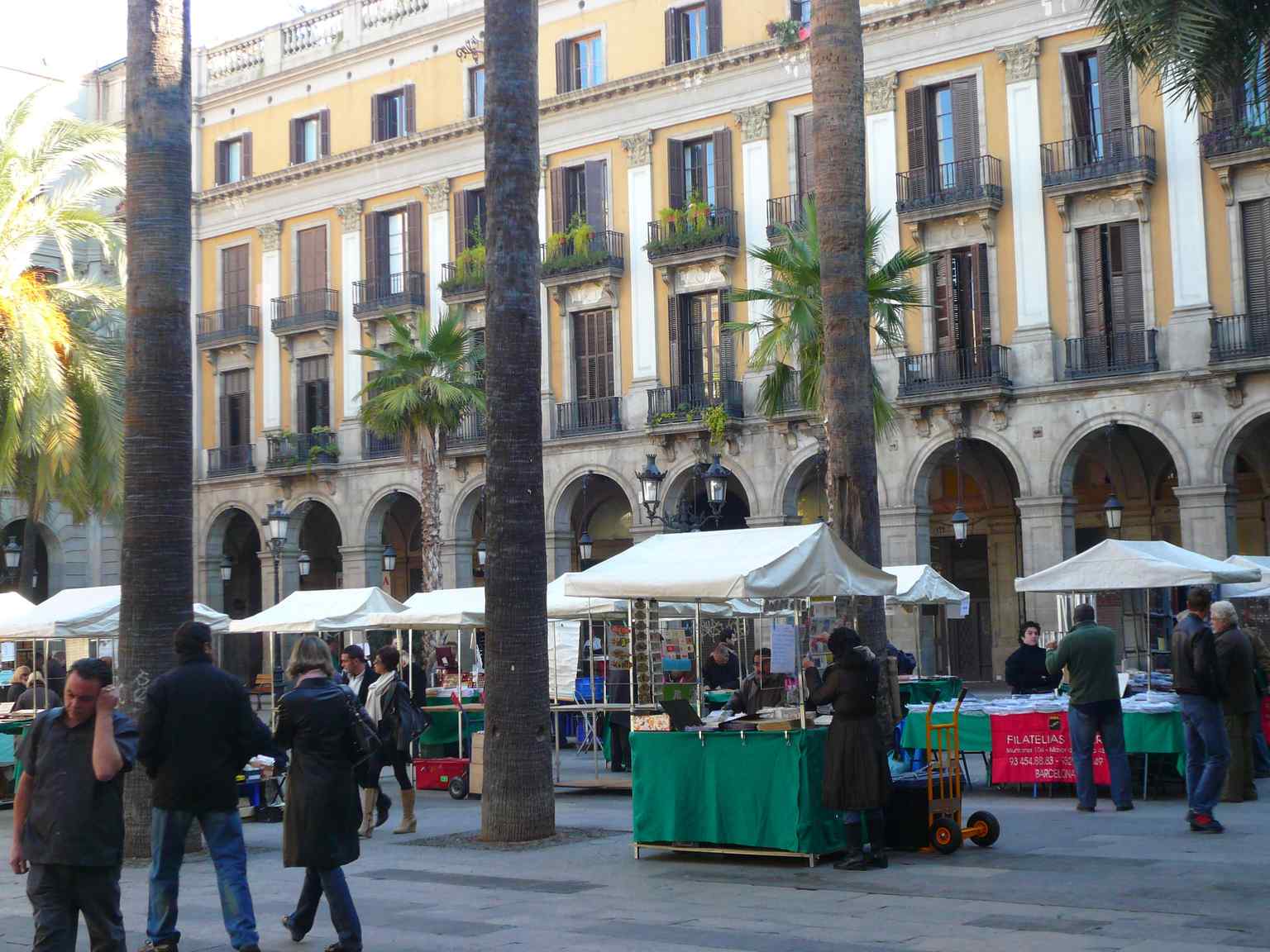
The architect Francisco Daniel Molina designed this plaza in 1850, adopting a neoclassical style, which relied on strict symmetry and grand Roman-inspired columns, to create an elegant playground for the city's wealthy elite. But the ghosts of the old monks lingered. During construction, the ruined site became a refuge for homeless children. In one rather macabre incident, a night watchman stumbled upon a group of these street kids playing a game in the dirt. Their toy? The skull of a monk they had dug up from the convent graveyard.
If you look toward the center of the square, past the Fountain of the Three Graces, you will spot two highly ornate iron lampposts resting on marble bases. They feature six arms and are topped with a winged helmet and coiled snakes. These were designed in 1879 by a young Antoni Gaudí, one of his very first commissions for the city.
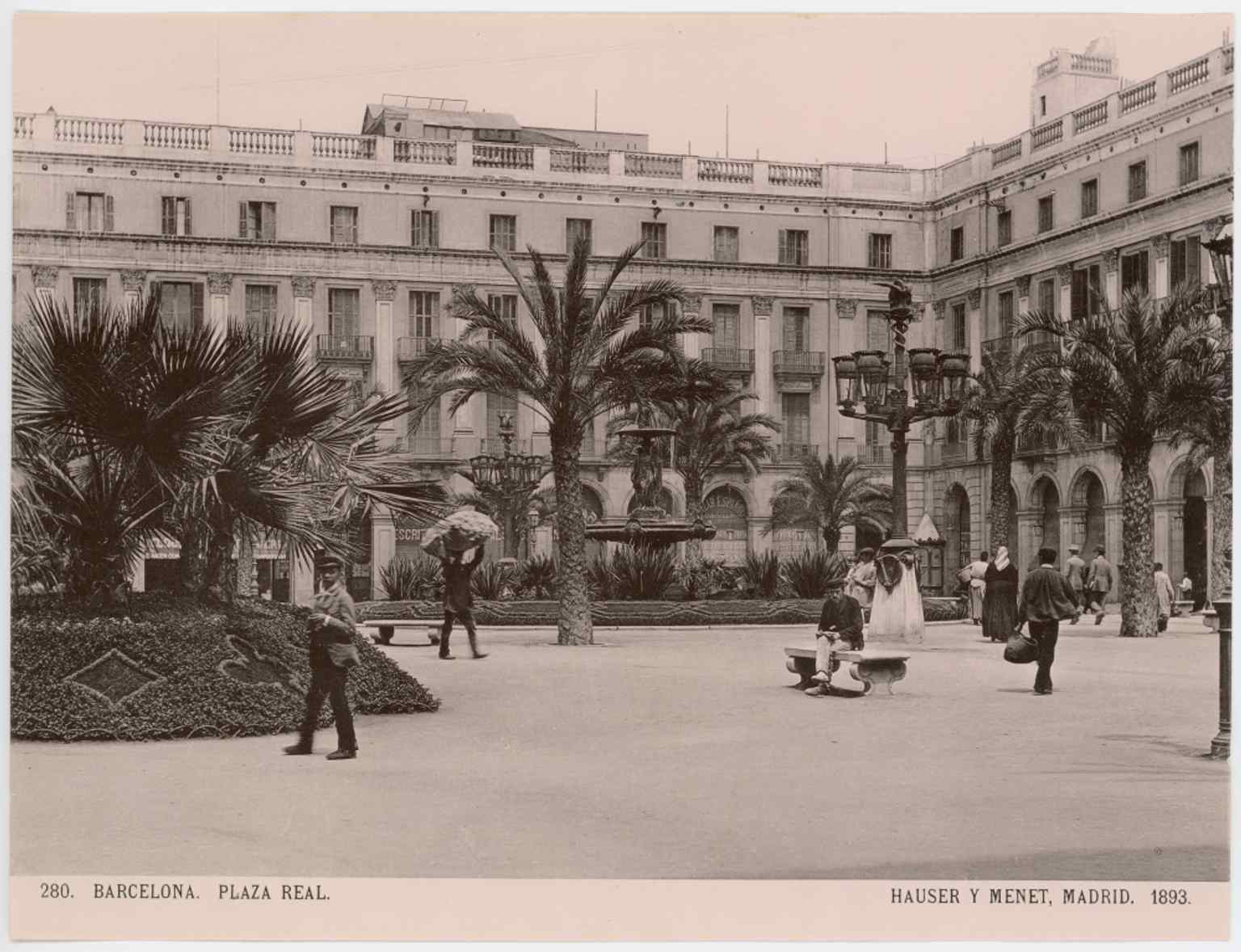
Plaça Reial always had a strange, slightly wild edge, shifting from aristocratic by day to purely chaotic by night. Over at number ten, there was a legendary taxidermy shop. In 1960, the surrealist painter Salvador Dalí orchestrated a bizarre spectacle here. He posed on top of a stuffed baby rhinoceros right in the middle of the plaza. He tipped the men who dragged the heavy beast out into the street twenty duros, which was about a hundred pesetas, barely a few dollars today. According to the shop owners, Dalí also walked away with a gorilla skeleton that he never actually paid for.
The square has seen its share of darker chaos too, from a deadly anarchist bomb hidden in a flower planter in 1892, to serving as the gritty epicenter of the underground punk scene in the 1970s and 80s. It was a haven for rebels and counterculture icons, holding onto its raw edge even as the city modernized around it.
Let us leave these ghosts and legends behind for now and dive deeper into the narrow alleys of the Gothic Quarter. Keep moving forward toward the old pine church, Santa Maria del Pi, which is just a short four-minute walk away.






