
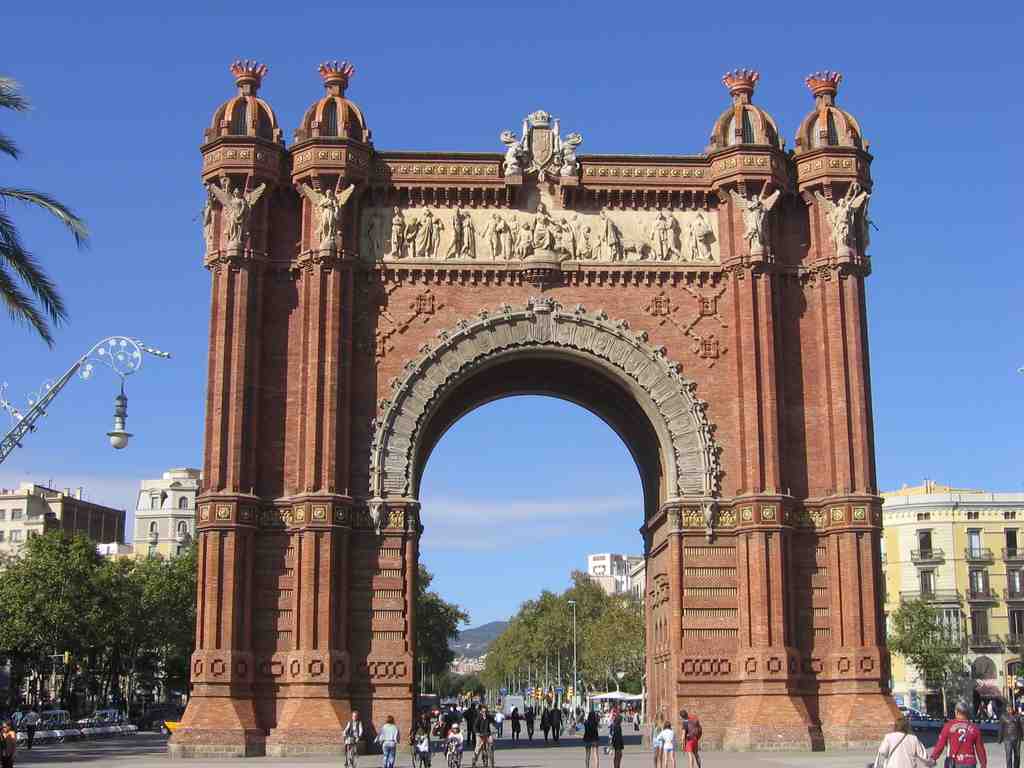
Notice the massive thirty-meter arch built from vibrant red brick up ahead on your right, decorated with a crown of pale stone sculptures. This is the Arc de Triomf. It is hard to miss. This monumental gateway was built as the main entrance for the 1888 Universal Exposition. This massive fair was Barcelona's grand re-entry onto the world stage, an ambitious celebration meant to showcase the city's leap into modern civil progress, art, and science.

Unlike the cold marble arches of Paris or Rome, which usually glorify military conquests, this arch celebrates peacetime achievements. The architect, Josep Vilaseca, chose to build it in the Neo-Mudéjar style. That is a type of Moorish revival architecture inspired by the intricate brickwork of medieval Islamic Spain. Using exposed red brick was not just an aesthetic choice, it was an economic triumph. The monument cost a mere one hundred fifty-four thousand pesetas, roughly equivalent to about two and a half million dollars today. That was an absolute steal for a city-defining landmark. More importantly, the humble brick visually connected the arch to the local working class and the booming brickmaking industry that was physically reshaping the city.

Observe the columns, and you will spot small stone bats carved into the capitals. The bat was the emblem of King James the First of Aragon, and it became a popular symbol of good fortune and vigilance in Catalan design. Up on the top front frieze, a sculpture shows Barcelona warmly receiving the nations of the world, while the sides celebrate agriculture, industry, commerce, and art. There is a stubborn urban legend that Gustave Eiffel originally pitched his famous iron tower to Barcelona for this exact spot, only to be rejected because the city thought it was an expensive eyesore. Historians have completely debunked that myth. Eiffel designed his tower specifically for Paris. But the rumor survives because it perfectly captures the era's tension between the old world of brick and the new, towering world of industrial iron.

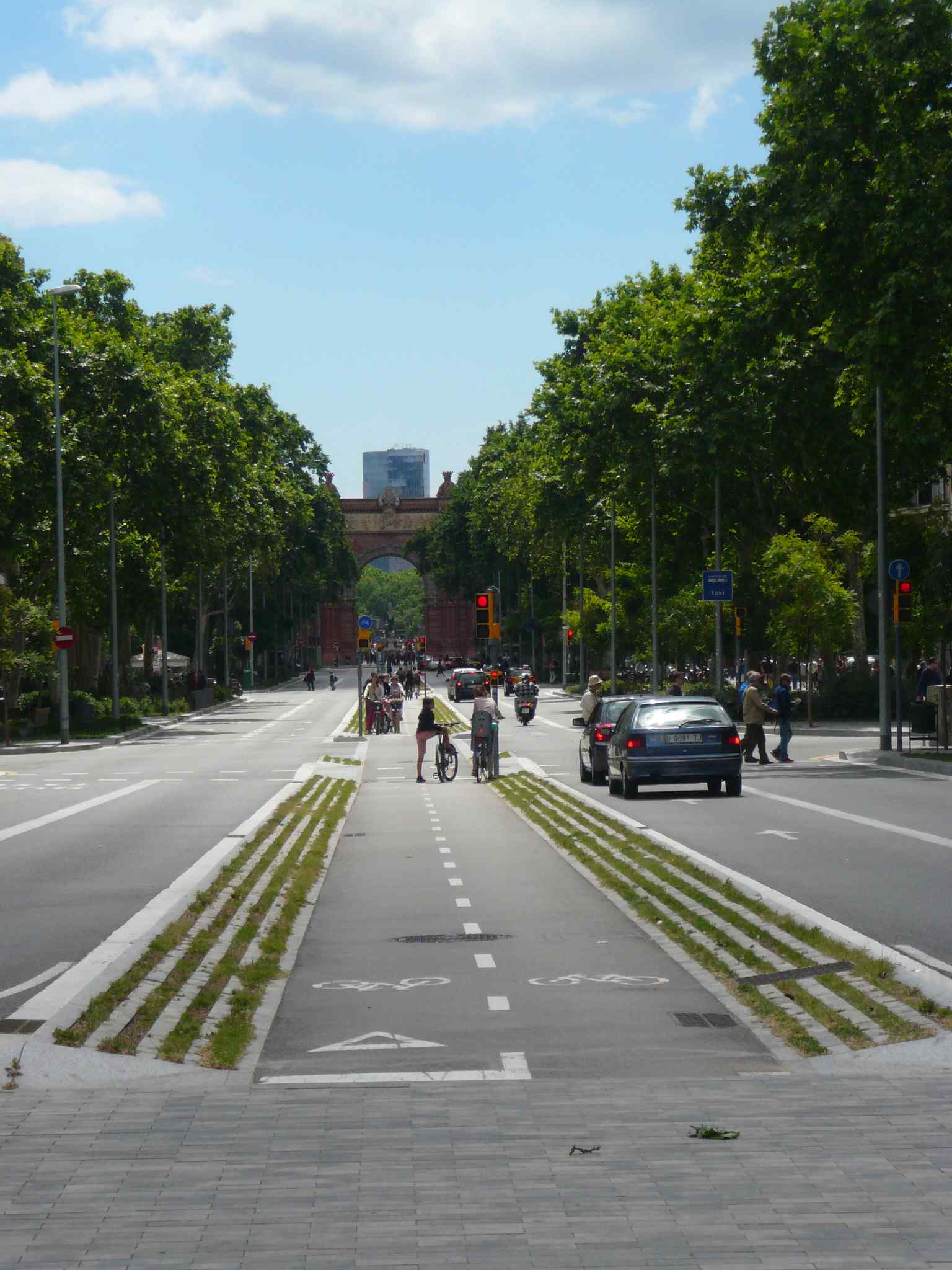
As you look through the arch, you will see a wide, sweeping promenade. This pathway has endured its own severe cycle of loss and revival. It used to be lined with eight towering bronze statues of Catalan heroes. But during the turbulence of the Spanish Civil War and the harsh post-war years, the statues were torn down. Five of those historic bronzes were actually melted down in 1950 to forge the giant statue of the Virgin Mary that now crowns the Basilica of La Mercè. Their metal was literally transformed into a new shape overlooking the city. Luckily, one statue dedicated to the historical leader Pau Claris was secretly hidden in a dark municipal warehouse. It miraculously survived the ideological purges for nearly forty years before being rescued and returned to the public eye. Go ahead and walk through the arch and continue down the grand promenade. This majestic space is open twenty-four hours a day, so it is always accessible. We will follow this path straight down toward the park to find the Castle of the Three Dragons, which is just a short six-minute walk away.






.jpg)
.jpg)
