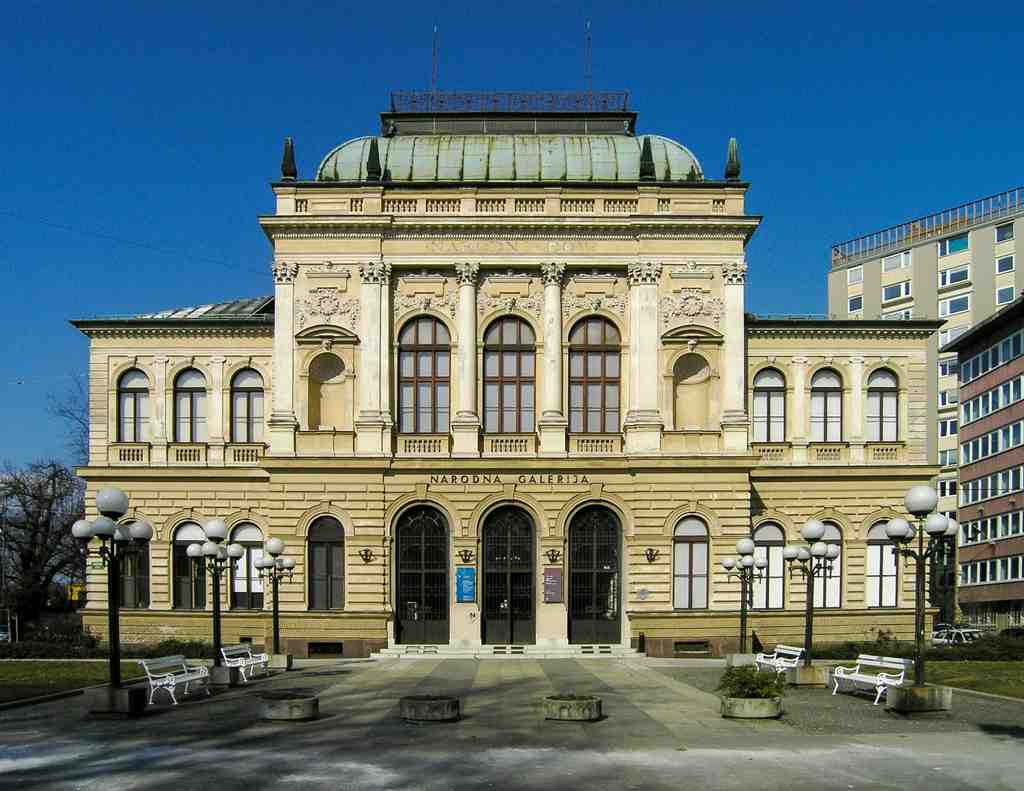
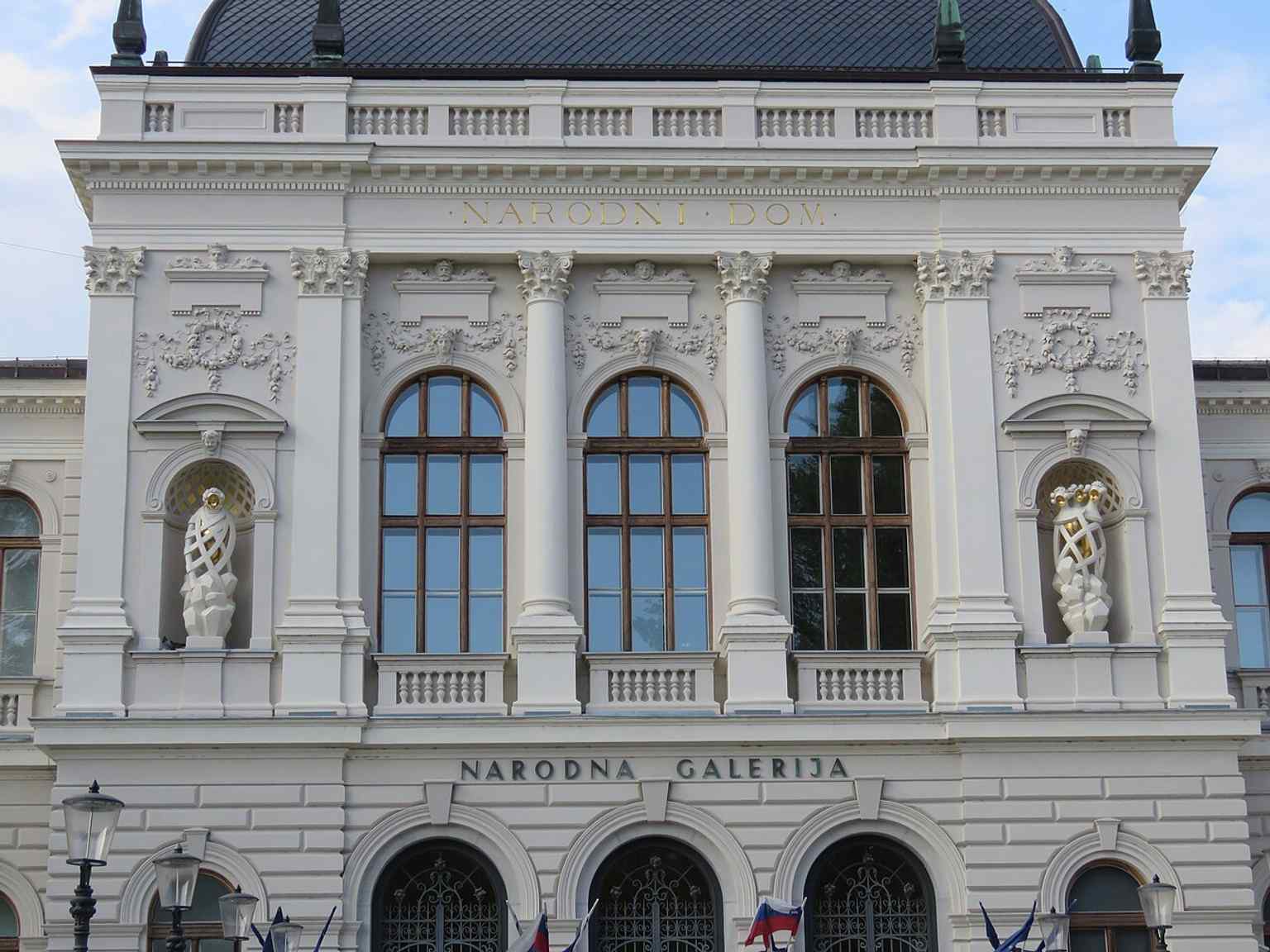
On your right, Narodni dom is a pale stone, three-part palace with a balanced neoclassical front, arched ground-floor openings, and statue-filled niches set into a neo-Renaissance façade.
This building was finished in 1896, planted right along Cankarjeva cesta-the promenade that stitches Ljubljana’s old center to Tivoli’s open green. And it wasn’t raised by a single patron with a deep pocket. It was willed into existence by what people proudly called an “All-Slovenian Action”: a sweeping, nationwide fundraising push organized by the Narodni dom society, founded in 1881. They ran lotteries, held veselice-community parties-and dances, and even placed little donation boxes, “puščice,” in inns and shops so ordinary citizens could drop in coins. It’s hard to miss what that meant: this wasn’t just a building project. It was a vote, repeated thousands of times, for whose language and culture would be at home in the city.
The architect was František E. Škabrout from Prague. Seventeen architects competed, and Škabrout won for a very practical reason: his design had more modest ornament, so it was cheaper and faster to build. But “modest” doesn’t mean timid. The plan is a three-part layout, like a basilica-a church-like arrangement with a strong central axis-translated here into a civic palace meant for gathering, debating, celebrating. Construction ran from 1893 to 1896 under Adolf Wagner, who also worked on the Philharmonic and the Tabor complex, and he refined Škabrout’s plans as the walls went up.
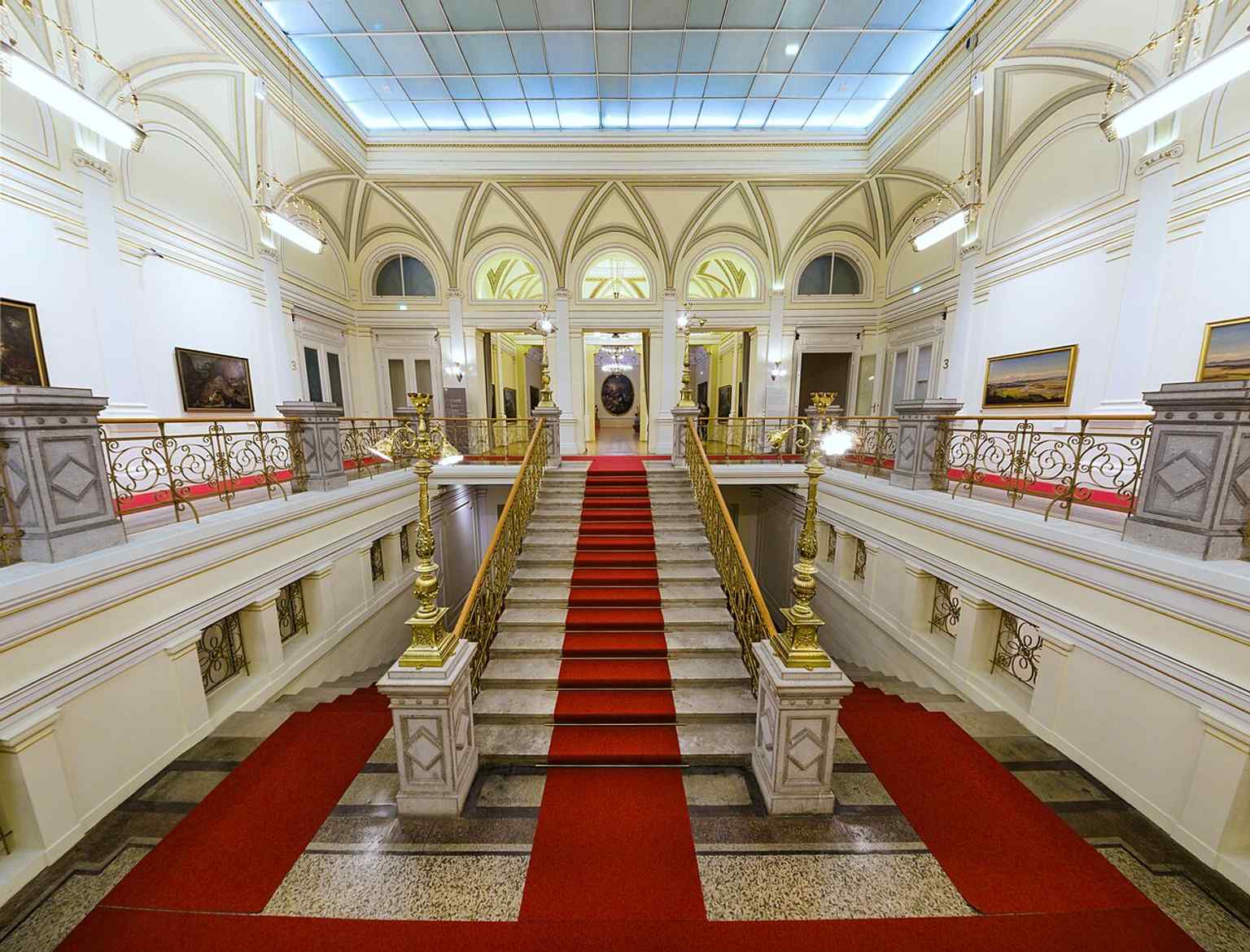
Narodni dom quickly became a social engine. Inside were club rooms for different societies, spaces for theater performances, a café, a restaurant, even a beer hall with its own cooling room. Out back there was a large garden with a dance floor, and at street level a sizable gym. If you pull up the interior photo on your screen, the grand staircase gives you a sense of the confidence of the place-built to carry crowds upward, not just a few dignitaries.
It also carried symbols. Narodni dom was Ljubljana’s first public building with electric lighting-and the first to bear an inscription exclusively in Slovene. In a city pressured by germanization, that single choice was a bright, public line in the sand.
Even an earthquake tested it: in April 1895 a devastating quake stopped work temporarily, yet this structure held firm, nearly unscathed, and the builders pushed on until the palace opened in October 1896.
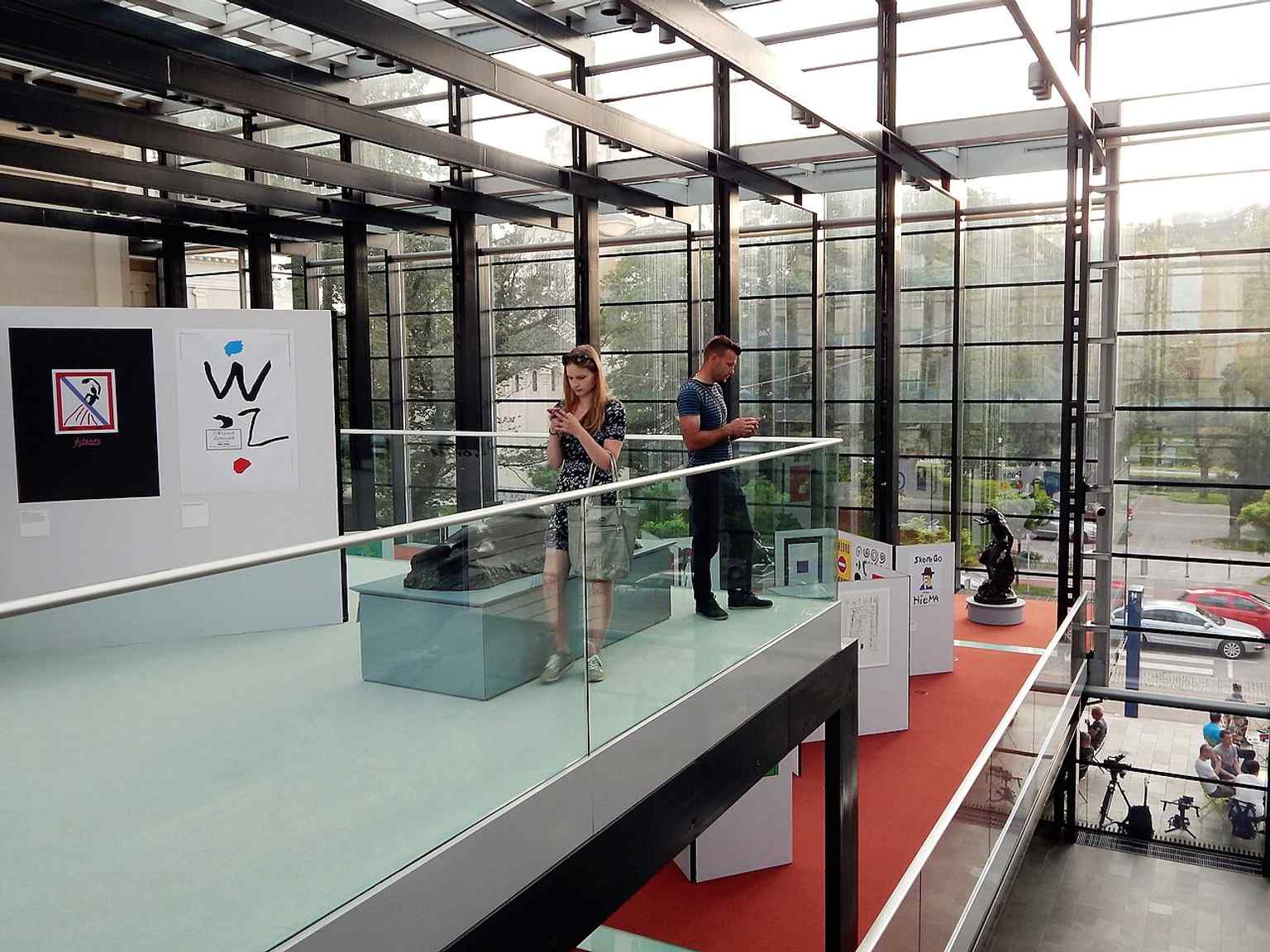
Later, the National Gallery made its home here, opening its first exhibition in 1933. But the building never lost its double life-“high” art above, athletic energy below-because Sokol gymnasts kept training here until 2015. Only in Ljubljana would a gallery share a heartbeat with a gym for almost a century.
As you look at the façade in the app image, notice the niches-finally filled with symbolic statues during the 2016 renovation, completing what Škabrout had wanted from the start. A crowd-funded palace, finished at last.
The National Gallery here is generally open Tuesday and Thursday 3 to 5 PM, and Wednesday 10 AM to 12 PM. When you’re ready, let the city’s stone give way to Tivoli’s broad paths-Tivoli City Park is about a 7-minute walk from here.