
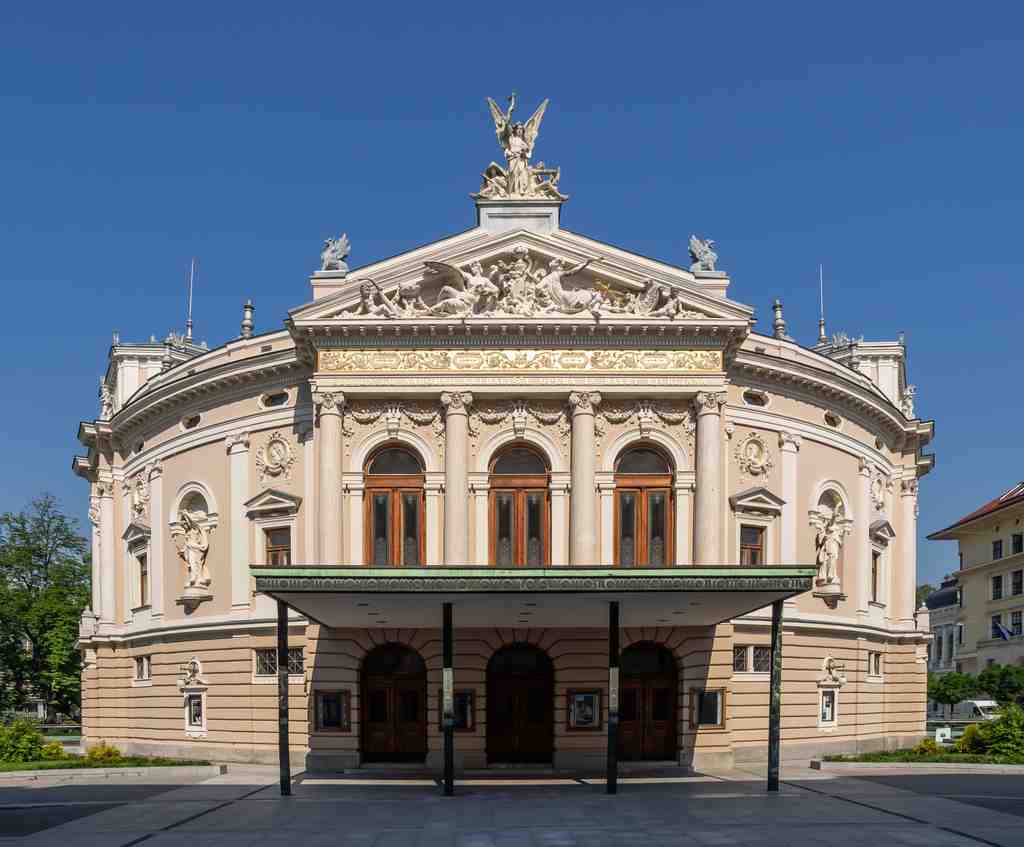
On your left, the Ljubljana Opera is a pale stone, Neo-Renaissance block with a columned entrance portico and a triangular pediment crowned by a sculptural group.
Stand where you are and let the façade do what it was designed to do: persuade. Those Ionic columns - the ones with the curled, scroll-like capitals - lift your gaze up to the pediment, and above it a “genius” figure stands with Opera and Drama, as if culture itself has taken the roofline. If you glance at the image in the app, you can pick out the allegories more clearly: Tragedy and Comedy set into the entrance niches, and the figures above, all part of the same theatrical argument in stone.
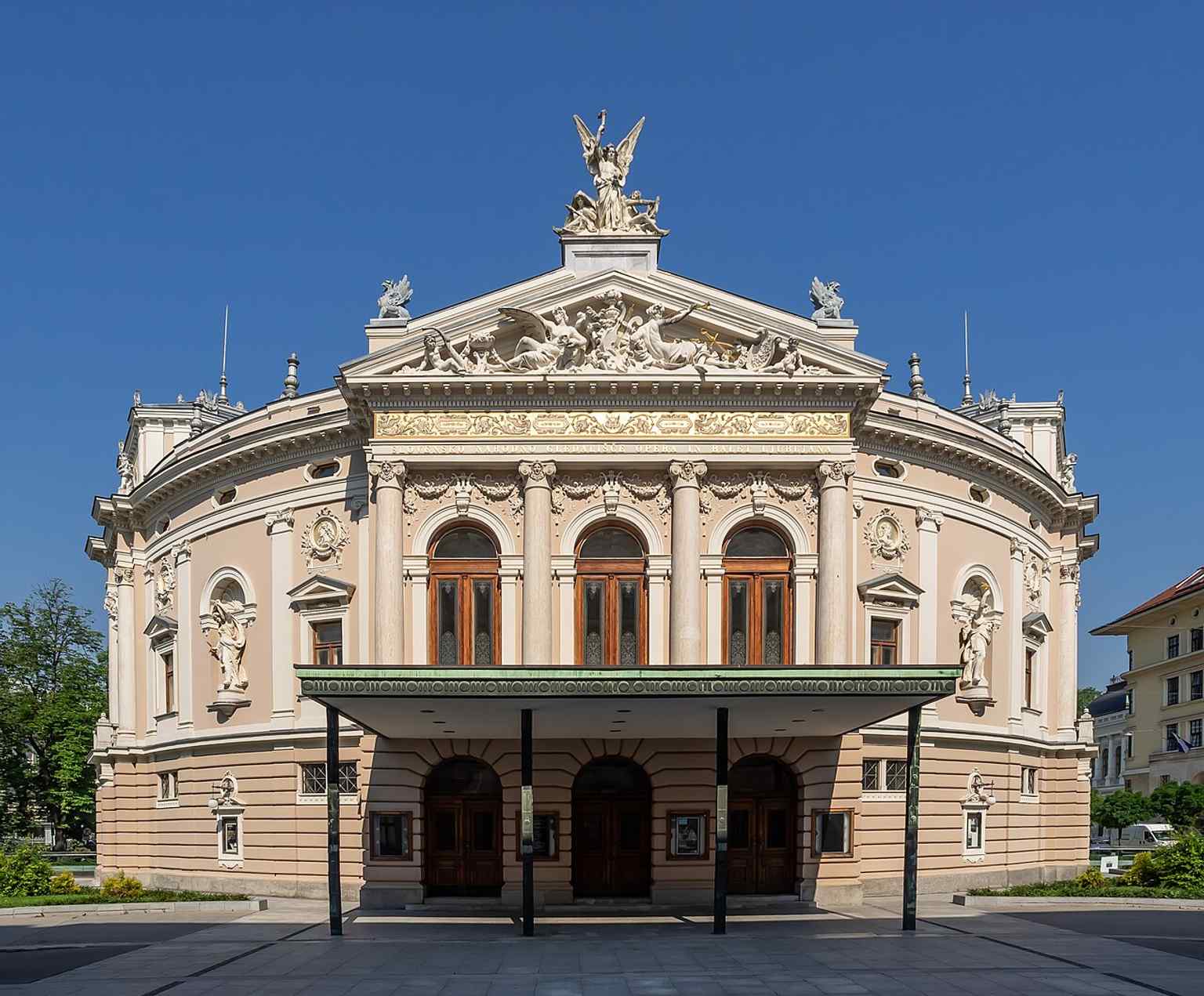
This building opened on September 29, 1892… and the date matters. Five years earlier, Ljubljana’s old Stanovsko Theatre burned to the ground. For three years the city had no central stage at all - and that absence created pressure. The provincial government had to deliver something safer than the old wooden hall, something that wouldn’t go up like a torch. So this house rose quickly, full of compromise, and still it arrived like a declaration.
The first performance was Smetana’s The Bartered Bride. Not just entertainment - a public signal. For Slovenes hungry for cultural dignity, that opening night became a turning point in the Slovenian Awakening: a moment when language, music, and presence on a major stage began to feel like a people claiming their own reflection.
But identity here was never simple. In the early decades, Slovenian artists had to share this very stage with a German ensemble. And it wasn’t polite sharing. The fights were constant: over scheduling, prestige, and the language spoken and sung from the boards. Even the building’s name - “Provincial Theatre” - hints at a time when Ljubljana was still negotiating who it was allowed to be.
Look again at the structure and you’ll see the same tension baked into the bricks. The architects, Jan Vladimír Hráský and Anton Hruby, were Czech, working in a Neo-Renaissance style between 1890 and 1892. The provincial building office demanded a “rational” solution, and critics complained it should be more representative, less practical. Hráský kept redrawing to meet strict budgets… and yet the finished house was among the most modern in the region, fitted with advanced electric lighting. It’s a familiar story of big visions trimmed down under budget pressure.
Out front, the busts of pioneers like Ignacij Borštnik and Anton Verovšek watch the entrance. Nearby on Cankarjeva cesta stands Julij Betetto - a Slovenian bass who sang in over 3,000 performances and taught with strict European standards, turning a small ensemble into something internationally credible.
And this stage carried risk. In 1929, Marij Kogoj’s Črne maske premiered here - an 800-page score so complex it bewildered audiences and strained musicians. Three years later, Kogoj was hospitalized with severe schizophrenia, and never returned to composing.
The myth of that opera has lived here ever since.
In a moment, follow the promenade toward a monument raised entirely by citizens’ hands… then we’ll continue to Narodni dom, about a 6-minute walk away. The opera’s box office hours are weekdays 10 to 1 and 2 to 5, and it’s closed Saturdays and Sundays.





.jpg)
