
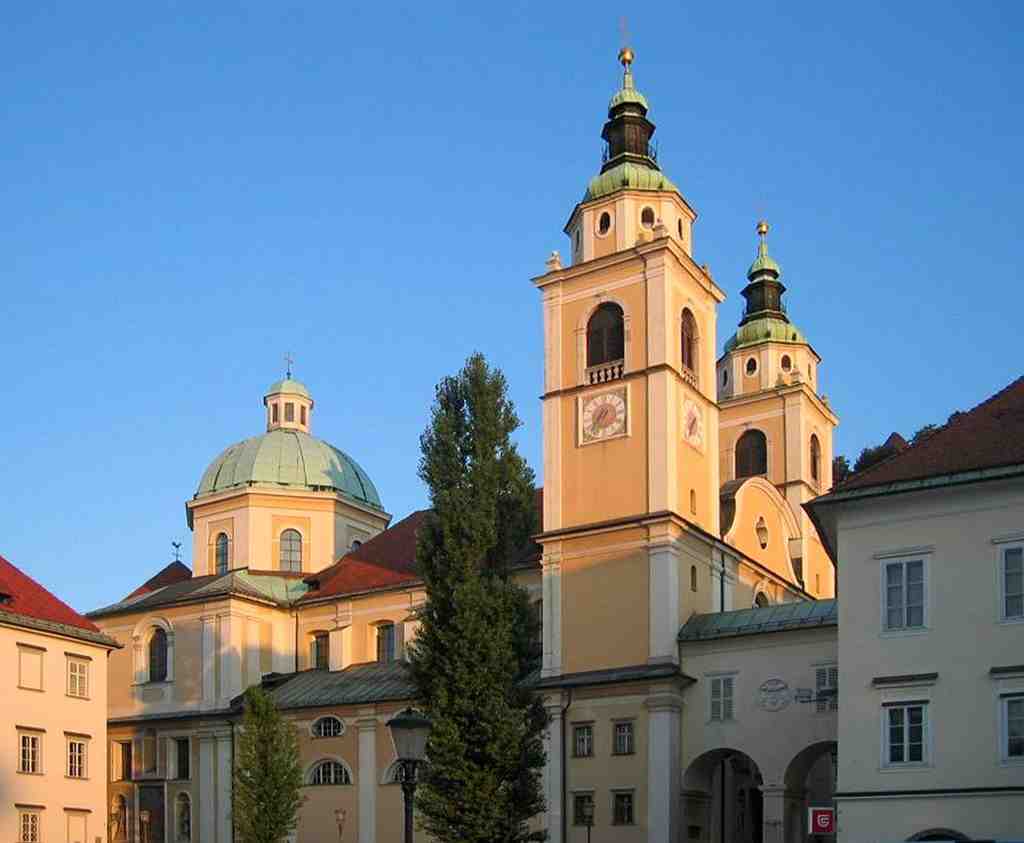
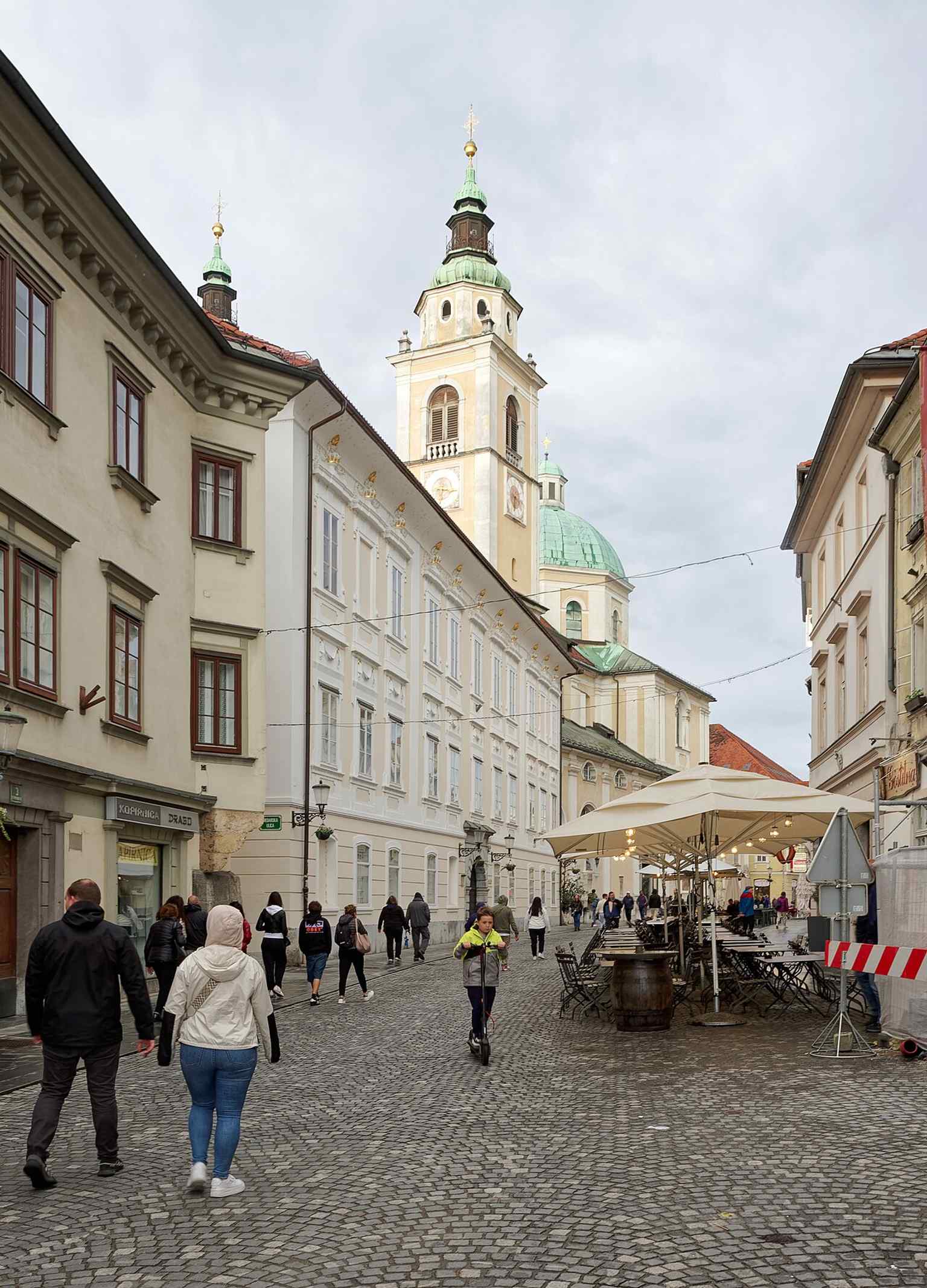
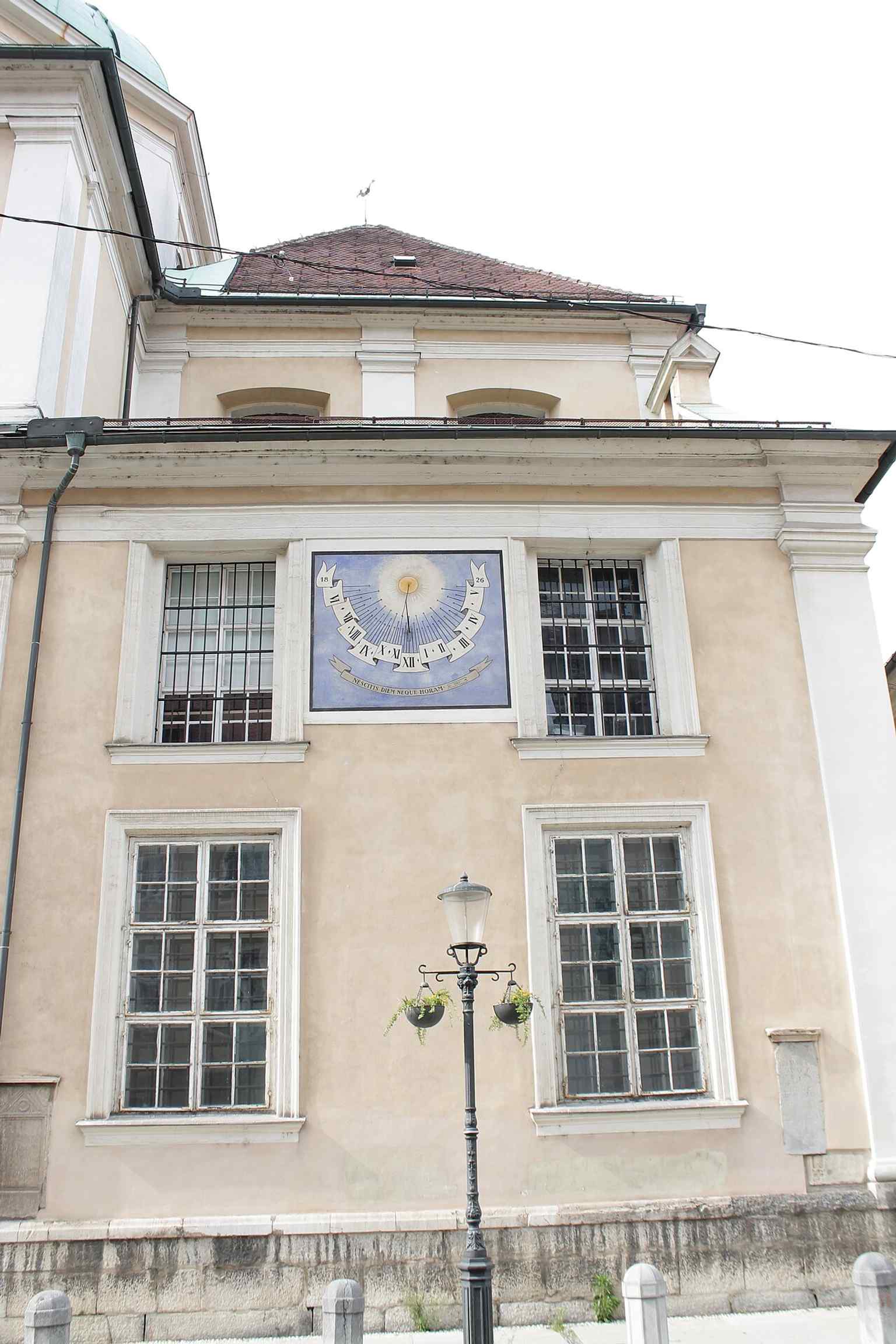
Looking to your left, you will spot the pale yellow facade of Ljubljana Cathedral, defined by its twin square towers and a prominent octagonal green dome resting over the eastern wing.
The story of this site is an endless cycle of ruin and rebirth, where each catastrophic fire only fueled the desire to build something grander. Long before this elegant structure stood here, a medieval church was reduced to ash in 1361, rebuilt, and then burned to the ground again in 1469. Check your screen for an engraving showing the old Gothic structure that stood here before the Baroque rebuild. That second blaze was a crushing blow, widely believed to be an act of arson by Ottoman raiding parties. Yet, the ashes had barely cooled before locals started planning a new spiritual center.
By 1700, the daunting task fell to Dean Janez Gregor Dolničar, who found himself trying to build a masterpiece right in the middle of a massive city wide construction boom. He spent years as the project's main agitator, wrestling with soaring wages for masons and severe shortages of materials just to get the foundation laid.
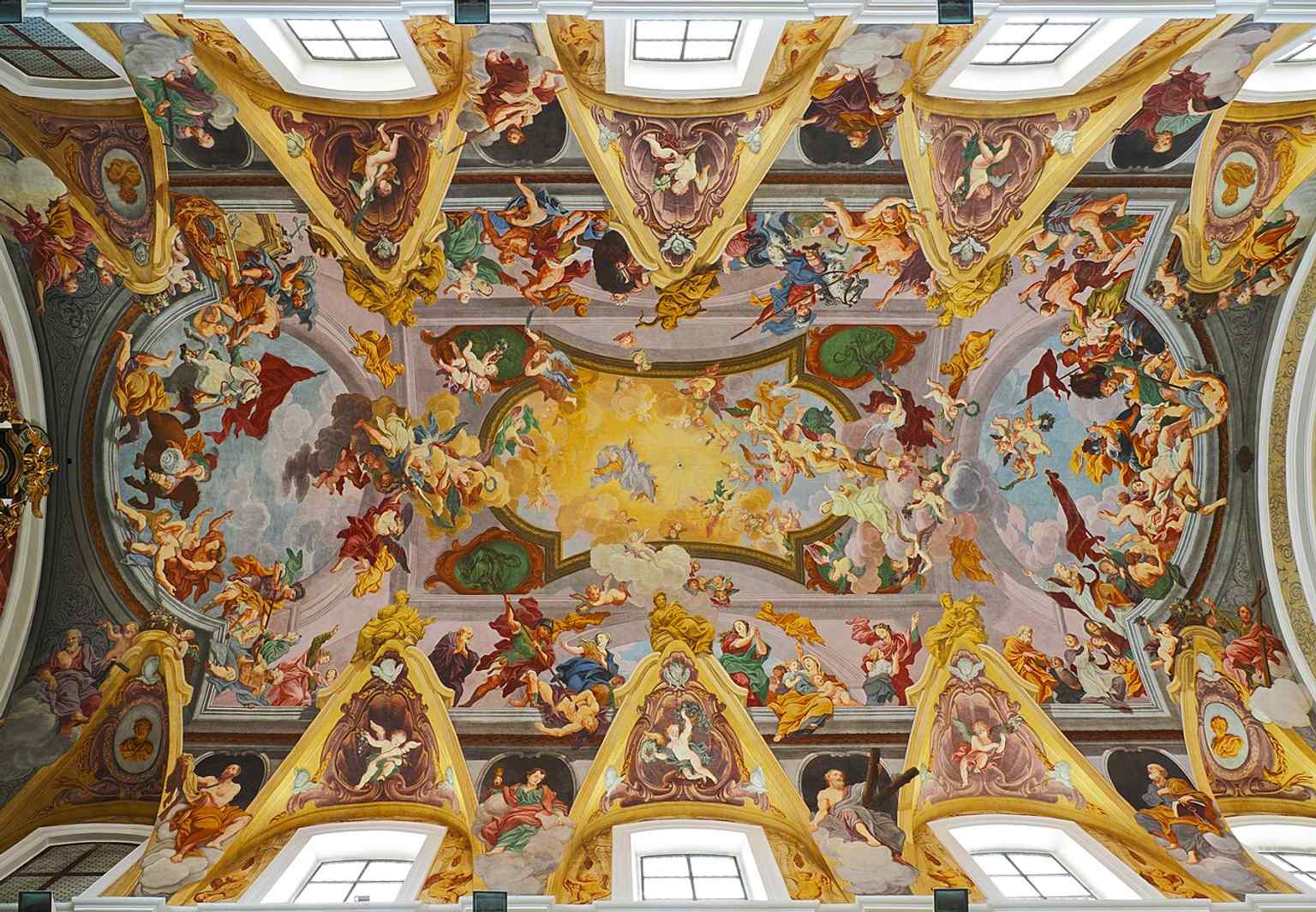
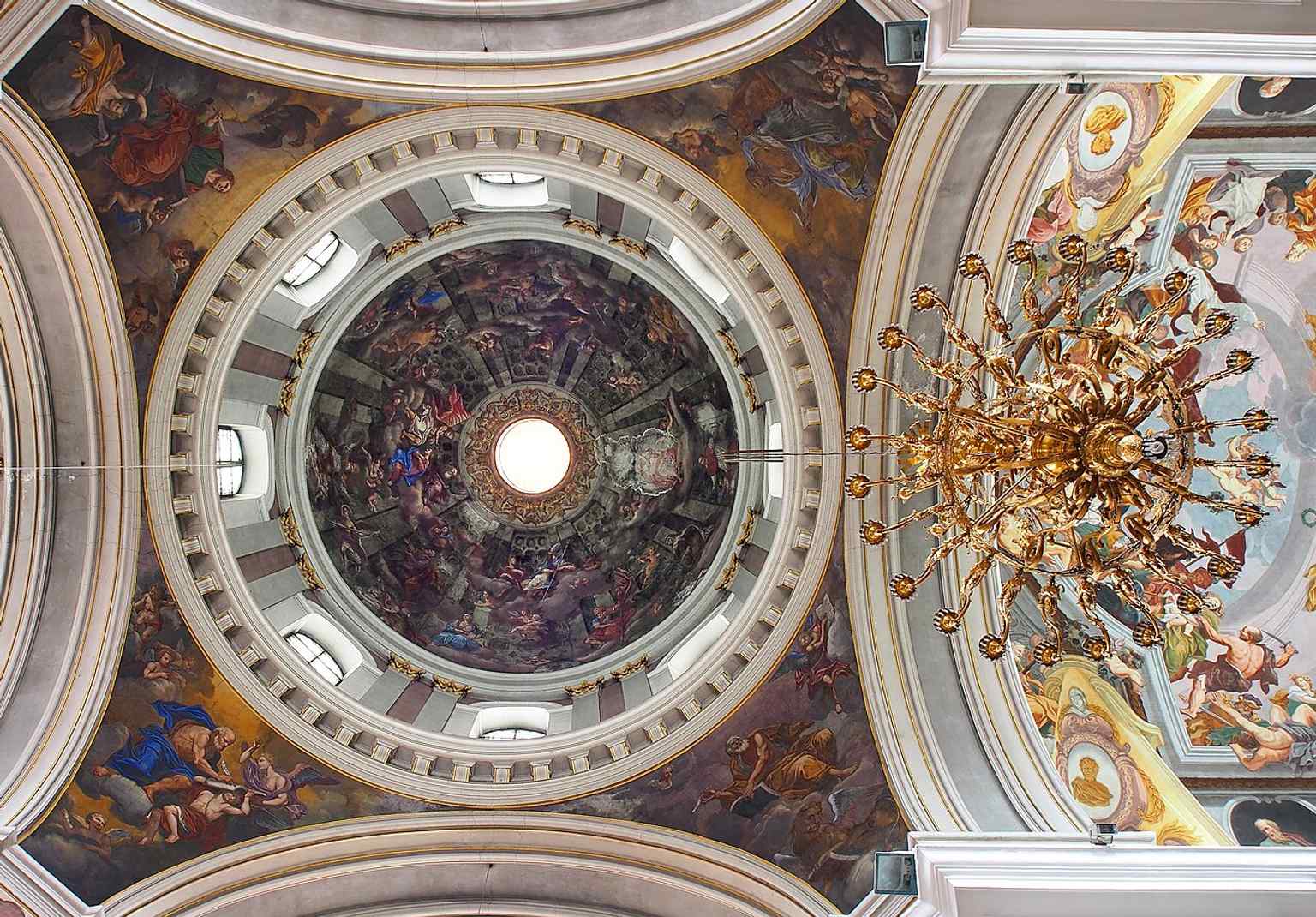
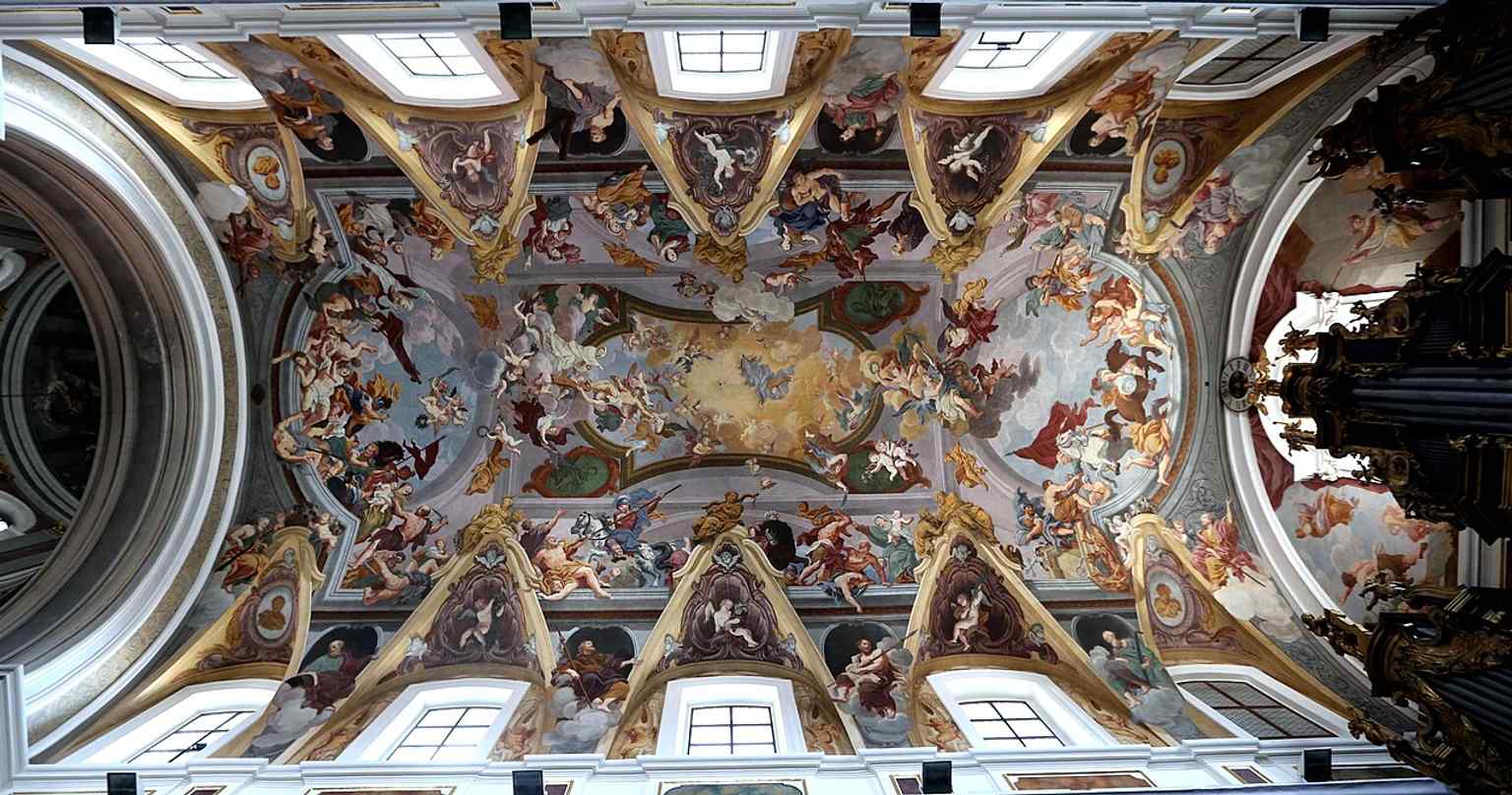
The budget was stretched so thin by these shortages that they could not even afford a real stone dome. So, they simply faked it. They hired an Italian master painter, Giulio Quaglio, to create a cupola finta, which is a painted illusion on a flat wooden truss that looks exactly like a soaring dome. You can take a look at your app to see some of Quaglio's magnificent interior frescoes. His painted dome was so convincing that in 1703, a bird flew into the cathedral and repeatedly attempted to fly out through one of the painted windows. That wooden optical illusion served as the ceiling for over a hundred and thirty years before the real octagonal dome you see outside was finally built in 1841.
You can feel that same stubborn ambition on the cathedral doors. The front entrance, called the Slovene Door, completely lacks traditional handles. People just grab a piece of the bronze sculpture itself, polishing it to gleaming gold with thousands of hands. The side entrance tells a much darker story. It features a portrait of Anton Vovk, a twentieth-century archbishop. He survived a brutal assassination attempt in 1952 where he was doused in gasoline and set on fire at a train station. Despite horrific burns, he survived and kept working. His face on that door is a quiet, permanent testament to enduring through the unthinkable.
Even the earth itself tried to tear this place down. The 1895 earthquake severely cracked the western gable, the decorative upper wall between the two towers. For almost a century, they had to use a simpler, safer triangular roofline until finally reconstructing the original curved Baroque design in 1989.
If you want to step inside, the cathedral is usually open daily from late morning through the afternoon, though Sunday hours are split into shorter windows. For now, let us head toward the vivid colors of Prešeren Square, where the Church of the Annunciation is waiting for us just a short six minute walk away.





.jpg)


.jpg)
