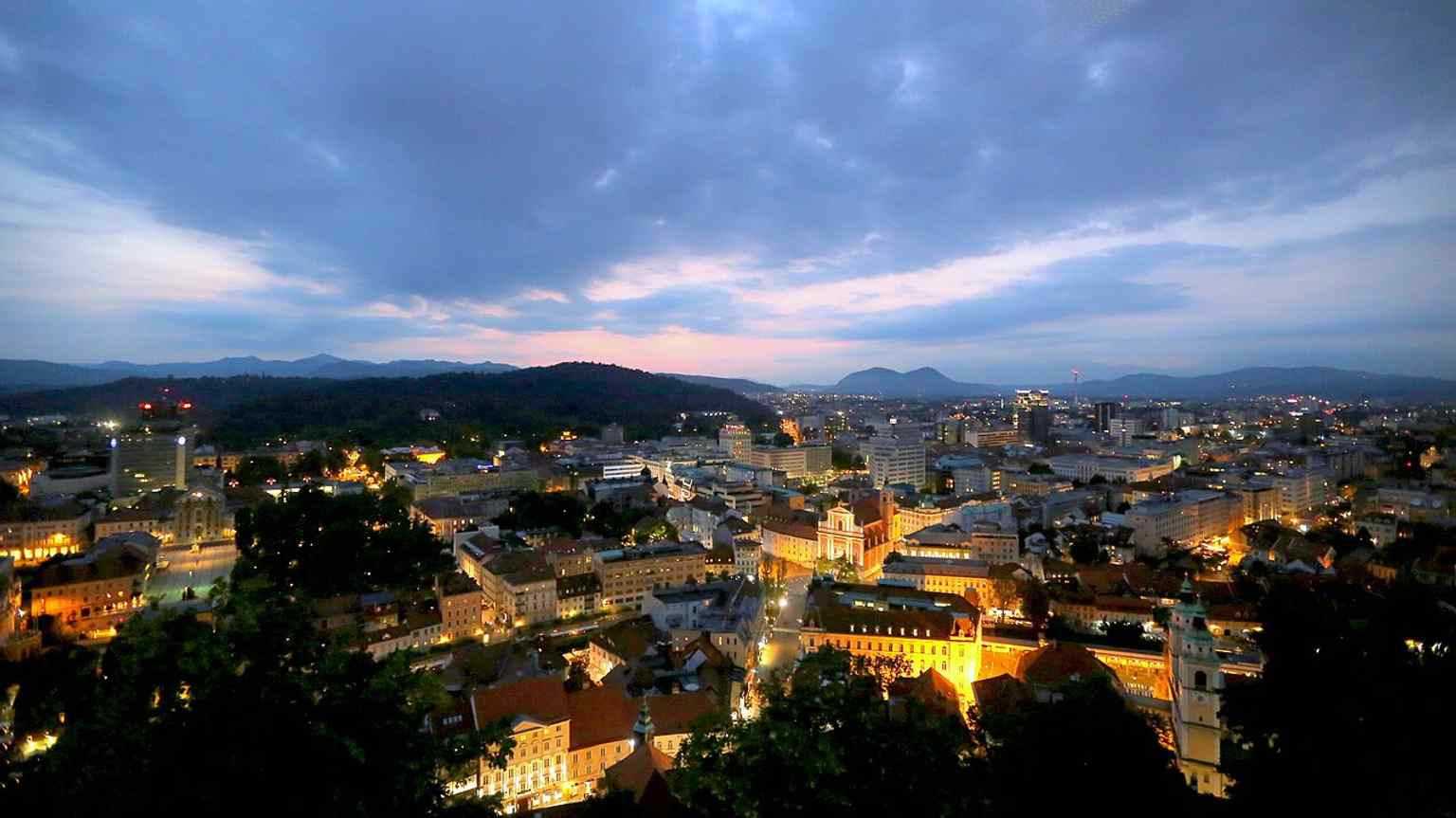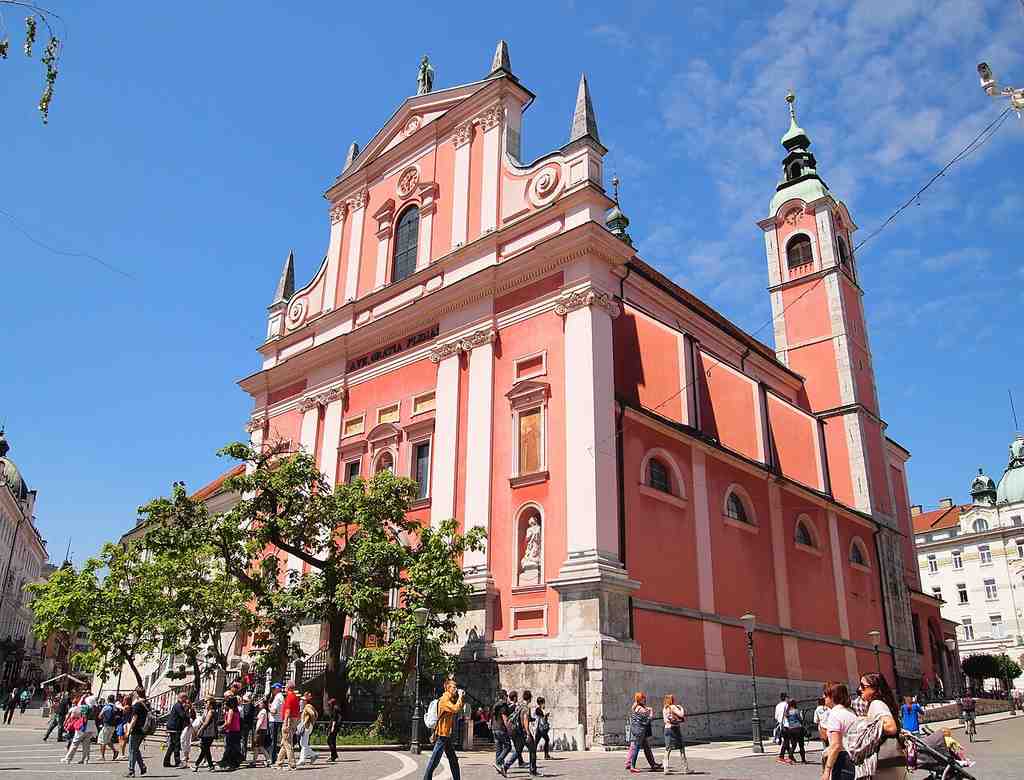
Look to your left and find the towering early Baroque church, defined by its smooth salmon-pink facade, a sweeping triangular pediment, and two square bell towers rising behind it. It is hard to miss, standing out vibrantly against the surrounding architecture.
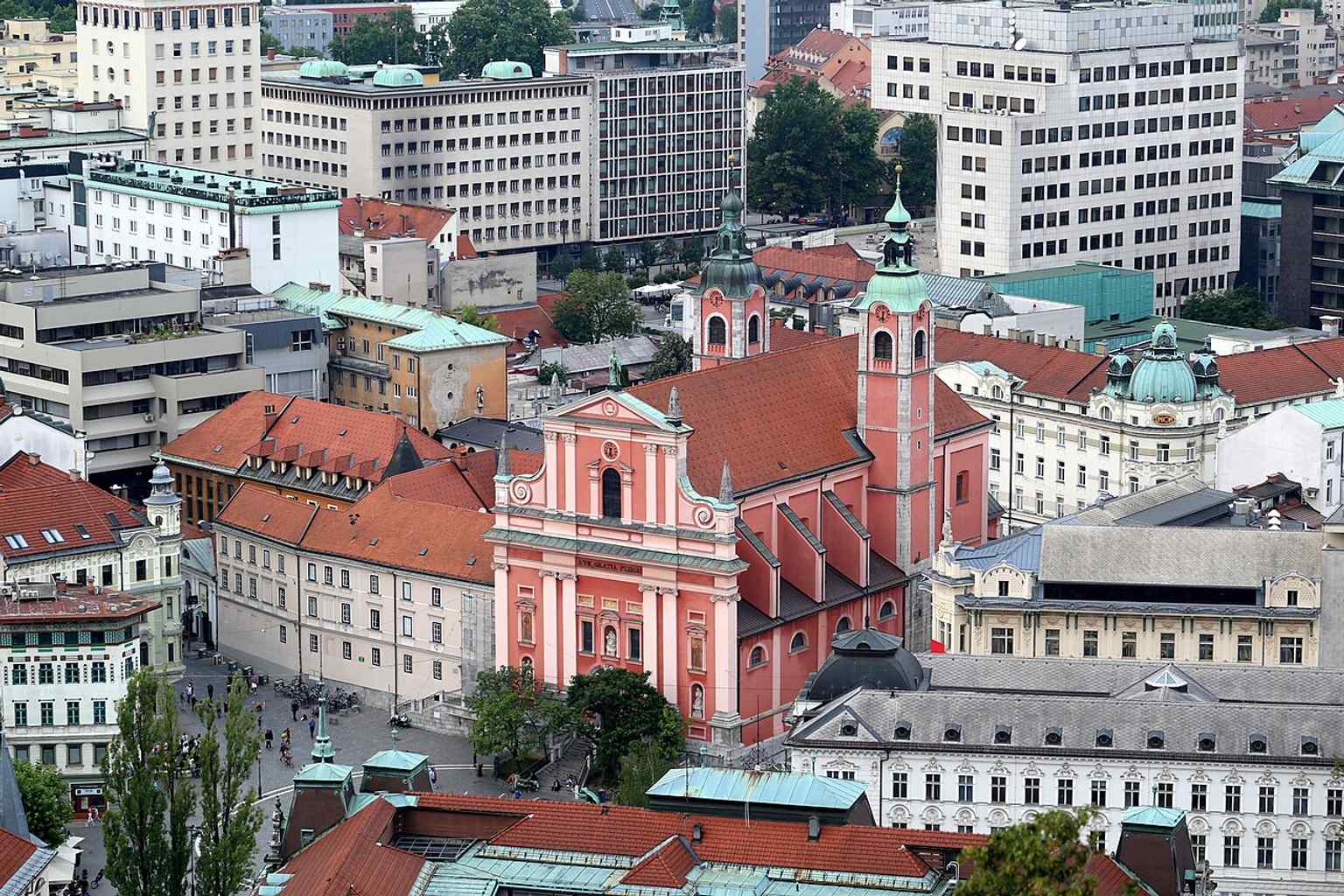
Take a glance at your screen to see a wider shot of this striking facade. That distinctive salmon pink is not a modern aesthetic choice, nor was it the original color. When the church was first built in the mid seventeenth century, it was painted stark white. But in the late eighteenth century, the city underwent the Josephinian Reforms. These were a series of strict imperial decrees by Emperor Joseph II that aggressively reorganized or shut down religious orders. The reforms forced the original occupants, the Augustinian monks, out of the building. The Franciscans then moved in and painted the entire church a bold, deep red, a color symbolizing their religious order. Over decades of harsh sunlight, that fierce red faded into the soft salmon pink you see today. When the time came for renovations, purists suggested repainting it red, but the citizens had grown so attached to the faded pink that the Franciscans deliberately preserved it.
Behind that cheerful exterior lies a rather devastating origin story. In 1645, a fire severely damaged the old church on this site. Around the same time, a wealthy local noble named Baron Konrad Ruessenstein received unbearable news. His son, Janez Karel, had died unexpectedly while studying in Rome. Heartbroken, the Baron decided to take the entirety of his late son's inheritance and donate it to rebuild this church.
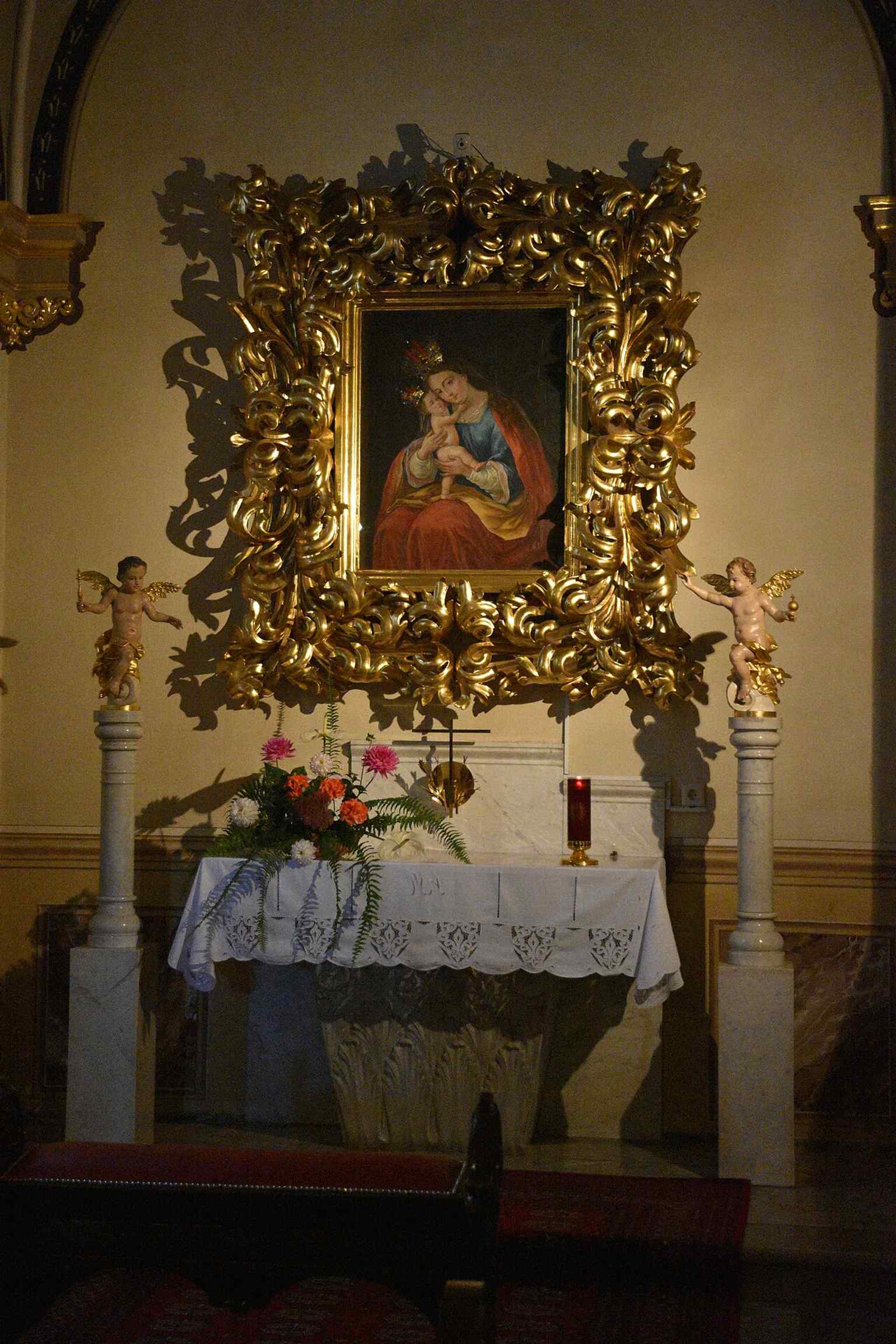
He had only one condition. He required the builders to include a Loreto chapel, a specific type of Catholic shrine modeled after the purported home of the Virgin Mary in Nazareth, which would serve as a family tomb and a permanent memorial for his boy.
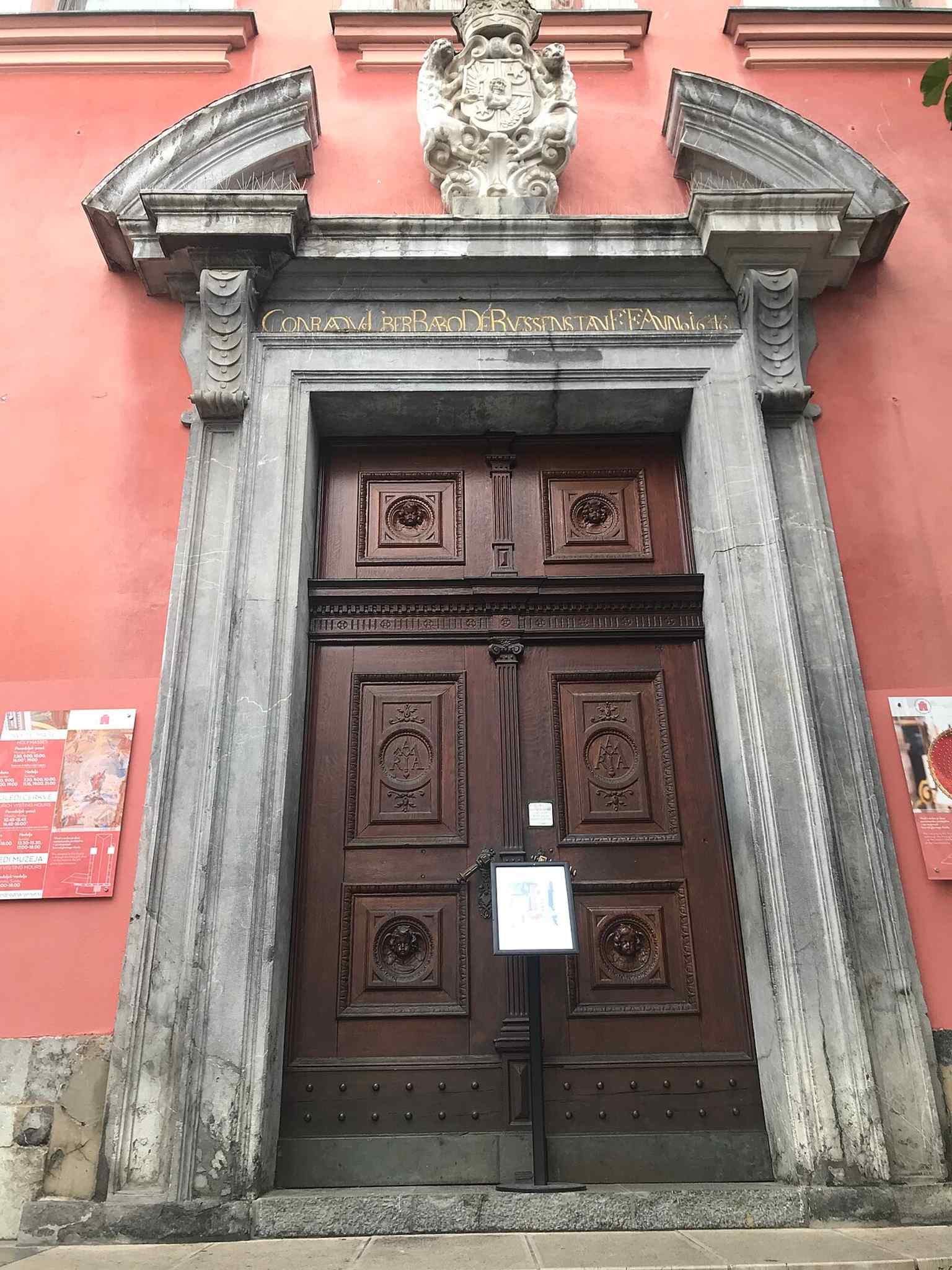
Check your app again for a close up of the grand main entrance. If you look just above those central doors, you will see a massive stone coat of arms held up by two lions. That is the Ruessenstein family crest, sitting there as a quiet, heavy reminder of a father's grief.
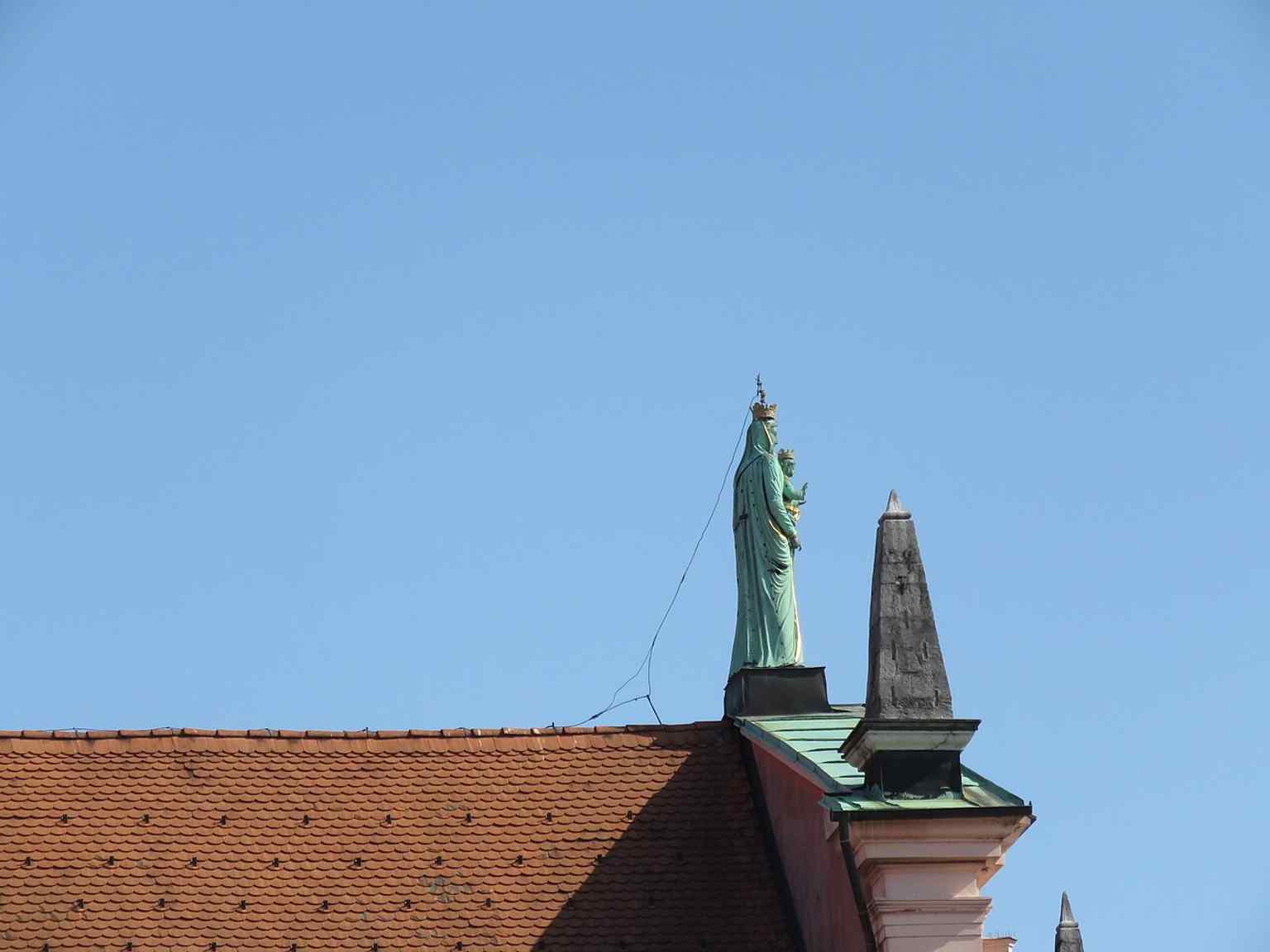
Look all the way up to the very top of the pediment, the large triangular section crowning the front wall. That copper statue of the Madonna is the largest of its kind in Ljubljana, added in 1858 to replace an older wooden statue. Since the copper figure is hollow, it quickly became a highly sought after luxury condominium for local pigeons, eventually requiring protective spikes to keep the birds out.
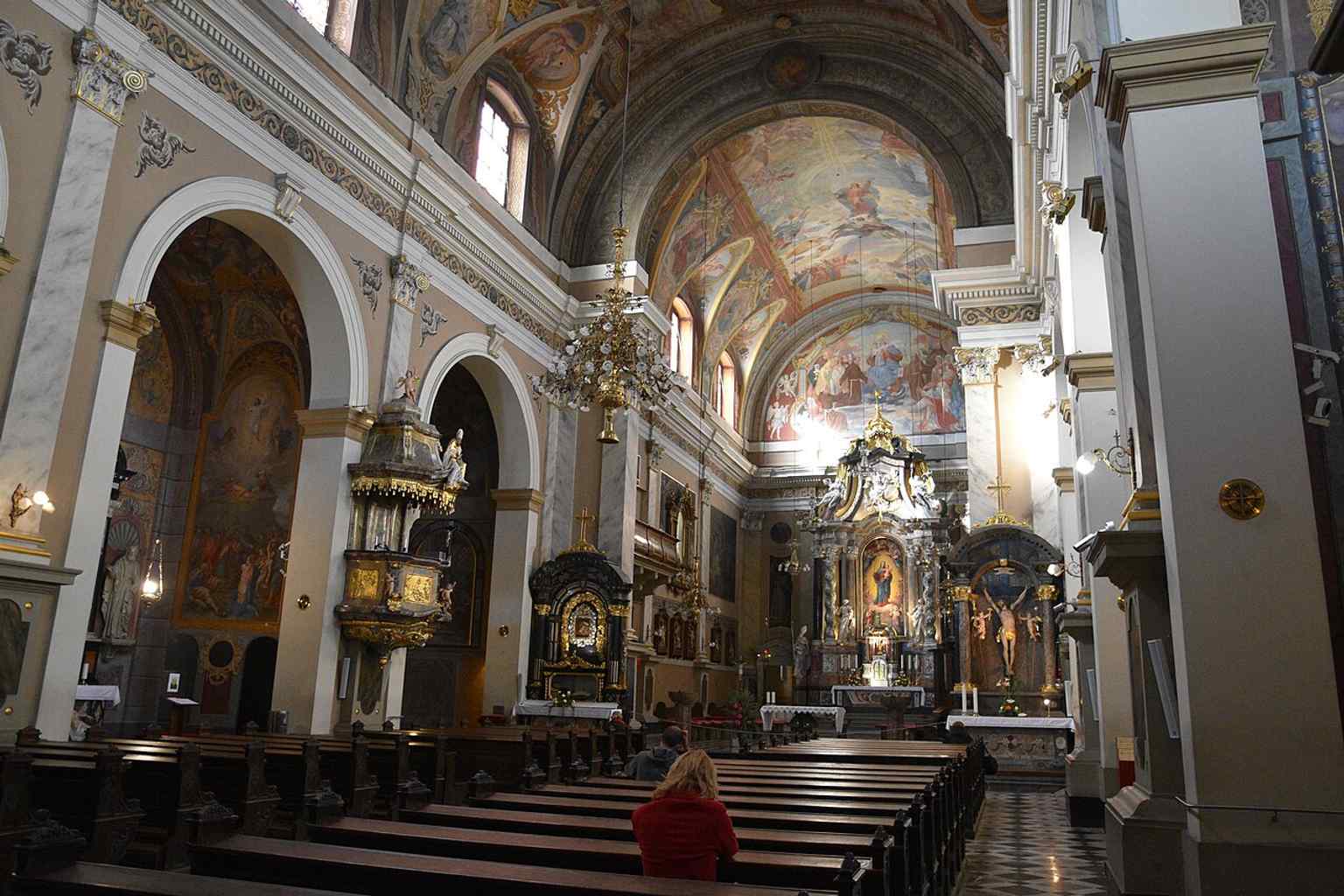
Let us stay right here in the square for a moment to appreciate a few more details of the exterior, before we head just a few steps over to explore more of the Franciscan Church of the Annunciation. If you want to see the interior later, the church is open most days from mid morning to late afternoon, with a short break for lunch.