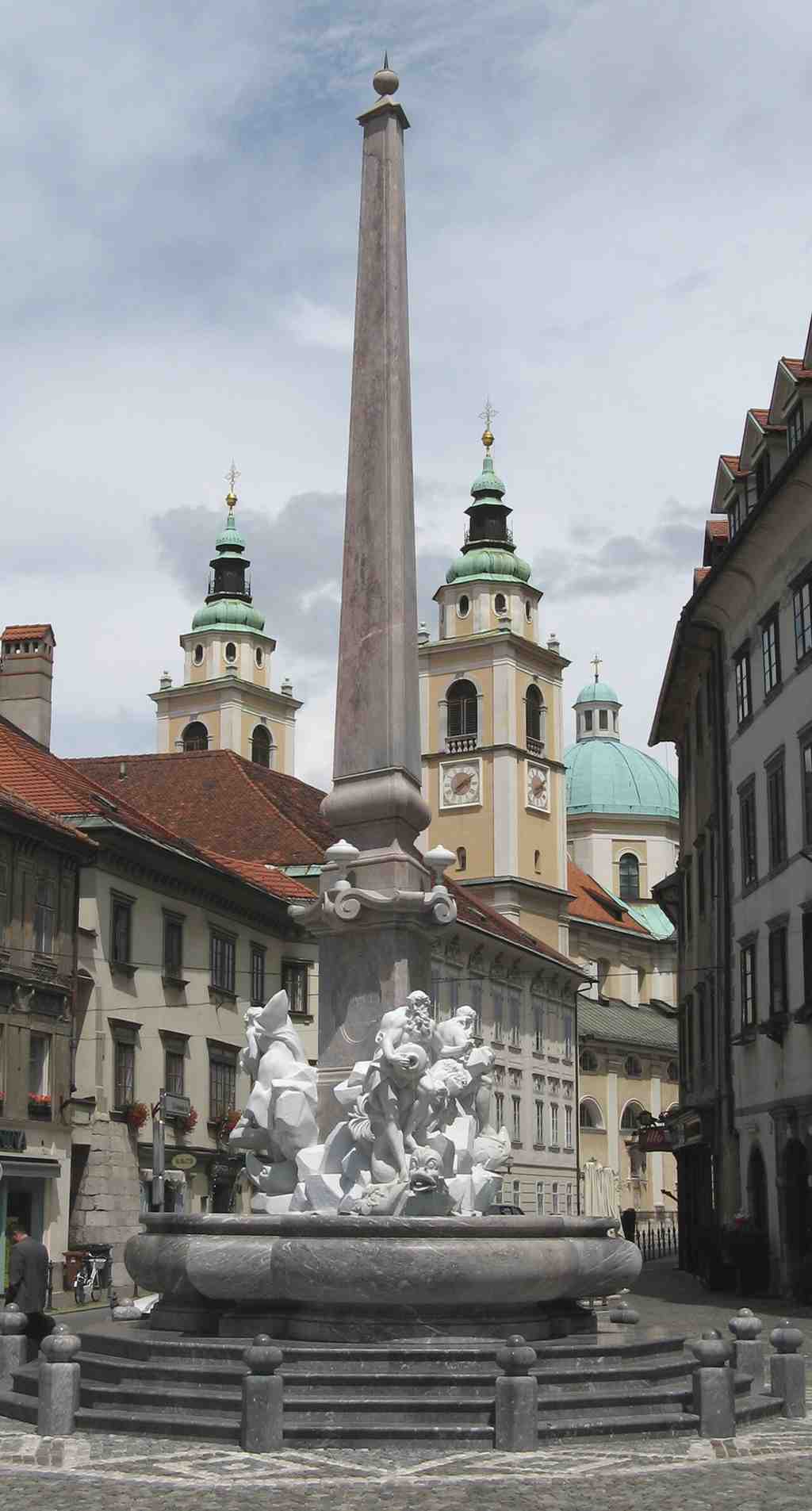
On your left stands a soaring ten-meter stone obelisk rising from a trefoil-shaped basin, surrounded by three gleaming white marble figures clutching water jugs. This monument was born of a small city's ambition to look like Rome, and it is the masterpiece that ultimately destroyed its creator.
In 1743, the city magistrate wanted a grand statement of power that also served a practical purpose as a public well. They turned to the city's most prestigious craftsman, an honorary citizen and State Engineer named Francesco Robba. He envisioned an all-white marble triumph, drawing inspiration from the magnificent fountains of Rome. He cleverly designed a trefoil, or three-lobed, basin to mirror Ljubljana's ancient town seal. Look up at that tall obelisk. If you step back and look from the right angle, you will notice it creates a perfect visual triangle with the twin towers of the cathedral behind it, a brilliant trick of Baroque urban planning.
At the base, three muscular river gods carved from pure Carrara marble pour water from their jugs. Today they represent the three main rivers of the region, but securing that marble is where the tragedy begins. Robba ordered the precious stone from Venice. But disaster struck when the transport ship sank off the coast of Trieste. Because he had fronted the money himself, the shipwreck was a catastrophic financial loss. He could not afford to buy replacement marble for the entire structure. To keep the project alive, Robba was forced into a scandalous compromise, substituting local gray limestone for the basin and the obelisk. The city authorities were so protective of the surviving white marble figures that they actually posted a night guard here to stop thieves from chipping away the luxurious stone.
Even with these compromises, the work dragged on for years. Hauling just the obelisk from a local quarry took thirteen days and required up to twenty pairs of oxen. By the time it was finally unveiled in 1751, the city claimed their funds were dry and refused to pay the full commission. Bankrupt and embittered by his masterpiece, Robba abandoned his home and fled to Zagreb, dying in obscurity just two years later.
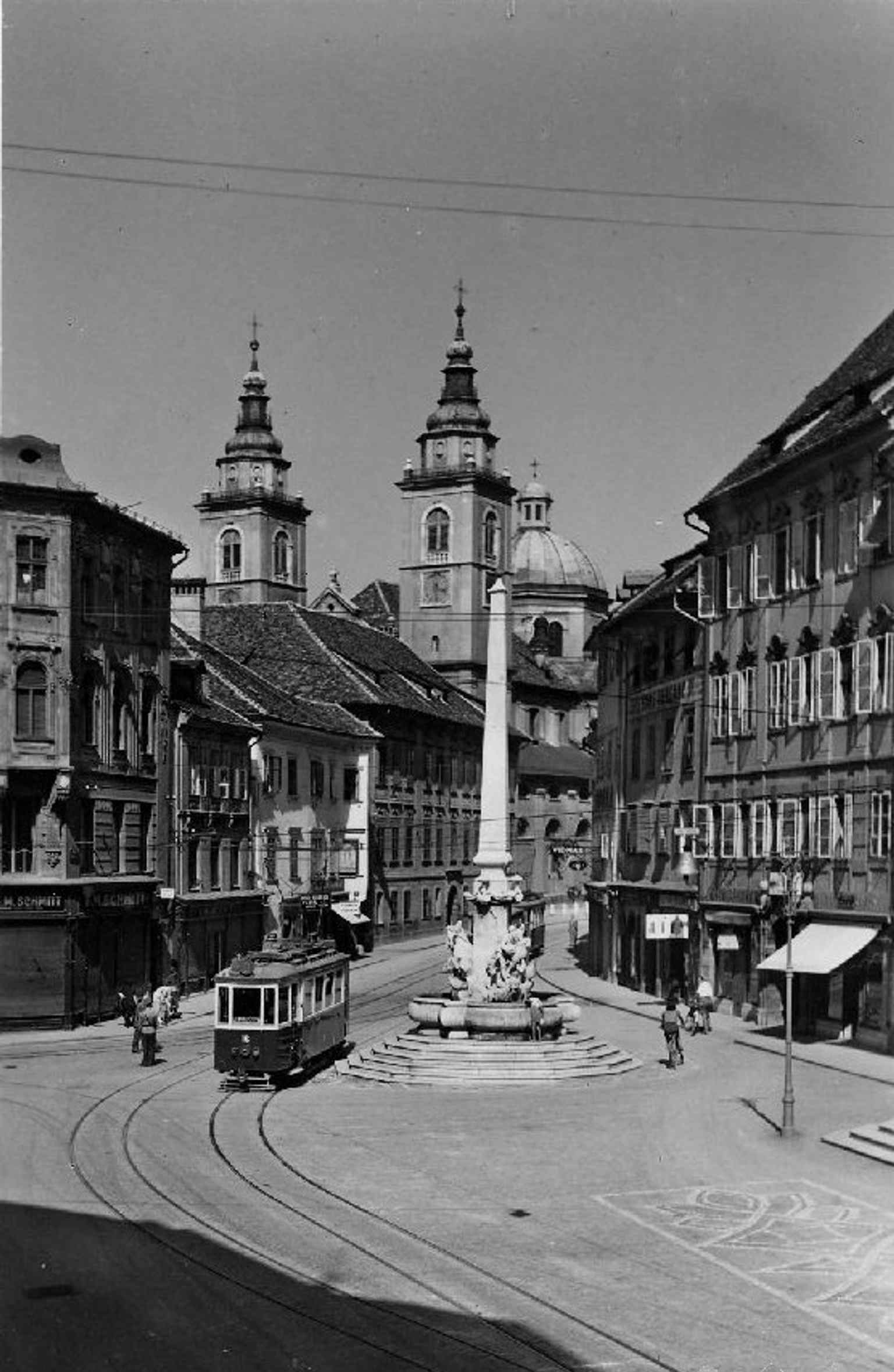
Over the centuries, the fountain became a beloved national symbol. You can check your phone for a photo showing seventy years of change in this square, transforming from a busy thoroughfare into the pedestrian plaza you see today. But decades of pollution eventually ate away at the original carvings. After intense debate, the authentic fountain was moved indoors for protection, and what you see before you is an exact replica installed in 2006. If you want to see the original stones, take a look at the image in your app showing the fountain safely housed in the National Gallery.
This square is open twenty four hours a day, so you can always come back to admire it. For now, let us keep moving toward the headquarters of the archdiocese, just a one minute walk from here.