
On your right is the Franciscan Library. If you check your screen, the first image shows the somewhat modest exterior of what was, for centuries, a highly restricted space. A secret garden of learning, open only to the brothers and a few lucky scholars. But in November 2023, for the first time in its nearly eight hundred year history, the doors were finally thrown open to the public.
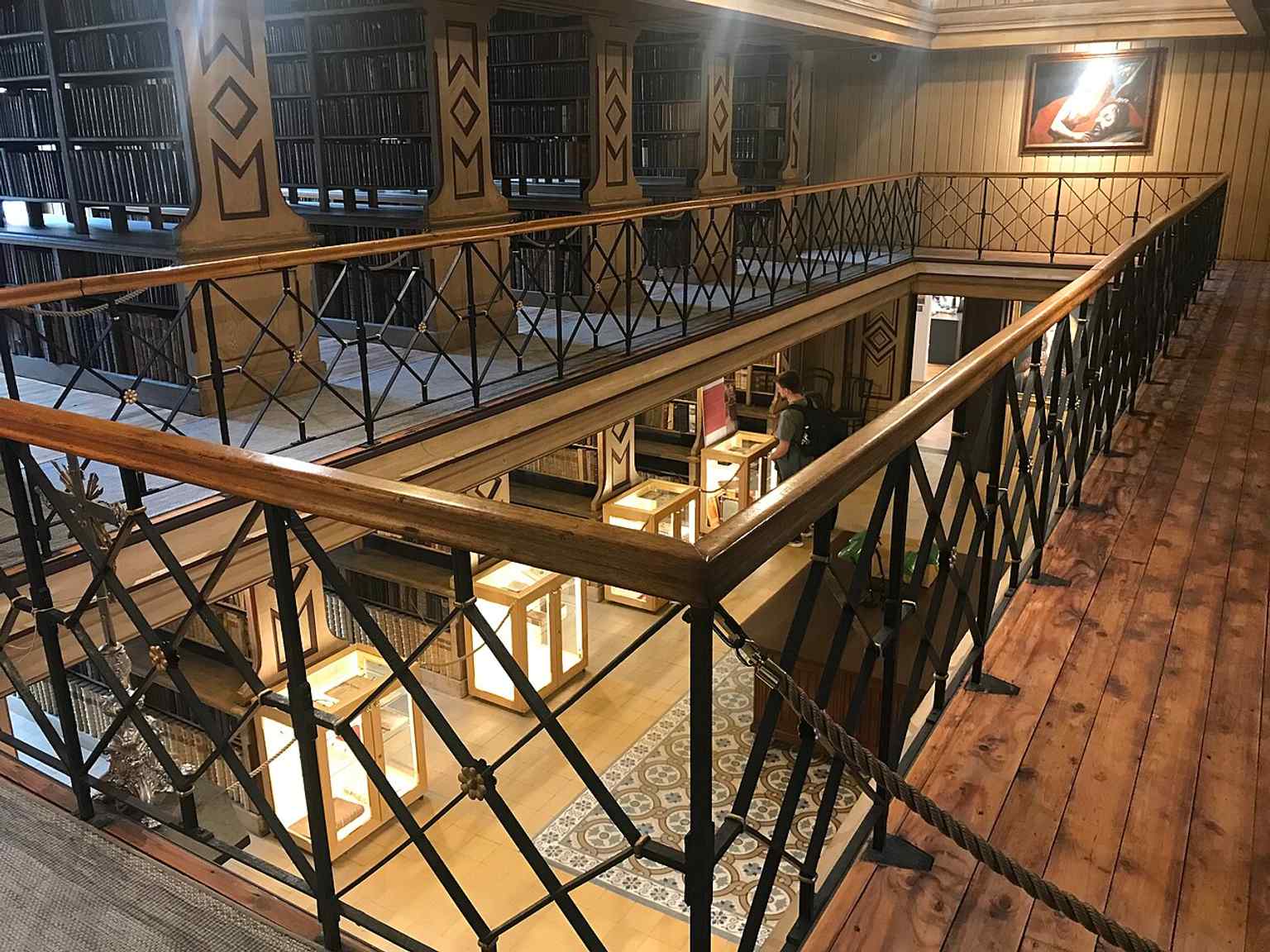
This building is a masterclass in survival, born from necessity. When the devastating 1895 earthquake struck, the city had to rethink how it built. An architect named Raimund Jeblinger came up with an engineering marvel for the library. He installed a revolutionary self supporting iron skeleton entirely separated from the outer walls, giving it incredible seismic resistance. You can see the robust exterior housing this structure in the second photo on your app. Inside, however, you would never know it was framed in iron, as it is completely wrapped in warm, three story wooden paneling.
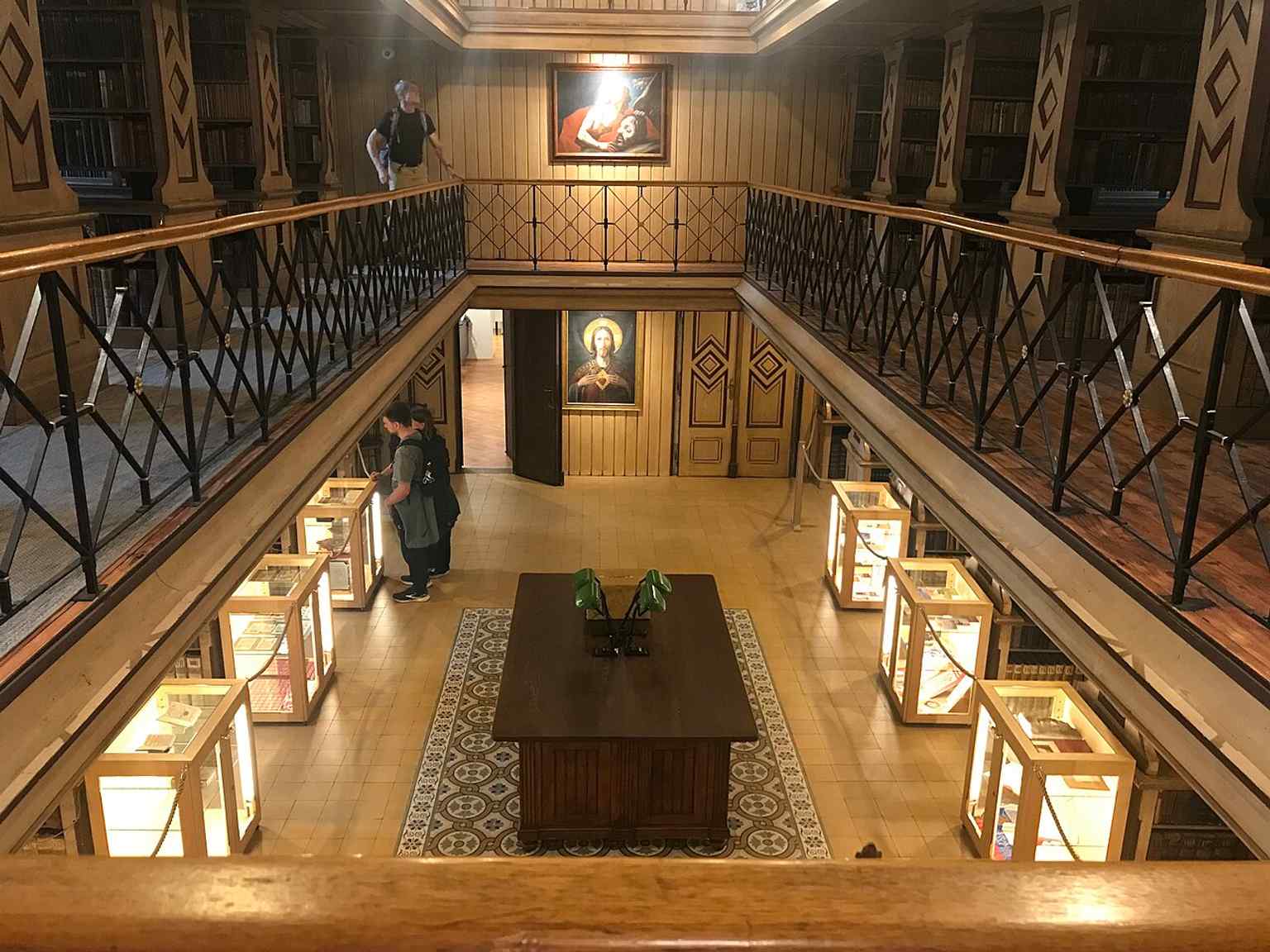
They did not just plan for the earth shaking. They planned for fire. Above the ornate coffered ceiling lies a thick layer of sand. Why? It is a brilliant, entirely mechanical fire suppression system. If a fire were to break out in the attic, the ceiling would burn and collapse, dumping tons of sand directly onto the flames to smother them, saving the priceless books below. It is beautifully pragmatic.
And the books certainly needed protecting, because they have had a turbulent journey. In the late sixteenth century, the Franciscans had to temporarily leave Ljubljana. They left their books behind, and the administrator of the local imperial hospital simply helped himself to the collection. The monks eventually had to use a bishop to legally pry their stolen treasures back. The library ultimately landed right here in 1784, thanks to those late eighteenth-century imperial mandates that shuffled monastic orders and properties. The Franciscans inherited this space and brought their shifting collection with them.
Much of the library's greatness comes from one highly ambitious eighteenth century monk named Žiga Škerpin. He was not just a theorist but a relentless traveler who scoured the printing houses of Venice, Rome, and Lyon to build a universal library for the local brothers. Today, that collection holds seventy thousand items. Down in the vault, they protect a fifteen eighty four edition of the Dalmatin Bible, the first translation of the Bible into Slovenian, complete with the signature of its Protestant pioneer, Primož Trubar. They even have the first edition of the famous epic poem Baptism on the Savica, featuring a personal dedication from the poet France Prešeren himself.
The library is open every day from eleven in the morning to six in the evening, should you want to marvel at that wooden interior yourself.
Now, let us leave the quiet preservation of history and step onward to the domain of the dramatic arts, as we make the one minute walk over to the Ljubljana City Theatre.





.jpg)
.jpg)