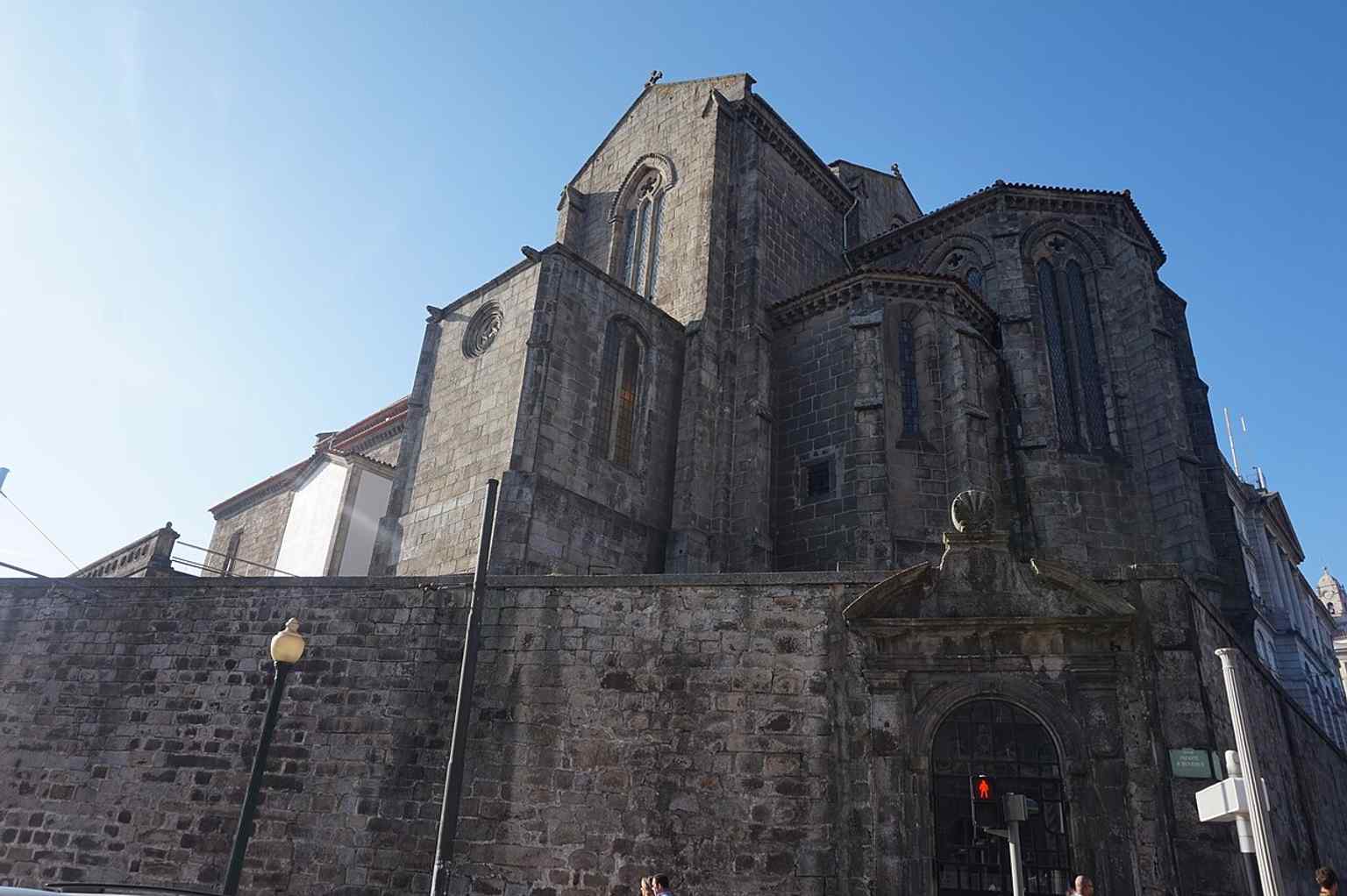
On your left, look for a dark granite Gothic façade with a round rose window above a tall portal, and a stone Saint Francis set between twisted columns.
At first glance, São Francisco looks stern and medieval... which is only half the truth. This church began in the fourteenth century as part of a Franciscan convent, but its story is less pure devotion and more long negotiation. The Franciscans were friars, and the lay brotherhoods attached to them were organized groups of ordinary townspeople who handled worship, charity, burial, and, not incidentally, influence. In a city like Porto, that mattered.
The friars received land here in twelve thirty-three. Then the trouble started. They argued with the bishop of Porto over the limits of that land, and the works kept stalling until a pope stepped in in twelve forty-four and confirmed the Franciscans’ claim. Even holy real estate needed paperwork.
The first church here was modest, just a single hall. The larger building in front of you took shape from thirteen eighty-three, after King Dom Fernando, a strong protector of the Franciscans, pushed the project forward. Builders finished it in fourteen ten: three naves, meaning three parallel interior aisles, five bays, a projecting transept crossing the main body of the church, and a three-part east end braced by buttresses. Structurally, it stayed remarkably intact, which is why many people consider it Porto’s best Gothic church.
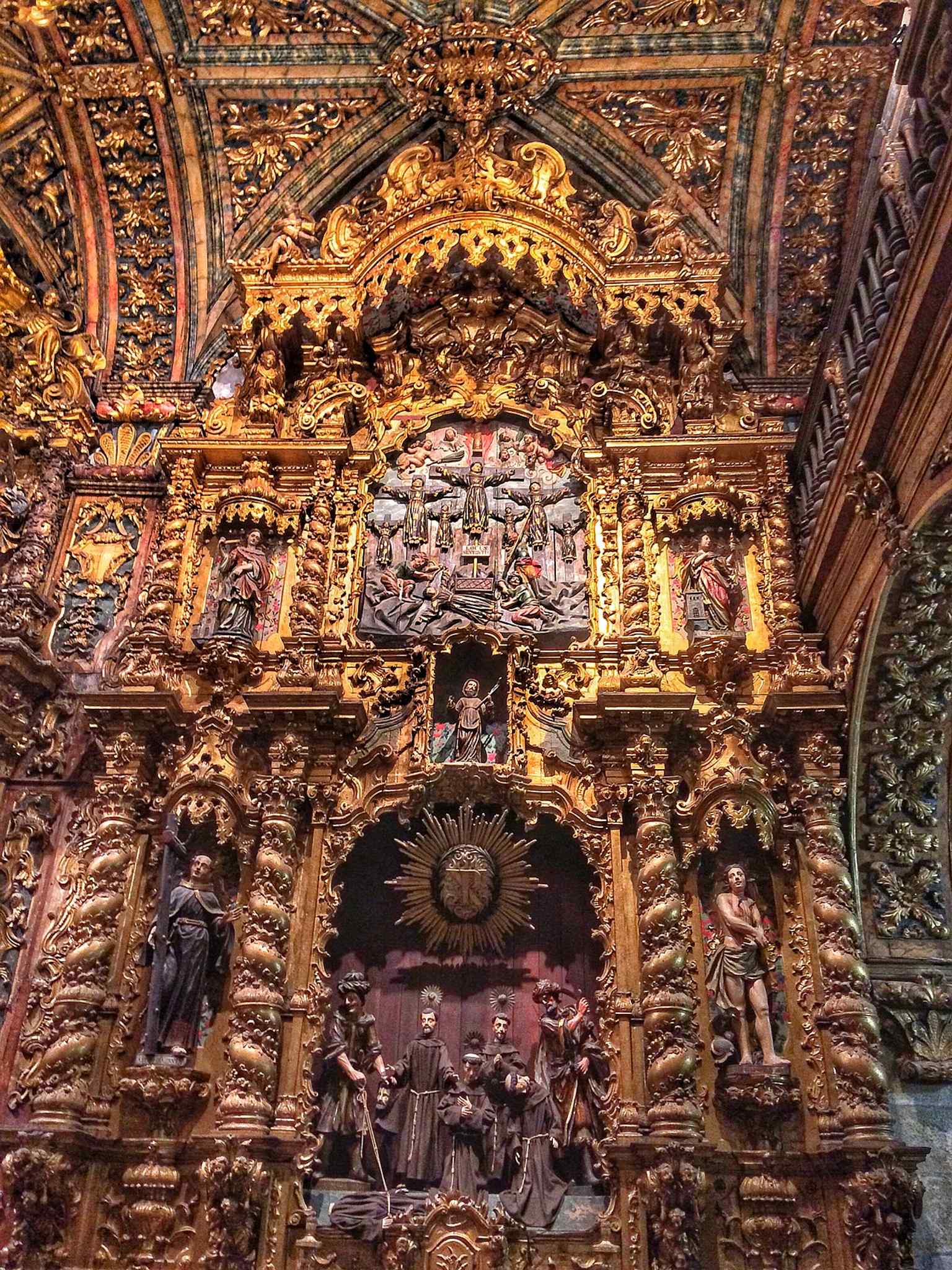
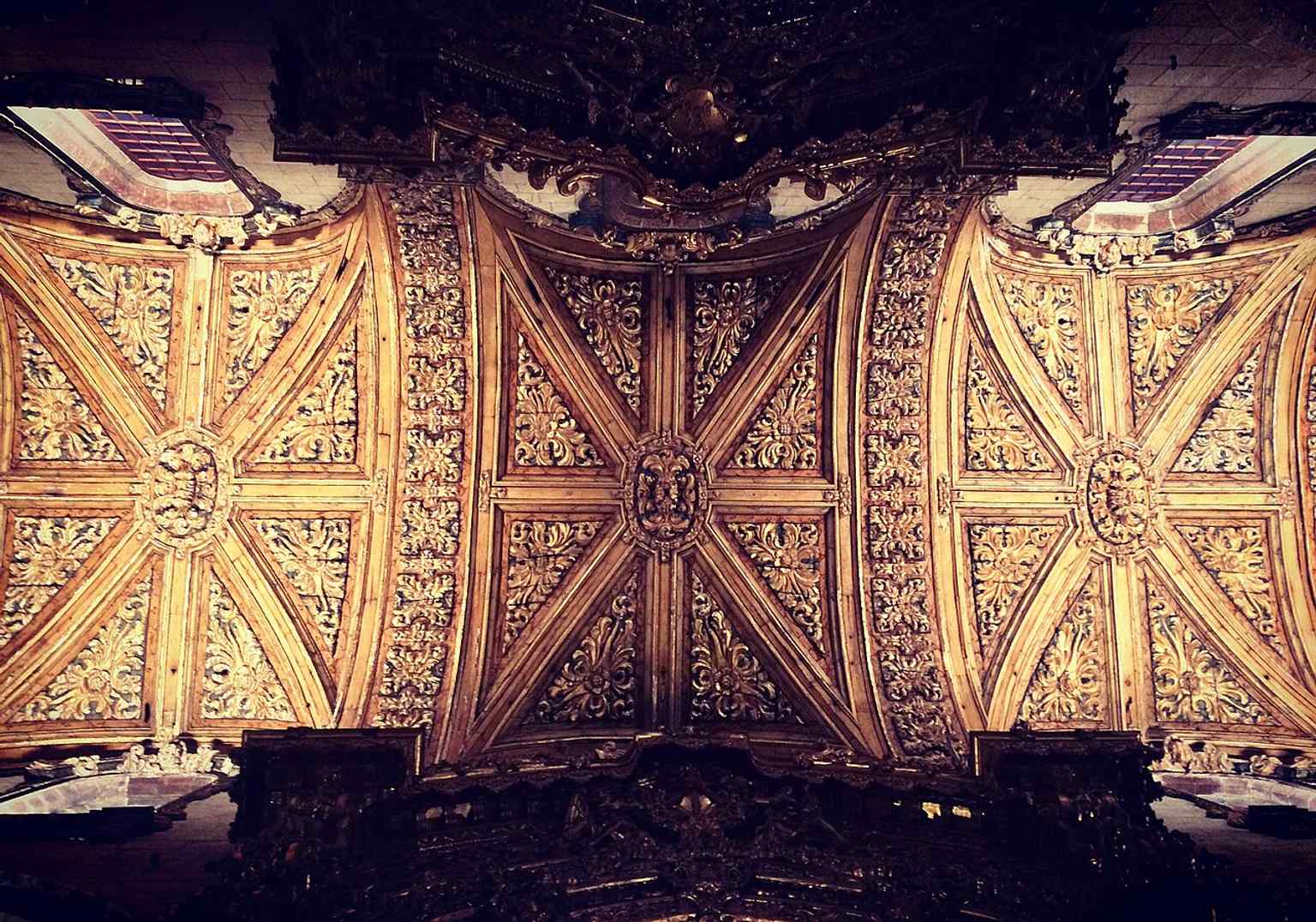
But the surprise is inside. In the first half of the eighteenth century, craftsmen wrapped much of the interior in gilded woodcarving - walls, columns, side chapels, even the vaulting overhead. If you look at the ceiling image in the app, you’ll see what happened when restraint left the room entirely. It’s magnificent.
That splendor can make the institution seem seamless and powerful from the start. It wasn’t. Between sixteen thirty-three and sixteen thirty-nine, the brothers of the Third Order - a lay Franciscan group - still met in borrowed convent chapels while they slowly bought what they needed: an altar, a cupboard for wax candles, a painted Saint Francis by Manuel Lopes, and an image of Saint Elizabeth of Hungary. Grandeur arrived late; first came improvisation.
There are older layers too. Near the portal survived a mural of Nossa Senhora da Rosa, attributed to António Florentim from the time of King João the First. It shows the Virgin holding a rose, with kneeling figures beside her, and it remains one of the oldest intact mural paintings in Portugal. So before the gold came, there was paint... and before certainty, a lot of institutional scrambling.
Then came fire, more than once. After one blaze destroyed a shelter for poor brothers and women under the Order’s care, Nicolau Nasoni designed a new Casa do Despacho in seventeen forty-seven. In eighteen thirty-three, Miguelite gunfire at the end of the siege set the convent buildings ablaze. The ruined cloister later gave way to the Stock Exchange Palace nearby. Commerce moved into the footprint of devotion with impressive efficiency.
And under this whole complex lies a catacomb cemetery, where brothers and benefactors were buried from seventeen forty-nine to eighteen sixty-six. Charity, memory, status, and salvation all shared the same address.
Next, we head to Casa do Infante, where Porto offers a famous origin story... and the evidence raises one careful eyebrow. If you want to come back inside later, São Francisco is open daily from nine in the morning to seven in the evening.