
On your left, look for a broad square of black-and-white stone paving, shaped around planted beds, with a bronze memorial rising near the centre.
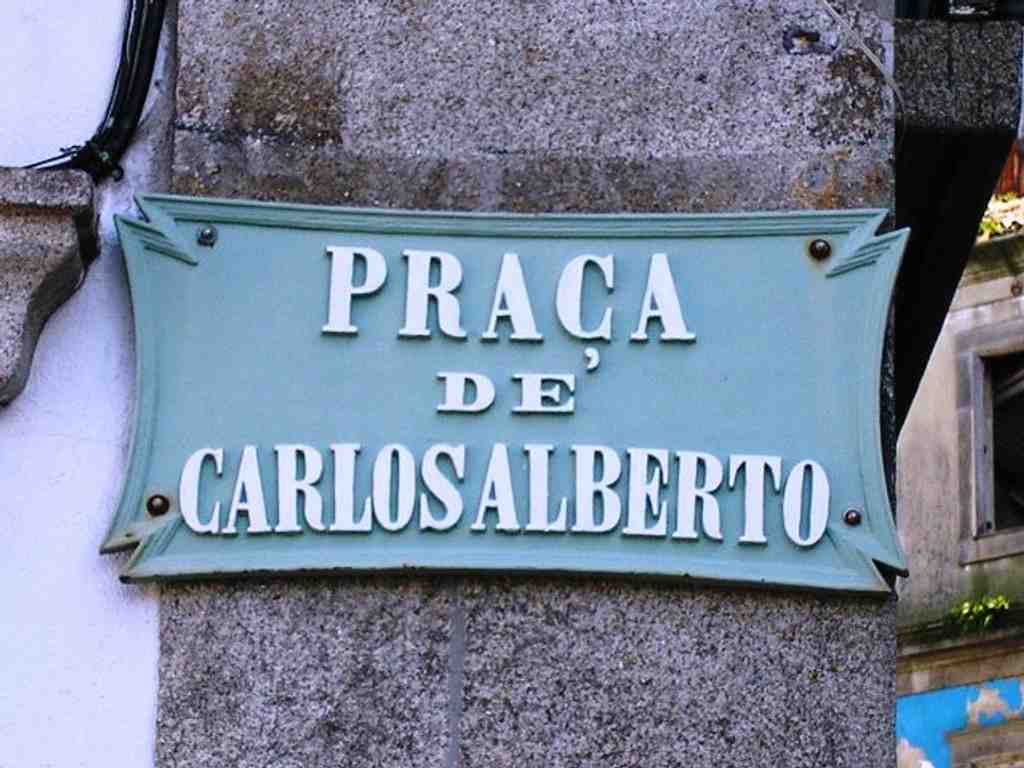
Carlos Alberto Square has the calm look of a city square that knows rather a lot and feels no need to boast. Long before it carried a king’s name, people called it Largo dos Ferradores, the Farriers’ Square. This was a working crossroads just outside the Olival Gate in the old Fernandine walls, where two roads parted company: one toward Braga, by today’s Rua de Cedofeita, and one toward Guimarães, by Rua das Oliveiras. Men brought horses here to be shod and prepared for a long journey. Inns gathered nearby. Trade followed wheels, hooves, and human need, as it usually does.
That practical life stayed for centuries. The square hosted one fair after another: cattle, cloth and animals, then herbs, coal, and firewood. Later it became the Feira das Caixas, the Fair of Boxes, because carpenters here made the wooden trunks that emigrants carried to Brazil. For a time it even worked as a kind of open-air labour exchange. Young farm servants and domestic workers came in from the outskirts and bargained directly with future employers. No grand speeches, just work, wages, and a clear eye.
Then European drama arrived and settled, briefly, into this ordinary urban pattern. On the nineteenth of April, eighteen forty-nine, Carlos Alberto, the exiled king of Piedmont and Sardinia, reached Porto after losing the Battle of Novara and giving up his throne. His first lodging here was the Hospedaria do Peixe, inside a nearby palacete on this square. He stayed only a short while and died about three months later at the Quinta da Macieirinha. Even so, the old Largo dos Ferradores took his name. Porto had a gift for that: taking an event from the European stage and folding it into daily city life, until exile became an address.
The square went on changing costume. The Hospital do Carmo stood here as a sign of care and order. Carriages left from here for São Mamede de Infesta, and in August of eighteen seventy-four Porto’s first carro americano, the horse-drawn tram that led toward the electric tram, set off from this very square for Cadouços in Foz. In the twentieth century, public memory settled here too. Henrique Moreira’s monument to the dead of the Great War, unveiled in nineteen twenty-eight after an earlier unpopular statue had already come and gone, gave the centre a solemn anchor. And in May of nineteen fifty-eight, an immense crowd accompanied General Humberto Delgado here to his campaign headquarters above Café Luso. “My heart will remain in Porto,” he declared. Fifty years later, José Rodrigues fixed that moment in bronze nearby.
Even recent rebuilding followed the same pattern: argument, revision, and then continuity. When the city added a vast underground car park, it kept the familiar gardens and the limestone-and-basalt paving above, as if this square had earned the right to remain recognisable.
Now let your attention settle on the palacete where a fallen king first found shelter, because exile, nobility, and civic culture meet there in one façade, and that is where we are going next. And as public squares do not keep business hours, this one is always open if you wish to return.




