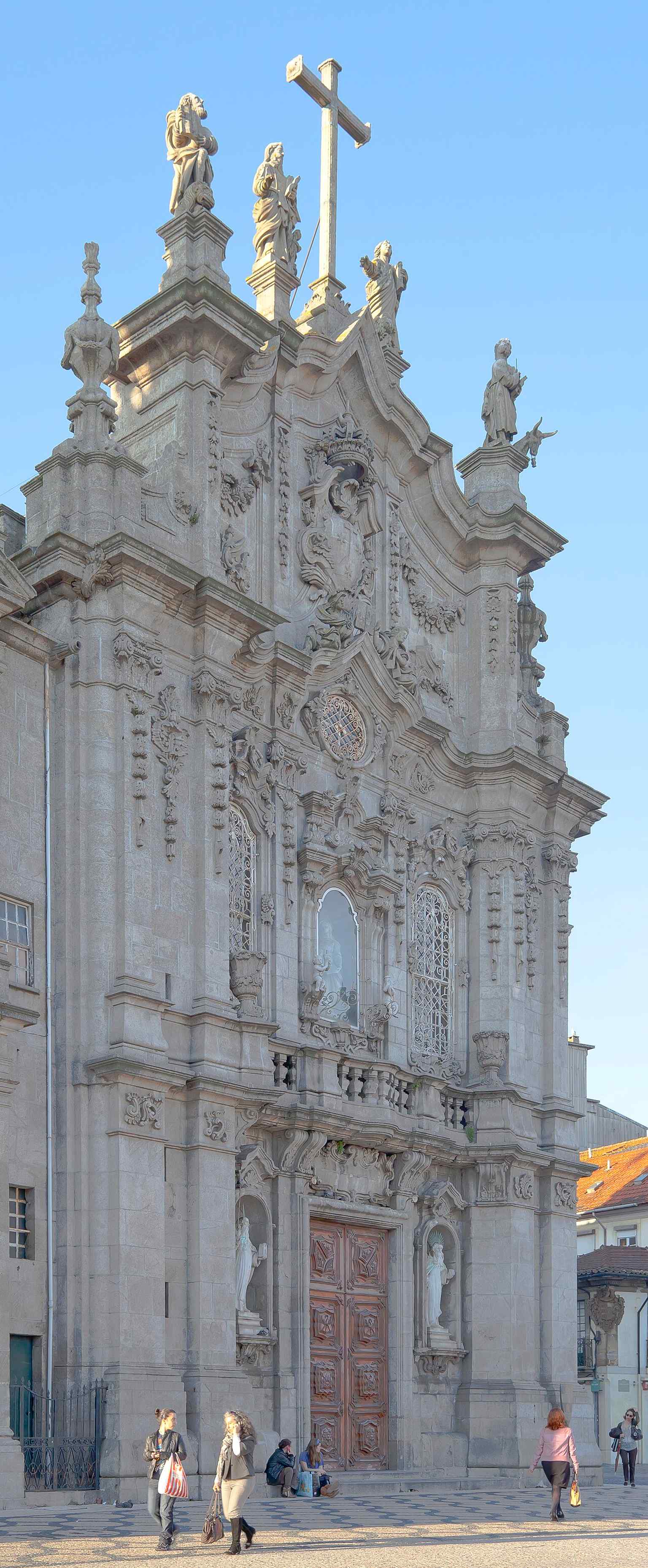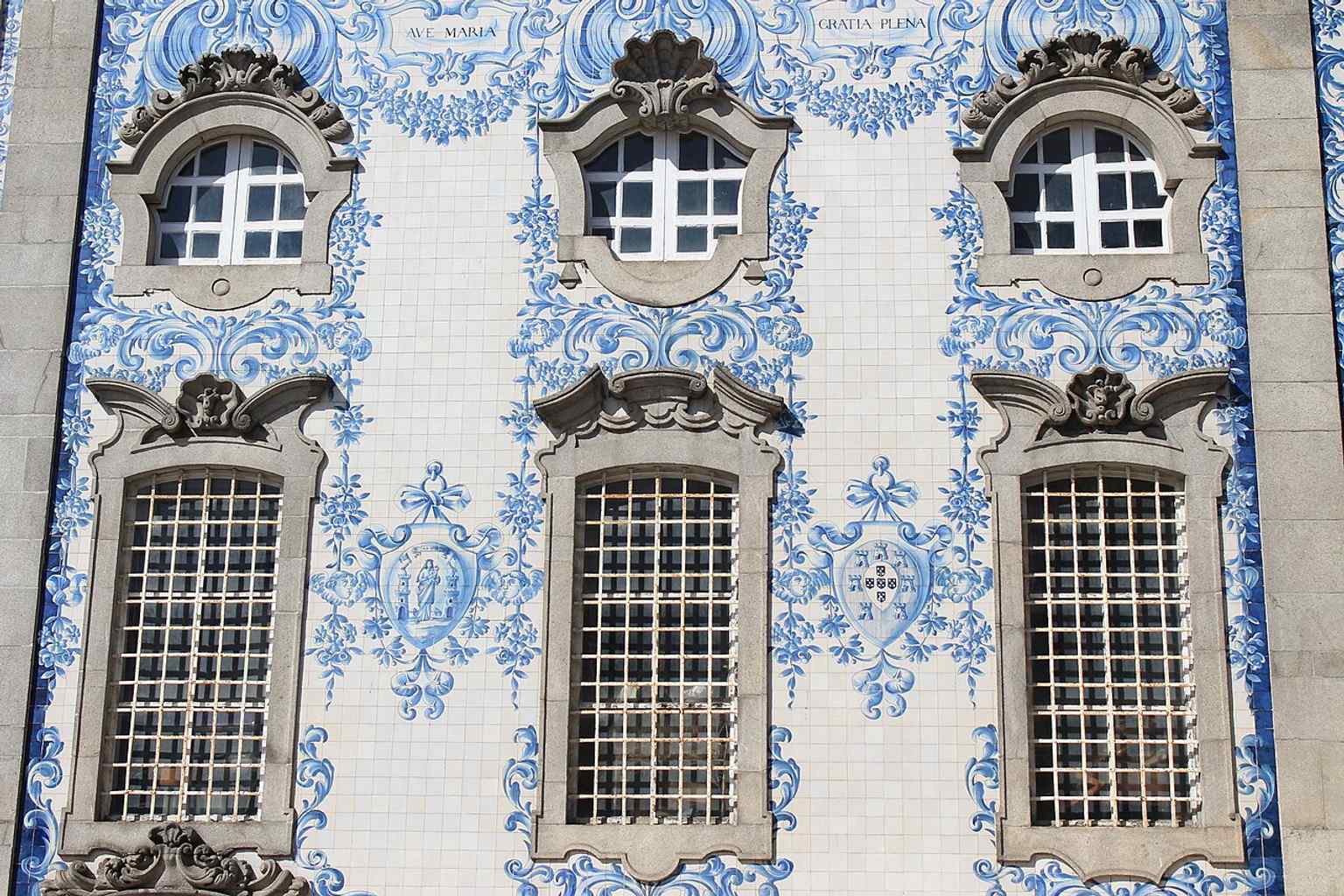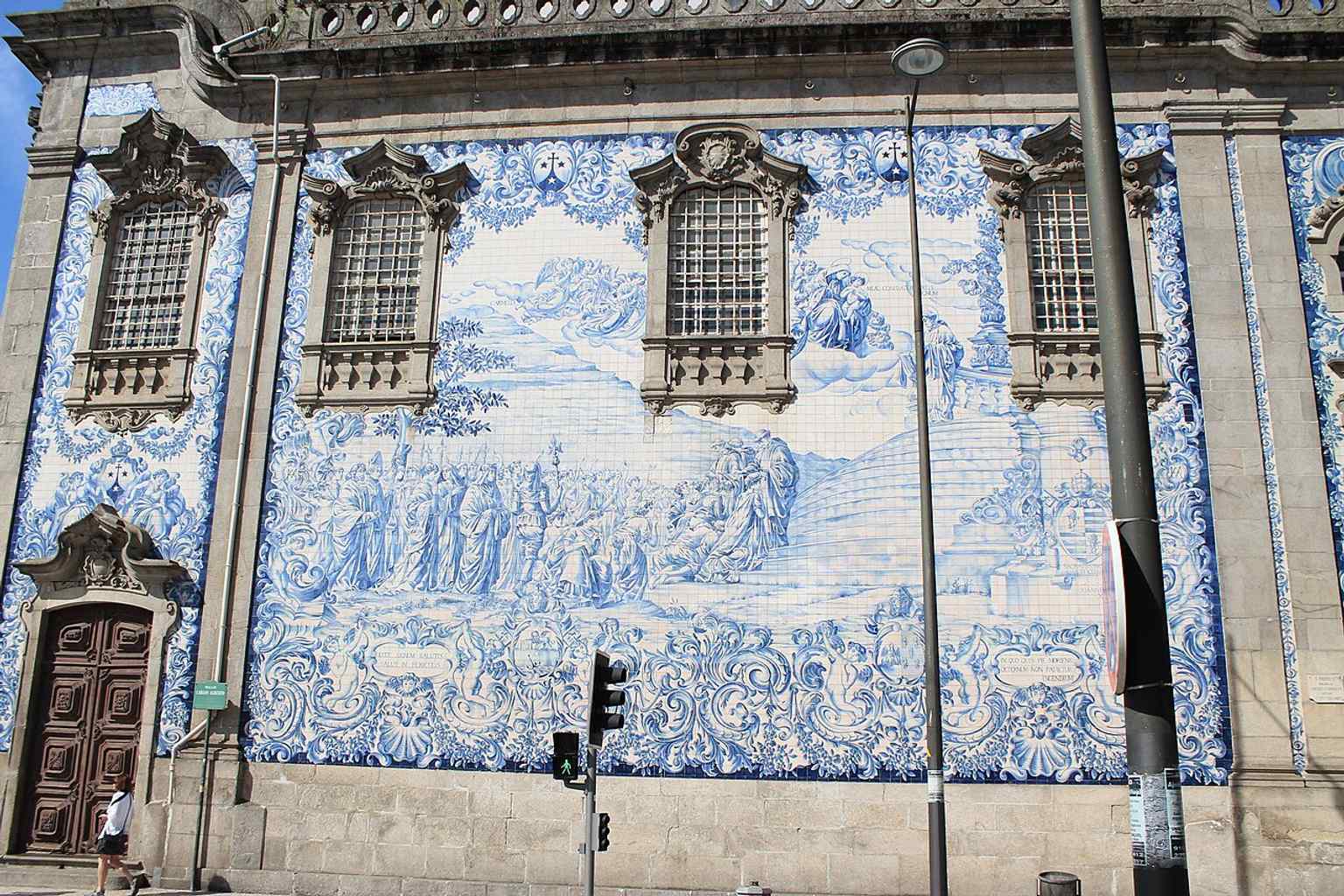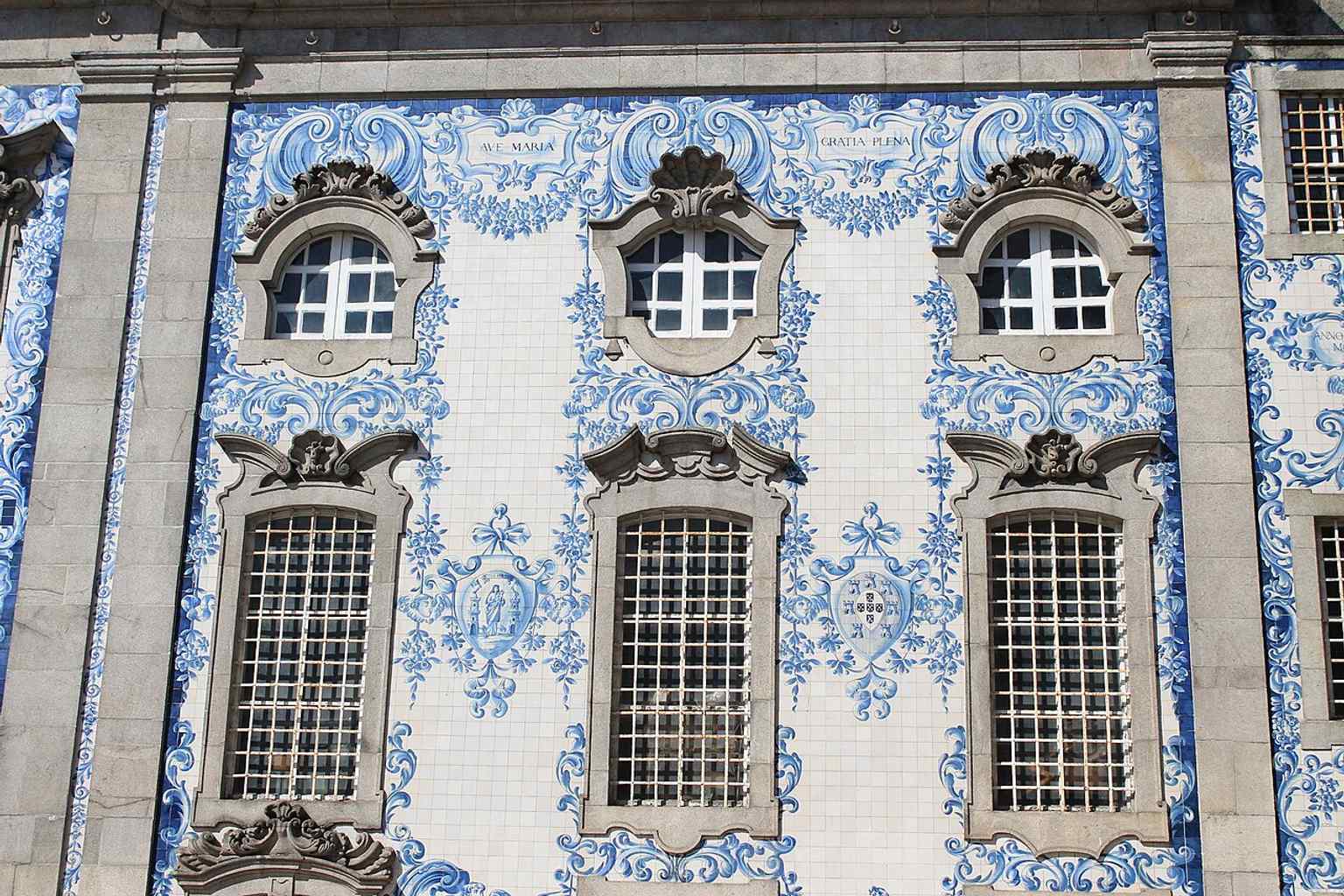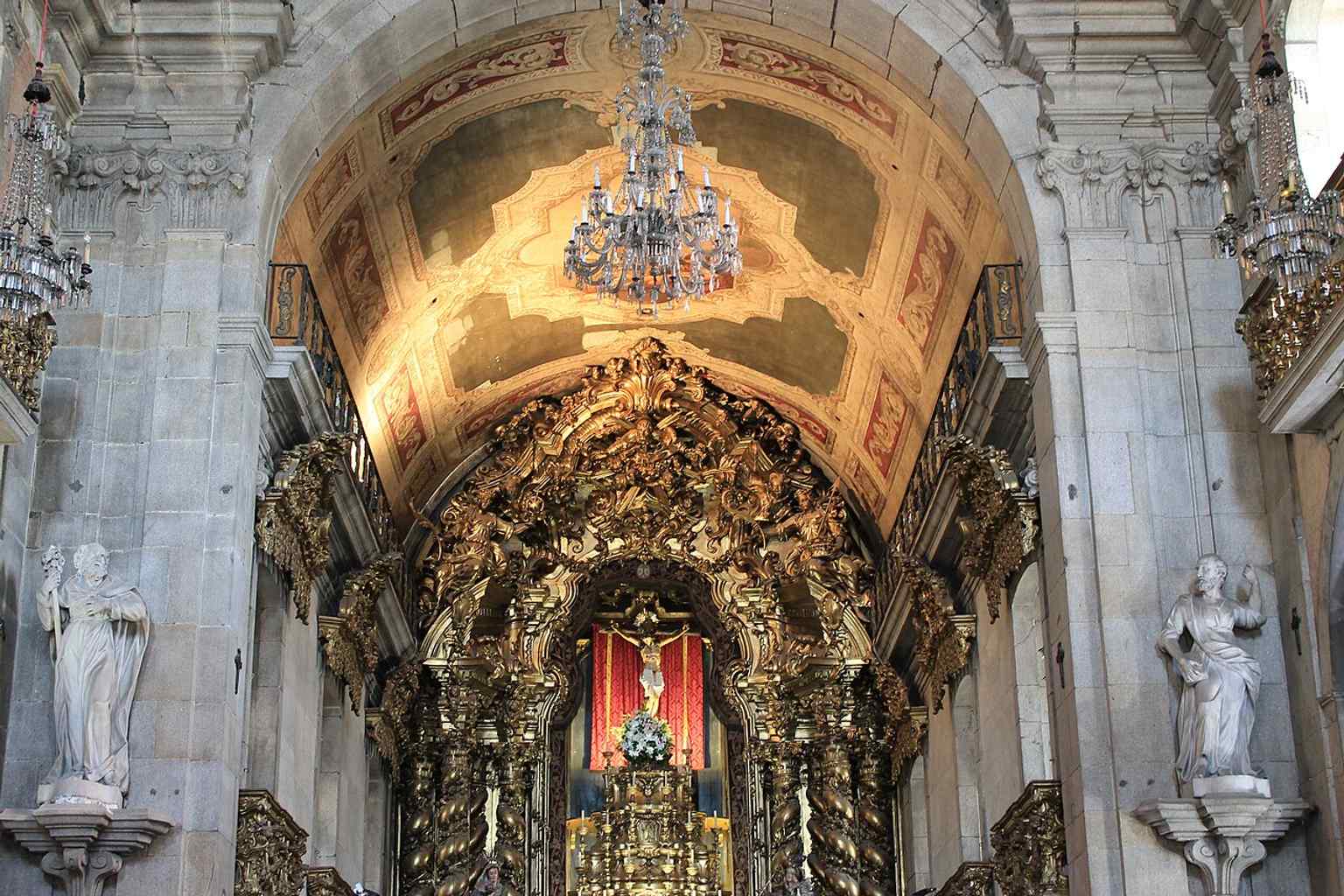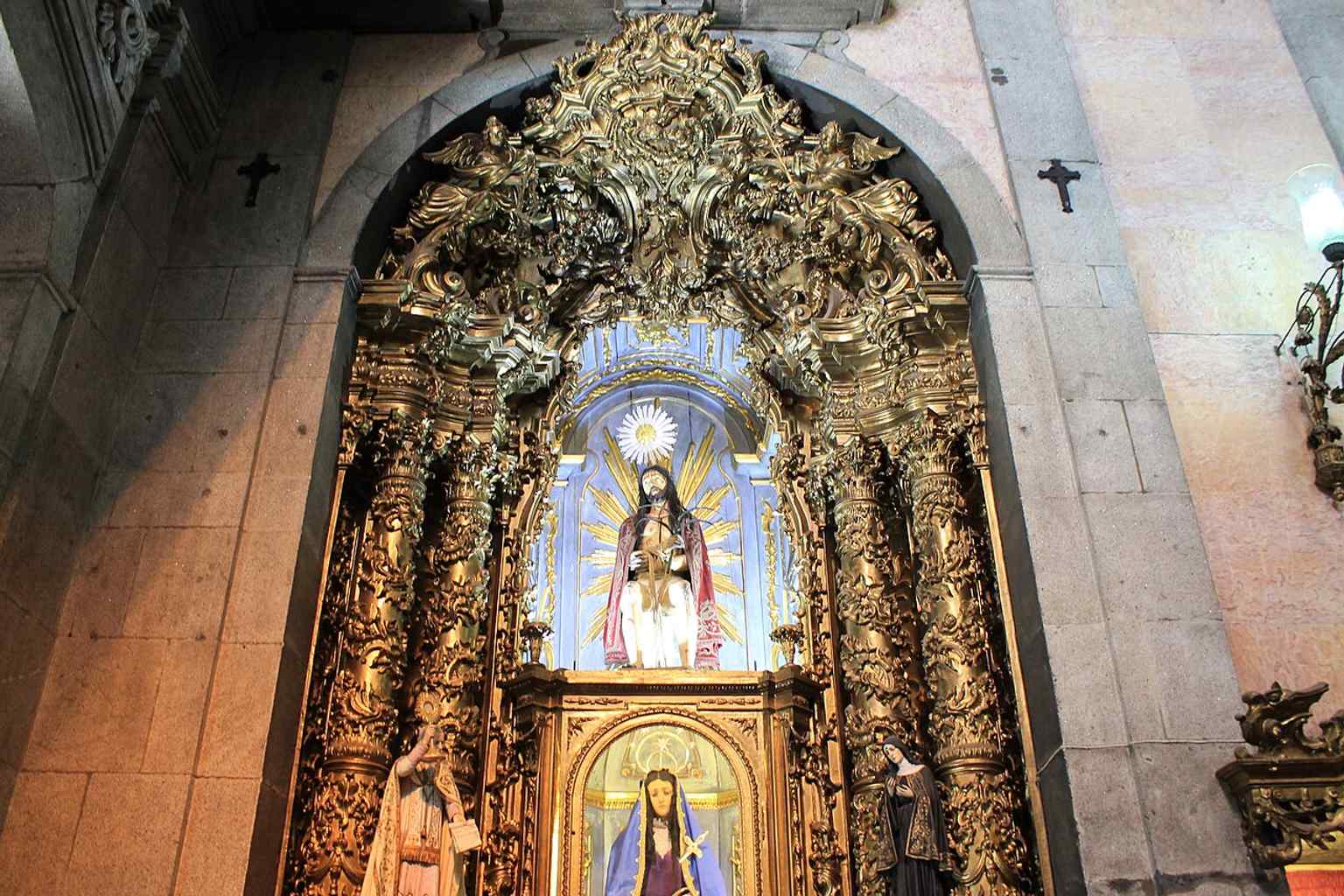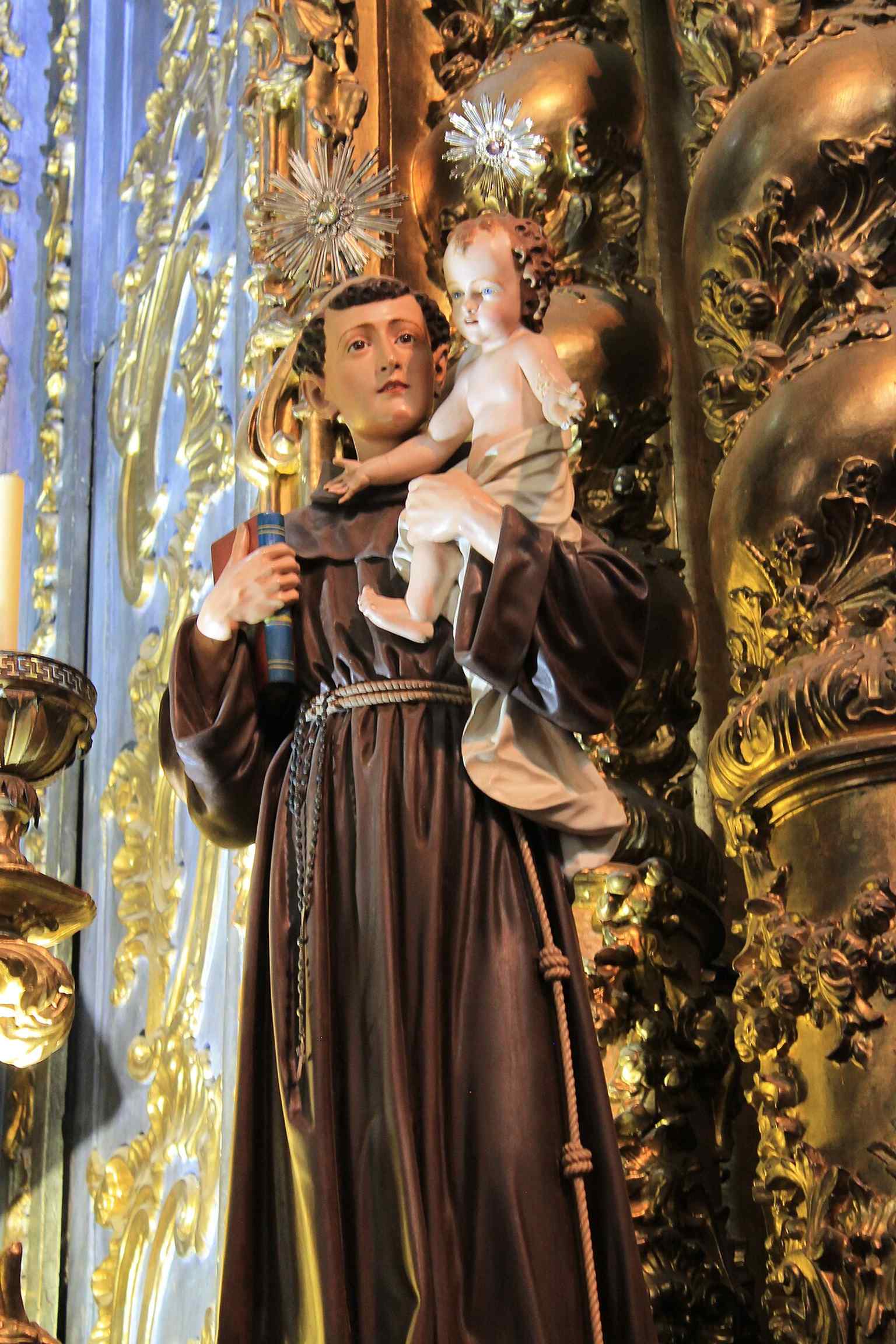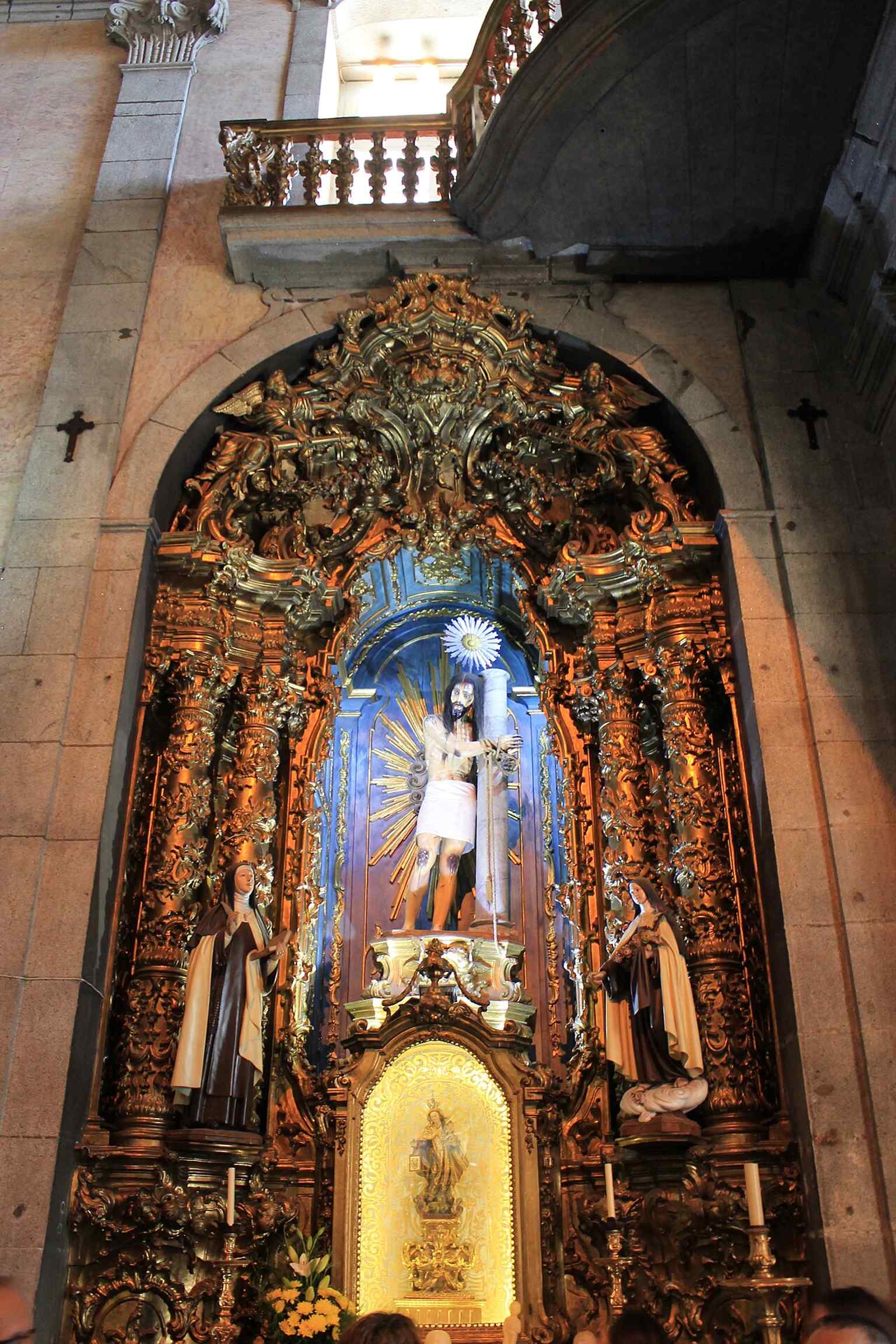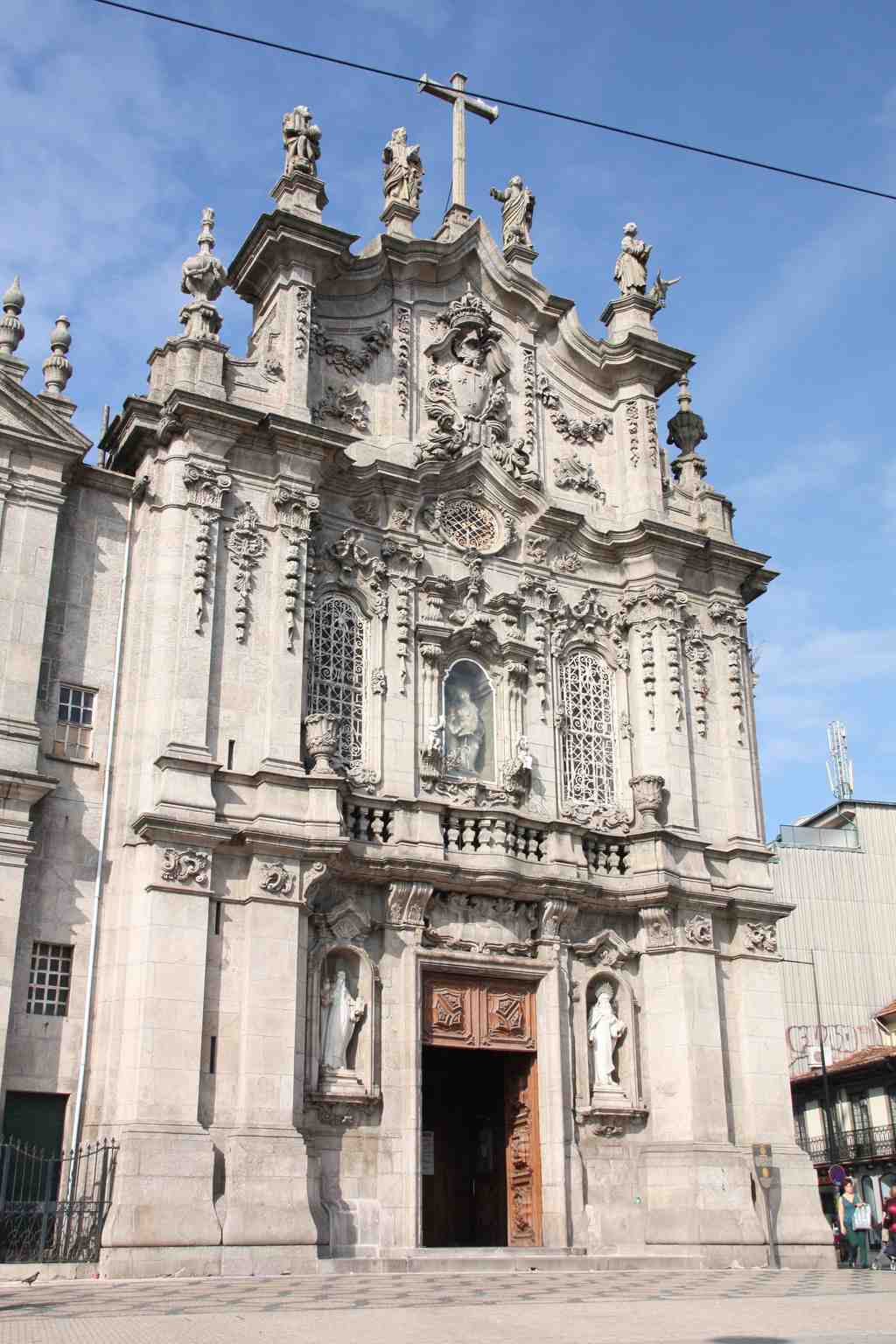
On your left, look for a pale granite church with a tall curving baroque façade and, along its side, a vast blue-and-white tiled wall that makes the whole building unmistakable.
This is the Carmo Church, the church of the Venerable Third Order of Our Lady of Mount Carmel, and it is a splendid little lesson in how Porto solves problems without ever missing a chance to look magnificent. At first glance, people remember the drama: the carved front, the statues, the sweep of stone. But the cleverest part of this place is almost invisible.
The church rose here in the second half of the eighteenth century, between seventeen fifty-six and seventeen sixty-eight. The architect, José Figueiredo Seixas, had a difficulty on his hands. The Carmo church stood beside the older Carmelitas church, but rules of the time did not allow two churches to sit wall to wall. So Seixas devised an elegant legal trick in stone and plaster. Between the two churches, he inserted a sliver of a building now known as the Casa Escondida between the churches: the Hidden House. It physically separated the churches so they did not technically share a wall. What many visitors take for a charming oddity came first as the essential solution.
If you glance at the image on your screen showing both churches together, you can see how improbable the arrangement is. The hidden house is only about one and a half metres wide, scarcely broader than an outstretched pair of arms. Legend, with the usual local flair, says it kept friars and nuns from dangerous proximity. The documents tell a more practical story. Over roughly two hundred and fifty years, that narrow strip housed passing chaplains and, at times, doctors connected to the Order’s hospital, which the Order completed in eighteen hundred and one.
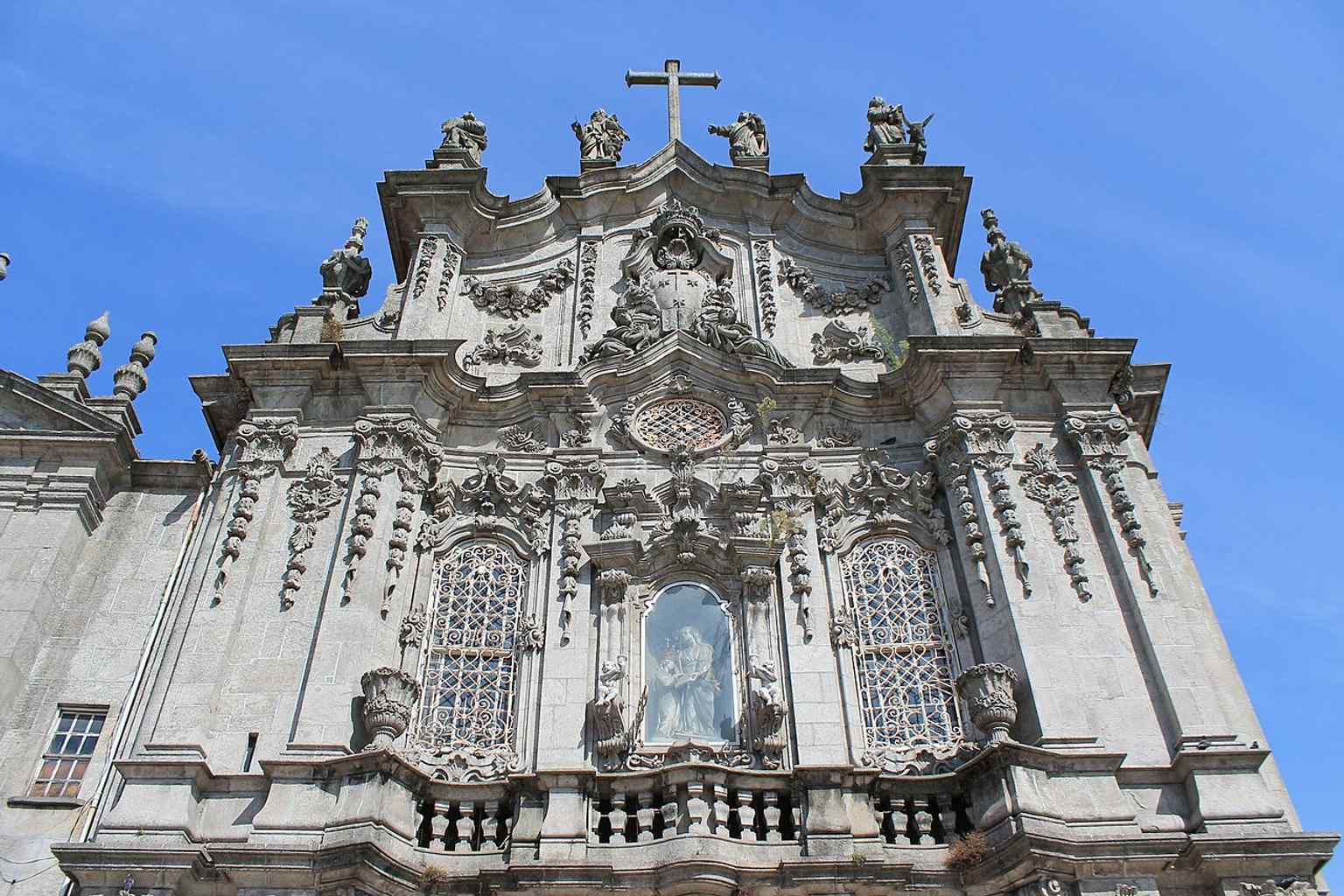
Now lift your eyes to the façade itself. Above the entrance, the church announces its loyalties. Santa Ana appears in a prominent position; the Carmelites held deep devotion to her and named her patron of this church. In the niches by the door stand Elijah and Elisha, prophets cherished by the Order as spiritual models. Higher still, the front bristles with finials and the figures of the four Evangelists, showing the influence of the Italianate baroque language associated with Nicolau Nasoni.
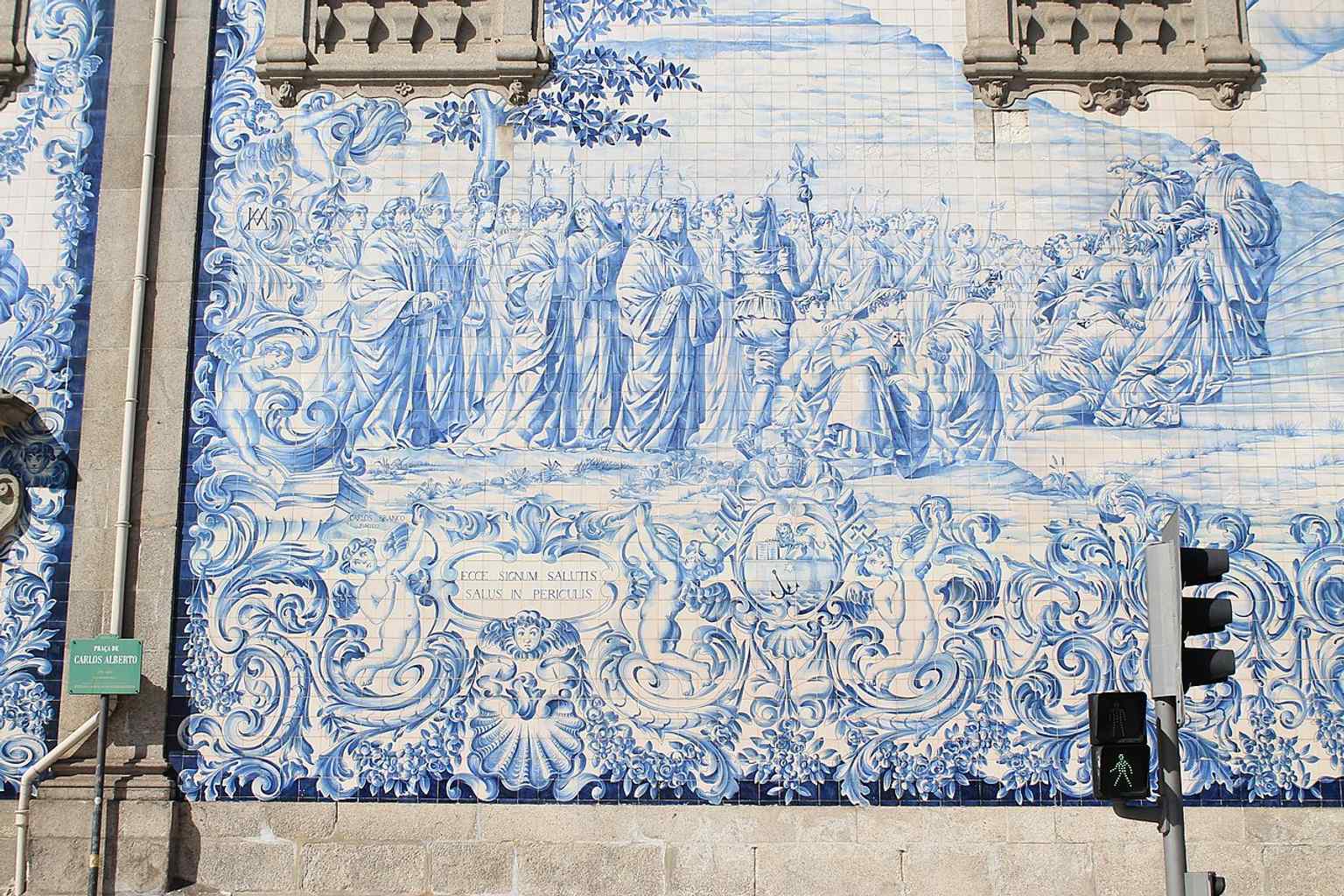
And then there are the tiles. If you open the detail image in the app, the side wall becomes a blue-and-white pageant. In nineteen twelve, Silvestre Silvestri designed that vast panel, Carlos Branco painted it, and workshops in Vila Nova de Gaia produced it. The scenes tell of the Carmelite Order’s origins and of Mount Carmel itself. So the church does what Porto so often does: it displays one story boldly to the street, while another survives in the seam, the gap, the almost-unseen solution.
That is the real charm here. Grandeur in public, ingenuity in hiding.
Before you leave, try to find the line where one church ends and the next begins, and imagine an inhabited strip so narrow it made the whole arrangement lawful. If you decide to return inside, the church generally opens daily from nine thirty in the morning until five in the afternoon. From here, step into the nearby square, where exile and local authority once briefly shared the same stage, and continue on to Carlos Alberto Square.