
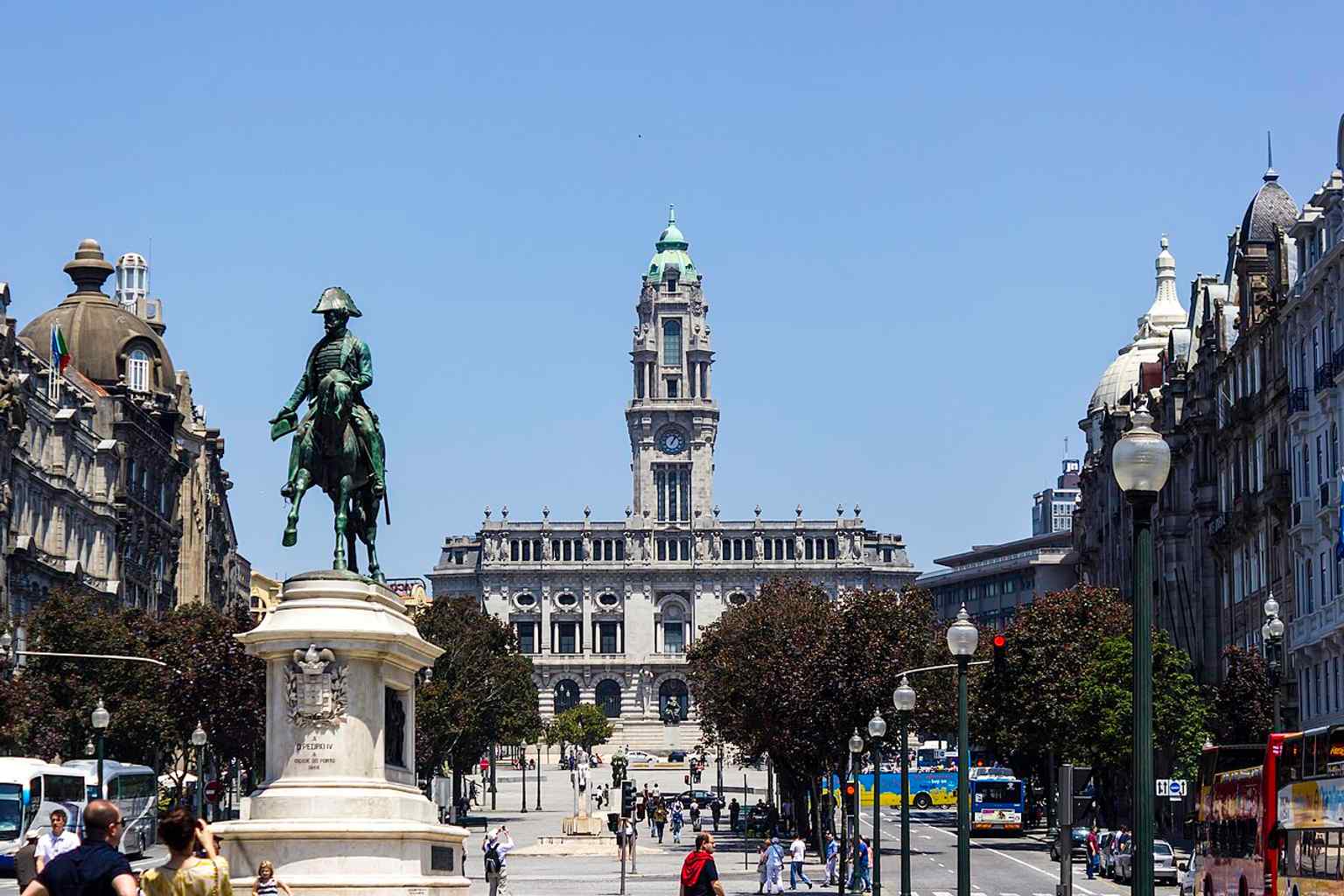
On your left, Liberty Square opens as a broad stone-paved space edged by granite façades, with the bronze horseman of Dom Pedro the Fourth rising on a tall pedestal at its centre.
This is Praça da Liberdade, often called Porto’s civic heart, and it has earned that title the hard way. Few places in the city have changed their name, their shape, and even their meaning so many times. Here, Porto kept returning to one difficult question: who gets to define freedom?
For centuries this was not the elegant centre you see now, but land outside the Fernandine Walls, between the gates of Porta de Carros and Santo Elói. The ground belonged to the cathedral chapter, a body of senior clergy who controlled property around the bishop’s seat. Plans for a public square appeared in the late seventeenth century, then stalled. Only in seventeen eighteen did the project truly move forward, when the chapter gave up land and new streets cut through what had been gardens and orchards, the hortas.
That first formal version became Praça Nova. It looked outward, modern, confident, civic. To the north stood two mansions that later housed the town hall. To the east rose the Convent of the Congregados. To the south ran a stretch of medieval wall, later cleared to make way for the Convent of Santo Elói, whose later life you can still sense in the Palácio das Cardosas behind the square.
But public space is never only about elegance. In eighteen twenty-nine, during Miguelist repression, this square became a theatre of exemplary punishment. Twelve liberals were executed here, liberals meaning supporters of constitutional rule rather than absolute royal power. Ten were hanged on the seventh of May, and two more on the ninth of October. According to the city’s own memory, some severed heads were displayed near their homes or in public places. So the same open square that invited gathering also taught fear.
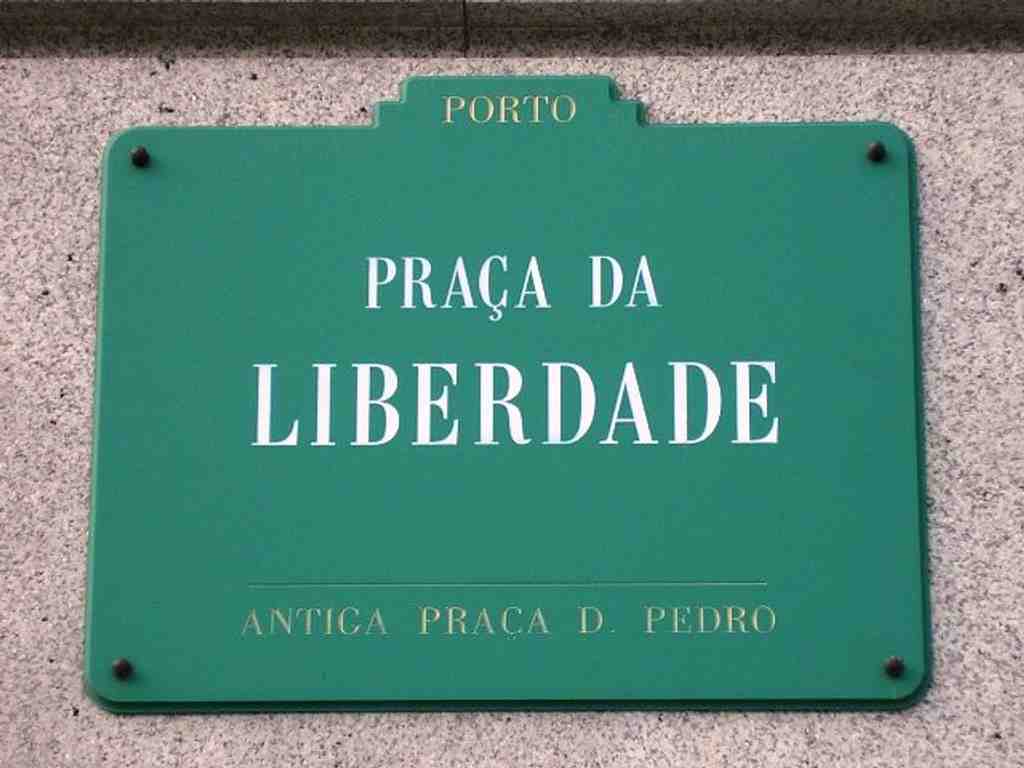
Its names tell that story too. It passed through Praça da Natividade, Praça Nova das Hortas, Praça da Constituição, Praça de Dom Pedro the Fourth, even Praça da República for a few days, before taking the name Praça da Liberdade in October of nineteen ten, after the republic replaced the monarchy. Power changed costume; the square kept the stage.
The figure you see in the middle fixes one chapter of that drama. The equestrian statue of Dom Pedro the Fourth, unveiled in eighteen sixty-six, came from the sculptor Célestin Anatole Calmels, with the architectural setting by Joaquim da Costa Lima. On the pedestal, reliefs recall liberal memory in stone and bronze: Pedro’s landing at Mindelo, and the remarkable gift of his heart to Porto. If you glance at the image on your screen, you can see how completely that monument commands the space.
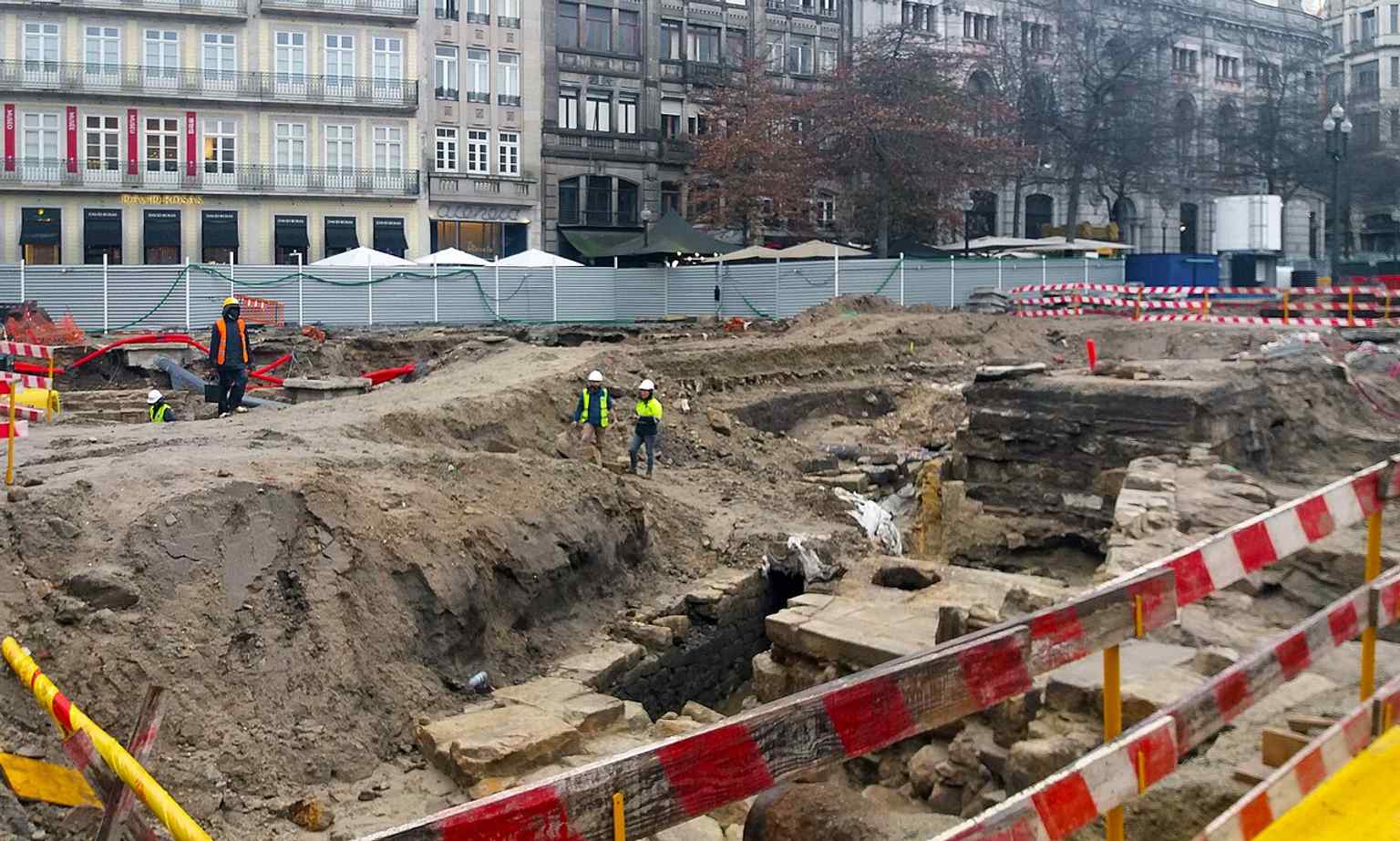
In the nineteenth century, the square became the city’s political and social salon. The town hall arrived in eighteen nineteen. The Dom Luís Bridge opened in eighteen eighty-seven. The railway reached nearby in eighteen ninety-six with São Bento station. Little cafés and drinking houses, the botequins, once filled the edges with argument and gossip before banks, insurers, and offices took over. Even the great rebuilding of Avenida dos Aliados began here in nineteen sixteen, with President Bernardino Machado attending the first demolition ceremony. And if you look at the later image in the app, even recent construction shows that this place still accepts reinvention as part of its nature.
So here is the question to carry with you: what should a city do with a square called Liberty when that same ground once displayed political terror in public? Porto does not erase the contradiction; it simply builds over it, and lets the memory sit underneath the stone.
When you are ready, we will climb toward the cathedral, where authority takes an older, sterner form. Fittingly for a public stage, this square remains open at all hours.






