
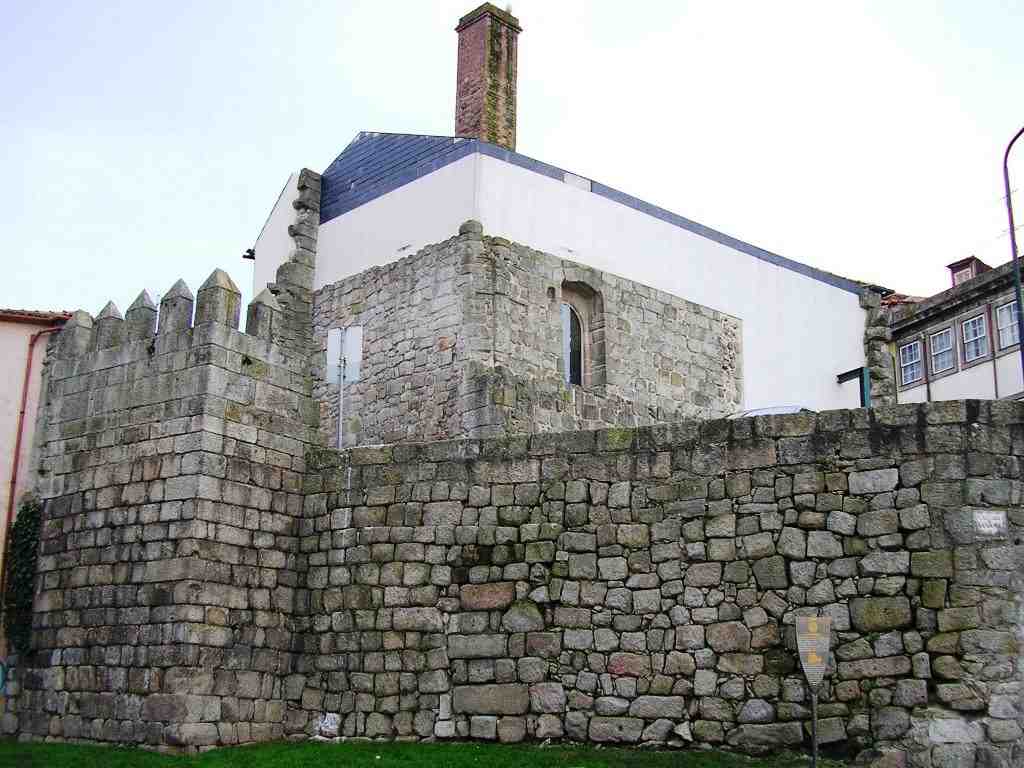
On your left, look for a narrow stone house with a simple rectangular façade, unevenly cut window openings, and old defensive wall masonry fused into the structure.
At first glance, Casa da Rua de D. Hugo can seem almost modest. That is the trick of it. Most tourists pass thinking this is merely an old house beside the cathedral precinct. In fact, this address turned into one of Porto’s sharpest arguments about what a “house” really is.
When archaeologists opened the interior in the nineteen eighties, they did not find a single neat layer of history. They found about twenty layers, reaching roughly three metres down, with traces of human occupation from the fourth or fifth century onward. That sequence ran from a proto-historic castro - a fortified hill settlement - into the Roman city, then Suevo-Visigothic and early medieval phases. In other words, Porto survives not only in monuments above ground, but underground and inside later buildings that quietly swallowed the older city whole.
And this building itself joined the argument. Records show it was not just a residence standing over ancient remains, but a late medieval house-tower: part home, part statement of status, with a defensive edge. Look closely at the façade and you are seeing later openings cut into an older body. What specialists call its reversed Gothic face still keeps an entrance and a light opening from that earlier structure. The street view understates it; the bones are tougher than they look.
One of the last private names attached to the property was Manuel Cardoso Corte Real, the owner in eighteen seventy-one. After him, the story shifts from ordinary property history to public excavation. In nineteen ninety-three, architects restored the building for the northern branch of Portugal’s Order of Architects, and the project won the João de Almada prize a year later. Rather fitting, really: a house that had spent centuries concealing the city became a place devoted to reading it.
If you glance at the image in the app, you’ll see the kind of primitive wall this quarter absorbed and later revealed again. That same habit of concealment continues at our next stop, Casa-Museu Guerra Junqueiro, only a minute away, where domestic rooms prove every bit as revealing as churches and palaces.




