AudaTours logoAudaTours

Stop 5 of 17

Porto Cathedral

headphones 04:18 Buy tour to unlock all 17 tracks

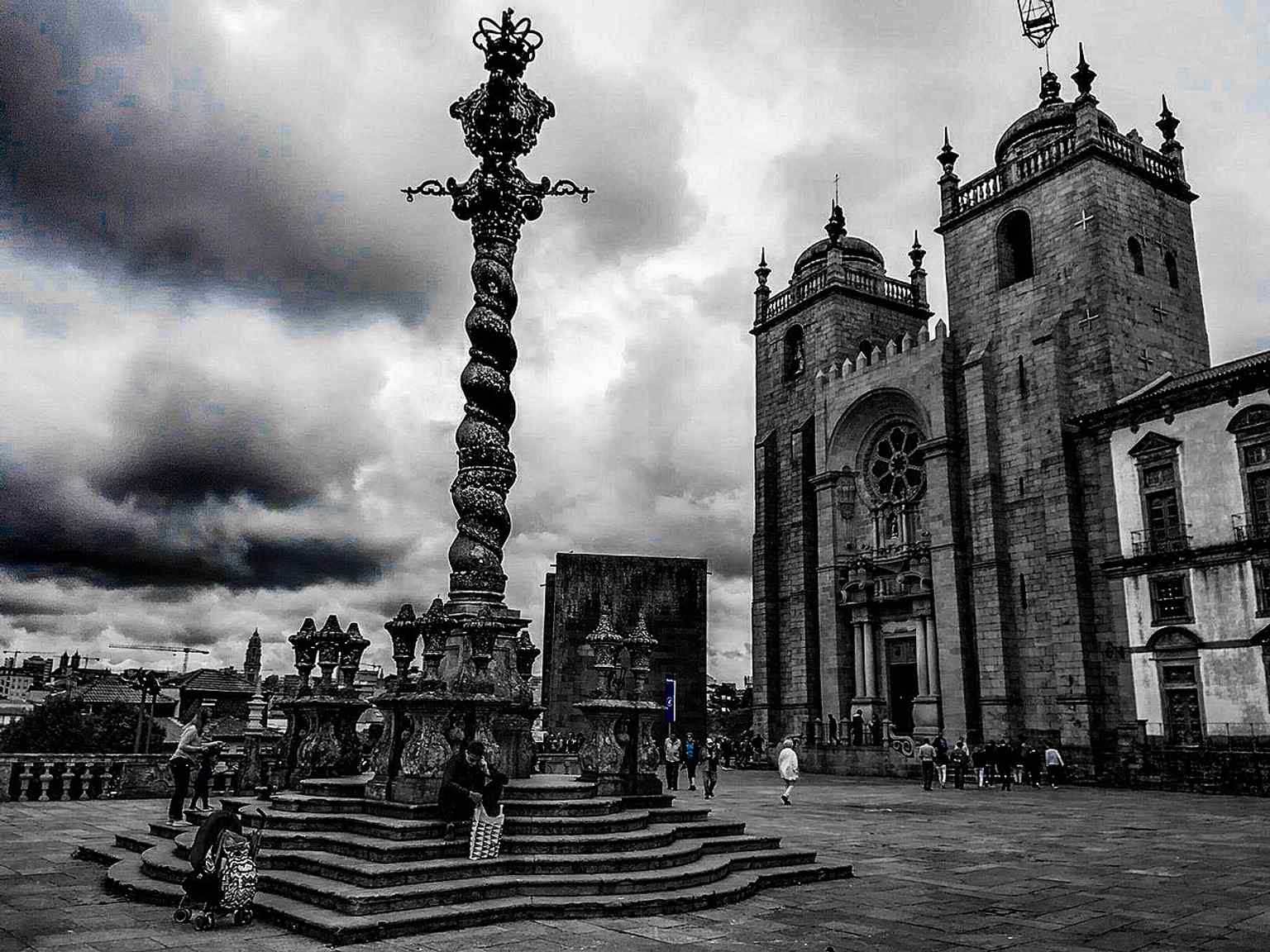
On your right rises a broad granite church with twin square towers and a round rose window tucked beneath a crenellated arch, giving the whole façade the look of a fortress.

This is Porto Cathedral, one of the city’s oldest monuments, and it occupies this hill like a statement of intent. Here in Porto, belief did not simply fill a church; it helped organise rank, memory, and authority. Bishops ruled from nearby, kings sought blessing here, and the city learned to read power through sacred stone.

This precinct is Porto’s oldest sacred core, the point from which so much else takes its bearings. Long before the later palaces, squares, and grand civic gestures below, this height held a chapel or hermitage founded by Henry of Burgundy and his wife in eleven oh eight. The older church still stood in eleven forty-seven, but in the second half of the twelfth century people began the building you see now, and they kept altering it right through the sixteenth century, then again in the eighteenth and twentieth.

Take a slow look at the front. Notice how the façade seems to belong to several centuries at once: the severe Romanesque body, the Baroque porch, the towers with their cupolas, the almost military outline. It is a church, certainly, but it also announces watchfulness, command, and survival.

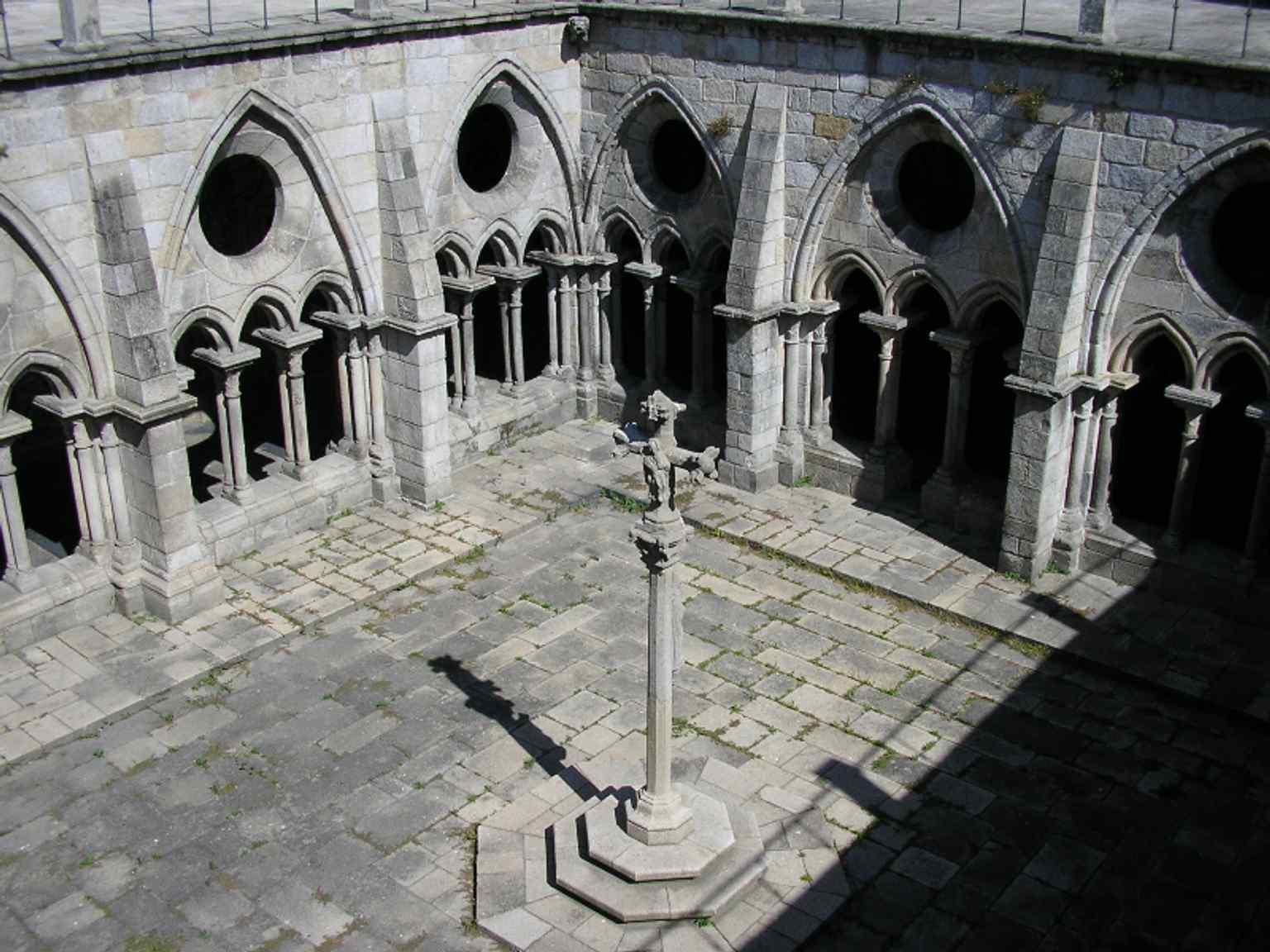
That mixed face tells the truth. The central hall inside, the nave, is narrow and covered with a barrel vault, and its heavy stone roof needed flying buttresses outside to help carry the load, making this one of the earliest Portuguese buildings to use that device. Yet later generations kept revising it. If you look at the image in the app, you can see the Gothic cloister added in the fourteenth and fifteenth centuries, then dressed in Baroque blue-and-white tiles by Valentim de Almeida in the seventeen twenties and thirties. The cathedral we meet today is the work of many hands, many intentions, and many acts of correction.
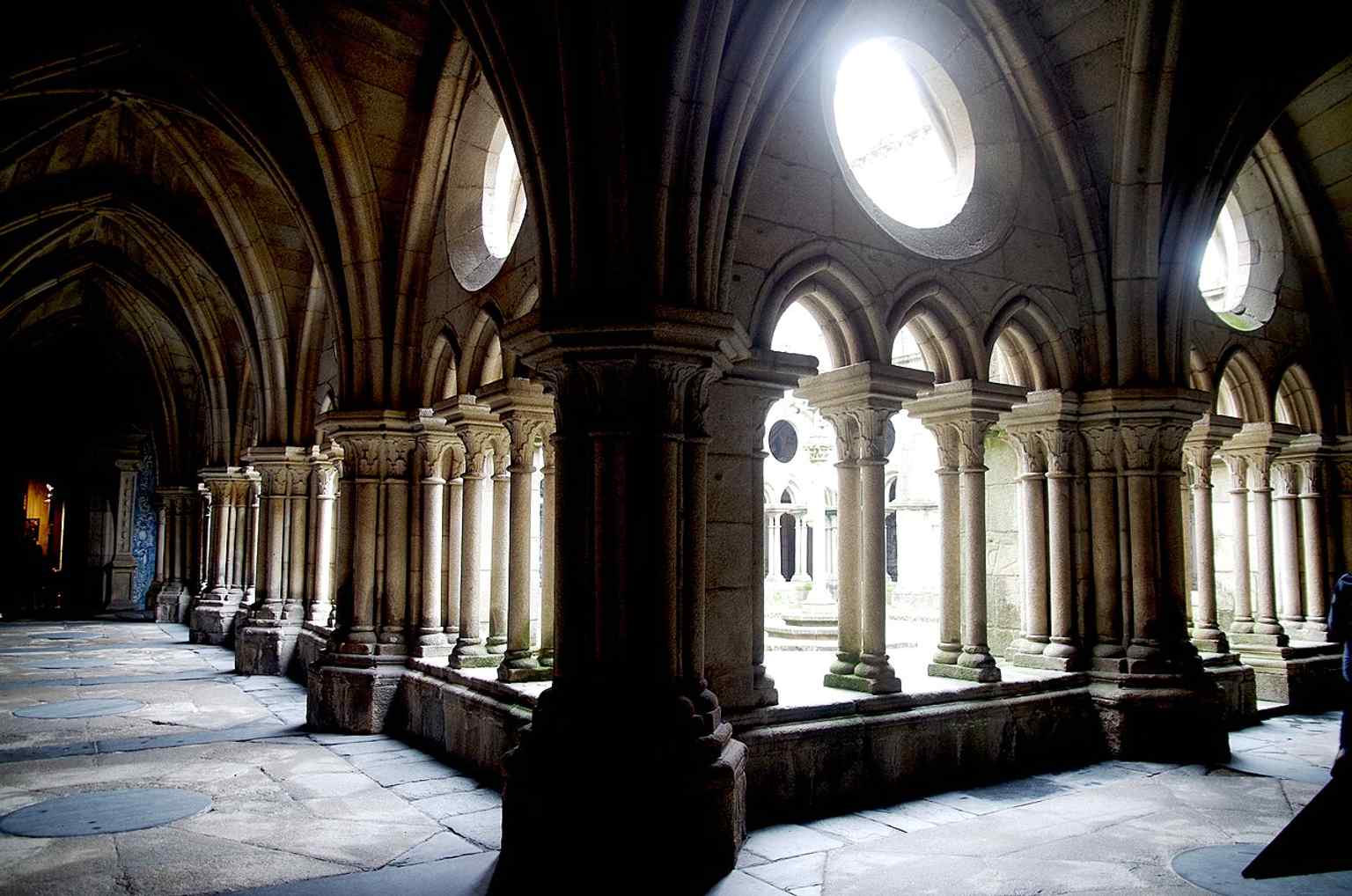
The Gothic cloister of Porto Cathedral, built in the 14th and 15th centuries and later lined with distinctive azulejo panels.
The Gothic cloister of Porto Cathedral, built in the 14th and 15th centuries and later lined with distinctive azulejo panels.Photo: Cardilio, Wikimedia Commons, CC BY-SA 4.0. Cropped & resized.

Its most famous human moment came in thirteen eighty-seven. King John the First and Philippa of Lancaster received a blessing here on the second of February, then married here on the fourteenth. That ceremony mattered far beyond Porto. It helped secure the long Anglo-Portuguese alliance, and Philippa later became known as the mother of Portugal’s so-called Illustrious Generation. If you want one scene that shows this hill binding faith to statecraft, that is it.

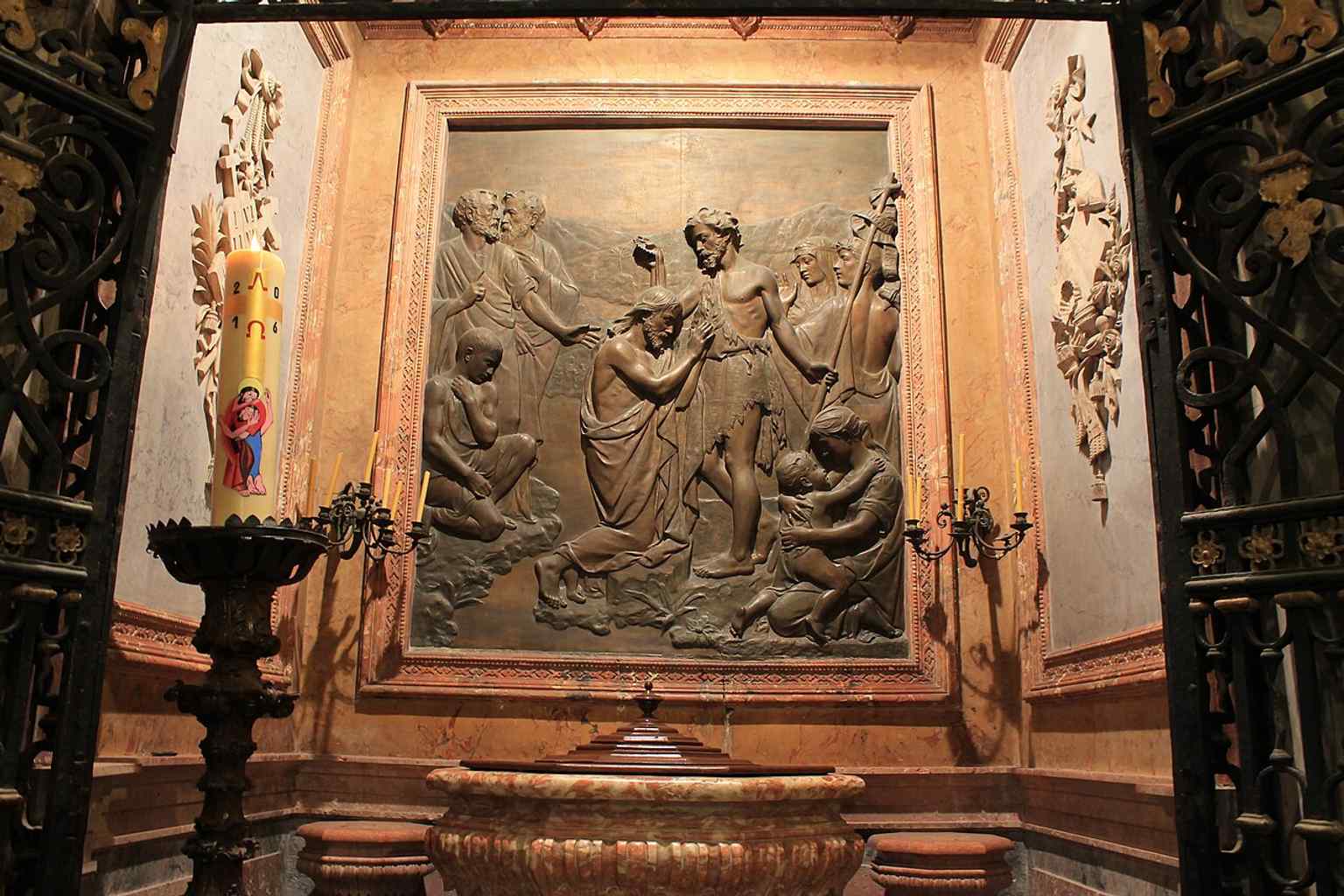
Another life began here as well. Tradition says Prince Henry the Navigator was baptized in this cathedral, tying the building to the earliest story of Portugal’s maritime expansion. If you open the baptistery image in the app, you’ll see the place associated with that memory. And like the city itself, the cathedral has endured conflict. During the War of the Oranges in eighteen oh one, Spanish soldiers briefly seized it before local residents drove them out. In the Napoleonic invasion, a legend says a sacristan, or perhaps canon Pedro Breiner, saved the great silver altarpiece by disguising it with plaster or bargaining for its survival. Whether every detail is exact matters less than what the story reveals: Porto expected this place to be defended.
The baptistery, where Prince Henry the Navigator was baptized according to tradition, linking the cathedral to Portugal’s age of discovery.
The baptistery, where Prince Henry the Navigator was baptized according to tradition, linking the cathedral to Portugal’s age of discovery.Photo: John Samuel, Wikimedia Commons, CC BY-SA 4.0. Cropped & resized.

Yet even here, authority is never the whole story. Around this mighty church stood smaller houses, servants’ routes, workshops, and private lives that made the hill human as well as ceremonial. We’ll find that quieter texture at Casa da Rua de D. Hugo, about a minute away. If you plan to return inside later, the cathedral generally opens from nine in the morning until six thirty in the evening.
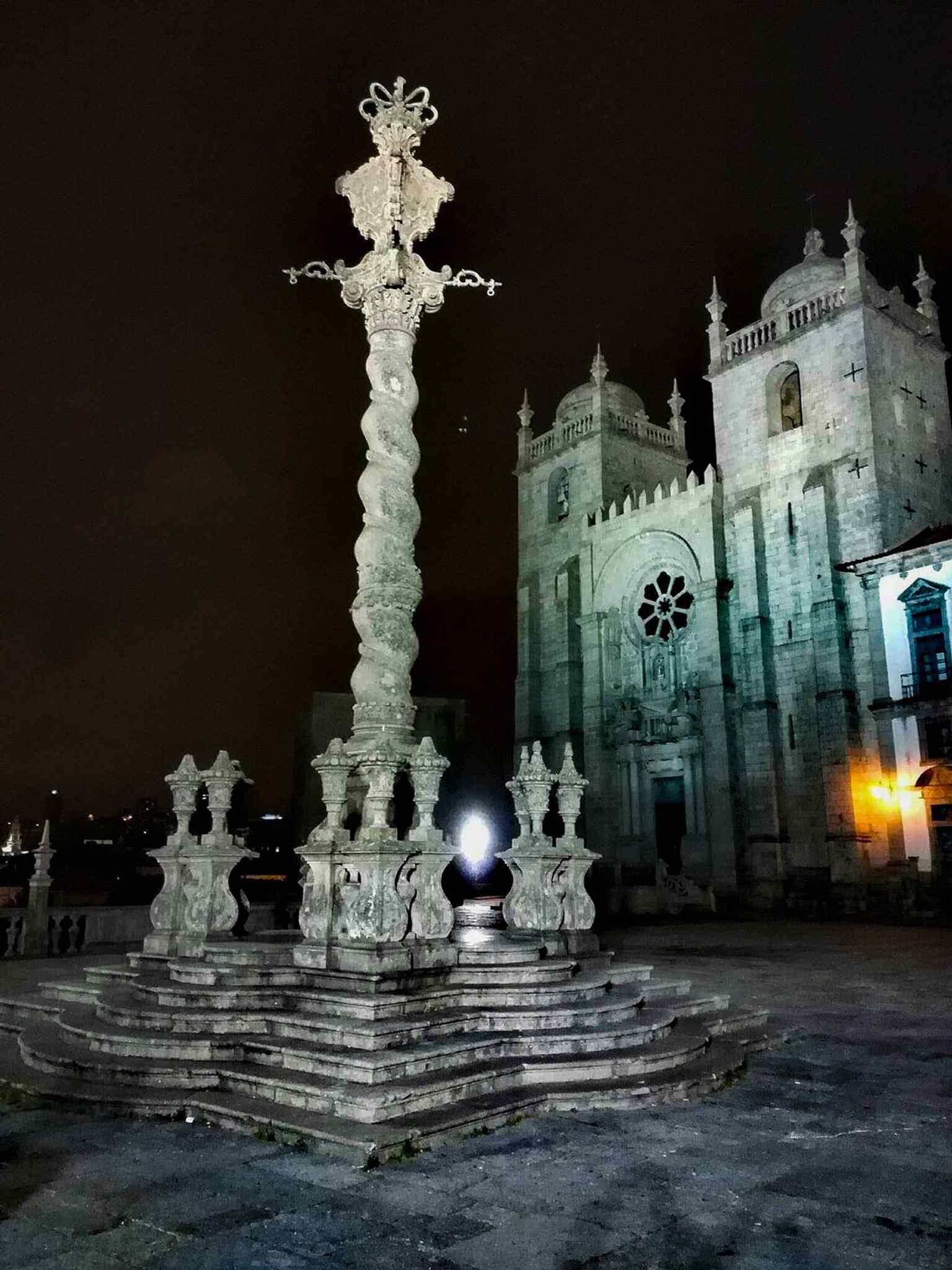
A broad daytime view of Porto Cathedral’s fortified Romanesque exterior, with the plain façade that still preserves its medieval character.
A broad daytime view of Porto Cathedral’s fortified Romanesque exterior, with the plain façade that still preserves its medieval character.Photo: John Samuel, Wikimedia Commons, CC BY-SA 4.0. Cropped & resized.
The cathedral under dramatic clouds, showing the twin towers and the sober stone frontage that made it look almost like a fortress.
The cathedral under dramatic clouds, showing the twin towers and the sober stone frontage that made it look almost like a fortress.Photo: Ivan Stesso, Wikimedia Commons, CC BY-SA 4.0. Cropped & resized.
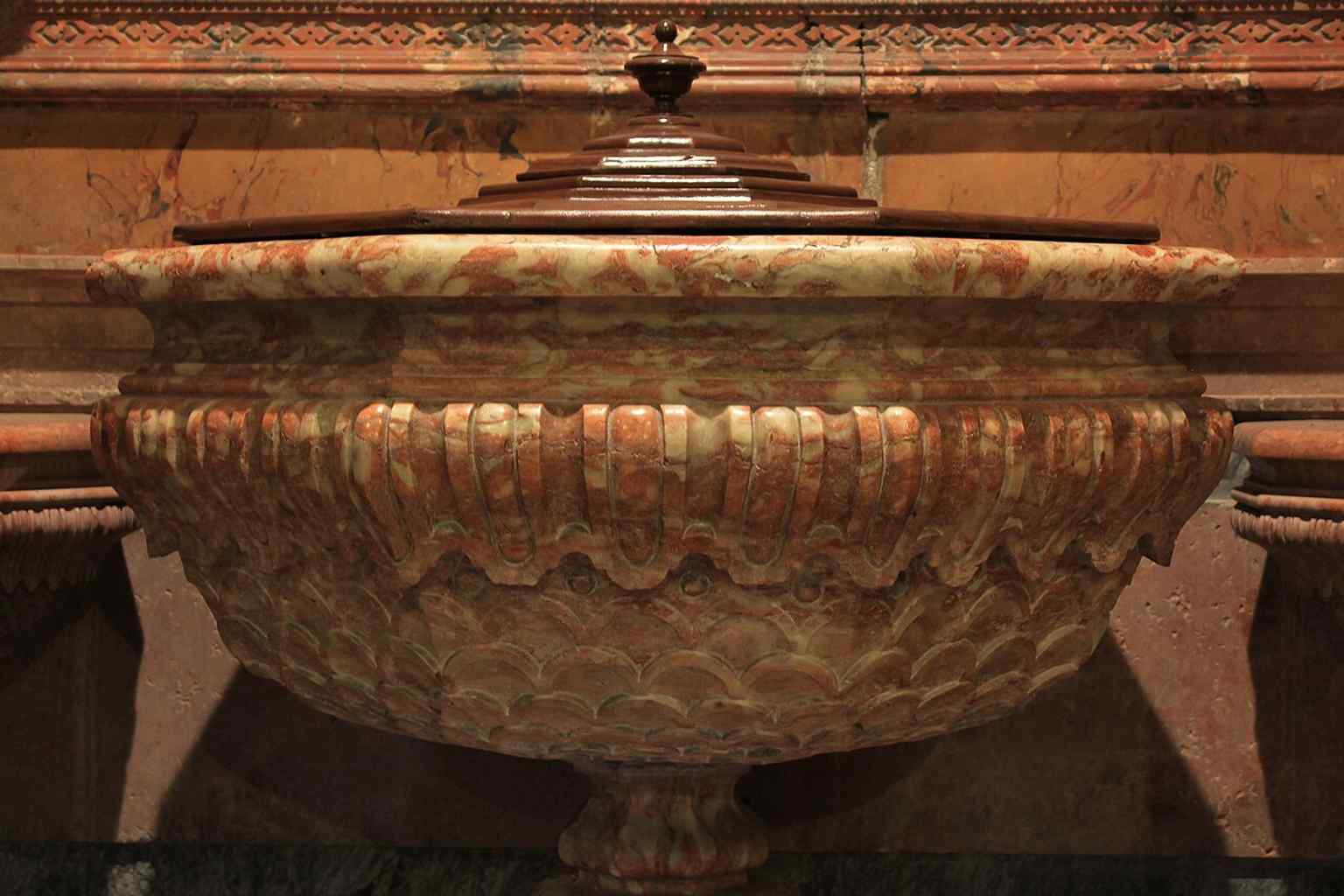
A closer baptistery view highlighting the bronze relief of Christ’s baptism, paired with the cathedral’s 17th-century holy-water fonts.
A closer baptistery view highlighting the bronze relief of Christ’s baptism, paired with the cathedral’s 17th-century holy-water fonts.Photo: John Samuel, Wikimedia Commons, CC BY-SA 4.0. Cropped & resized.
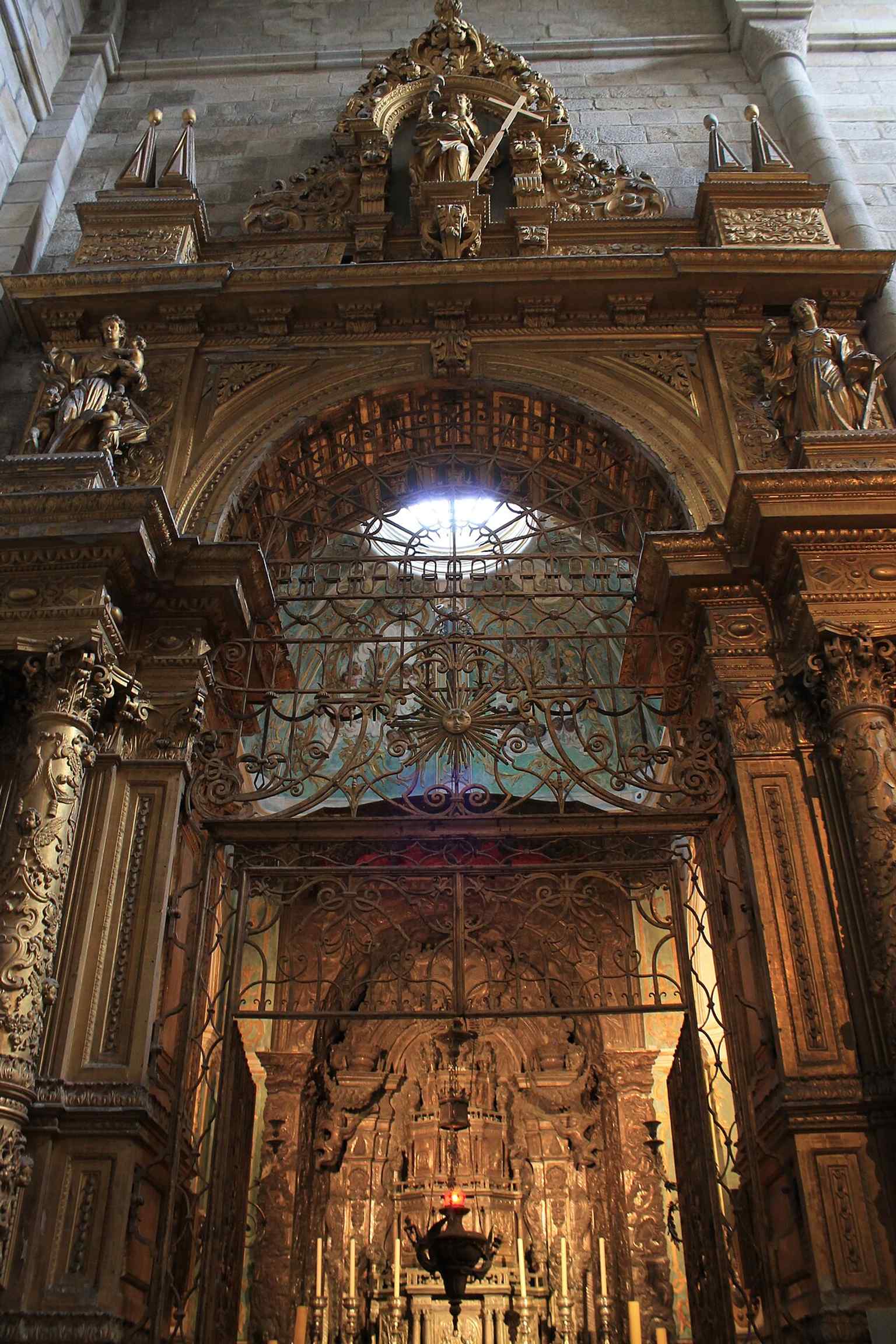
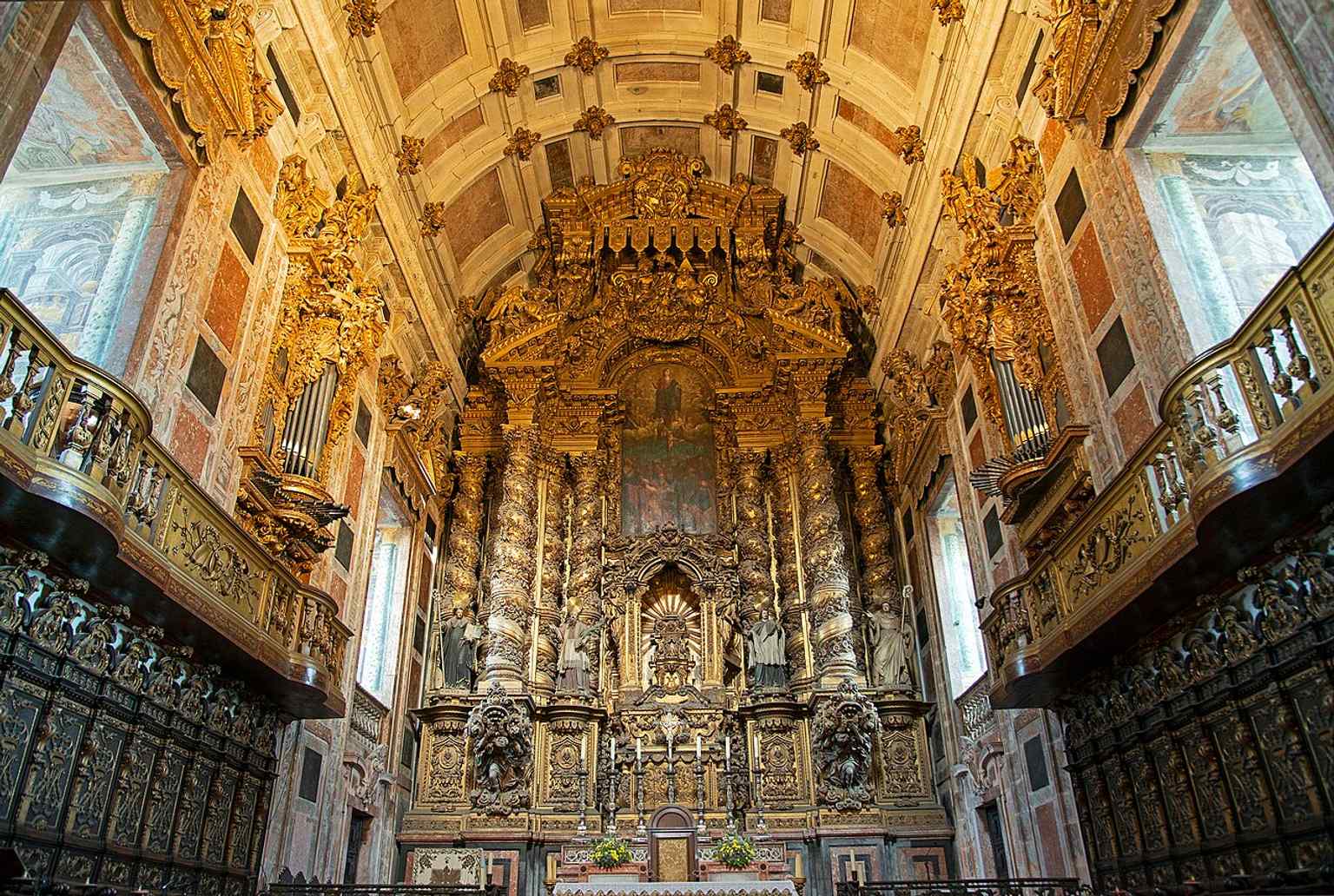
The Chapel of the Blessed Sacrament, home to one of the cathedral’s major Baroque chapels and altar works.
The Chapel of the Blessed Sacrament, home to one of the cathedral’s major Baroque chapels and altar works.Photo: John Samuel, Wikimedia Commons, CC BY-SA 4.0. Cropped & resized.
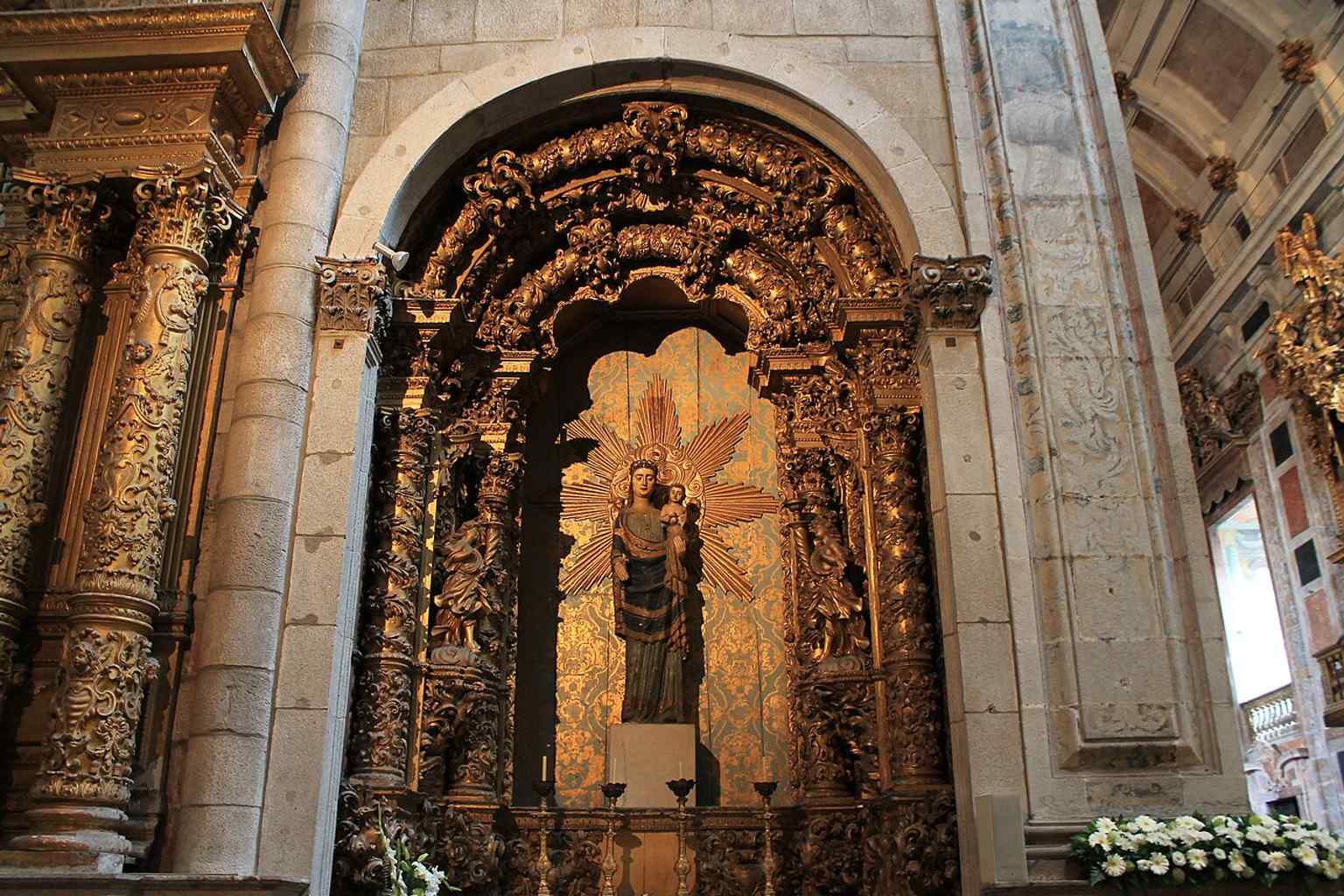
The altar of Our Lady of Vandoma, a good example of the richly layered devotional interiors added over centuries.
The altar of Our Lady of Vandoma, a good example of the richly layered devotional interiors added over centuries.Photo: John Samuel, Wikimedia Commons, CC BY-SA 4.0. Cropped & resized.
A chapel interior in the cathedral complex, showing the Baroque-era sacred spaces that transformed the medieval building.
A chapel interior in the cathedral complex, showing the Baroque-era sacred spaces that transformed the medieval building.Photo: John Samuel, Wikimedia Commons, CC BY-SA 4.0. Cropped & resized.
The cathedral’s galilé with azulejos, reflecting the 18th-century decorative program that gave the entrance area a colorful Baroque touch.
The cathedral’s galilé with azulejos, reflecting the 18th-century decorative program that gave the entrance area a colorful Baroque touch.Photo: John Samuel, Wikimedia Commons, CC BY-SA 4.0. Cropped & resized.
A view from the cathedral tower over Porto, connecting the monument to the historic city it has watched over for centuries.
A view from the cathedral tower over Porto, connecting the monument to the historic city it has watched over for centuries.Photo: JensKunstfreund, Wikimedia Commons, CC BY-SA 4.0. Cropped & resized.
arrow_back Back to Porto Audio Tour: Noble Palaces, Towering Tales & Cathedral Echoes
Loved by travellers

Thousands of tours started.
Plenty of opinions.

4.8 across the App Store and Google Play. Here's a few we keep coming back to.

starstarstarstarstar
This was a solid way to get to know Brighton without feeling like a tourist. The narration had depth and context, but didn't overdo it.
Christoph
Christoph
Brighton Tour
starstarstarstarstar
Started this tour with a croissant in one hand and zero expectations. The app just vibes with you, no pressure, just you, your headphones, and some cool stories.
download Get the app

Pop your headphones in.
Step outside.

Free to download. Tours in every city. Start in 60 seconds — no account, no card.

Download on the App StoreGet it on Google Play
starstarstarstarstar_half
4.8
AudaTours app icon
headphones
~ 4 min until your first tour starts
public
1,000+ cities worldwide
all_inclusive
AudaTours
Unlimited

Every tour. Every city. One subscription.

3101 tours2271 cities138 countries50+ languages