
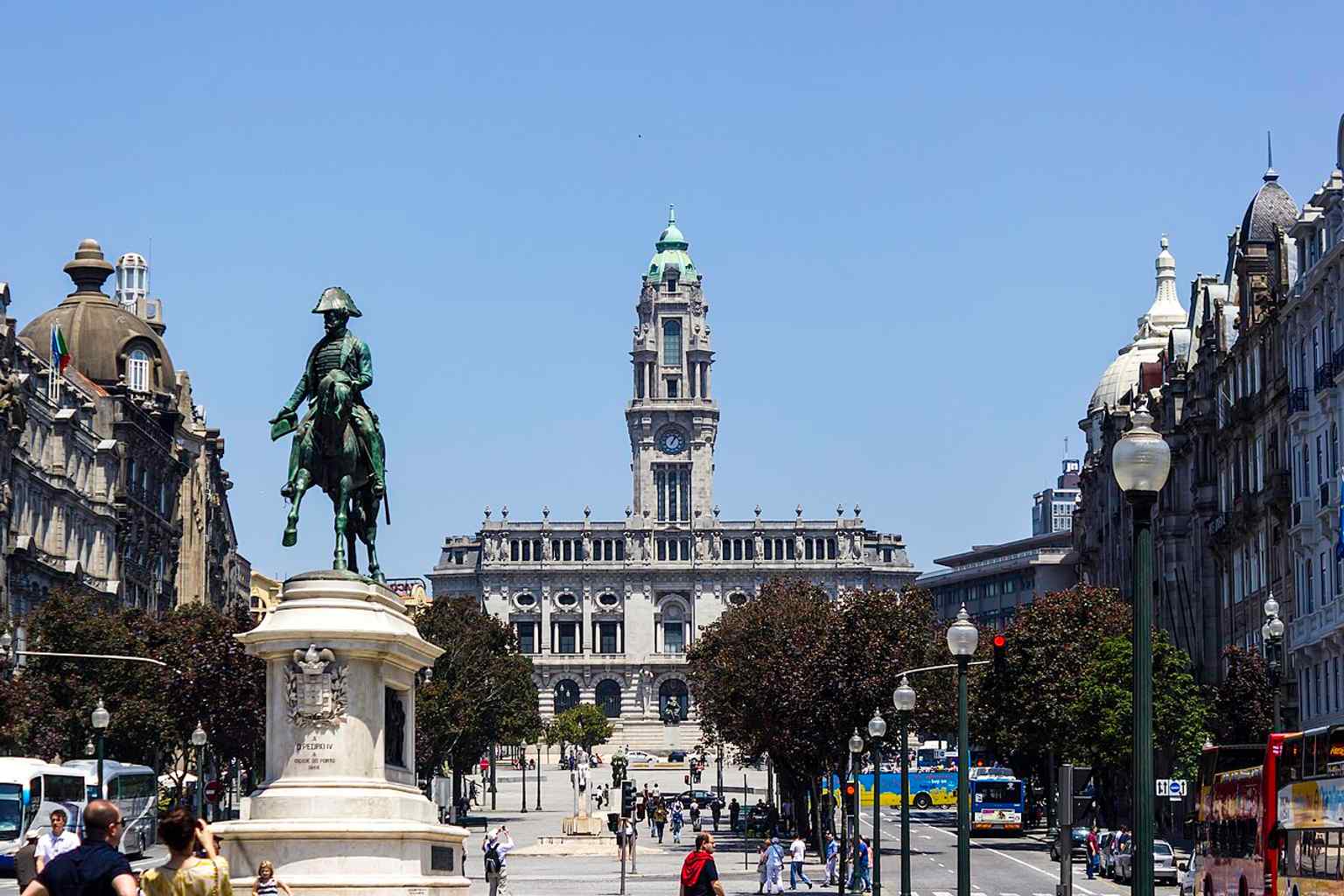
On your left, look for a broad stone-paved square framed by granite façades, with a bronze horseman rising on a tall pedestal at its centre.
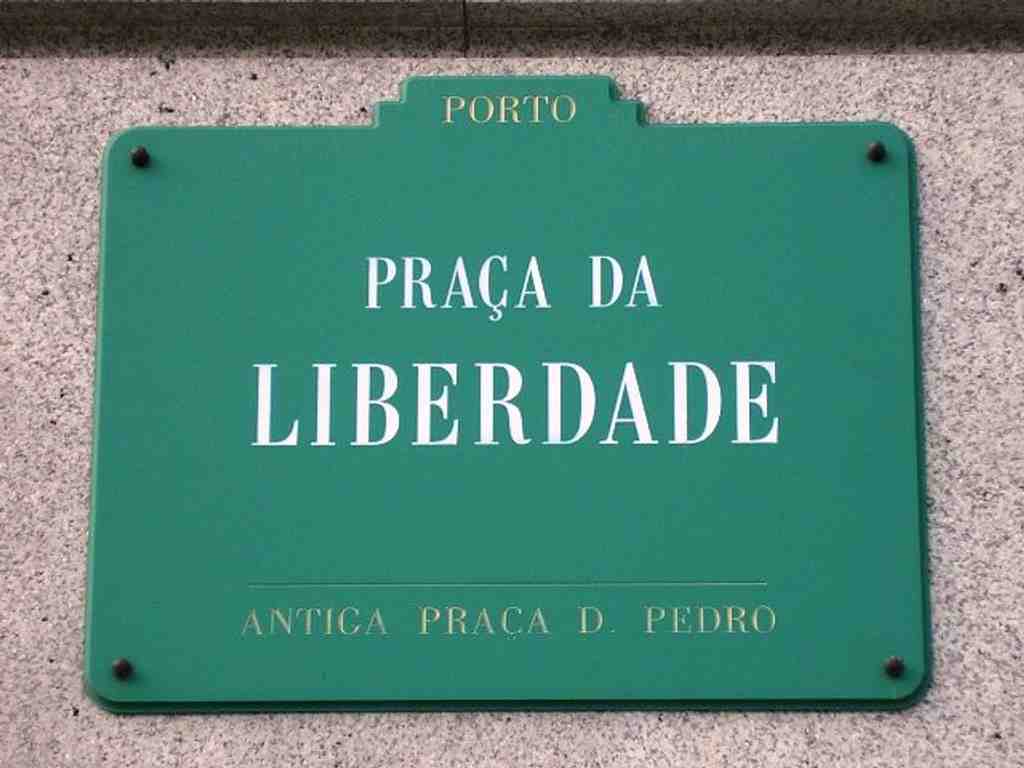
If Porto has a civic stage, this is it. Liberty Square looks open and ceremonial, but the ground beneath that elegance has carried several different identities, and not all of them were gentle. Over the centuries this place answered to names as varied as the Place of the Nativity, the Field of the Orchards, Constitution Square, Dom Pedro the Fourth Square, and, for a few days after the revolution of nineteen ten, Republic Square. On the twenty-seventh of October, nineteen ten, the city settled on Liberty Square, turning a political ideal into an address.
This land began outside the Fernandine walls, the medieval ring that once enclosed Porto. It lay between two gates and belonged to the Cabido da Sé, the cathedral chapter, meaning the body of senior clergy who managed cathedral property. Plans for a public square appeared in sixteen ninety-one and seventeen oh nine, then stalled. In seventeen eighteen, the chapter finally released the land, new streets were cut through, and a formal square began to emerge. By the nineteenth century, with the town hall here, the Dom Luís bridge open, and São Bento station nearby, this had become the city’s political, commercial and social centre.
But Liberty Square keeps one memory that slices straight through the postcard view. In eighteen twenty-nine, under Miguelism, the movement that backed Dom Miguel and absolute monarchy, twelve liberals, men who supported constitutional government, died here for their part in the uprisings of eighteen twenty-eight. Ten were hanged on the seventh of May, and two more on the ninth of October. Municipal memory adds an uglier detail: some severed heads were displayed near homes and public places, making the square not merely a place of ceremony, but a theatre of deliberate terror.
That is why the figure in the middle matters. Dom Pedro the Fourth, mounted in bronze, stands here not simply as a king, but as the champion of the liberal cause against his brother Miguel. When the city unveiled this monument in October of eighteen sixty-six, sculptor Célestin Anatole Calmels and architect Joaquim da Costa Lima turned the pedestal into a political argument in stone and bronze. The reliefs show heroic scenes, including the delivery of Pedro’s heart to Porto and the liberal landing at Mindelo. If you glance at the image on your screen, you can see how completely that statue anchors the whole space.
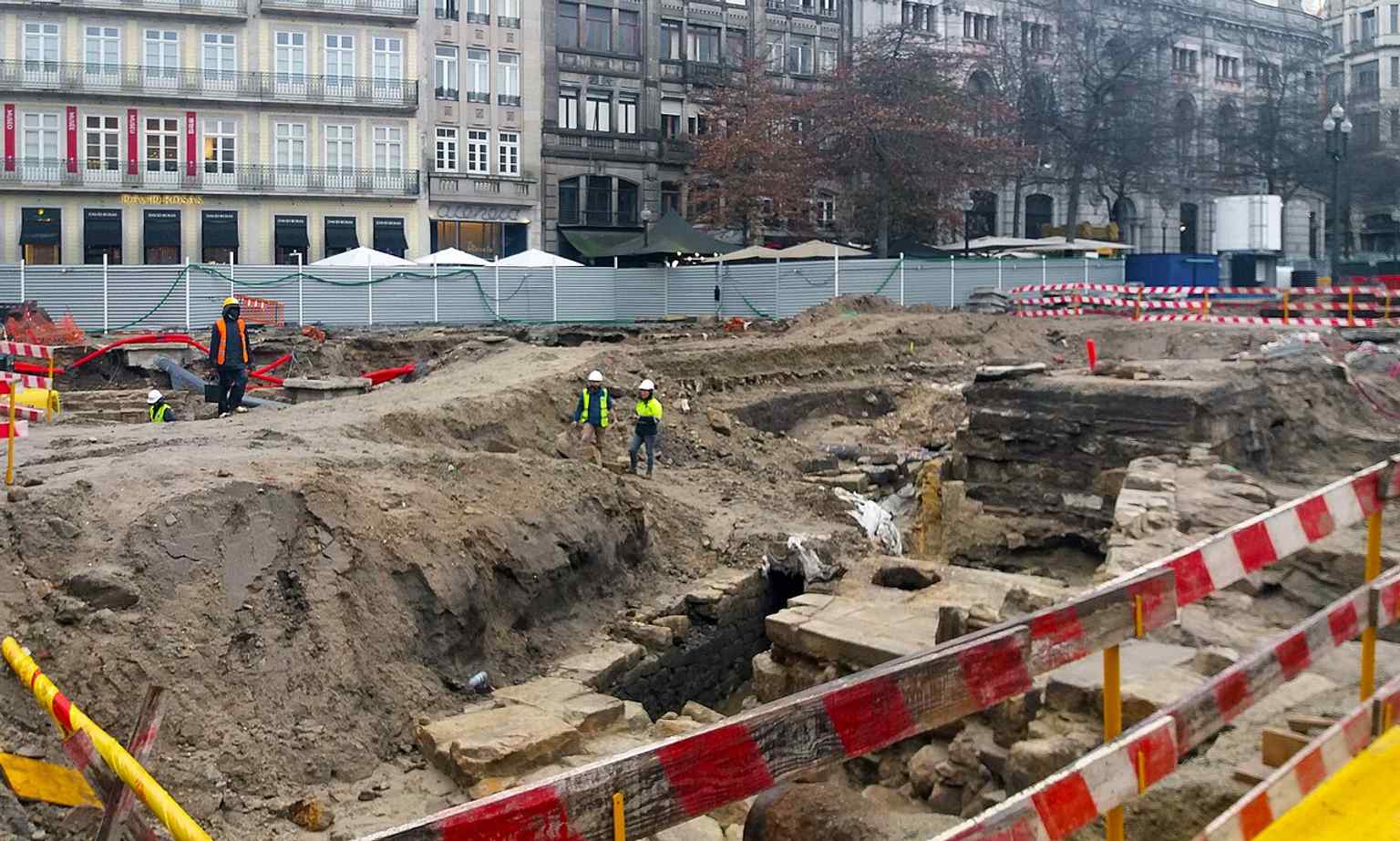
Then came another struggle: who gets to reshape the city. In nineteen sixteen, with President Bernardino Machado present, workers began demolishing the old municipal building at the north end, and Porto opened the grand axis of the Avenida dos Aliados. Old streets vanished. New banks, insurance companies and offices moved in. The Bank of Portugal claimed a prominent plot soon after. Even later plans imagined sweeping viaducts and the destruction of medieval blocks nearby. In Porto, planning rarely meant only traffic or beauty; it also meant power, visibility and control. The metro works shown in another image remind you that this centre still changes under pressure.
From this broad public theatre, we now head toward Santa Clara, where authority and belief retreat behind church walls and speak in a more intimate register. And, fittingly for the city’s public heart, the square itself is open at all hours.






