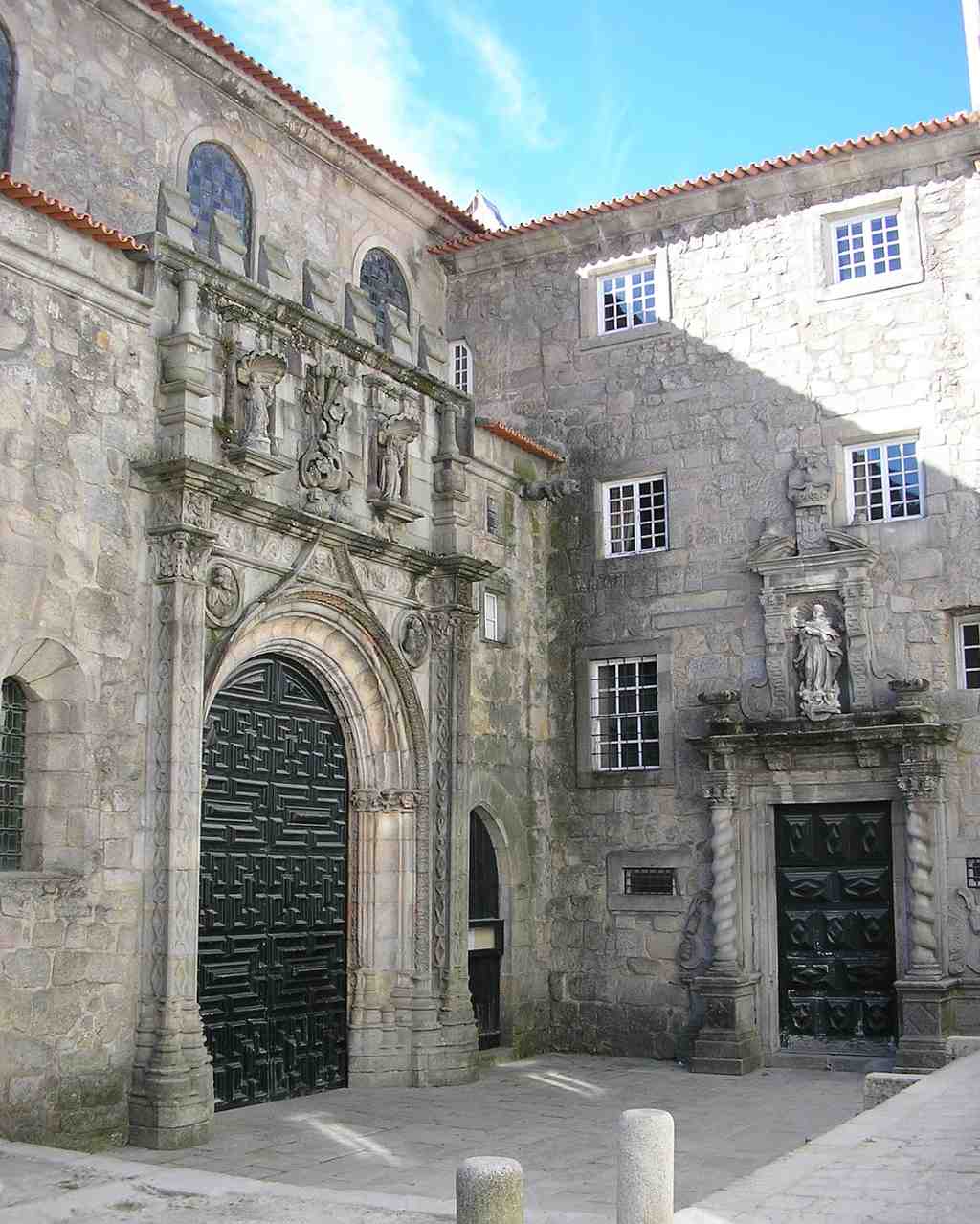
On your right, look for a pale granite church with a plain, block-like façade, a Baroque doorway framed by twisted columns, and the medieval wall running close beside it.
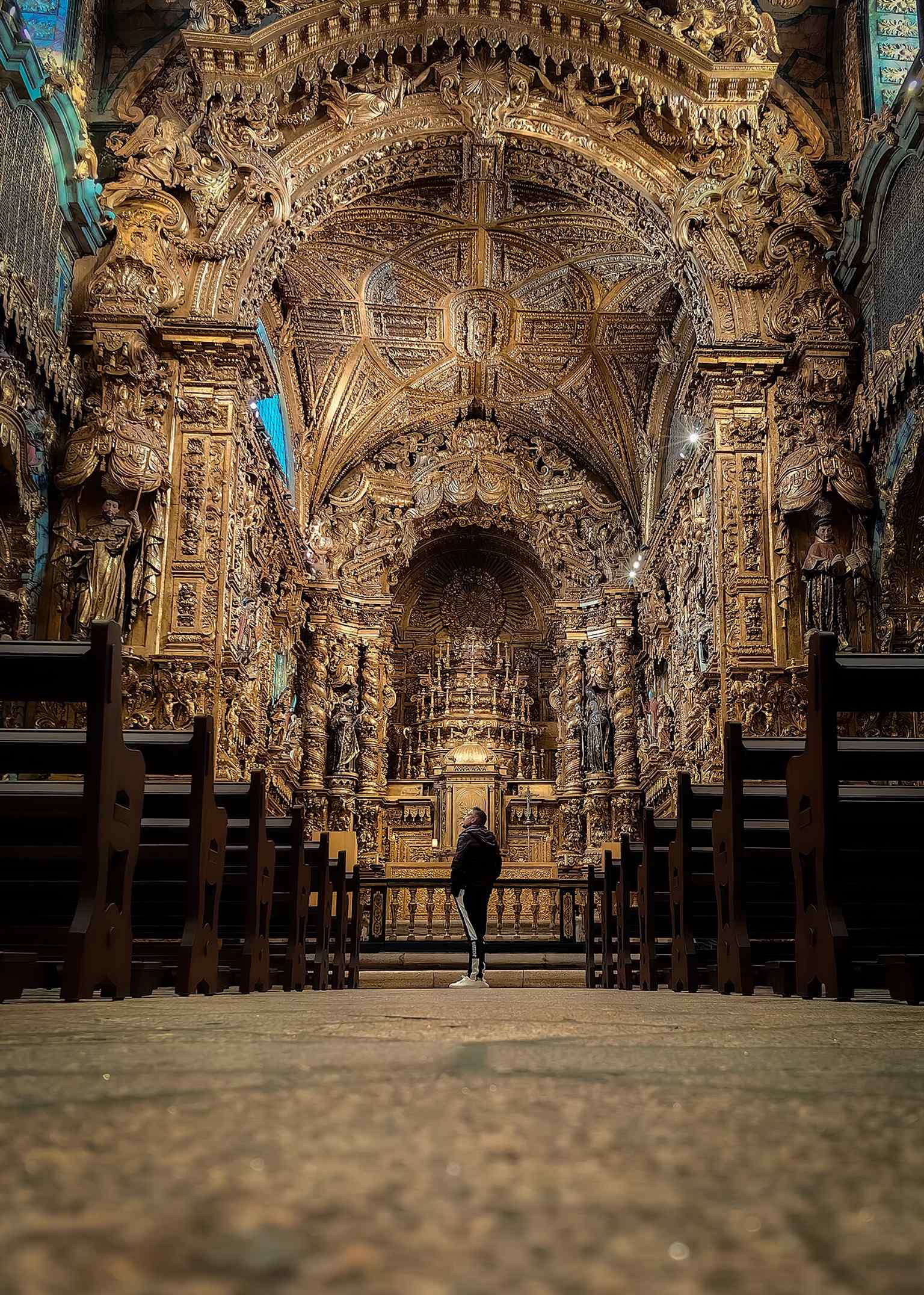
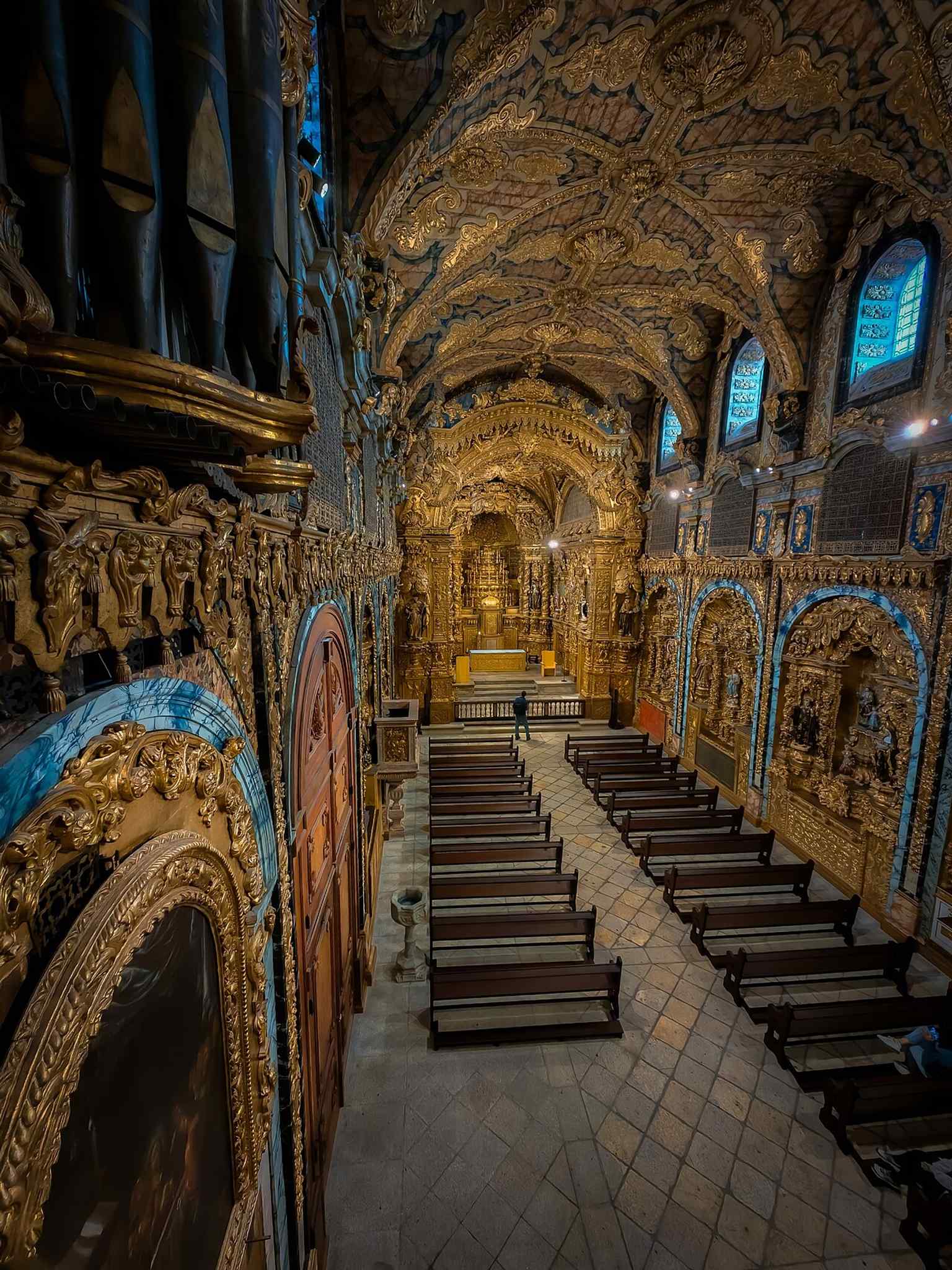
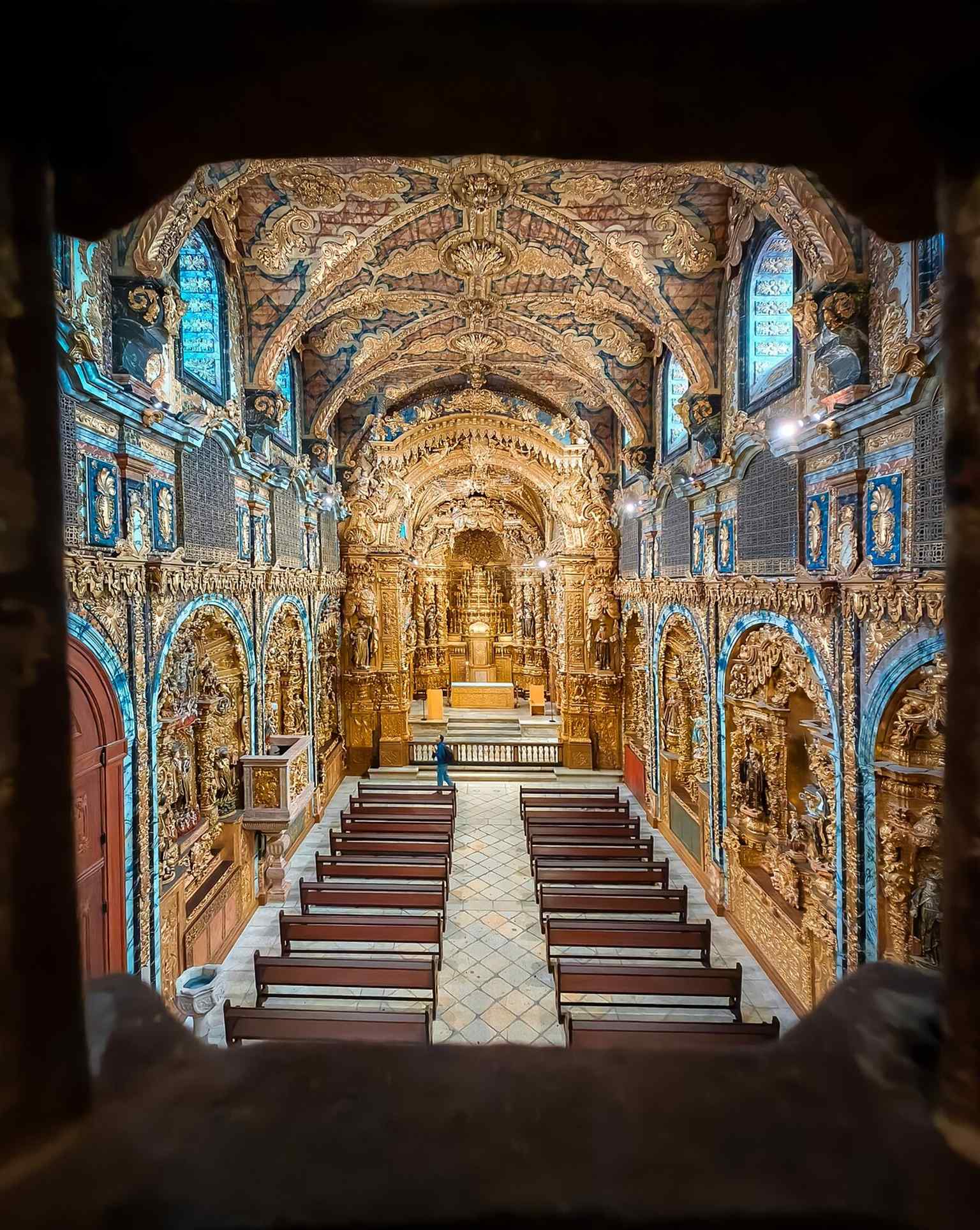
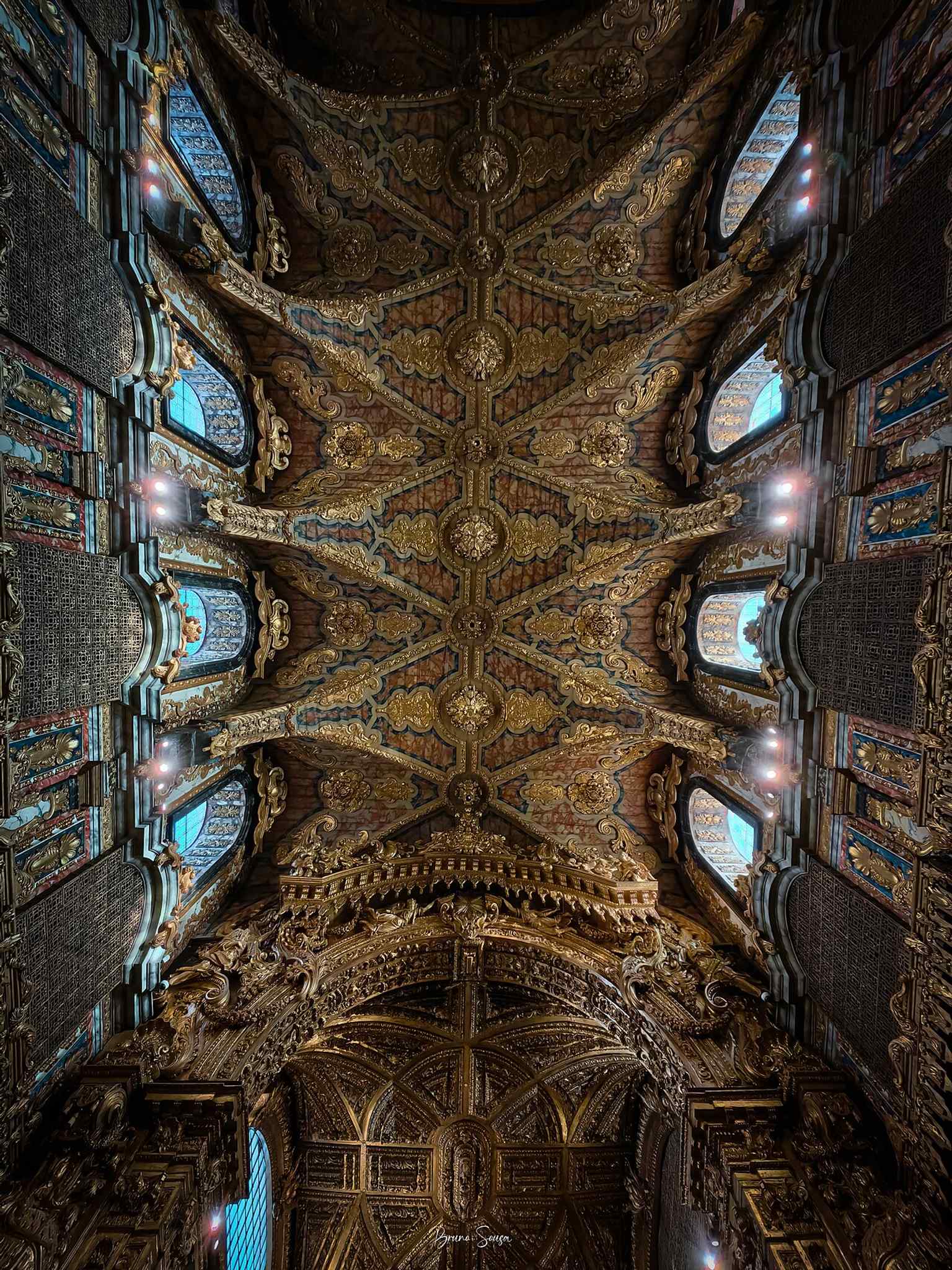
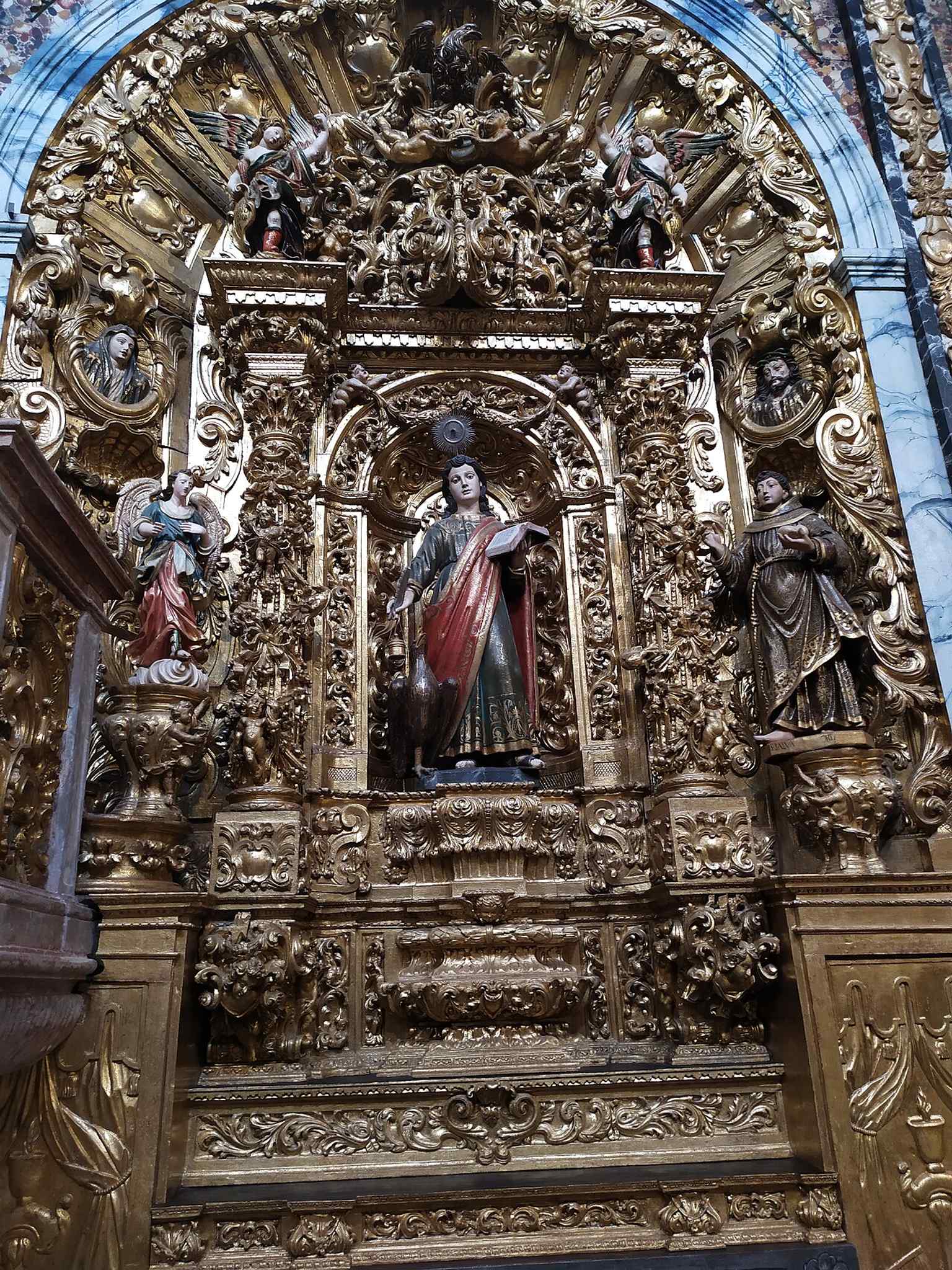
Santa Clara keeps its greatest surprise indoors. From the street, it seems almost restrained; inside, the church opens into one of Porto’s most astonishing displays of carved wood covered in gold leaf, a Baroque skin laid over centuries of prayer. Places like this remind you that Porto often hides its splendour behind severe exteriors, and that the brilliance usually rests on lives history barely names: enclosed women, hired craftsmen, donors, organ tuners, sacristans, all working beyond the public gaze.
The women here were the Clarissas, Franciscan nuns who moved into this new monastery in fourteen twenty-seven after asking to leave their older thirteenth-century house at Entre Ambos-os-Rios, in what is now Torrão. The church itself took longer, reaching completion in fourteen fifty-seven. Records say the king financed much of the work, and the dedication was celebrated in the presence of Fernando da Guerra, the royal family, and the court. So although the sisters lived behind enclosure, their house stood at the centre of powerful networks.
Over time, smaller convents were closed and more nuns joined Santa Clara, bringing income with them. One revenue stream even came from a toll charged on goods moving along the Douro. That money fed a living institution, not a silent relic. Locals who know the archives will tell you the proof survives in expense books: in August of sixteen thirty, the organist was paid to repair the organs, and in July of sixteen sixty, a priest from Braga, Sebastião de Araújo, tuned and repaired both the main organ and the little regal, a small portable keyboard, for four thousand réis. It is such a precise, ordinary note, and it changes everything. Suddenly the gilding is not decoration but the backdrop to daily Mass, music, and routine devotion.
If you glance at the app, the interior image reveals that transformation. Between seventeen thirty and seventeen thirty-two, Miguel Francisco da Silva enlarged the church and wrapped it in gilded carving, while an earlier main altar structure had already been executed by Bartolomeu Gomes on a base by Bento Cordeiro. The crown even sent four thousand cruzados to Mother Clara de São Francisco through Teodósio Pereira. Later, Abbess Guiomar Jerónima da Visitação founded a confraternity here in seventeen forty-eight, binding new devotion into the old house.
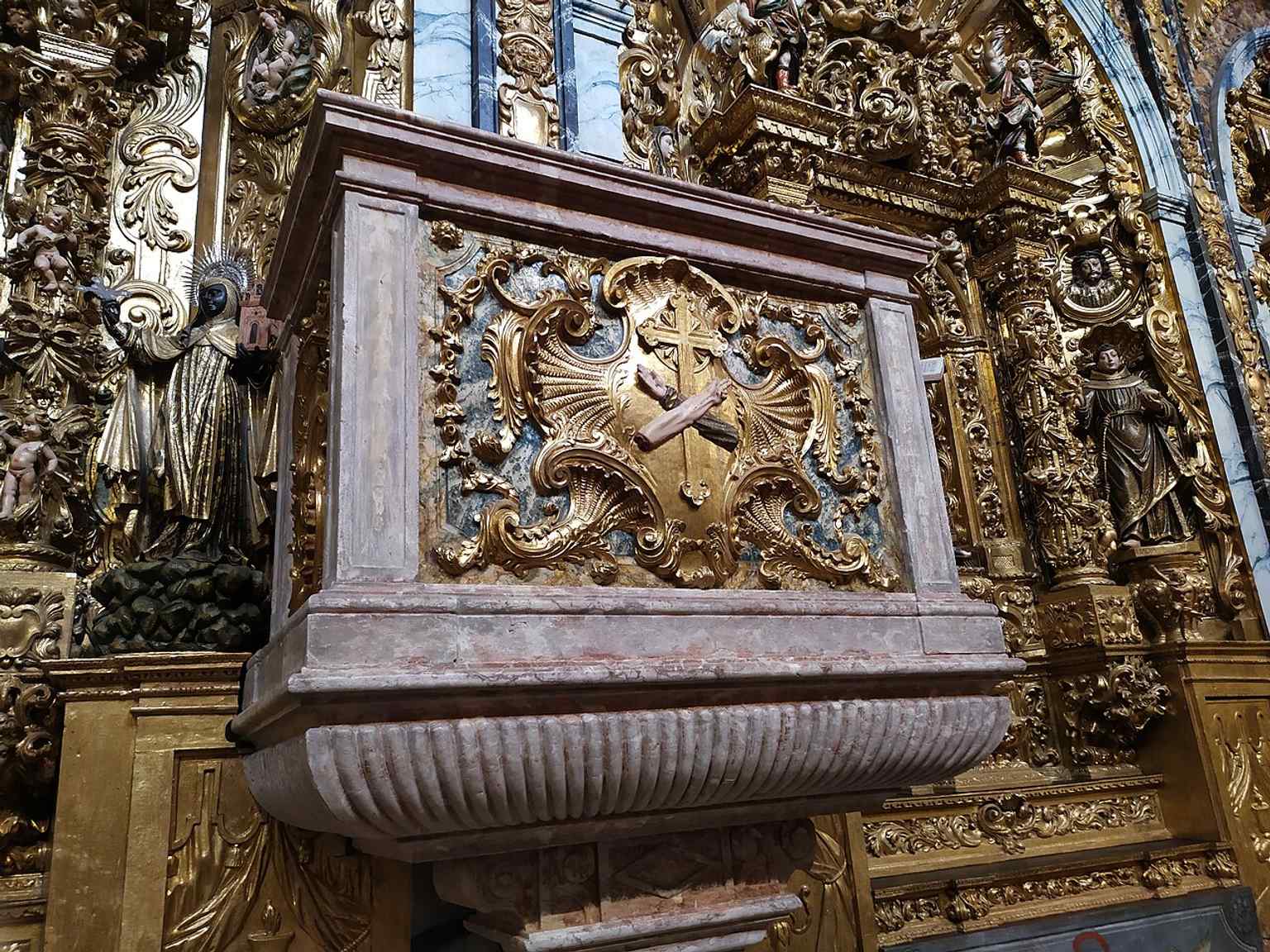
Then came loss and reinvention. French troops carried off part of the convent treasure, the religious orders were suppressed in eighteen thirty-four, and Santa Clara endured only until the last nun died in nineteen oh one. After that, the complex served the state, a health dispensary, and other institutions. Recent conservation, from two thousand and sixteen to two thousand and twenty-one, stabilised the building and uncovered painted saints on wood, a granite slab from sixteen forty-five, and older winged angels hidden beneath later gilding. You can see the care of that work on your screen. Here, beside the Fernandine wall, enclosure meets defence. In about four minutes, at Porto Cathedral, we’ll see how that same edge of the city turned faith into something more openly commanding. If you plan to go in, the church generally opens in the morning and again in the afternoon, with a midday closure.