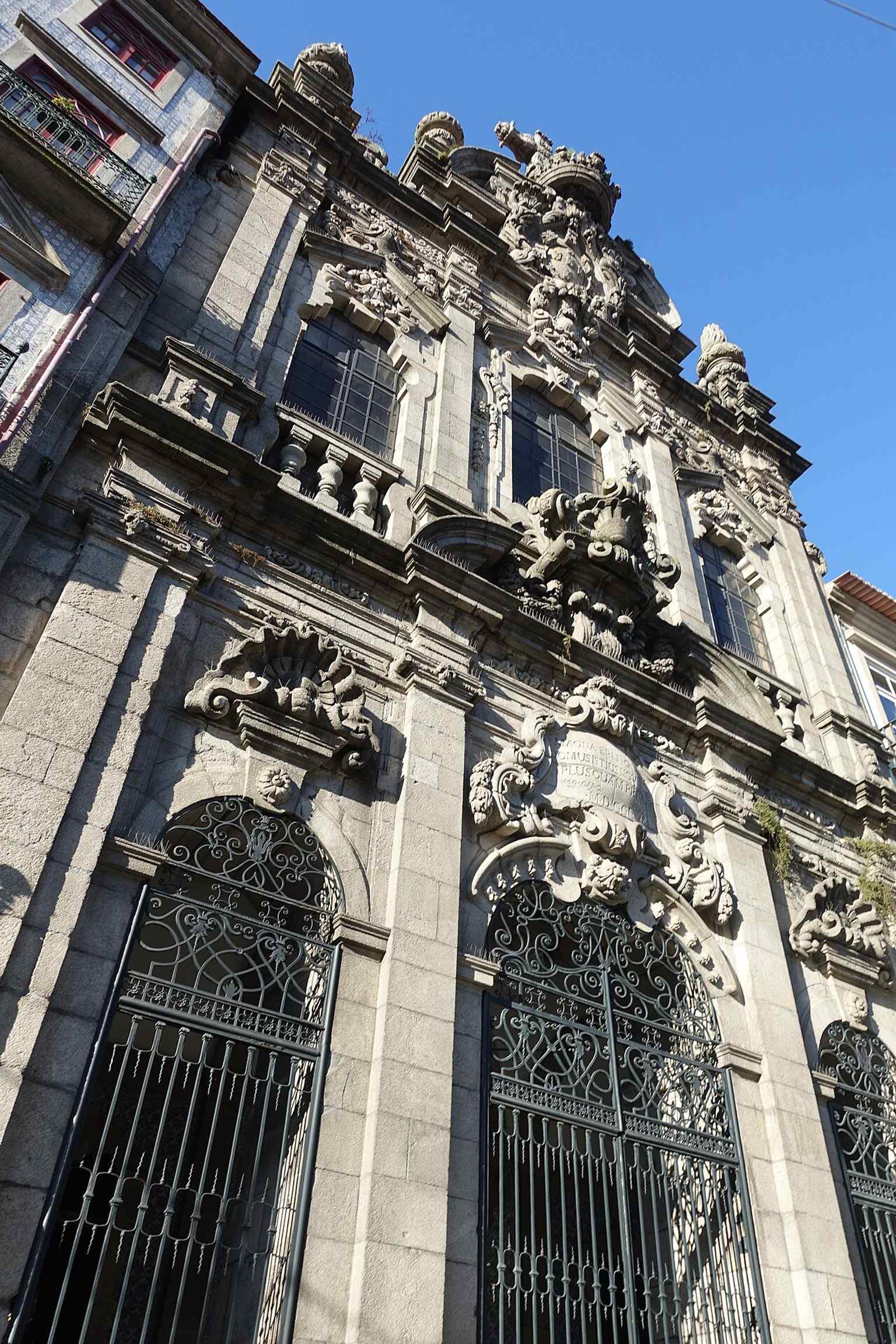
On your right stands a pale granite façade like a stone theatre set, with three open arches at ground level, richly curling split pediments above, and a carved stone cross rising from the crown.
This is the Church of Misericórdia do Porto, on Rua das Flores, and it tells you something important about Porto: care here did not live only in private kindness. It took offices, money, stone, signatures, and influence. The Santa Casa da Misericórdia was a brotherhood of charity, certainly, but also an engine of urban power, managing help for the vulnerable through a very public institution.
Its story begins with royal encouragement. Around fifteen hundred, King Dom Manuel the First urged Porto’s leading citizens to found a confraternity like the one in Lisbon. They did, and by fifteen hundred and two the Misericórdia had taken shape. At first it worked from a chapel by the cathedral, but Rua das Flores had become one of the city’s important arteries, so in fifteen fifty-five the brotherhood moved its administrative house here and began this church.
If you glance at the image in the app, you can see how theatrical the front is, almost all façade and flourish, as if the church is presenting itself to the street in a single dramatic gesture. Yet most visitors never realise they are not looking at the original church entire. Only the chancel, the sacred eastern end around the main altar, truly survives from the sixteenth-century building. In April of sixteen twenty-one, lightning struck and destroyed the façade. People sometimes confuse the date because new interior tiles arrived in sixteen twenty-eight, but the blow came earlier, and it changed everything.
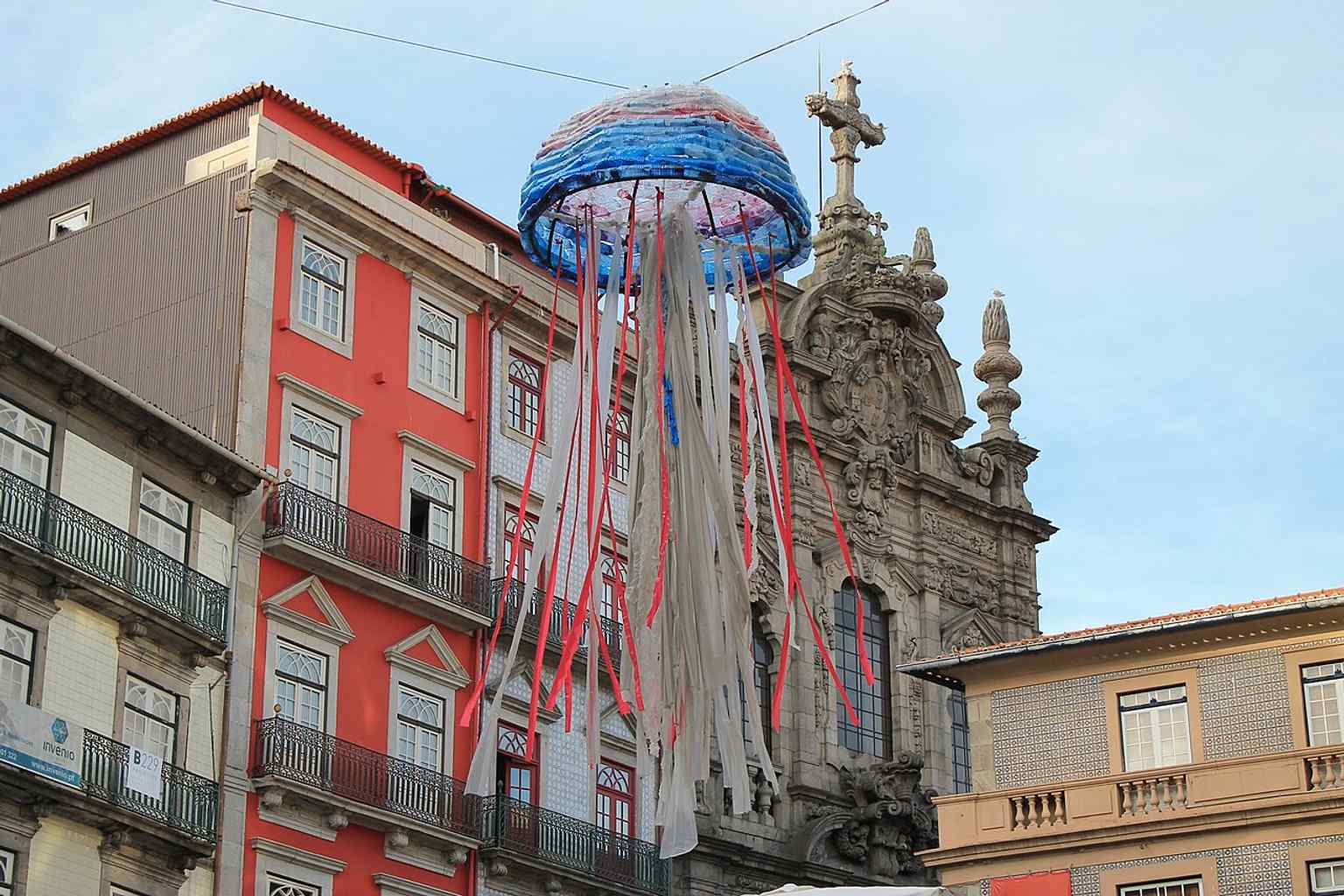
That is where the human story sharpens. Dom Lopo de Almeida helped make the chancel possible through his patronage, and he lies buried here. The stone came from the quarry at Monte de Mijavelhas. Father Gonçalo Vieira supervised the work. And the noble idea of charity met a stubborn reality: the project kept stopping because people worried it was becoming too expensive. Even the organ joined the trouble. Salvador Rebelo built one in the fifteen nineties, only for it to fall badly out of tune within a few years, forcing repairs and promises of regular maintenance.
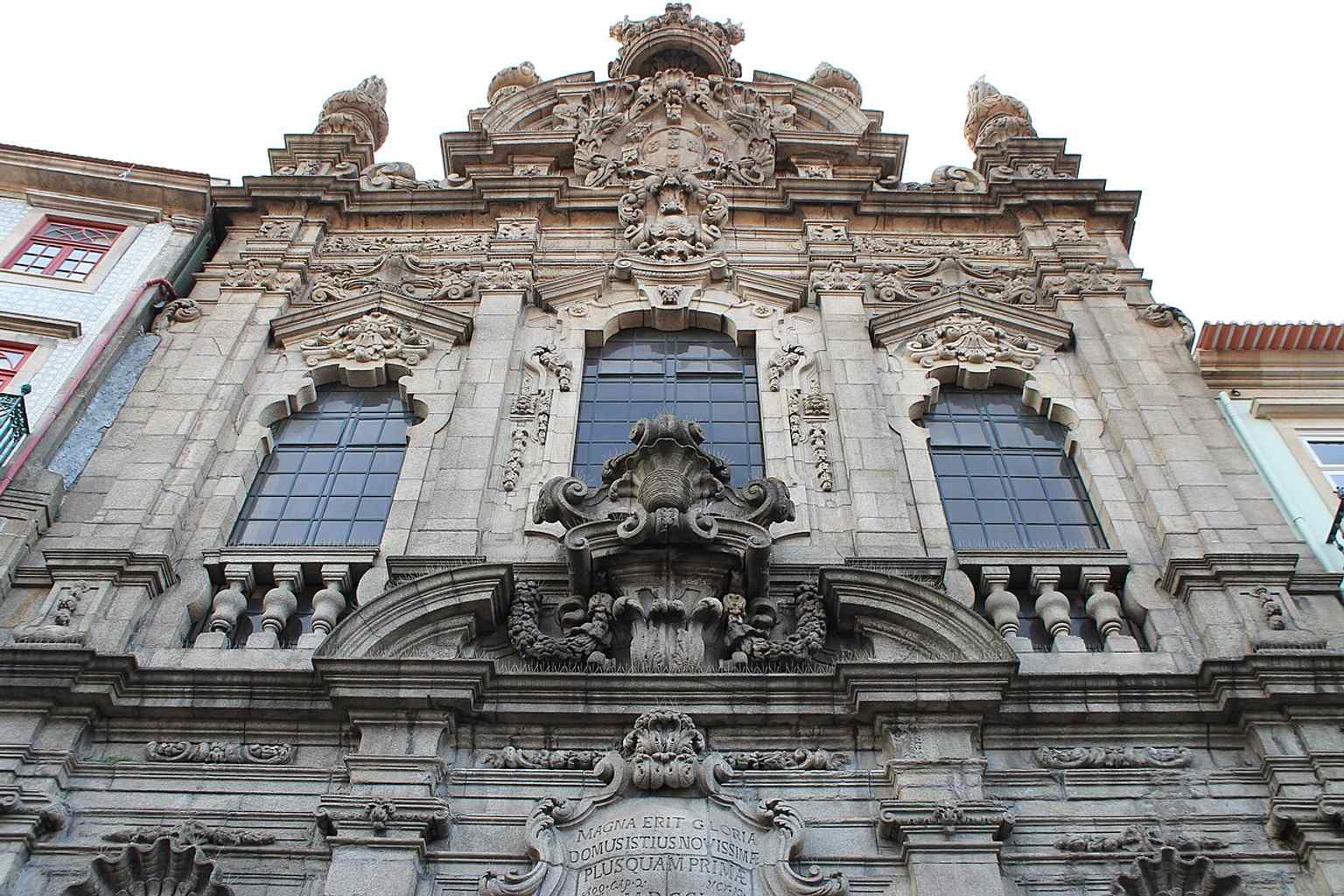
By the eighteenth century the church had become dangerously neglected. In seventeen forty, the brotherhood called in experts, including Nicolau Nasoni, to judge whether the structure was safe. After the vault fell, Nasoni prepared several designs. The Misericórdia chose the simplest option in seventeen forty-eight, which in Porto rather amusingly still meant abundance: heavy sculpture, swelling curves, shells over the side arches, and that great crest of the brotherhood under the royal crown. If you look at the second image, you can read the rebuilding in the stone itself: an eighteenth-century face laid over a much older devotional core. So ask yourself this: which leaves the deeper mark on a city, the men who rule it from above, or the institutions that quietly organise care, burial, memory, and relief for those history usually forgets?
From here, let your eyes travel toward the landmark where faith, ambition, and a single soaring tower claim the skyline more boldly still: Clérigos is about ten minutes away. If you want to come back inside later, the church is generally open every day from ten in the morning until half past six.