
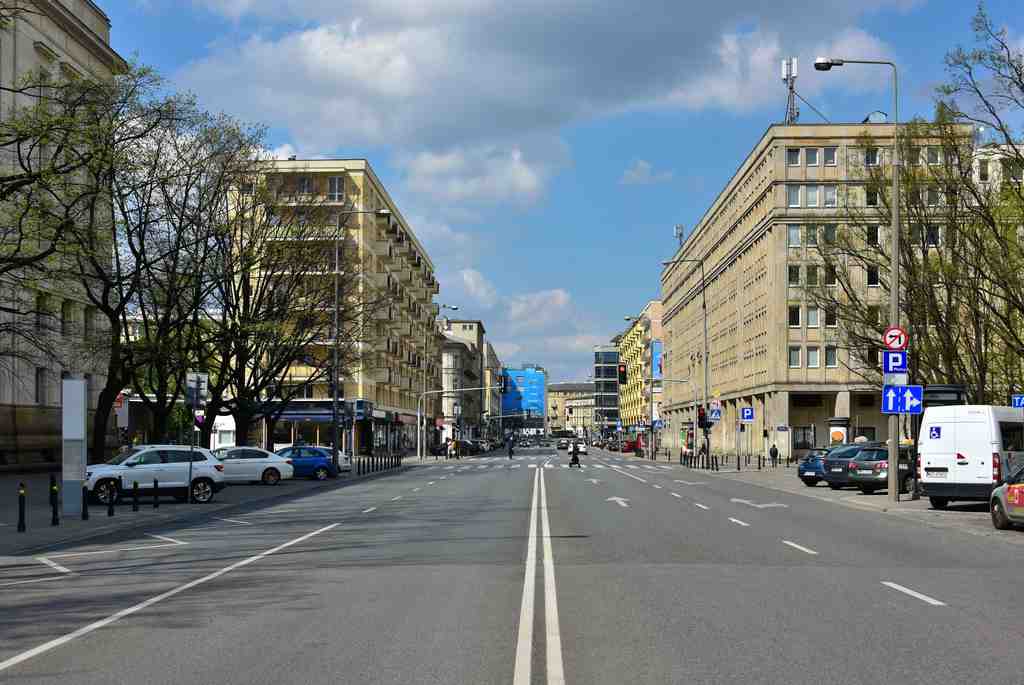
Look for the broad asphalt street lined with stone and concrete façades, with a sharp wedge-shaped corner building marking the split where Krucza meets Mokotowska and Piękna.
Krucza began, very appropriately, as a practical problem. Around seventeen seventy, the street started here and ran only as far as beyond Nowogrodzka, then stopped. The city wanted to push it farther, but the ground ahead was wet and troublesome, and that difficult patch helped give the street its name. Not every urban legend gets such muddy credentials.
This is where Warsaw’s ordinary metabolism mattered. Krucza grew through errands, rent, fabric, hats, and shop windows... not through ceremony. After eighteen seventy, builders packed both sides with rental tenements. Before the First World War, people came here for cheap women’s clothing. Later, Krucza became known for women’s hat shops too. The street stayed narrow, busy, and full of ground-floor trade. If the palm on Aleje Jerozolimskie plays the diva, Krucza handled the receipts.
In eighteen twenty-three, the street finally connected to the newly laid Droga Jerozolimska, today’s Aleje Jerozolimskie, and that turned it from a stub into a working city artery. By the late nineteenth and early twentieth century, it had the kind of urban texture cities rarely plan well: crowded sidewalks, small commerce, and buildings that earned their keep floor by floor.
Then war tore through that texture. Some buildings burned in September nineteen thirty-nine, and the Second World War destroyed almost all of Krucza. At the start of the Warsaw Uprising, soldiers from the Bełt and Kiliński battalions raised a barricade between numbers seventeen, now twenty-three, and twenty-two. So even this shopping street became a front line.
After the war, planners widened Krucza to thirty-four meters in nineteen forty-nine. They cleared the ruined eastern frontage entirely and kept only a few prewar tenements on the west side. Ministries and central offices moved in. At Krucza thirty-six and Wspólna six, architect Zbigniew Karpiński finished a major office building in nineteen fifty-one. Then came Metalexport in nineteen fifty-six, right at this end of the street. The idea was a ministry district. It looked efficient on paper and lifeless after five o’clock, so the city eventually added housing and, in nineteen fifty-seven, the Orbis Grand Hotel.
If you check the image in the app, you can see that assertive corner development here. During construction nearby, workers even uncovered a tobruk - a small reinforced-concrete bunker from nineteen forty-four - and sent it to the Warsaw Uprising Museum.
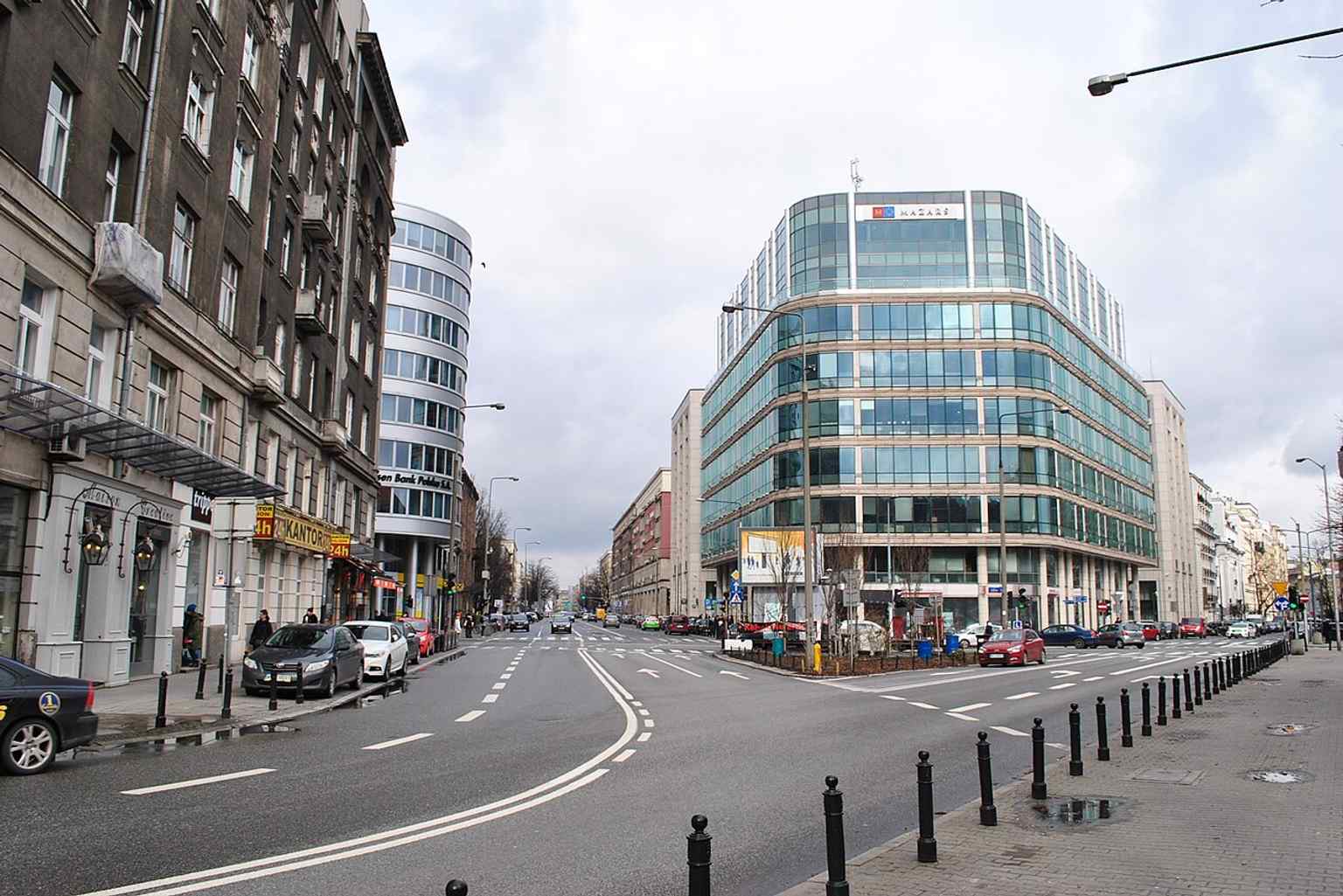
Krucza later glowed with neon too: a pink rooster for Polskie Nagrania, a record label, and a yellow-gowned lady advertising chocolates at Bombonierka. That is the point of this street. To understand Warsaw, you have to read shopfront habits and street plans as carefully as monuments. From here, Piękna Street waits about eight minutes away.





.jpg)