AudaTours logoAudaTours

Stop 3 of 16

Wawel Cathedral

Wawel Cathedral
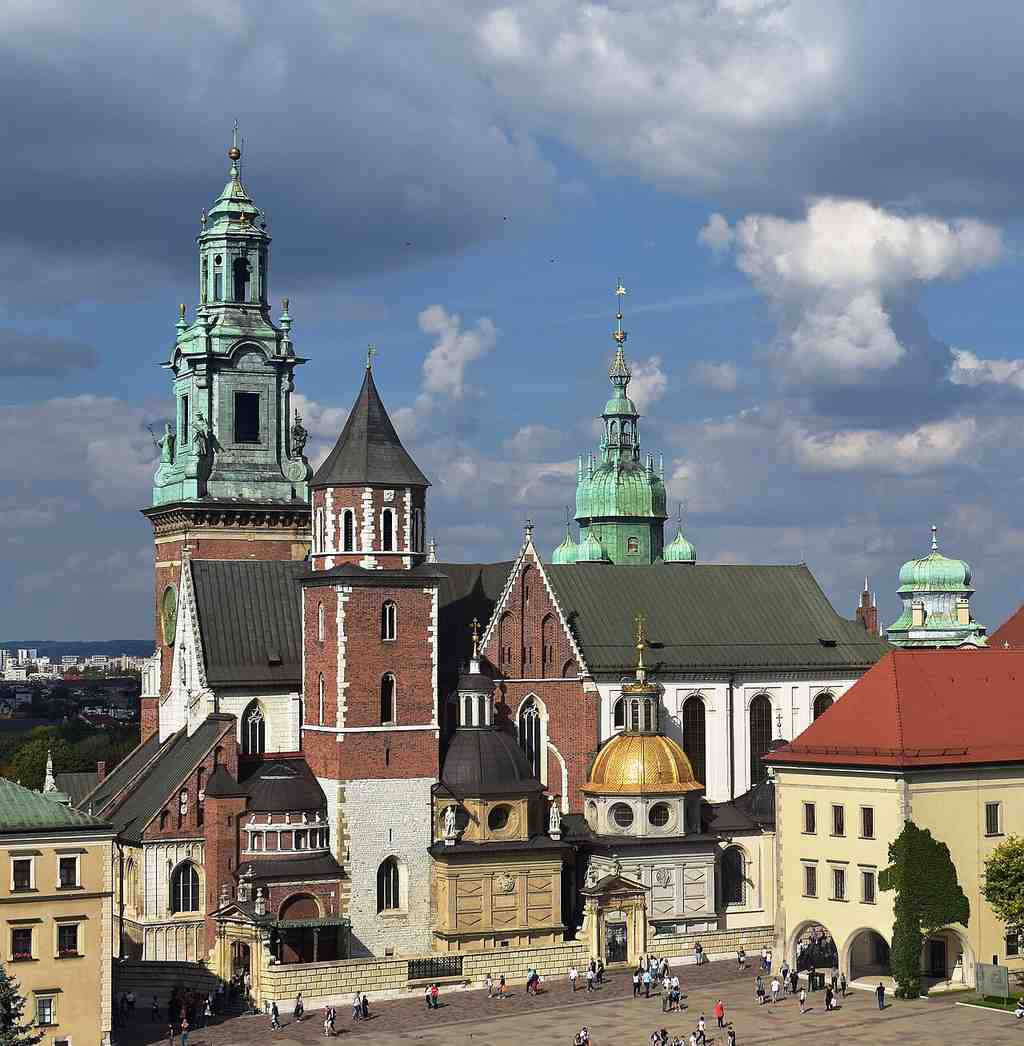
Archcathedral Basilica of St. Stanislaus and St. Wenceslas in Krakow
Archcathedral Basilica of St. Stanislaus and St. Wenceslas in KrakowPhoto: Zygmunt Put, Wikimedia Commons, CC BY-SA 4.0. Cropped & resized.

In front of you stands a red-brick and pale limestone cathedral façade, broad and vertical, marked by a round rose window and the tall Clock Tower rising above the left side.

This is the church where Polish rule came to be blessed, buried, and rebuilt... sometimes all at once. If the castle next door staged power, this place gave that power a sacred script. That is what sacred patronage means here: rulers funded cathedrals, chapels, and dedications so political authority stood inside holy space, not beside it.

The ground under this cathedral had already lived more than one life. Around the year one thousand, after the bishopric of Krakow was created, Bolesław the Brave began the first cathedral here and dedicated it to Saint Wenceslas. Later, at the turn of the eleventh and twelfth centuries, Władysław Herman and then Bolesław the Wry-Mouthed raised a second Romanesque cathedral of limestone and sandstone. Romanesque means thick walls, rounded forms, and a fortress-like gravity. Fire destroyed that church in the early fourteenth century... but the site refused to give up.

On the twentieth of January, thirteen twenty, in that damaged older cathedral, Archbishop Janisław crowned Władysław Łokietek king of Poland near the relics of Saint Stanislaus. That moment mattered enormously. It began the tradition of crowning Polish monarchs here, binding the kingdom to this hill with ritual, memory, and a little theatrical certainty. Soon after, Bishop Nanker started the Gothic cathedral you see now, and in thirteen sixty-four, in the presence of King Casimir the Great, it was consecrated.

Gothic, by contrast, aims upward: pointed arches, ribbed vaults, and a lighter skeleton. This church took the form of a basilica, meaning a tall central hall with lower side aisles, crossed by a transept, the arm that gives the building its cross-shape. Around that Gothic core, later centuries added a ring of chapels, each one a statement of rank, devotion, or dynastic ambition. The kings were not subtle about it. They rarely are.

Most people standing out here never quite picture what still survives below. Beneath this later cathedral lies the Romanesque Crypt of Saint Leonard, a buried fragment of the earlier church. It is one of those places where Krakow’s earlier self never really left, it just moved underground and kept its dignity. If you want to see that hidden layer, take a glance at the crypt image in the app.
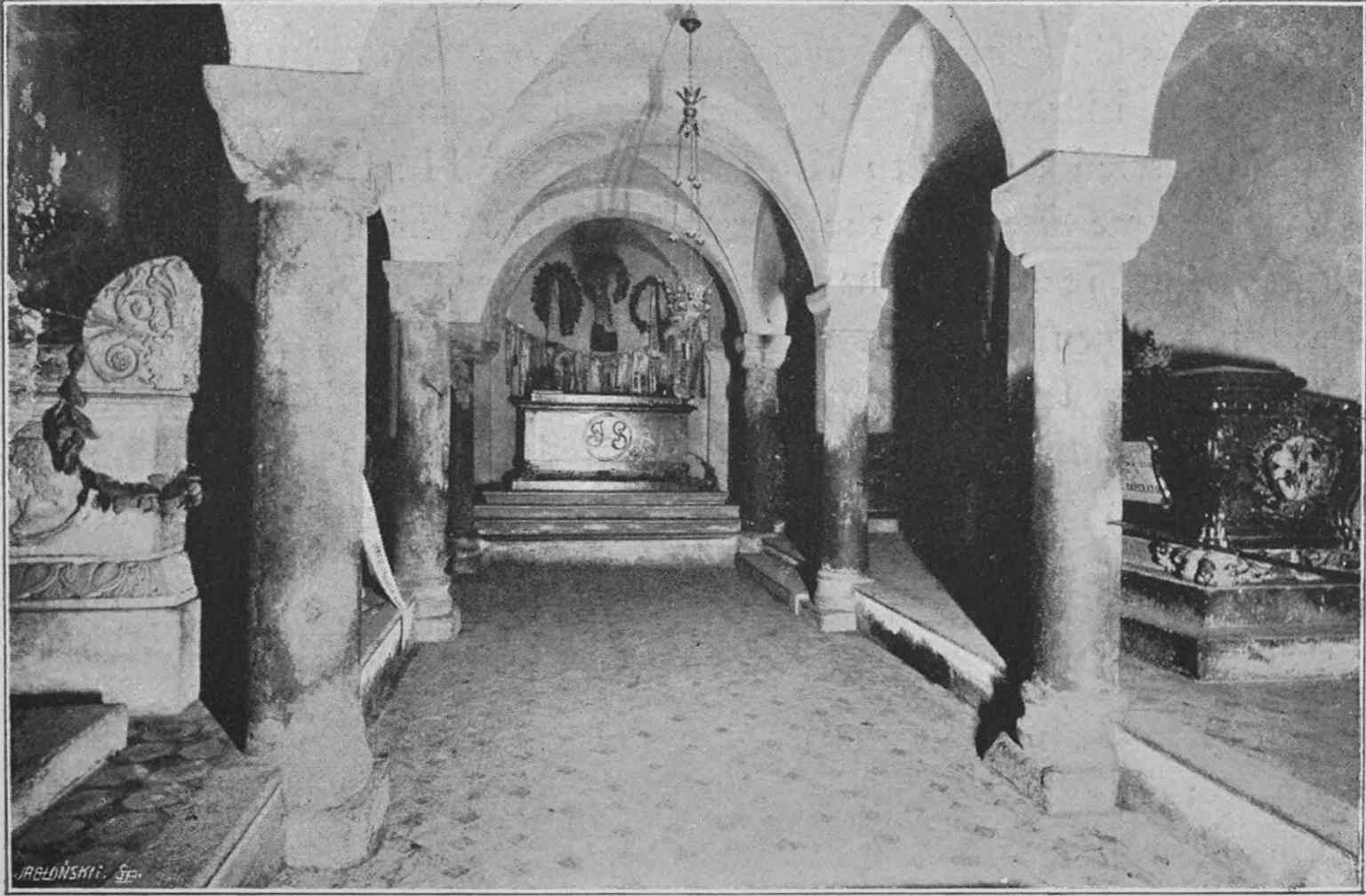
An early 20th-century look at the Romanesque crypt, the underground remnant of the older cathedral beneath today’s Gothic church.
An early 20th-century look at the Romanesque crypt, the underground remnant of the older cathedral beneath today’s Gothic church.Photo: AnonymousUnknown author, Wikimedia Commons, Public domain. Cropped & resized.

And this church kept collecting meaning. Many Polish rulers from Łokietek to Stanisław Leszczyński rest here, along with bishops, generals, and poets. Over time, a royal necropolis became a national pantheon. Karol Wojtyła, the future Pope John Paul the Second, celebrated his first Mass here in nineteen forty-six and became a bishop here in nineteen fifty-eight. Same building, different century, same claim to continuity.

If you check the before-and-after image, you can see how the cathedral still commands Wawel even as the hill around it changed from open ground to the more shaped setting of today.

From here, that sacred authority begins to flow downhill into the city’s streets, walls, and parish churches. Our next stop, Saint Andrew’s Church, is about a seven-minute walk away. If you want to step inside later, the cathedral usually opens from nine to four-thirty, with Sunday hours beginning at half past twelve and ending at four.
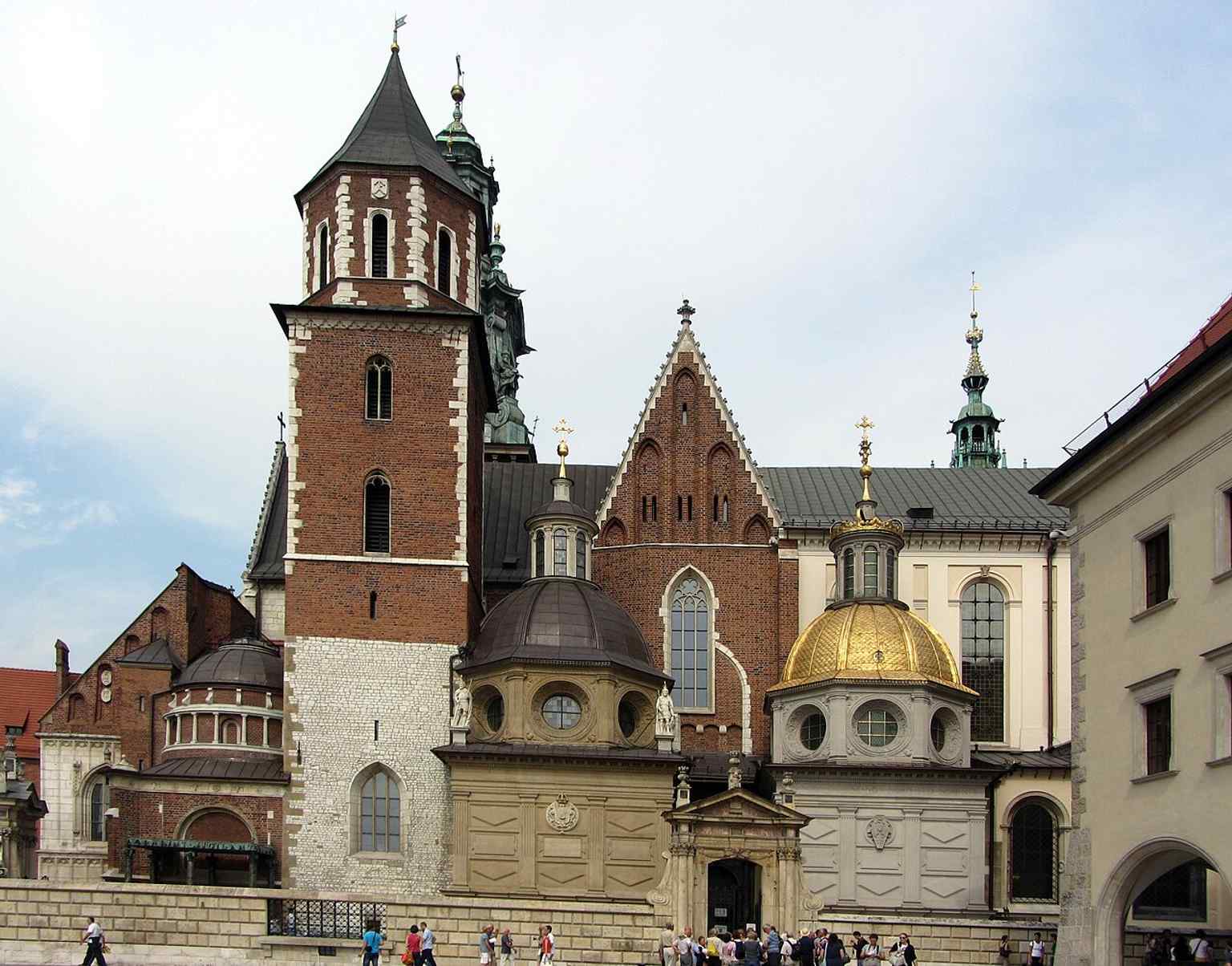
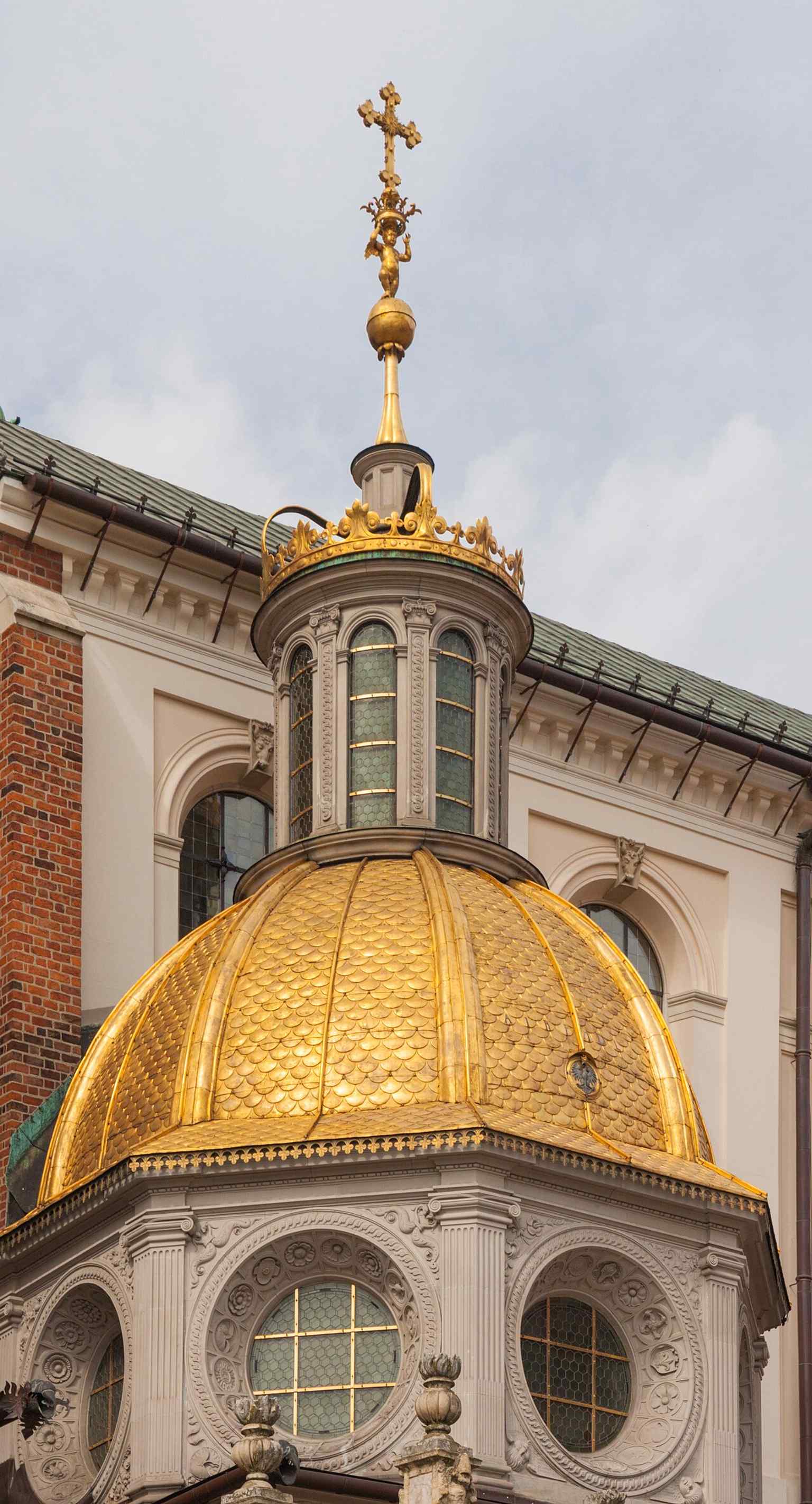
The south side with the Sigismund and Vasa Chapels, two of the most important royal mausoleums on the cathedral’s exterior.
The south side with the Sigismund and Vasa Chapels, two of the most important royal mausoleums on the cathedral’s exterior.Photo: Falk2, Wikimedia Commons, CC BY-SA 4.0. Cropped & resized.
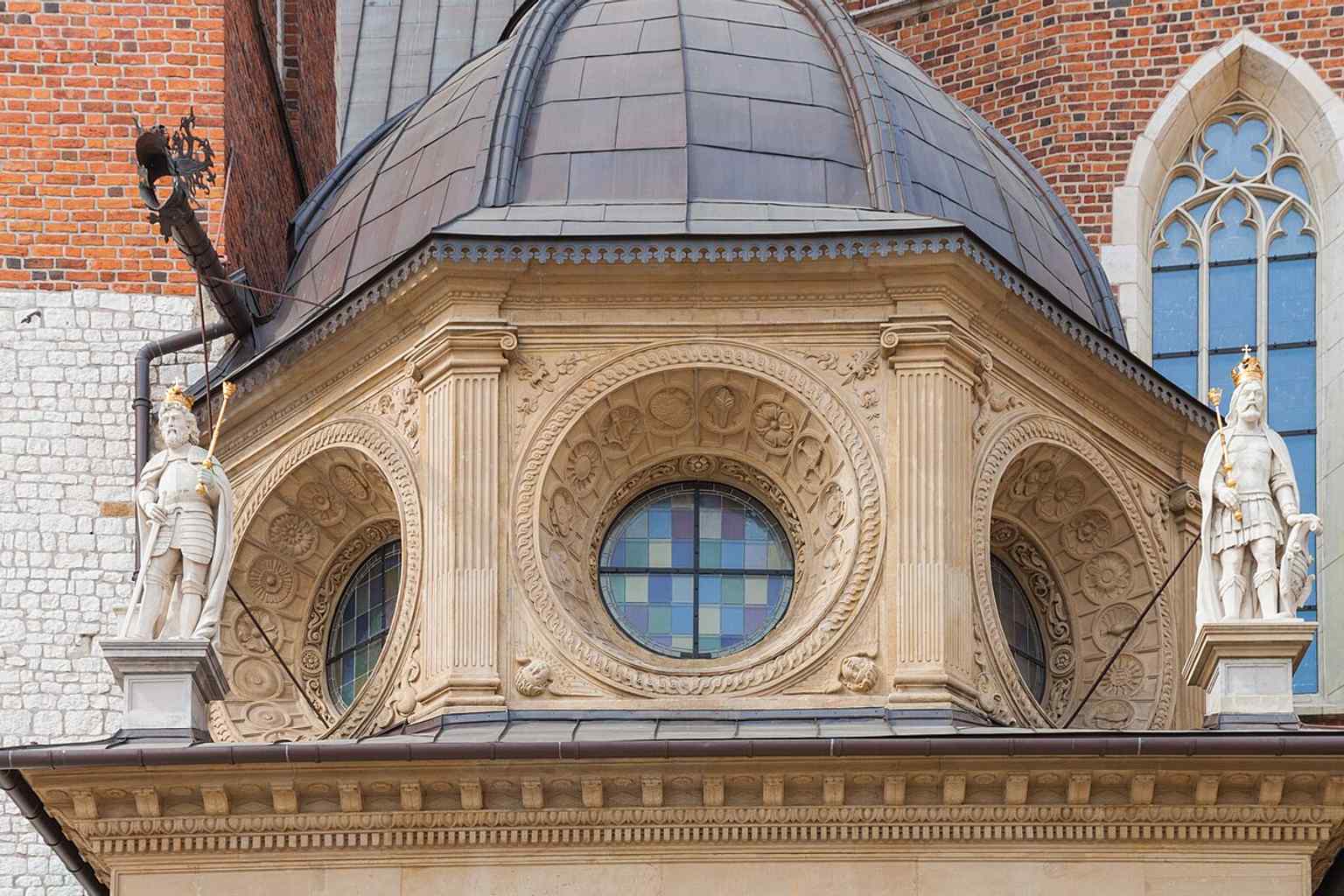
The Sigismund Chapel, the jewel-like Renaissance chapel that became a model for later royal funerary architecture in Poland.
The Sigismund Chapel, the jewel-like Renaissance chapel that became a model for later royal funerary architecture in Poland.Photo: Marcin Konsek, Wikimedia Commons, CC BY-SA 4.0. Cropped & resized.
The Vasa Chapel beside the Sigismund Chapel, echoing its form and showing how later dynasties tied themselves to Wawel’s royal memory.
The Vasa Chapel beside the Sigismund Chapel, echoing its form and showing how later dynasties tied themselves to Wawel’s royal memory.Photo: Marcin Konsek, Wikimedia Commons, CC BY-SA 4.0. Cropped & resized.
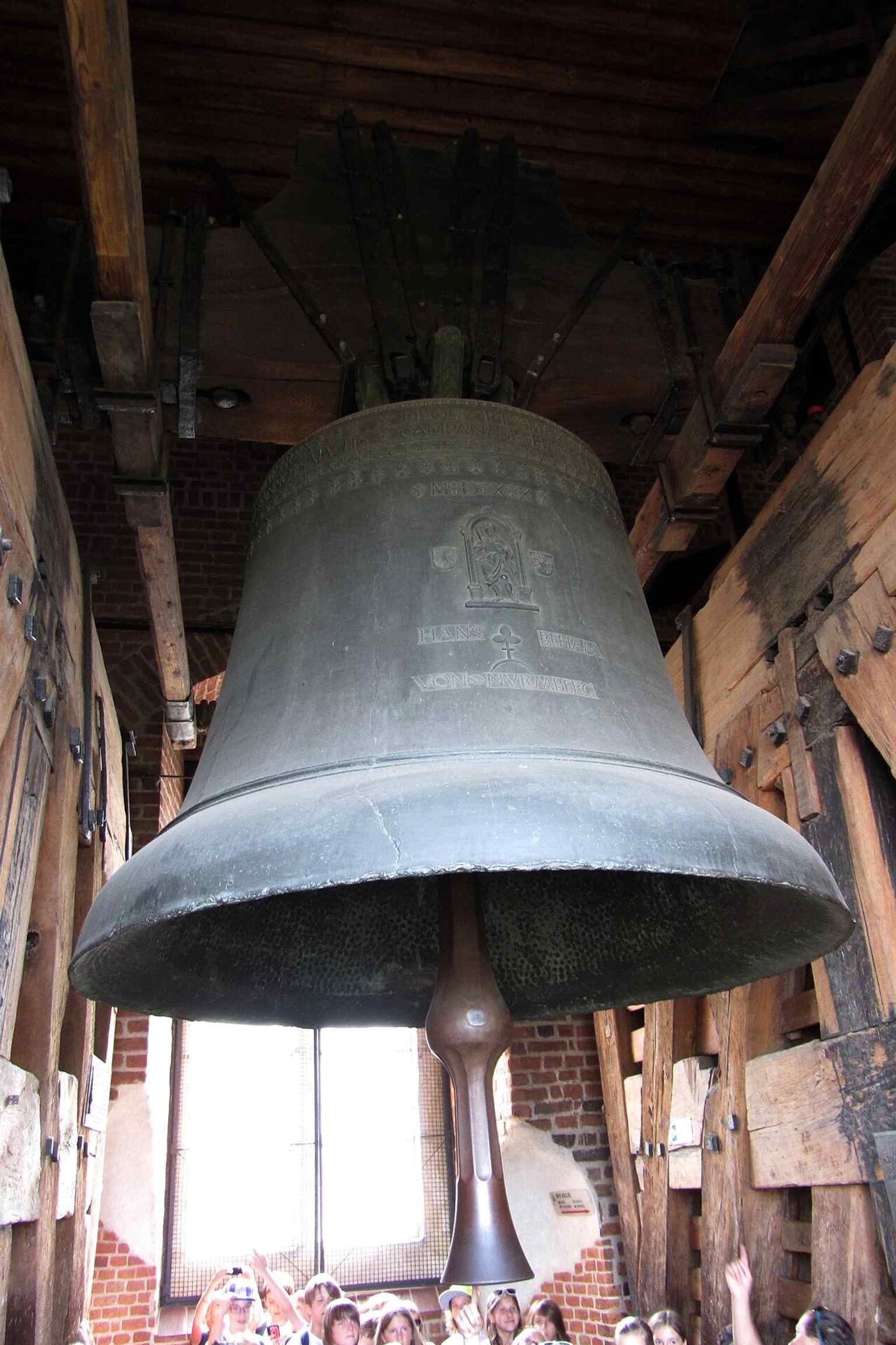
The famed Sigismund Bell, cast in 1520, whose heavy bronze voice rings out only on the greatest feast days.
The famed Sigismund Bell, cast in 1520, whose heavy bronze voice rings out only on the greatest feast days.Photo: Falk2, Wikimedia Commons, CC BY-SA 4.0. Cropped & resized.
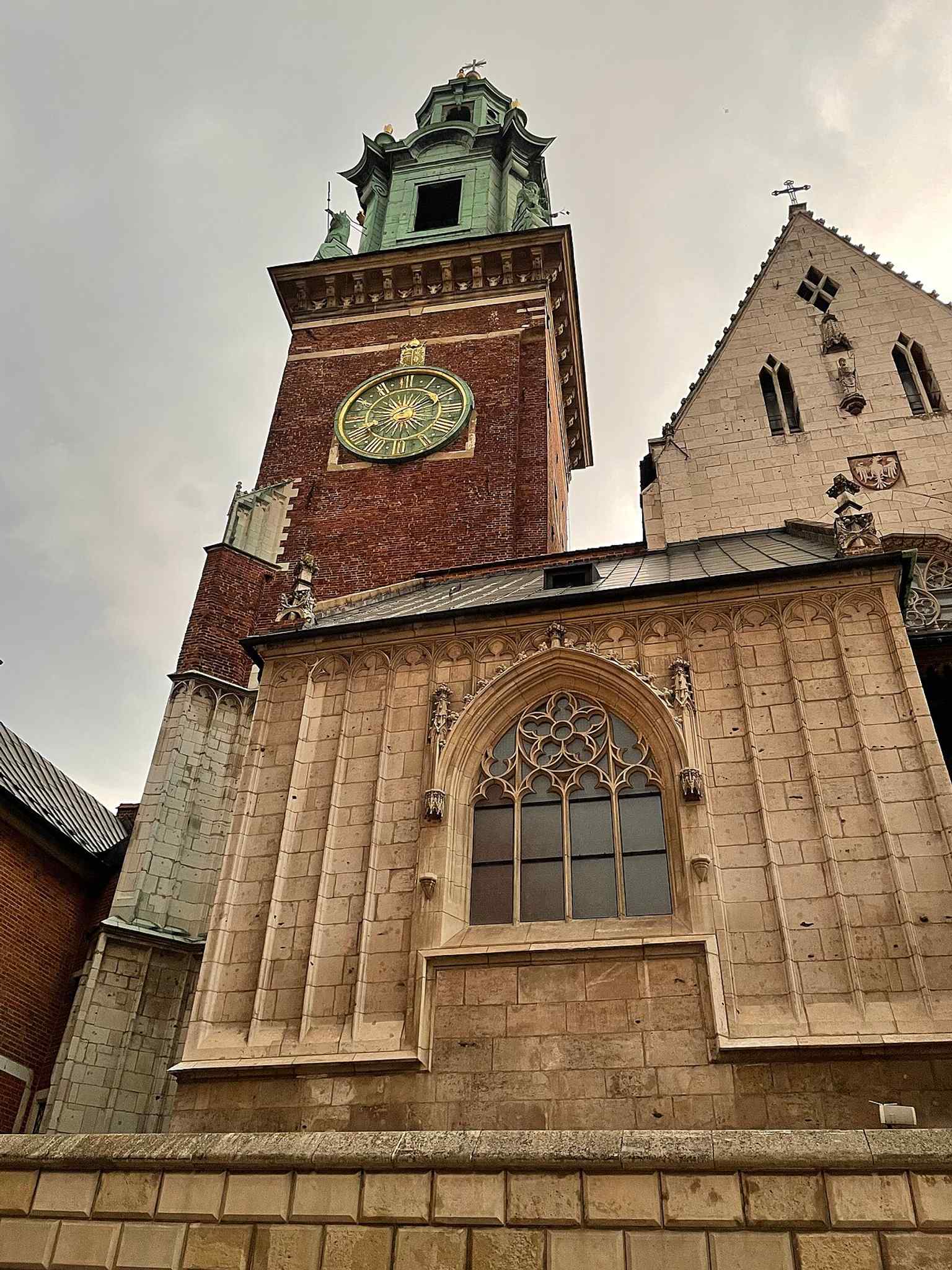
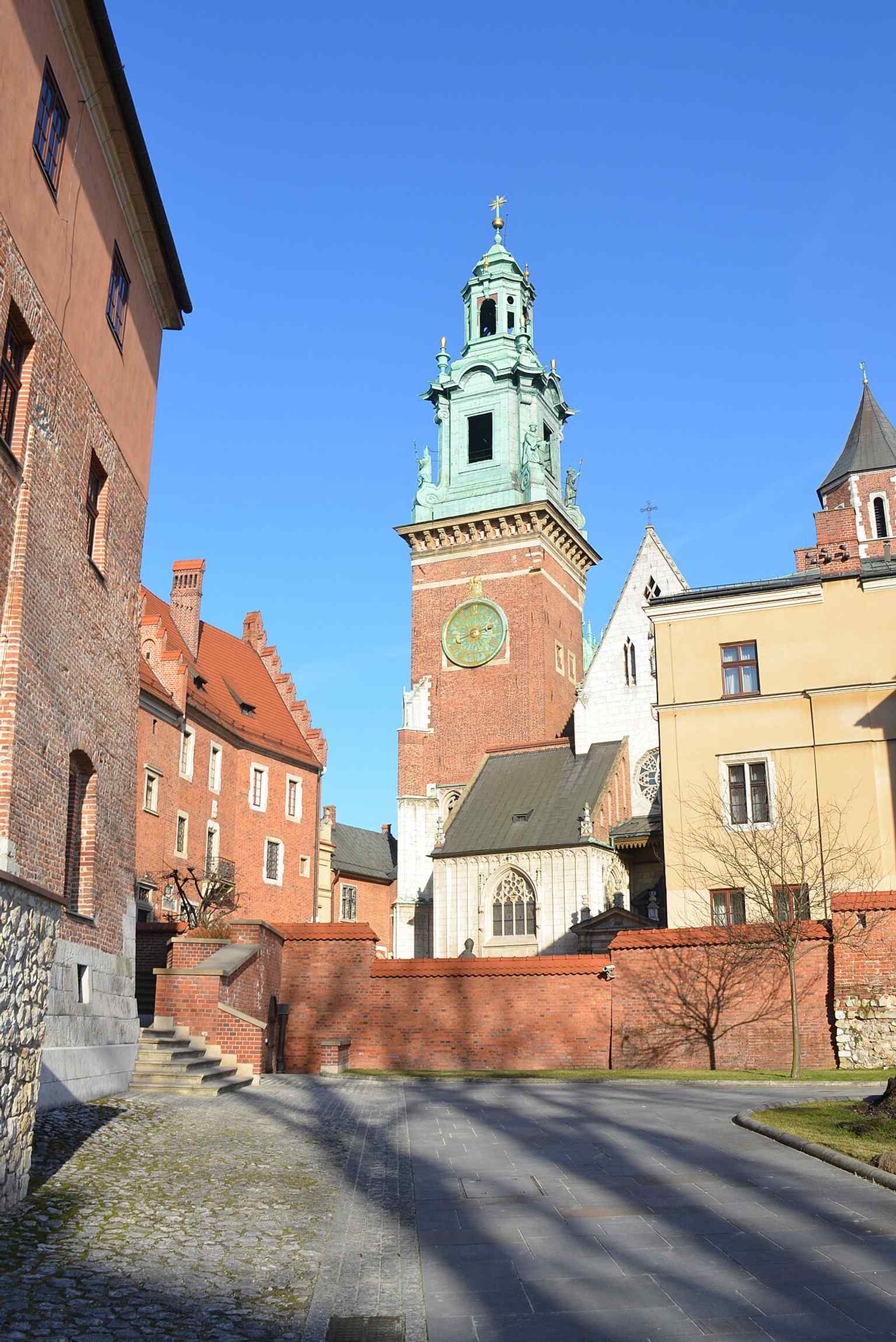
A close view of the bell tower, one of the cathedral’s defining verticals and home to the great Sigismund Bell.
A close view of the bell tower, one of the cathedral’s defining verticals and home to the great Sigismund Bell.Photo: ViktoriaLi, Wikimedia Commons, CC BY-SA 4.0. Cropped & resized.
The Cathedral Museum displays the treasury objects that made Wawel both a spiritual center and a royal treasure house.
The Cathedral Museum displays the treasury objects that made Wawel both a spiritual center and a royal treasure house.Photo: Silar, Wikimedia Commons, CC BY-SA 4.0. Cropped & resized.
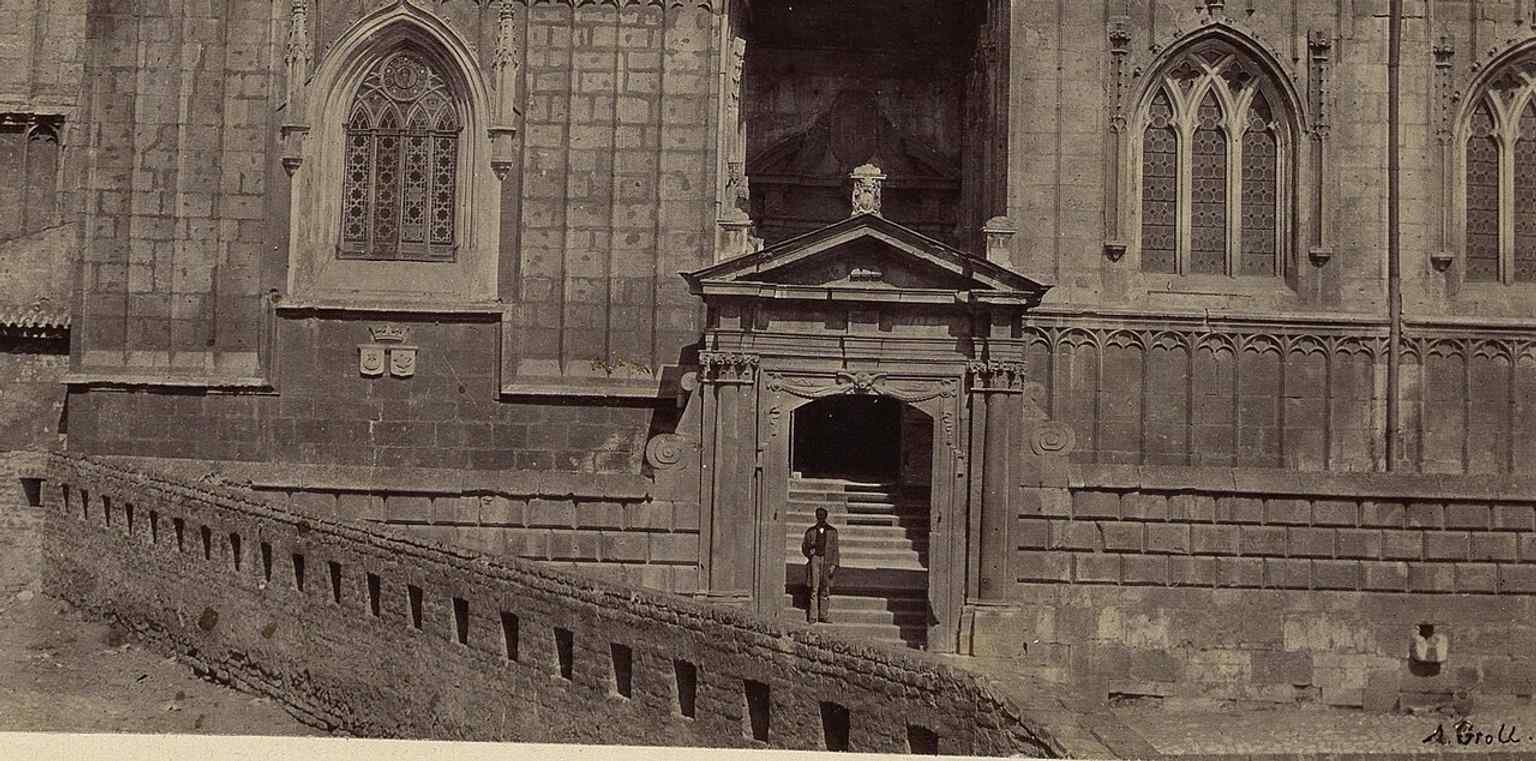
Andreas Groll’s 1863 photograph of the western façade shows Wawel before modern restoration work, preserving an older visual memory of the cathedral.
Andreas Groll’s 1863 photograph of the western façade shows Wawel before modern restoration work, preserving an older visual memory of the cathedral.Photo: Andreas Groll, Wikimedia Commons, Public domain. Cropped & resized.
arrow_back Back to Krakow Highlights Audio Tour: Royal and Architectural Heritage
Loved by travellers

Thousands of tours started.
Plenty of opinions.

4.8 across the App Store and Google Play. Here's a few we keep coming back to.

starstarstarstarstar
This was a solid way to get to know Brighton without feeling like a tourist. The narration had depth and context, but didn't overdo it.
Christoph
Christoph
Brighton Tour
starstarstarstarstar
Started this tour with a croissant in one hand and zero expectations. The app just vibes with you, no pressure, just you, your headphones, and some cool stories.
download Get the app

Pop your headphones in.
Step outside.

Free to download. Tours in every city. Start in 60 seconds — no account, no card.

Download on the App StoreGet it on Google Play
starstarstarstarstar_half
4.8
AudaTours app icon
headphones
~ 4 min until your first tour starts
public
1,000+ cities worldwide
all_inclusive
AudaTours
Unlimited

Every tour. Every city. One subscription.

3101 tours2271 cities138 countries50+ languages