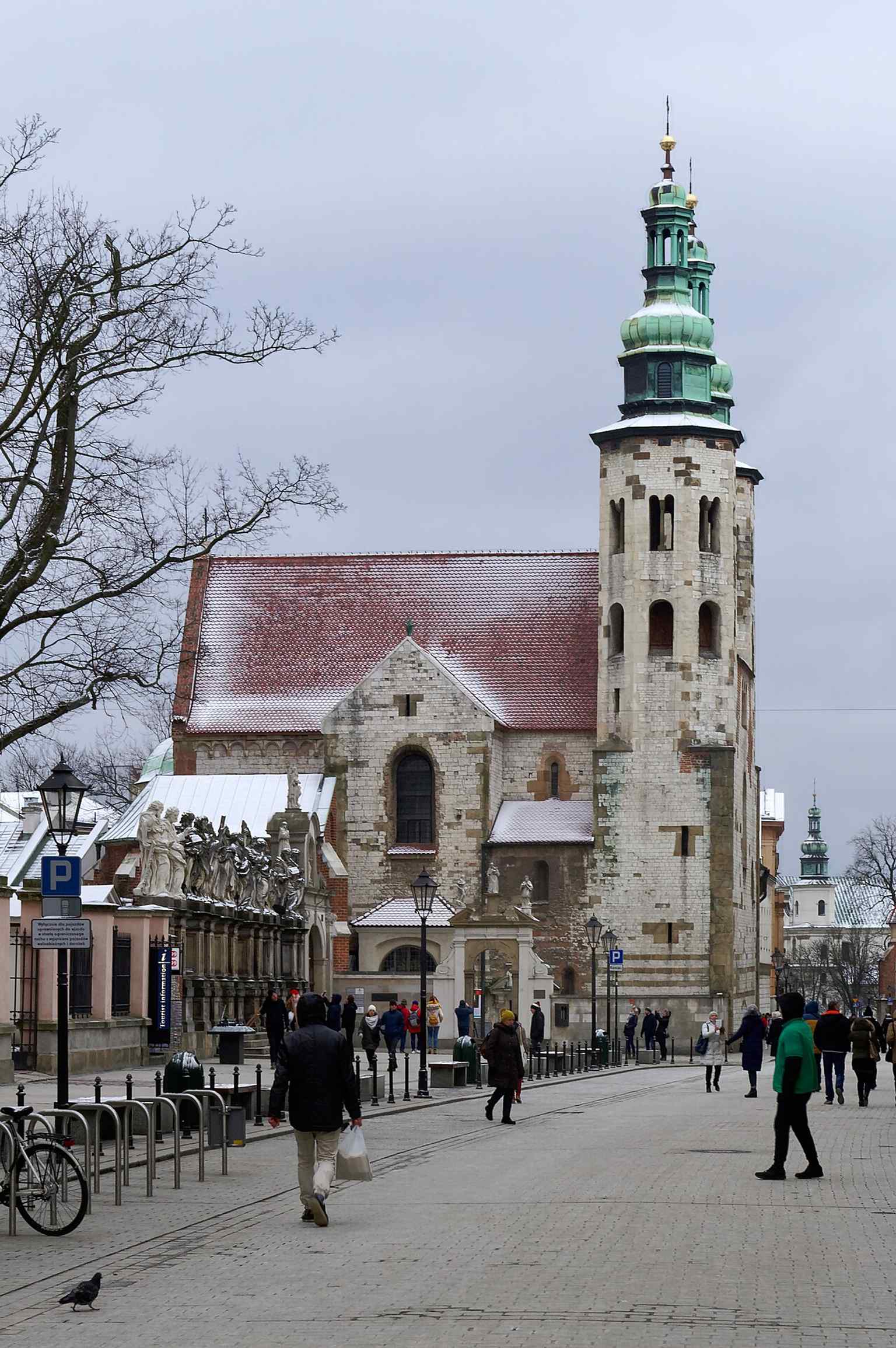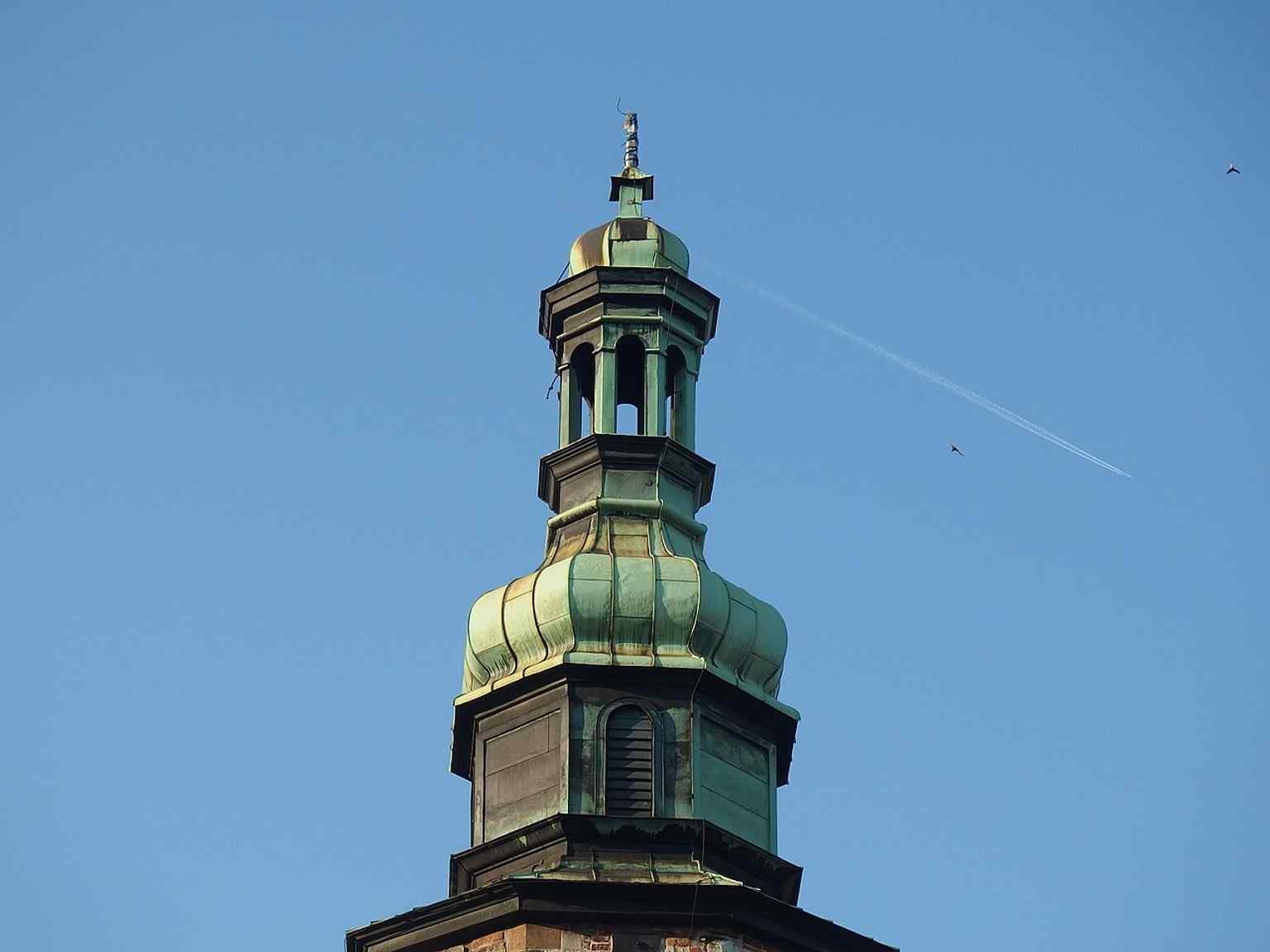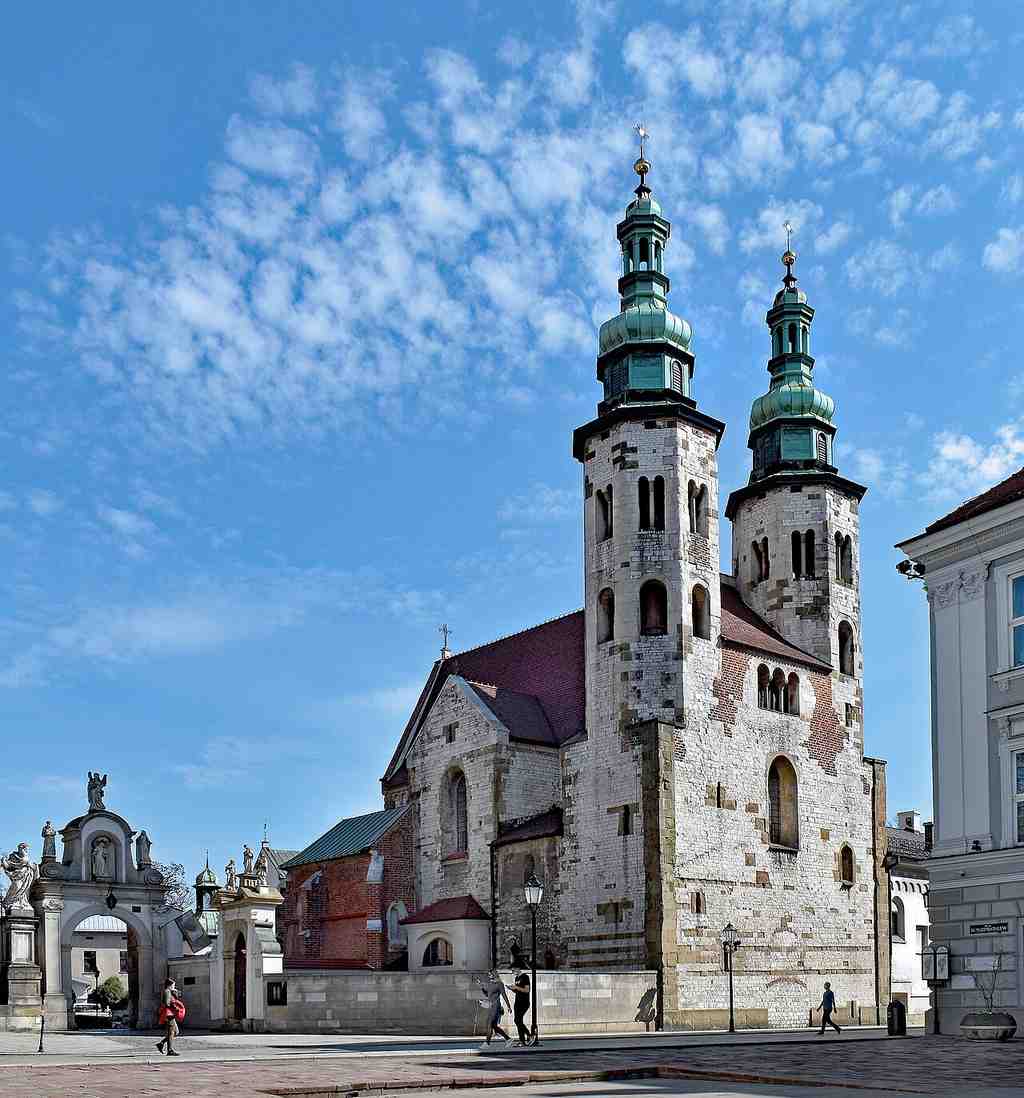
On your right, St. Andrew’s is a compact stone church with thick bands of pale limestone and sandstone, twin towers that shift from square bases to octagonal upper levels, and dark baroque domes sitting on top like later thoughts.
This is one of Kraków’s hardest old survivors. Palatine Sieciech, one of the most powerful men in Poland, founded it between ten seventy-nine and ten ninety-eight for the settlement of Okół, and the Benedictines first oversaw it. Long before churches here became postcard material, they also had a blunter job: keep people alive. In this city, faith and defense often shared the same walls.
That became brutally clear in twelve forty-one, when the Mongols attacked. Local accounts say the people of Kraków fled here in huge numbers, and this church held. Look at the lower part of the facade: the mass is heavy, the openings are few, and some of them were made as arrow slits, not generous invitations. A place like this could shelter a congregation on an ordinary day... and a terrified population on a catastrophic one.
And here is the question that lingers: if a city were collapsing around you, what kind of building would feel strong enough to trust with your life?
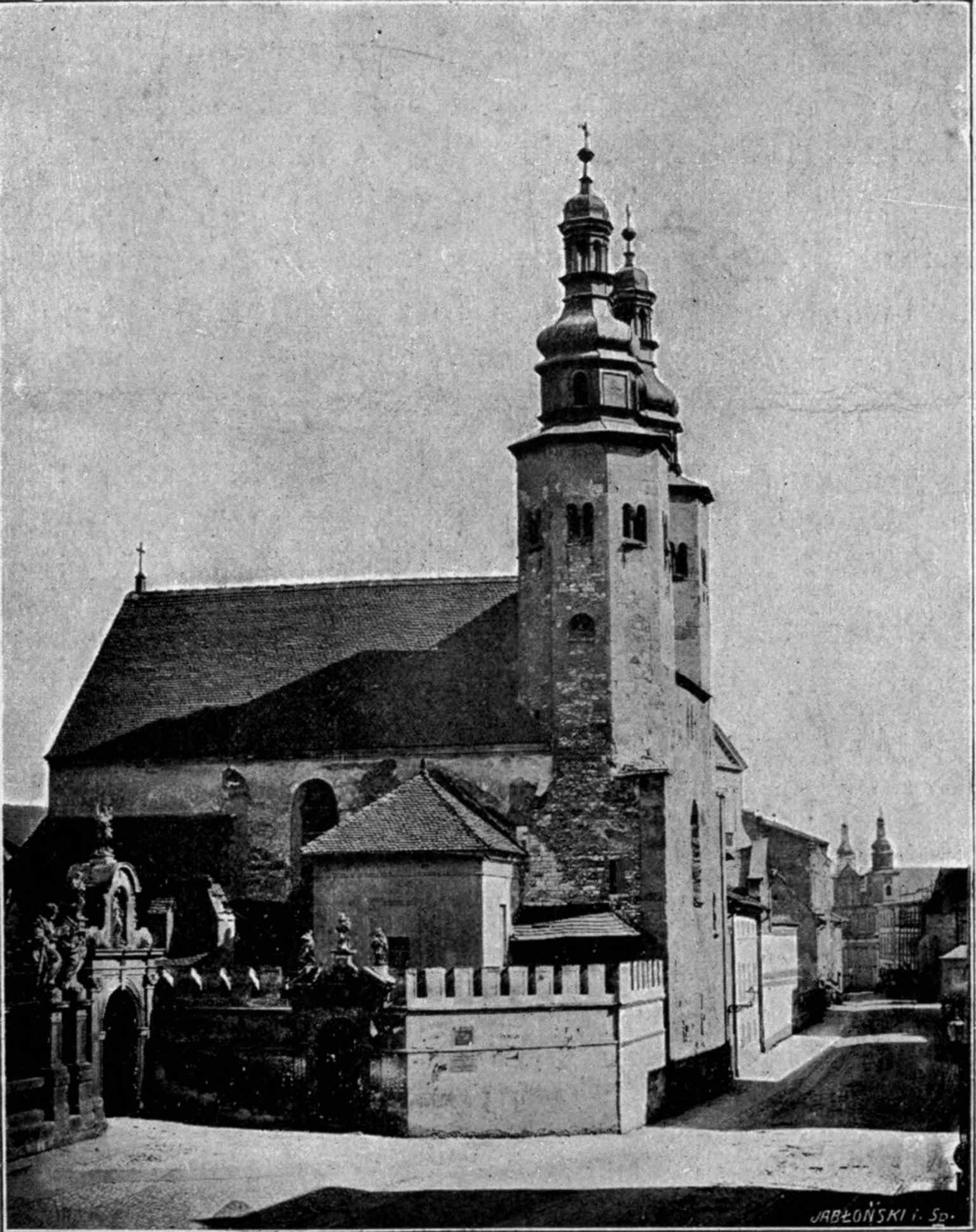
The church kept proving its point. In twelve forty-three, Konrad of Masovia fought for the Kraków throne and actually ringed the church with a moat and an earthwork. A second Tatar raid in twelve sixty probably damaged it, but not enough to erase its core. If you want, check the before-and-after image in the app; the street changes dramatically, but these stubborn towers barely seem to notice.
Then the story turns quieter... and, in its own way, tougher. In thirteen twenty, King Władysław Łokietek gave the church to the Poor Clares and funded convent buildings beside it. Their community carried the memory of Blessed Salomea, the woman who brought the Poor Clares to Poland in twelve forty-five, so this was not just a property transfer. It was a handoff of care, devotion, and continuity from one era of danger to another of disciplined prayer.
That enclosed life preserved remarkable things almost by accident. Inside the convent survive a portable mosaic icon of the Virgin from the turn of the twelfth and thirteenth centuries, thirteenth-century reliquaries, and some of Europe’s oldest nativity figures, likely given by Elizabeth, sister of King Casimir the Great. Strict enclosure, it turns out, can make an excellent museum policy.
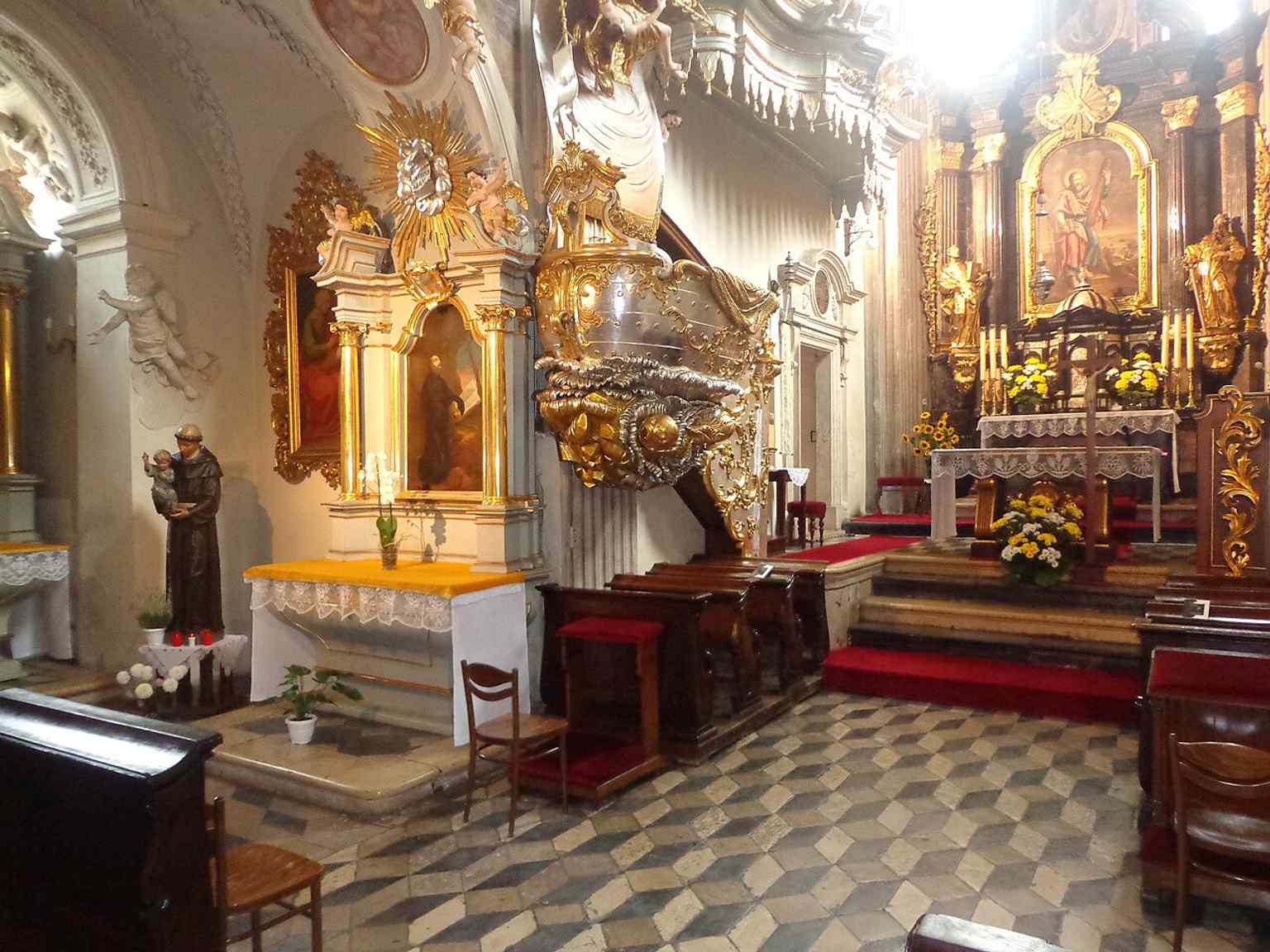
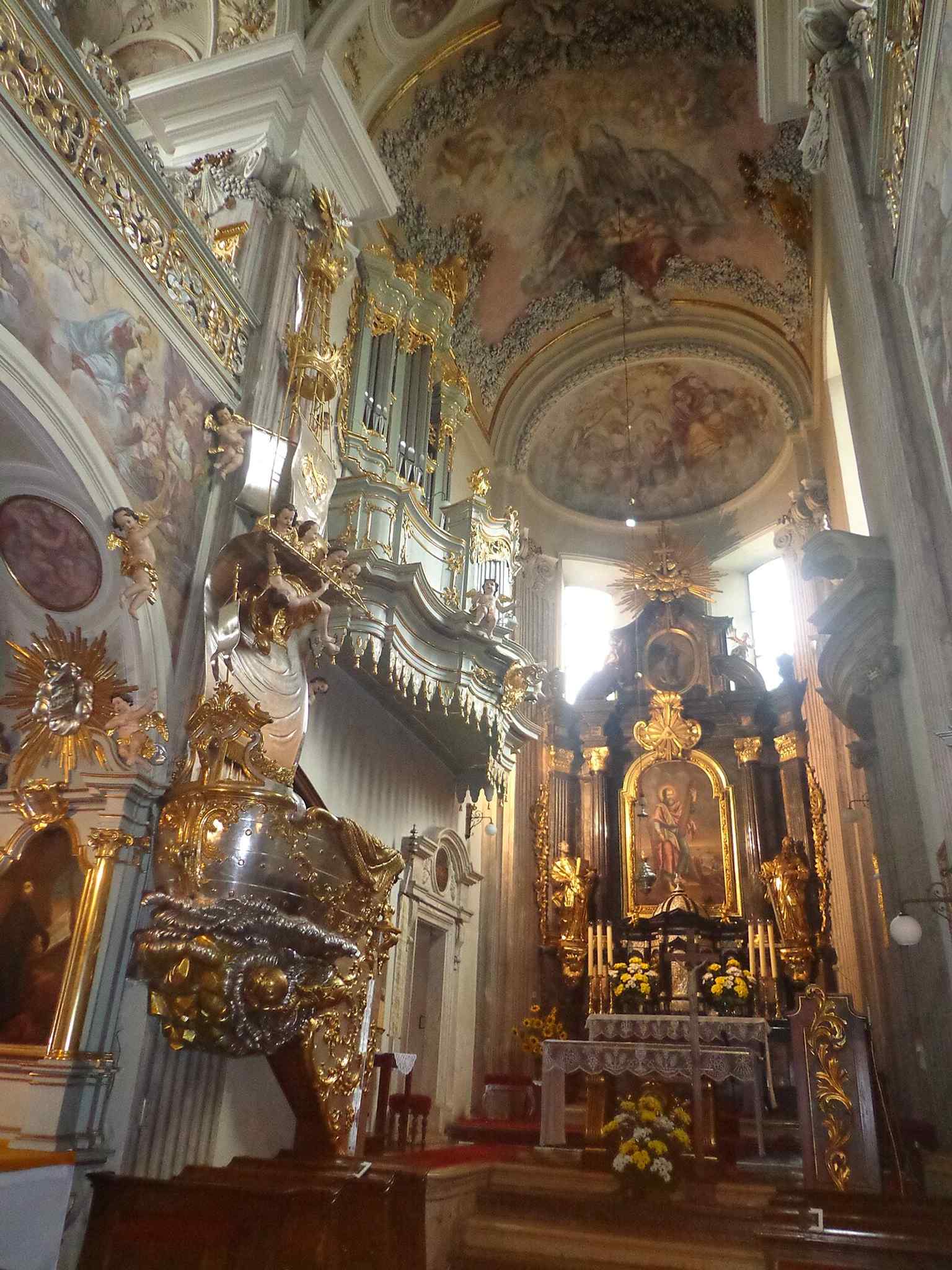
The exterior still keeps its Romanesque body: alternating stone layers, twin towers with paired windows, and a solid western front that looks built to absorb bad news. Later centuries added their own opinions. In sixteen thirty-nine, builders topped the towers with baroque domes, and in the eighteenth century artists, probably including Baltazar Fontana and perhaps Franciszek Placidi, transformed the interior into a far more ornate devotional space. If you glance at the interior photo on your screen, you can see that baroque glow wrapped around a much older skeleton.
So along Grodzka, this stern survivor gives way to the next idea of sacred architecture: less fortress, more performance. Ahead, the Church of Saints Peter and Paul takes that turn with real confidence. If you want to return later, St. Andrew’s is generally open daily from seven A-M to five P-M.