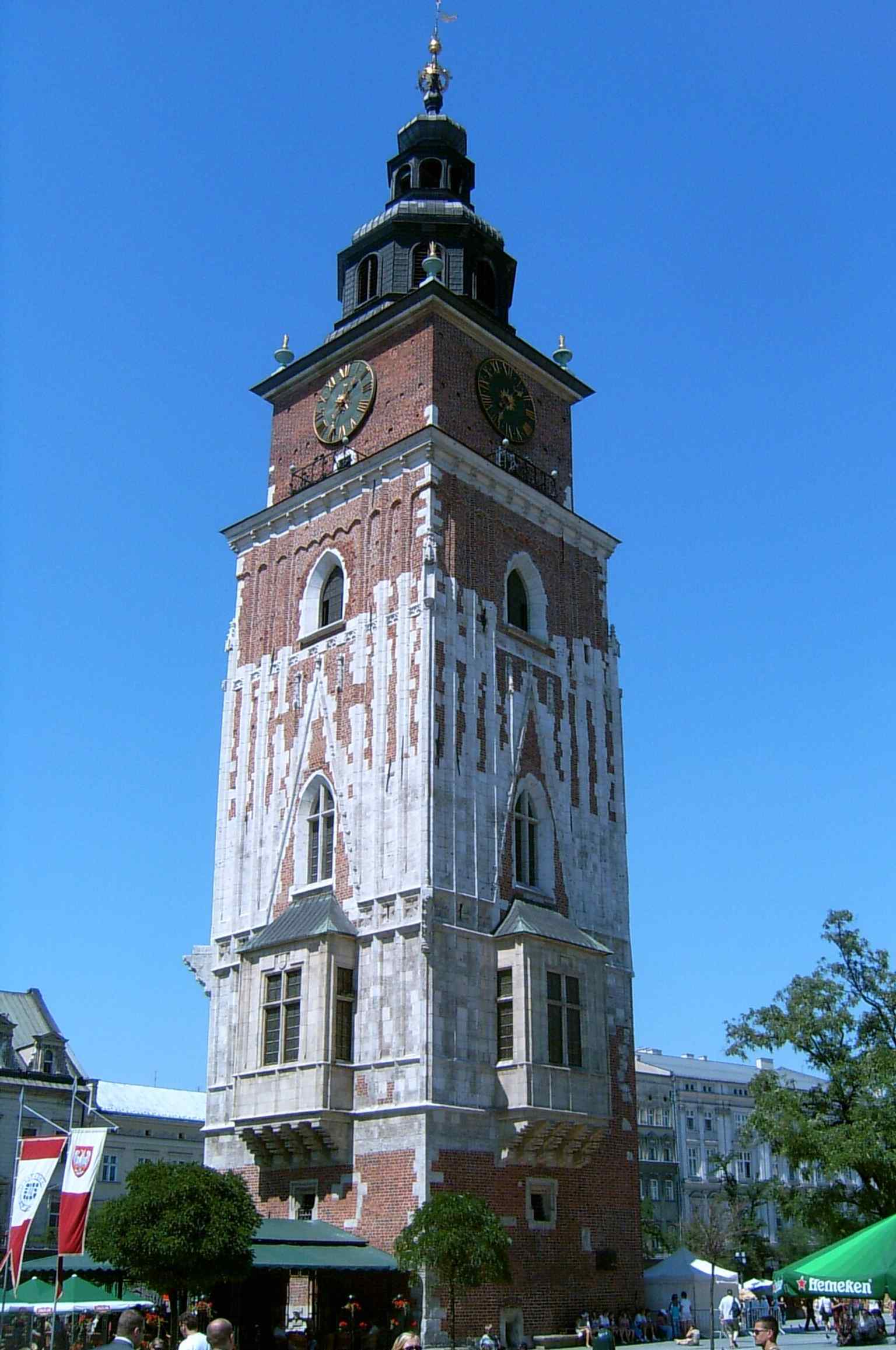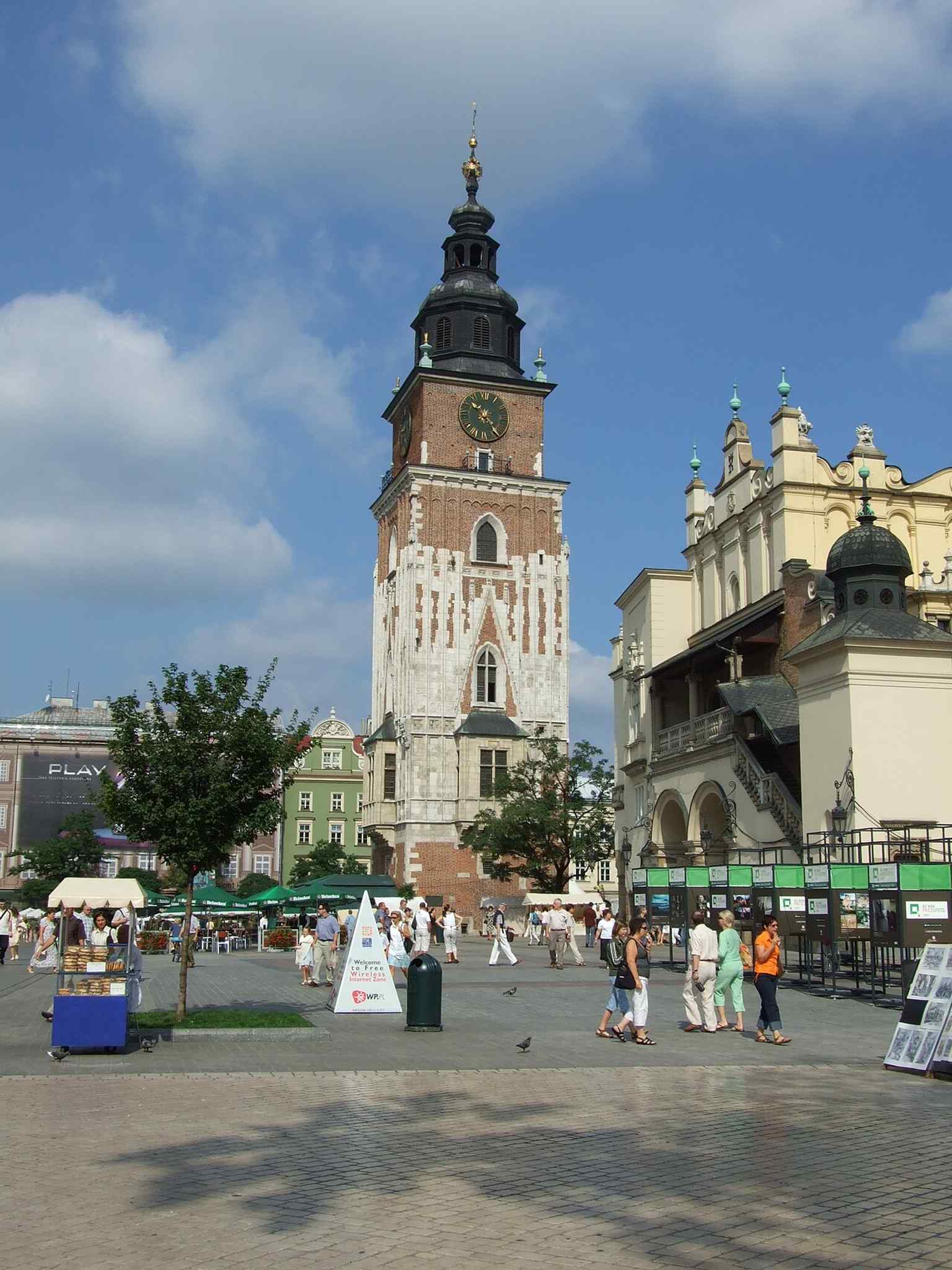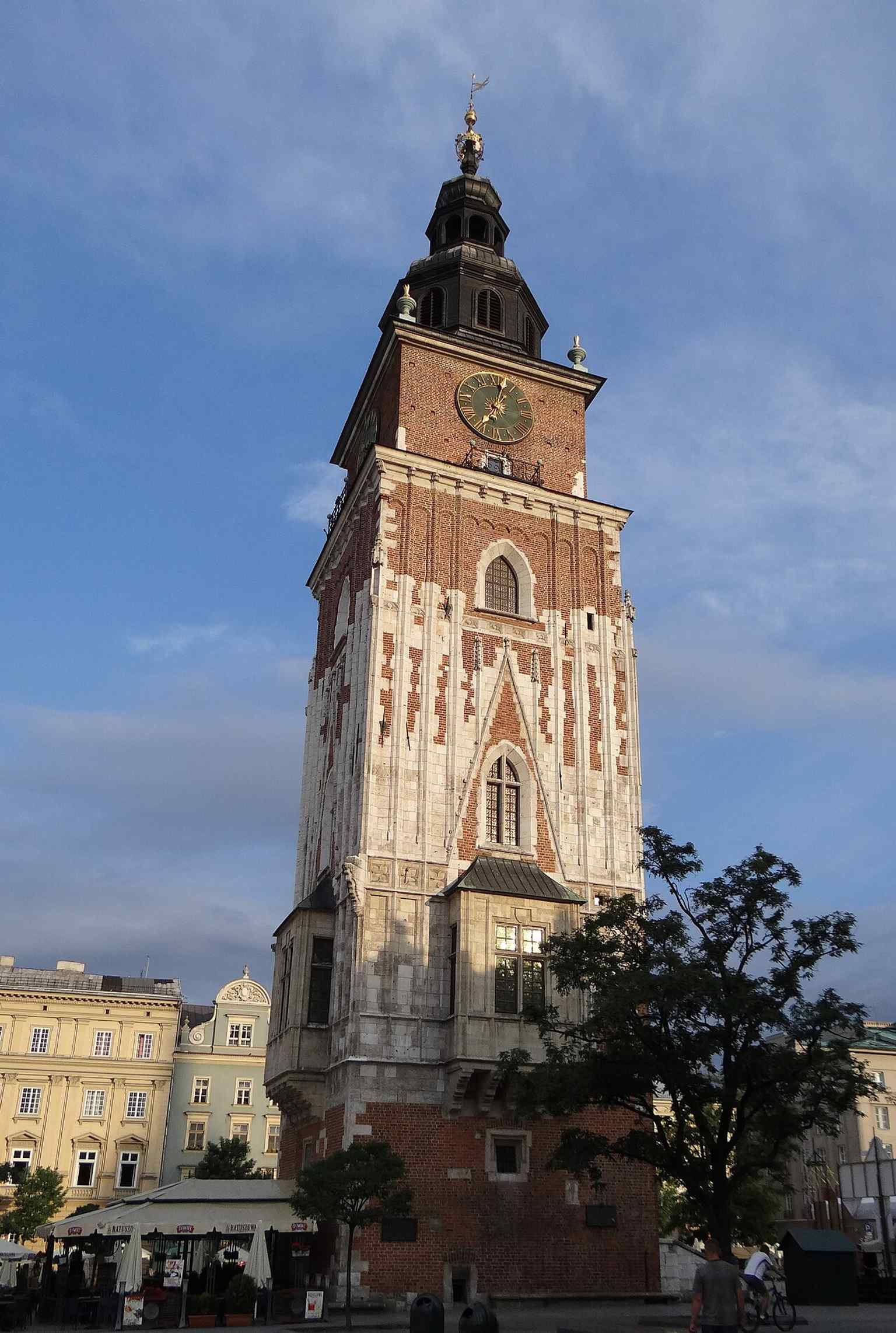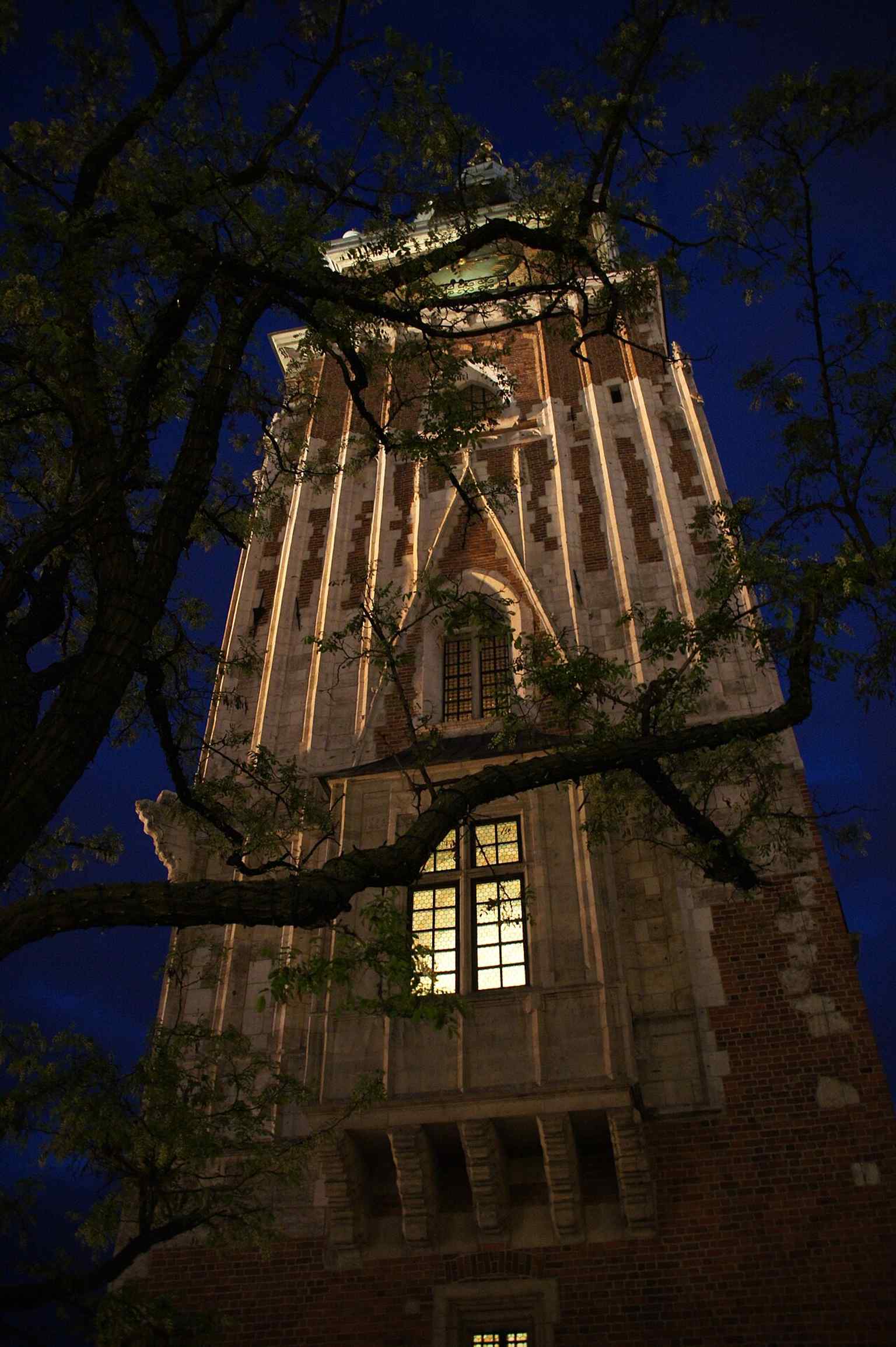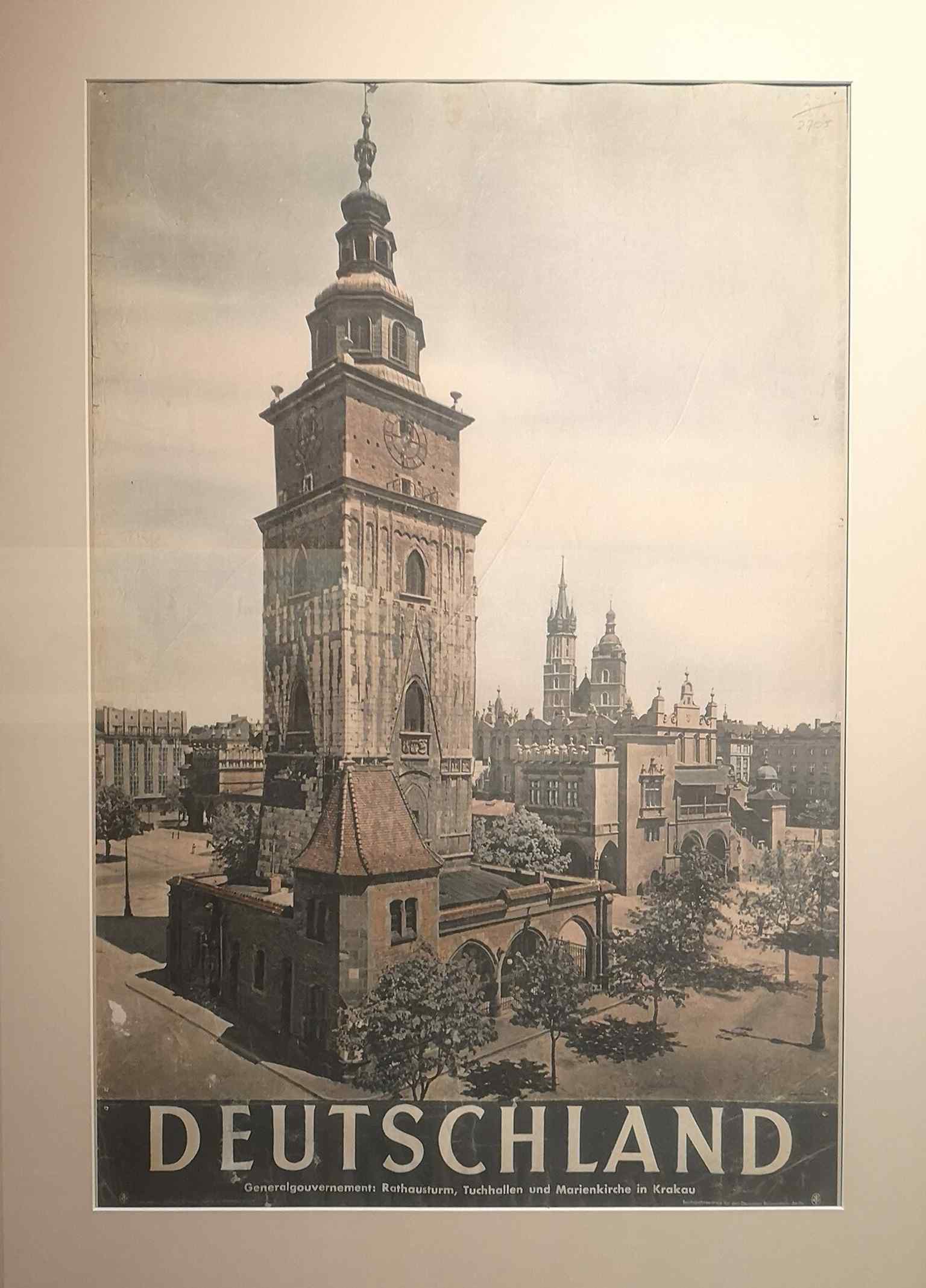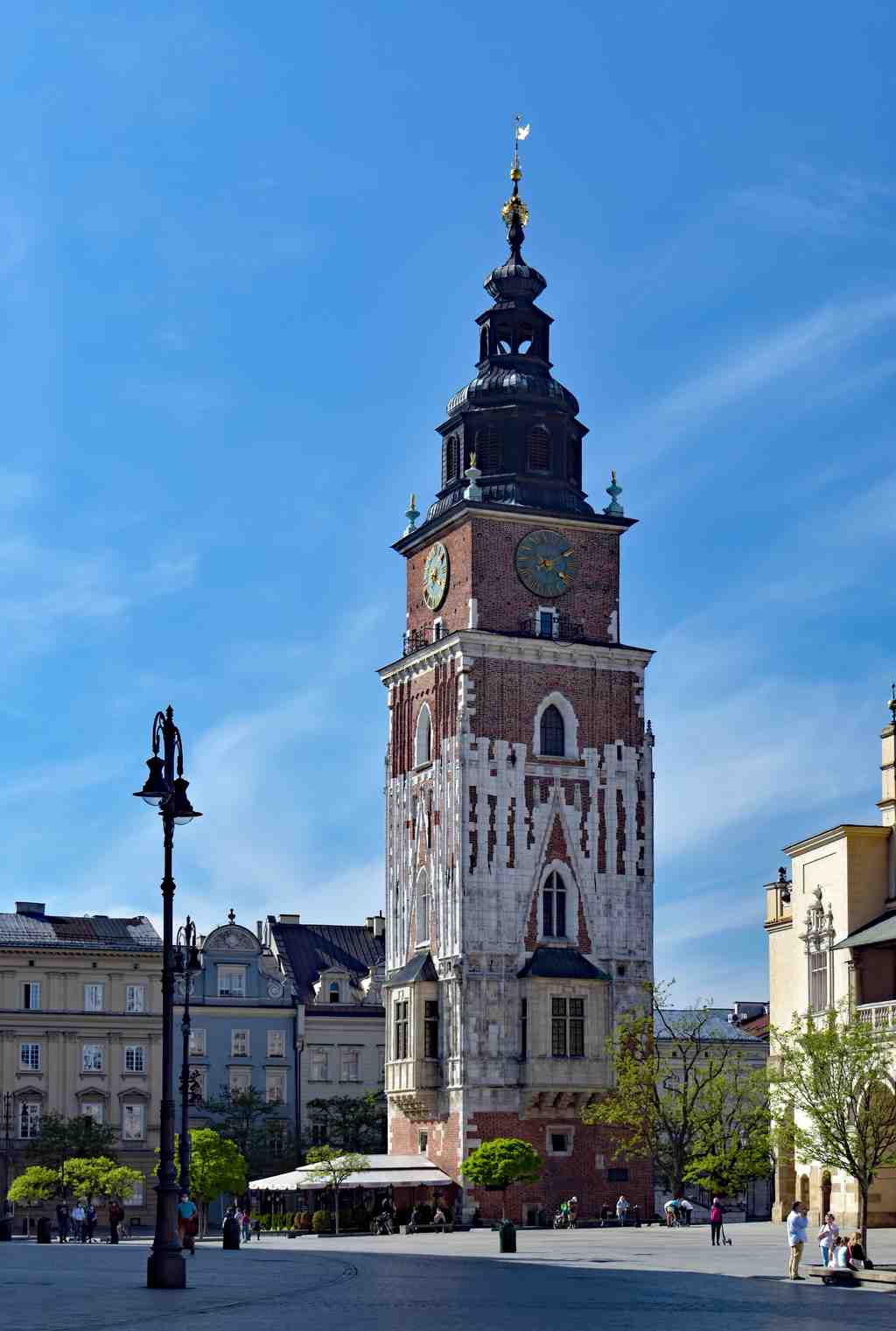
On your right rises a tall stone-and-brick Gothic tower, almost square in shape, with a slightly tilted stance and two stone lions guarding the entrance.
This tower looks permanent... but its survival was anything but. What stays in a city center is not simply whatever gets old enough. It’s whatever people choose to keep, whatever they can afford to lose, and whatever someone fails to knock down.
This is the only piece left of Kraków’s old Town Hall, the ratusz, after officials tore the rest down in eighteen twenty. Their language was “beautifying” the square. Funny how that often means removing the inconveniently medieval bits. The first plan, back in eighteen seventeen, targeted only the nearby granary. Then, during work in eighteen twenty, cracks spread through the main Town Hall walls. That gave authorities a neat excuse to erase more than five centuries of civic history in one sweep.
If you want a quick visual of that change, have a look at the comparison image in the app.
Even this tower nearly followed the rest. In eighteen twenty-one, a local senator wrote that the “isolated Gothic clock” spoiled the view and had no value. Happily, the city ignored him. So yes, this tower survived not by miracle, but by public disagreement... which is a very Kraków kind of rescue.
The tower itself dates to the late fourteenth century, climbs about seventy meters, and leans by fifty-five centimeters because a violent storm shifted its foundations in seventeen oh three. Earlier still, lightning struck in sixteen eighty, melted the lead roof and bells, and burned the tower down to half its height. Royal architect Piotr Beber rebuilt the top and added a heavy buttress to keep the weakened walls standing. Survival, here, meant patching, arguing, and carrying on.
And below your feet? The cellars held two very different worlds separated by a partition. One side poured beer in the famous Świdnicka Cellar, a place so rowdy locals nicknamed it the Rogues’ Den. The other side held the prison and torture chamber. Same building, same basement, very different evenings.
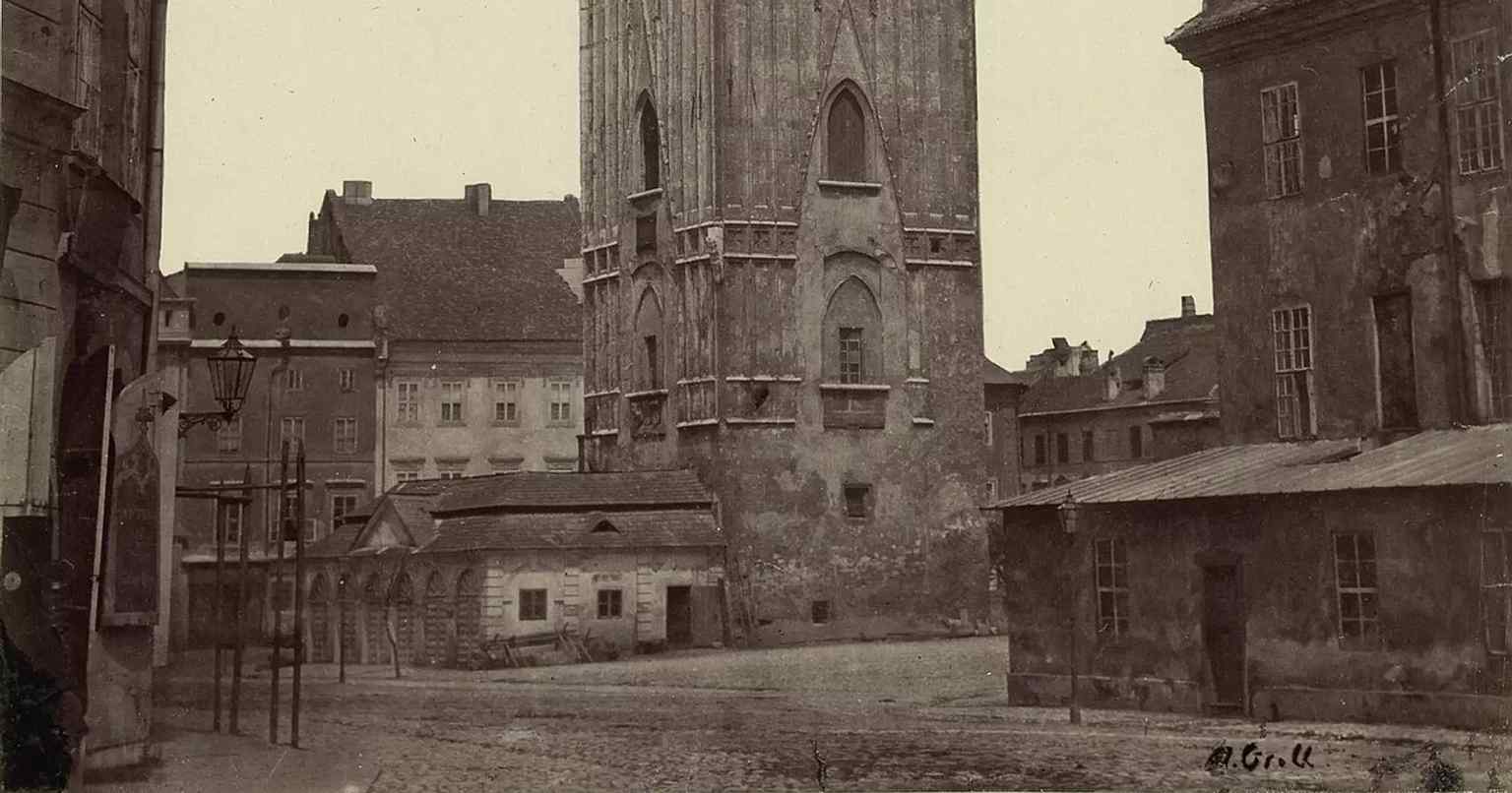
If you check the historical guardhouse image on your screen, you’ll see another layer that vanished later. A classicist guardhouse once stood beside the tower, survived the nineteenth century clear-outs, then gained such dark associations during the Nazi occupation that Kraków demolished it in nineteen forty-six.
Today the tower serves as a museum branch, and the clock now keeps atomic-level time by radio signal. Very efficient. Rather a change from the old civic chaos it once watched over.
From a tower that survived because people finally argued for keeping it, we head next to something raised on purpose to shape public feeling: the Adam Mickiewicz Monument, about a two-minute walk from here. If you want to go inside this tower later, it’s generally open from late morning into early evening.